Best Way to Put Out an Electrical Fire Safely
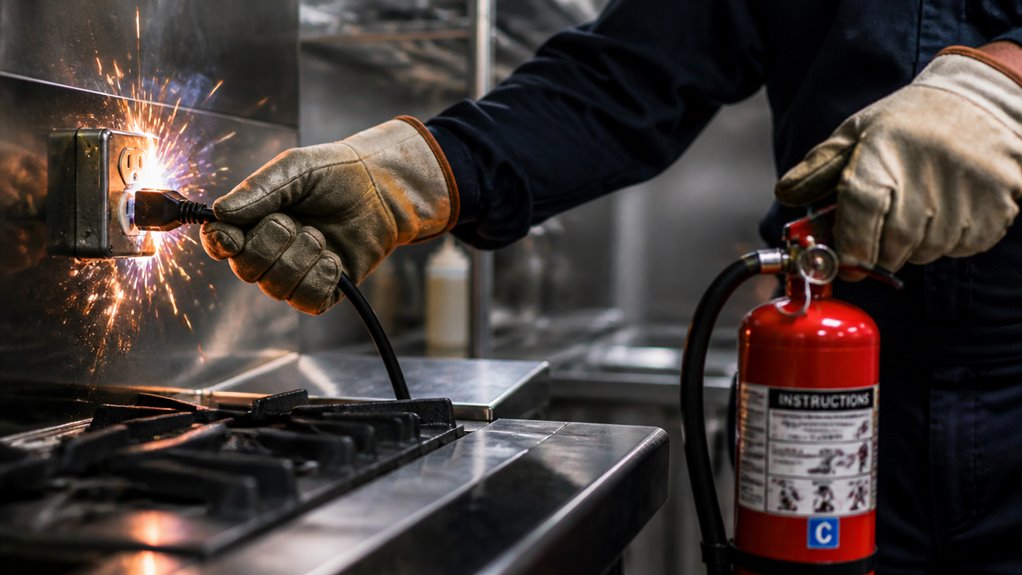
To put out an electrical fire safely, first cut power to the affected circuit or unplug the device if it’s safe.
Never use water, as it conducts electricity and increases shock risk.
Instead, use a Class C, CO2, or dry chemical extinguisher, aiming at the fire’s base while maintaining an exit path.
If the fire grows or power shutoff isn’t possible, evacuate and call emergency services promptly.
Understanding these steps helps you protect yourself and prevent damage.
Key Takeaways
- Cut power to the affected circuit or unplug the appliance only if it can be done safely before attempting to extinguish the fire.
- Never use water or foam extinguishers on electrical fires due to the risk of electric shock and fire spread.
- Use a Class C, ABC, or BC-rated extinguisher, such as CO2 or dry chemical, designed for electrical fires.
- Aim the extinguisher nozzle at the fire base and sweep side to side until flames are fully extinguished.
- Maintain a clear exit path and call emergency services if the fire becomes uncontrollable or unsafe to manage.
How to Safely Shut Off Power Before Fighting an Electrical Fire?

Before you attempt to fight an electrical fire, cut power to the affected circuit or unplug the appliance if you can do so safely.
Locate your home’s main breaker panel and switch off the breaker controlling the area where the fire started.
If you can’t identify the specific circuit quickly, shut off the main breaker to cut power to the entire house.
Avoid touching any equipment or wires while power is still on. Electrical fires pose a shock risk.
If unplugging an appliance, pull the plug firmly but carefully. Never grasp the cord.
If the fire spreads or you feel unsure, evacuate immediately and call emergency services.
Always treat the situation as an electrical hazard first, not just a flame issue.
Regular maintenance and adherence to safety protocols are essential to prevent electrical fire hazards.
Why You Should Never Use Water on Electrical Fires?
When dealing with an electrical fire, you should never use water because it conducts electricity, increasing your risk of electric shock.
Water can turn energized equipment into a dangerous conductor, potentially causing severe injury or death.
Water transforms live electrical devices into hazardous conductors, posing serious risks of injury or fatality.
Instead of putting out the fire, water may spread the electrical current to you or others nearby.
Additionally, water won’t effectively extinguish the fire if the power remains on.
Always cut power or unplug the device safely before attempting to douse flames.
Using water also risks damaging electrical components, leading to costly repairs or further hazards.
Remember, electrical fires demand non-conductive extinguishing agents designed specifically to interrupt the circuit safely.
Avoiding water keeps you safe and prevents worsening the situation.
Generators produce sparks and heat that can ignite electrical fires, so always ensure power is completely shut off before addressing the fire.
Best Types of Fire Extinguishers for Electrical Fires
Although electrical fires pose unique risks, you can effectively combat them by choosing the right fire extinguisher.
Look for extinguishers labeled Class C, ABC, or BC, as they’re designed for electrical hazards. CO2 extinguishers work well on live electrical equipment since they’re non-conductive and leave no residue.
Dry chemical extinguishers are effective but may leave a messy residue. Avoid foam or water-based extinguishers; they conduct electricity and increase shock risk.
| Extinguisher Type | Key Features |
|---|---|
| CO2 | Non-conductive, residue-free |
| Dry Chemical ABC | Versatile, leaves residue |
| Dry Chemical BC | Effective, less versatile |
| Clean Agent | Non-conductive, non-residue |
| Water/ Foam | Not for electrical fires |
Many modern extinguishers also feature UL certification to ensure their safety and performance in electrical fire situations.
Choose one suitable for your environment to stay safe and ready.
How to Use a Fire Extinguisher on Electrical Fires?
Approach the electrical fire cautiously, keeping a safe distance as you prepare to use the extinguisher.
First, confirm the power is off or unplug the device if safe.
Select a Class C, ABC, or BC-rated extinguisher. CO2 or dry chemical types work well.
Aim the nozzle at the fire’s base, not the flames’ tips.
Squeeze the handle steadily to release the extinguishing agent.
Sweep the nozzle side to side across the fire’s base until the flames go out.
Stay alert for any signs of re-ignition and be ready to act quickly.
Never use water or foam extinguishers on electrical fires, as they conduct electricity and increase shock risk.
Always prioritize your safety and maintain a clear exit path.
Regular maintenance and cleaning of fire safety equipment, including fire sprinkler heads, help ensure optimal performance during emergencies.
What to Do If an Electrical Fire Gets Out of Control?
If the electrical fire spreads rapidly or you can’t extinguish it quickly, prioritize your safety by evacuating immediately.
Don’t waste time trying to fight a fire that’s out of control. Shut off power to the affected circuit if you can do so safely, but only if it won’t delay your exit.
Avoid going near energized equipment once flames grow beyond your control. Leave the area and close doors behind you to slow the fire’s spread.
Once you’re in a safe location, stay clear of smoke and hazardous fumes. Never attempt to re-enter until professionals confirm it’s safe.
Electrical hazards near contaminated water increase safety risks, making evacuation essential to avoid injury or property damage in cases of sewage backup emergencies.
When and How to Call Emergency Services During an Electrical Fire?
Whenever an electrical fire grows beyond your control or you’re unsure about handling it safely, you need to call emergency services immediately.
If an electrical fire becomes uncontrollable or unsafe to manage, call emergency services without delay.
Don’t wait or try to fight the fire if flames spread quickly, smoke thickens, or you can’t cut power safely.
Your priority is to evacuate the area and keep everyone away from energized equipment until professionals arrive.
When you call, clearly state the location, nature of the fire, and any immediate hazards.
Provide details about the power source if known.
Stay on the line until the dispatcher tells you it’s okay to hang up.
Remember, timely notification guarantees a faster response, minimizing damage and risk.
Never hesitate to call; your safety and others’ come first.
Fire sprinklers typically activate within 30 seconds to 2 minutes of detecting heat, so alerting emergency services promptly helps ensure a coordinated response.
Preventing Electrical Fires at Home and Work
Knowing when to call emergency services is essential, but preventing electrical fires before they start is even more effective.
You should keep wiring and electrical equipment in good repair, replacing worn or damaged cords and plugs immediately.
Avoid overloading outlets and extension cords, which can cause overheating and sparks.
Test circuit interrupters like AFCIs and GFCIs regularly to make sure they function properly.
Keep flammable materials away from electrical appliances and avoid using damaged devices.
Always unplug appliances when not in use, especially if they show signs of malfunction.
By maintaining vigilance and addressing electrical hazards promptly, you greatly reduce the risk of an electrical fire at home or work.
This protects yourself and others from potential harm and costly damage.
Using durable materials and proper maintenance with features like weather-resistant finishes can also reduce electrical hazards in outdoor settings.
How to Maintain Electrical Equipment to Prevent Electrical Fires?
Regularly maintaining your electrical equipment is essential to preventing fires and ensuring safe operation.
Inspect cords, plugs, and devices frequently for wear or damage, and replace them immediately if you find any defects.
Regularly check cords and plugs for damage and replace them promptly to ensure safety.
Avoid overloading outlets or extension cords, as excess current can cause overheating.
Test safety devices like AFCIs and GFCIs regularly according to manufacturer instructions to ensure they function properly.
Keep equipment clean and free of dust, which can trap heat and spark fires.
If you notice unusual smells, sounds, or excessive heat, disconnect the device and have it checked by a professional.
Staying proactive with maintenance minimizes the risk of electrical faults that lead to fires, protecting your property and safety.
Don’t wait until a problem arises; keep your electrical system in top condition.
Ensure proper ventilation around electrical equipment to reduce moisture accumulation and prevent potential damage from excess humidity.
Frequently Asked Questions
Can Electrical Fires Cause Toxic Smoke or Fumes?
Yes, electrical fires can produce toxic smoke and fumes because burning insulation, plastics, and wiring release harmful chemicals.
You should avoid breathing in this smoke, as it can irritate your lungs and cause serious health issues.
If you encounter an electrical fire, prioritize evacuating the area quickly and call emergency services.
Use proper protective equipment if you must stay near the fire, and always make sure ventilation is adequate to reduce exposure to hazardous fumes.
Are There Special Fire Extinguishers for Lithium Battery Fires?
Yes, you need special extinguishers for lithium battery fires because they can reach temperatures over 1,000°F and reignite easily.
Standard extinguishers often won’t work. Look for Class D extinguishers designed for metal fires or those labeled for lithium-ion batteries.
These use dry powder agents that smother flames and cool hotspots effectively.
Always keep one accessible if you handle devices with lithium batteries regularly to protect yourself and your property.
How Quickly Can Electrical Fires Spread Compared to Other Fires?
Electrical fires can spread very quickly, often faster than ordinary fires.
Energized equipment and wiring can ignite nearby combustible materials rapidly.
You need to act immediately to cut power and use the proper extinguisher.
Smoke from electrical fires can thicken fast, reducing visibility and increasing danger.
Staying alert and responding quickly helps prevent the fire from growing uncontrollably and causing extensive damage or injury.
What Personal Protective Equipment Is Recommended During Electrical Fires?
You should wear insulated gloves and rubber-soled boots to protect against electrical shock. Use flame-resistant clothing to shield your body from heat and potential sparks.
Safety goggles or a face shield protect your eyes from smoke and debris. Always make certain your PPE is rated for electrical hazards before approaching.
Never touch energized equipment directly and keep a safe distance unless the power is confirmed off to reduce injury risks during electrical fires.
Can Electrical Fires Damage Nearby Plumbing or Gas Lines?
Imagine a kitchen fire starts from faulty wiring and quickly spreads near your gas line. Yes, electrical fires can damage nearby plumbing or gas lines, causing leaks or explosions.
You need to act fast to prevent catastrophic damage. Heat can warp pipes, and flames can ignite gas, so evacuate immediately and call emergency services.
Always keep electrical systems well-maintained to reduce such risks and protect your home’s infrastructure.
Know the Safest Response to an Electrical Fire
When an electrical fire sparks, act swiftly but smartly. Cut the power like flipping a switch on danger.
Never douse flames with water; it’s a lightning trap. Grab a Class C fire extinguisher, aim low, and sweep the blaze away like a firefighter’s dance.
If the fire grows beyond control, don’t hesitate. Call emergency services immediately.
Stay vigilant, maintain your electrical gear, and you’ll keep sparks from turning into roaring infernos. Safety is your brightest shield.