
How to Get Wax off Laminate Floor Without Damage?
To get wax off your laminate floor, first let hardened wax cool fully. Then gently lift it with a plastic scraper or old credit card, avoiding metal tools.
Test any cleaning solution in a hidden spot to make certain no damage or discoloration occurs. Use mild soap and warm water on a microfiber cloth to remove residue, drying immediately to prevent damage.
Applying low heat with a hair dryer can soften stubborn wax for easier cleanup. For deeper guidance, more detailed steps can help you maintain your floor’s integrity.
Key Takeaways
- Allow wax to cool and harden before gently lifting it with a plastic scraper or old credit card to avoid scratching the laminate surface.
- Use a mild cleaning solution, like dish soap with warm water or diluted vinegar, and a microfiber cloth to remove remaining wax residue.
- Soften leftover wax residue with a hair dryer on low heat, wiping immediately with a dry cloth to prevent re-hardening or damage.
- Test removal methods on a hidden spot first to ensure no discoloration, dullness, or surface damage occurs.
- Avoid metal tools, harsh chemicals, excessive water, and waxing products to protect the laminate’s wear layer and finish.
How to Identify Wax Type and Laminate Floor Condition?

Although laminate floors aren’t designed to be waxed, you can often find wax buildup from spills or leftover residues. It’s vital to identify the wax type and assess the floor’s condition before starting removal.
Laminate floors aren’t meant for waxing, but wax buildup from spills can still occur and needs careful removal.
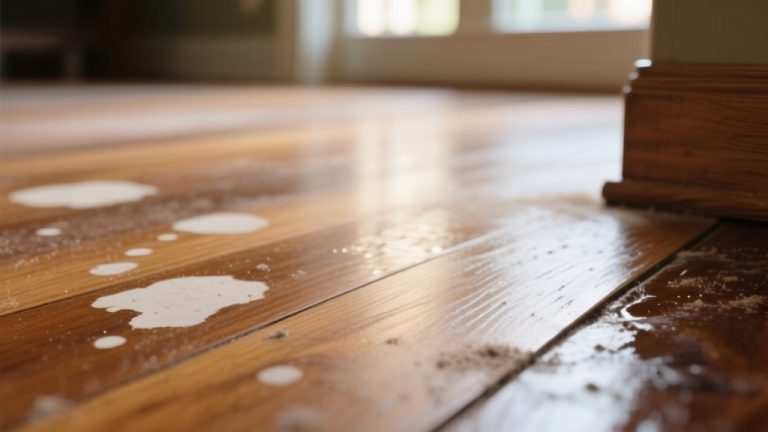
Fresh candle wax is typically soft and pliable, while old wax buildup becomes hardened and thicker. This requires a more careful approach.
Take note of visible haze or slipperiness, which often indicates a wax film left from repeated cleaning product use.
Thicker deposits usually demand a combination of gentle scraping and residue cleaning.
Before proceeding, closely examine the laminate’s wear layer for any damage or sensitivity. This ensures that removal methods won’t worsen the surface.
This precise identification helps you select appropriate tools and cleaning agents, protecting the floor’s integrity during wax removal.
It’s also important to test cleaning solutions in inconspicuous areas to avoid potential damage during the process.
When to Test Your Wax Removal Method on a Hidden Spot?
After identifying the wax type and evaluating your laminate floor’s condition, you should test your chosen removal method on a hidden area before treating a larger section. This prevents unexpected damage or discoloration. Choose a discreet spot like under furniture or in a corner.
Apply the removal technique exactly as planned, then observe the area for changes in color, texture, or finish after drying.
| Test Aspect | What to Look For |
|---|---|
| Surface Integrity | No scratches, dullness, or peeling |
| Color Consistency | No discoloration or fading |
| Residue Removal | Wax is softened or lifted cleanly |
Testing assures your method is safe and effective, preventing costly mistakes on visible floor areas. It is also important to avoid using harsh chemical cleaners during this process to protect your floor’s finish.
How to Safely Remove Hardened Wax From Laminate Floors?
When you encounter hardened wax on your laminate floor, start by allowing it to cool completely to avoid smearing.
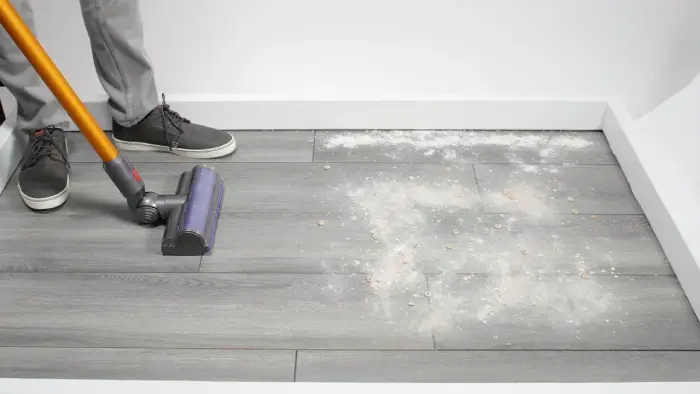
Use a plastic scraper or an old credit card to gently lift the wax, working from the edges inward.
Gently lift wax using a plastic scraper or old credit card, starting from the edges inward.
Avoid metal tools or abrasive materials to prevent scratching the laminate wear layer.
Apply gradual pressure rather than forcing the tool to reduce damage risk.
After lifting the bulk of the wax, check for any remaining residue.
Use a mild cleaning solution, such as a few drops of dish soap diluted in warm water, and a microfiber cloth to remove leftover film.
Dry the area immediately to prevent moisture damage.
Always test your method on a small, hidden section first to make certain it won’t harm your floor’s finish.
Regular cleaning and prompt removal of debris help maintain the floor’s appearance and prevent scratches and damage.
How to Use Heat to Soften Wax for Easier Removal?
Once you’ve removed the bulk of hardened wax using a scraper, some residue may remain stubbornly adhered to the laminate surface.
To soften this wax, use a hair dryer set to low or medium heat. Hold it a few inches above the area, moving it continuously to prevent overheating.
Apply only enough heat to soften the wax without melting it or damaging the laminate’s protective layer. As the wax softens, immediately wipe it away with a clean, dry cloth or paper towel to prevent re-hardening.
Avoid using excessive heat, which can warp or discolor the floor. This controlled heat method facilitates easier removal of wax residues while preserving the laminate’s finish and structural integrity.
For best results, ensure you do not use metal blades for scraping to avoid surface damage and opt for plastic scrapers instead.
How to Clean Wax Residue With Mild Solutions on Laminate Floors?
Although removing the bulk of wax leaves most of the residue gone, a thin film often remains on laminate floors that requires gentle cleaning. To effectively remove this wax residue without damaging the surface, use mild cleaning solutions and follow these steps:
Mix a few drops of mild dish soap or 2 cups vinegar per gallon of warm water.
Dampen a microfiber cloth or mop, avoiding excessive water saturation.
Clean small floor sections, wiping along plank direction to minimize streaks.
Frequently rinse the cloth or mop to prevent wax redeposition.
Immediately dry the cleaned area to protect laminate seams and core from moisture.
This method guarantees safe residue removal while maintaining laminate floor integrity and finish quality. For added protection, consider using rubber feet or pads under furniture to prevent damage and wear on laminate surfaces.
Mistakes to Avoid When Removing Wax From Laminate Floors
Cleaning wax residue with mild solutions helps preserve your laminate floor’s finish. However, improper removal techniques can cause lasting damage.
Using gentle cleaners protects your laminate floor’s finish while harsh methods risk permanent damage.
Avoid using metal scrapers, steel wool, or abrasive pads, as they scratch the protective wear layer. Don’t saturate the floor with water or harsh cleaners; excess moisture seeps into seams and swells the fiberboard core.
Applying excessive heat, such as a hair dryer too close or on high settings, risks warping or discoloring the laminate. Resist sanding or re-waxing; laminate floors aren’t designed for wax, and sanding removes the protective surface.
Always test cleaning methods on a small hidden area first to ensure no adverse reaction. Following these guidelines will prevent damage and maintain your floor’s integrity while effectively removing wax residue. Controlling indoor humidity is also important, as high moisture levels can exacerbate swelling and damage to laminate flooring.
How to Dry and Protect Your Laminate Floor After Cleaning?
Always dry your laminate floor immediately after cleaning to prevent moisture from seeping into seams and damaging the fiberboard core beneath.
Residual water can cause swelling or warping over time, so thorough drying is vital for maintaining floor integrity and appearance.
To effectively dry and protect your floor, follow these steps:
Use a clean, dry microfiber cloth or mop to absorb moisture.
Wipe in the direction of the laminate planks to minimize streaking.
Rinse cleaning tools frequently to avoid redepositing residue.
Avoid saturating the floor with water or cleaning solutions.
Allow the floor to air dry completely before replacing furniture or rugs.
These practices guarantee your laminate floor stays dry, protected, and free from damage after wax removal or any cleaning process.
Because waterproof laminate requires prompt spill cleanup to prevent core swelling and delamination, thorough drying is essential.
Frequently Asked Questions
Can Wax Removal Damage the Laminate Floor Warranty?
Yes, improper wax removal can damage your laminate floor warranty.
If you use abrasive tools, excessive heat, or harsh chemicals, you risk scratching or warping the protective wear layer, which often voids the warranty.
Always follow manufacturer guidelines and use gentle methods like plastic scrapers, mild soap solutions, and controlled heat.
Testing in a small area first helps prevent damage that could lead to warranty denial.
Are Commercial Wax Removers Safe for Laminate Floors?
Commercial wax removers generally aren’t safe for laminate floors because they often contain harsh chemicals or solvents that can damage the protective wear layer.
You should avoid products labeled for hardwood or tile wax removal unless explicitly stated safe for laminate.
Instead, use mild solutions like diluted vinegar or dish soap.
Always test any cleaner in a small, inconspicuous area first to make certain it won’t dull or degrade your laminate’s finish.
How Often Should Laminate Floors Be Cleaned to Prevent Wax Buildup?
You should clean laminate floors at least once a week to prevent wax buildup, especially if you use products that leave residues.
Spot clean spills immediately to avoid hardened wax or sticky films.
Regularly using a damp microfiber mop with a mild detergent or vinegar solution helps maintain the protective finish without adding waxy layers.
Avoid excessive moisture and harsh cleaners, which can damage the surface and encourage buildup over time.
Can Wax Stains Be Removed From Laminate Without Professional Help?
Yes, you can remove wax stains from laminate floors without professional help.
Start by letting wax cool and gently scraping it off with a plastic tool. Use a hair dryer on low heat to soften residue, then wipe it away.
Clean remaining film using a mild soap or vinegar solution with a microfiber cloth. Dry thoroughly to prevent damage.
Avoid harsh tools or excessive heat to protect your floor’s finish throughout the process.
What Should I Do if Wax Removal Causes Discoloration?
If wax removal causes discoloration, you’re not alone. Up to 30% of laminate floors show slight color changes after harsh cleaning.
Immediately stop using any heat or chemical treatments. Rinse the area thoroughly with plain water to remove residues.
Use a specialized laminate floor cleaner designed to restore finish without damage. Test in a hidden spot first.
If discoloration persists, consider consulting a flooring professional to avoid worsening the damage.
Remove Wax Safely and Protect Your Laminate Flooring
Did you know that 85% of laminate floor damage comes from improper cleaning methods?
By carefully identifying your wax type and testing removal techniques on a hidden spot, you protect your floor’s integrity.
Using heat to soften wax and mild solutions to clean residue guarantees effective removal without harm.
Avoid common mistakes, dry thoroughly, and apply a protective layer to maintain your laminate’s finish and durability.
This precise approach keeps your floors looking pristine longer.