What Flooring Looks Good Next to Hardwood? Style Guide
You’ll want flooring that complements your hardwood’s tone and undertone. Warm woods pair beautifully with earthy neutrals, while cool woods suit muted shades.
Choose materials like large-format matte porcelain or natural stone for subtle contrast and durability, especially in moisture-prone areas.
Luxury vinyl and low-pile carpet work well when matched in texture and color temperature.
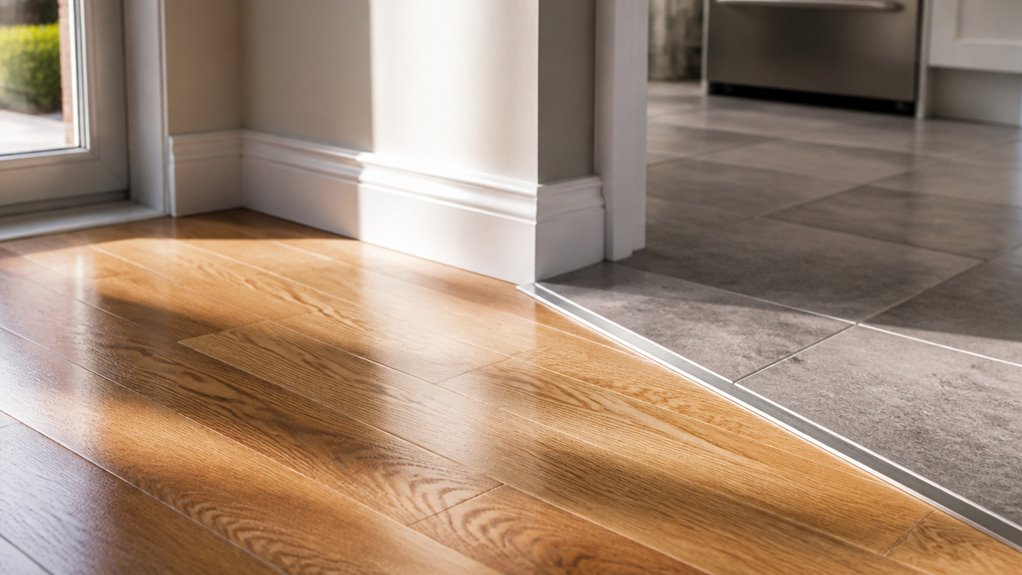
Smooth changes using coordinated grout, transition strips, and matching plank widths refine the flow.
Explore these expert tips to create a seamless, stylish look throughout your space.
Key Takeaways
- Choose complementary flooring tones and undertones to ensure seamless visual flow alongside hardwood.
- Use large-format porcelain, natural stone, or wood-look luxury vinyl for durability and cohesive texture contrast.
- Match grout colors and carpet tones to hardwood undertones for smooth transitions between materials.
- Employ transition strips and moldings to address height differences and create polished flooring connections.
- Opt for low-pile or cut-pile carpets in soft neutrals and subtle patterns to harmonize with hardwood grain.
Choosing Flooring That Works With Hardwood

How do you choose flooring that complements your hardwood without clashing? Start by considering tone and undertone: warm hardwoods pair beautifully with warm neutrals like beige, off-white, or gray.
Consider tone and undertone to seamlessly pair your hardwood with warm neutral flooring options.
Opt for large-format porcelain or natural stone with matte finishes to enhance wood’s warmth without mimicking its grain. Match grout color to the wood’s undertone for subtle cohesion.
Luxury vinyl plank or tile can either gently contrast or blend when you align plank width, tone, and texture thoughtfully. If you prefer carpet, stick with soft neutrals in low-pile styles to avoid competition with the wood’s natural pattern.
In all cases, aim for a clear match or deliberate contrast to maintain an intentional, polished aesthetic throughout your space. When working on hardwood projects, using tools like an 8-inch jointer can help achieve precise edges that complement your flooring choices perfectly.
Smooth Transitions Between Hardwood and Other Floors
When it comes to blending hardwood with other types of flooring, coordinating color temperatures is key. You want everything to feel cohesive, not like a patchwork quilt! Taking the time to match those shades can really make a difference in the overall vibe of your space.
And let’s not forget about height differences. Using the right passage moldings can help create a seamless flow between the floors, making it safe and stylish at the same time. It’s those little details that really elevate your design and keep your flooring transitions looking polished. So, pay attention to all those aspects, and you’ll achieve a beautiful, cohesive look! Choosing carpet colors that reflect the hardwood undertones can further enhance the smooth transition between flooring types.
Coordinating Color Temperatures
When coordinating color temperatures between hardwood and adjacent flooring, it’s essential to consider the undertones in each material to ensure a seamless visual flow.
Matching warm hardwoods with warm, earthy tones or cool hardwoods with cool, muted tones helps avoid jarring contrasts. You want to either match closely or contrast clearly; half-matching looks accidental.
Paying attention to grout colors, carpet tones, or vinyl hues ensures the shift feels intentional and polished. Using the correct transition strips can also help create a smooth visual and physical connection between different flooring types.
| Flooring Type | Warm Undertones | Cool Undertones |
|---|---|---|
| Tile | Beige, stone-look tile | Gray, off-white tile |
| Carpet | Soft neutrals, low-pile | Subtle patterns, cool neutrals |
| Luxury Vinyl | Wood-look LVP, warm hues | Stone-look LVT, cool gray |
| Engineered Wood | Golden oak, cherry hue | Ash, maple tones |
| Natural Stone | Warm, matte textures | Light, neutral stone |
Managing Height Differences
Although hardwood and adjacent flooring materials often differ in thickness, managing height differences is essential for creating smooth, visually appealing shifts. Uneven floors can disrupt flow and draw unwanted attention.
To achieve seamless changes, you’ll want to take into account:
Use reducers or threshold moldings to bridge height gaps gracefully. Opt for flush installations where possible to minimize level changes. Select transition strips that complement both flooring types in color and texture.
Plan for expansion gaps, especially when pairing engineered wood with hardwood. Address moisture-prone areas with moisture-resistant materials to prevent warping and uneven surfaces. When floors are of equal or nearly equal height, T moulding is an ideal choice for creating a clean, safe transition.
Best Neutral Tile Options to Pair With Hardwood
When you’re looking to pair tile with hardwood, warm neutral tones like beige, off-white, and soft gray are fantastic choices. They really create a harmonious blend that highlights the natural beauty of your wood.
Consider using large-format porcelain or stone-look tiles. If you choose grout colors that match the undertones of your wood, it ensures a seamless and elegant transition between surfaces. Plus, it just looks more polished!
Don’t forget to pay attention to the details! Focusing on smooth edges and thoughtful change strips can help maintain a clean and intentional flow between the different surfaces. It makes all the difference in the overall aesthetic!
For a practical and stylish upgrade, consider peel-and-stick vinyl tiles that offer waterproof, scratch-resistant, and easy-to-install options that complement hardwood floors beautifully.
Warm Neutral Tile Choices
Warm neutral tiles like beige, off-white, and gray offer a versatile foundation that complements a wide range of hardwood finishes without creating visual conflict.
Choosing warm undertones in your tile can enhance golden oak, cherry, and other warm hardwoods, creating a cohesive look.
Large-format porcelain tiles provide a clean, modern base ideal for kitchens and bathrooms.
Stone-look tiles add subtle texture without mimicking wood grain.
Matching grout colors to your wood’s undertone further smooths the visual flow.
Consider these points when selecting warm neutral tiles next to hardwood:
- Beige and off-white tiles blend seamlessly with most warm woods.
- Gray tiles offer a subtle contrast without clashing.
- Large-format porcelain creates minimal grout lines for a sleek effect.
- Stone-look tiles add warmth and texture without competing.
- Grout color coordination softens the junction between surfaces.
Additionally, choosing tiles with high slip resistance is important for safety in moisture-prone areas adjacent to hardwood.
Smooth Transition Techniques
To achieve a seamless flow between hardwood and tile, selecting the right neutral tile is key. You want tile shades like beige, off-white, or soft gray that complement your wood’s undertones.
Large-format porcelain or stone-look tiles create clean, elegant shifts without overpowering hardwood’s warmth. Matching grout colors to wood tones further smooths the visual shift.
| Tile Type | Best Use Case |
|---|---|
| Large-Format Porcelain | Kitchens, bathrooms, entryways |
| Stone-Look Tile | Warmth complement without mimicry |
| Natural Stone | Moisture-prone areas, contrast |
Pay attention to grout and tile texture. Matte or lightly textured finishes blend better with hardwood’s matte surface. This ensures a polished, cohesive look throughout your space.
Proper storage practices for adhesives used in tile installation can help maintain strong bonds and prolong the life of your flooring materials.
Natural Stone to Contrast Hardwood Elegantly
Alongside hardwood, natural stone offers a striking contrast that highlights the wood’s grain and warmth without overpowering it.
You’ll find stone especially effective in moisture-prone spaces like bathrooms and entryways, where hardwood isn’t ideal.
Choosing neutral stone tones keeps the overall look cohesive, preventing competition with the wood’s rich texture.
For the best visual harmony, opt for matte or lightly textured stone finishes rather than polished ones.
These finishes blend more naturally with matte hardwood surfaces.
Consider these key points when pairing natural stone with hardwood:
- Use neutral stone colors for a seamless yet bold contrast.
- Select matte or textured stone to complement hardwood’s finish.
- Place stone in high-moisture or connecting areas.
- Match grout undertones with hardwood to smooth transitions.
- Let hardwood remain visually dominant for balanced elegance.
To maintain the appearance and durability of natural stone floors, it’s important to use pH-neutral cleaners and avoid acidic or abrasive products.
Matching Luxury Vinyl Flooring With Hardwood
When you pair luxury vinyl flooring with hardwood, you’ll want to carefully coordinate tone, texture, and plank width to create a harmonious flow between the two surfaces.
Opt for wood-look luxury vinyl plank or tile that closely matches the hardwood’s color temperature and grain texture for seamless continuity. If you prefer contrast, choose neutral or stone-look vinyl that complements without competing, especially in moisture-prone areas like kitchens or laundry rooms.
Pay attention to plank width. Matching or slightly varying widths keeps the juncture intentional. A flush installation or a well-chosen threshold strip enhances the overall aesthetic, preventing visual disruption.
Luxury vinyl’s moisture resistance and low maintenance make it a practical partner to hardwood, marrying durability with style while maintaining elegant visual balance. For the best longevity and scratch protection, consider options with a thick wear layer of 20–40+ mil to ensure superior performance.
Selecting Carpet Colors and Styles for Hardwood Floors
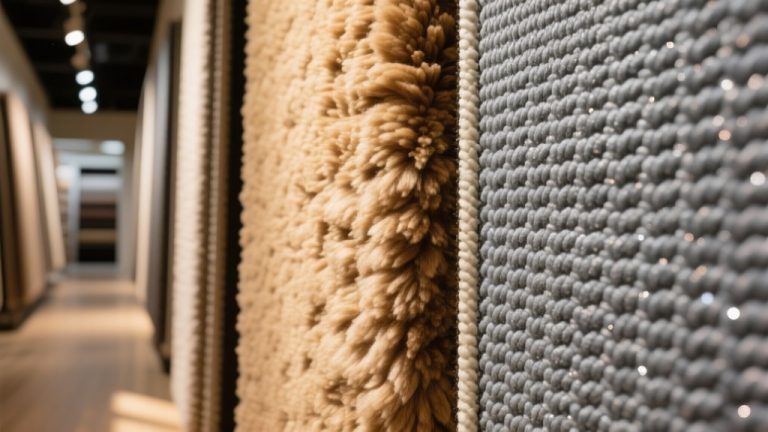
Pairing carpet with hardwood introduces a different kind of texture and warmth that can soften the room’s overall feel.
When selecting carpet colors and styles, aim to complement the wood undertone instead of competing with it.
Soft neutrals provide a seamless shift, while low-pile carpets create a cleaner edge against hardwood.
If you prefer patterns, choose subtle, low-contrast designs that don’t overwhelm the wood grain.
To finish the look professionally, use transition strips where carpet meets hardwood.
Consider these key points:
Match carpet tone to the hardwood’s undertone for harmony.
Opt for soft neutral shades to ensure smooth flow.
Select low-pile or cut-pile for clean edges.
Use subtle patterns if desired, avoiding bold contrasts.
Employ transition strips for polished seams.
For high traffic areas near hardwood, choosing carpets with low pile heights helps maintain durability and ease of maintenance.
Why Engineered Wood Works Well Next to Hardwood?
Because engineered wood closely mimics the look and feel of solid hardwood, it offers a seamless visual flow that enhances your space’s continuity. You’ll appreciate its dimensional stability, making it ideal for areas where moisture or temperature fluctuates.
Matching color temperature, texture, and sheen guarantees engineered wood blends naturally with adjacent hardwood. Its similar expansion behavior simplifies installation shifts, creating a unified aesthetic.
| Feature | Engineered Wood | Solid Hardwood |
|---|---|---|
| Moisture Resistance | Better suited for kitchens, bathrooms | Less moisture-tolerant |
| Appearance | Nearly identical to hardwood | Natural wood grain variation |
| Stability | Dimensionally stable | Can expand/contract more |
| Installation Ease | Easier shift adjacent to hardwood | Requires more careful planning |
Common Mistakes to Avoid When Pairing Floors With Hardwood
Matching engineered wood with hardwood sets a high standard, but missteps can still undermine the overall look. When pairing floors with hardwood, avoid these common mistakes to keep your space cohesive and stylish:
Choosing mismatched undertones that clash rather than complement your hardwood.
Select undertones that harmonize with your hardwood to create a seamless and appealing floor design.
Overlooking threshold strips, which help smooth height differences and visual breaks.
Ignoring the room’s moisture levels; hardwood isn’t ideal for damp areas without proper engineered wood or alternatives.
Selecting floors with competing patterns or textures that distract from hardwood’s natural grain.
Attempting a half-match that looks accidental instead of intentional.
Stay mindful of color temperature, texture, and functional needs to guarantee your flooring choices enhance hardwood’s beauty rather than detract from it.
Frequently Asked Questions
How Do Humidity Levels Affect Hardwood and Adjacent Flooring?
You need to consider humidity because hardwood expands and contracts with moisture changes, which can create gaps or warping.
Adjacent flooring like engineered wood handles humidity better, reducing junction issues.
Materials like tile, stone, or luxury vinyl resist moisture well, protecting your hardwood from damage in damp areas.
To keep everything looking seamless and stable, choose flooring with compatible expansion rates. Use proper threshold moldings to accommodate movement without compromising aesthetics.
Can Underfloor Heating Be Used With Mixed Flooring Types?
Imagine stepping onto a warm floor that seamlessly shifts beneath your feet. Yes, you can use underfloor heating with mixed flooring types, but you’ve got to be cautious.
Some materials, like engineered wood and tile, handle heat well, while solid hardwood needs careful monitoring to avoid warping. Matching compatible floors and installing precise insulation guarantees even warmth and preserves beauty.
This makes your space both cozy and stunning without risking damage.
What Maintenance Differences Exist Between Hardwood and Other Flooring?
You’ll notice hardwood needs gentle care. Regular sweeping, occasional refinishing, and protection from moisture keep its warmth.
Tile and natural stone, however, handle water easily and require only mopping and grout cleaning. Luxury vinyl demands minimal effort, just sweeping and damp mopping.
Engineered wood shares hardwood’s care but resists moisture better. Carpet needs vacuuming and periodic deep cleaning.
Each flooring’s upkeep reflects its material, so plan maintenance based on your lifestyle and space.
Are There Eco-Friendly Flooring Options That Complement Hardwood?
You can choose bamboo or cork flooring as eco-friendly options that complement hardwood beautifully.
Bamboo offers a warm, natural look with a similar grain texture, creating harmony in your space.
Cork provides softness and subtle patterns, pairing well with wood’s warmth.
Both are renewable, sustainable, and low in VOCs.
When selecting, match tones thoughtfully and use smooth junctions to maintain an elegant, cohesive flow between floors.
How Does Natural Light Impact Flooring Color Coordination?
Light is the painter’s brush, shaping how you see colors. Natural light brightens flooring tones, making warm woods feel richer and cool tiles appear crisper.
When coordinating floors, consider how sunlight changes throughout the day. Morning light softens hues, while afternoon sun intensifies them.
You’ll want flooring colors that complement both bright and shaded areas. This ensures harmony and balance without overwhelming your space’s natural glow.
What Flooring Looks Good Next to Hardwood? Final Tips
When pairing flooring with hardwood, remember that 85% of homeowners prefer smooth progressions to maintain visual flow. You’ll want to choose materials and colors that complement hardwood’s natural warmth without overwhelming it.
Whether you opt for neutral tile, natural stone, or luxury vinyl, attention to detail guarantees your floors look cohesive and elegant. Avoid common mistakes like mismatched tones, and you’ll create a stunning, harmonious space that highlights the beauty of your hardwood floors.