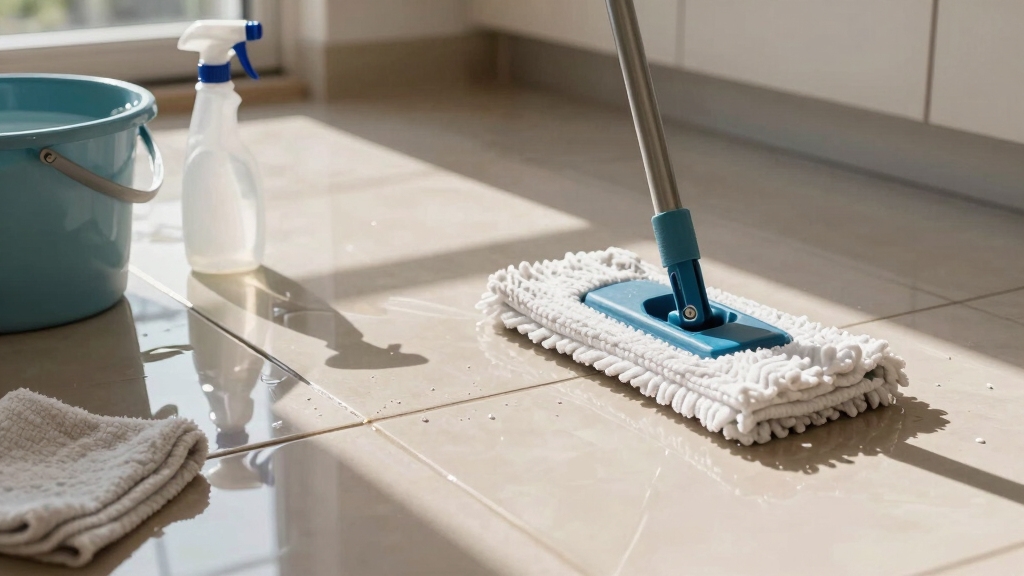
Whats the Best Way to Clean Tile Floors: Sparkle Every Step
You’ll get the best results by first sweeping or vacuuming all loose dirt, focusing on corners and edges. Use a damp microfiber mop with warm water to clean efficiently without excess moisture.
Choose cleaners suited to your tile type: pH-neutral for natural stone and mild detergents for porcelain. Avoid abrasives and harsh chemicals to protect grout and tiles.
Dry floors quickly to prevent streaks and mold. For a deeper understanding, explore tailored cleaning and grout care techniques next.
Key Takeaways
- Sweep or vacuum floors thoroughly, focusing on corners and edges before mopping to remove loose dirt and debris.
- Use a damp microfiber mop with warm water and avoid soaking floors to prevent water spots and streaking.
- Choose cleaners based on tile type: pH-neutral detergent for natural stone, diluted vinegar for ceramic, and mild soap for vinyl or laminate.
- Clean grout with baking soda paste or hydrogen peroxide solution, scrubbing with appropriate brushes and ensuring grout dries fully.
- Use quality tools like steam mops, microfiber mops, and crevice nozzles for effective, damage-free tile floor maintenance.
Daily Habits to Keep Your Tile Floors Sparkling

Consistently maintaining your tile floors with daily habits substantially extends their cleanliness and shine.
Start by sweeping or vacuuming the entire floor to remove loose dirt and debris. Focus on corners, baseboards, and under cabinets using a crevice nozzle.
Begin with sweeping or vacuuming, paying close attention to corners, baseboards, and under cabinets for thorough dirt removal.
Regularly sweeping prevents dirt from embedding into the tile or grout. Follow up with a damp microfiber mop using warm water; microfiber removes 99% of bacteria with water alone.
Use a spin mop with a foot pedal to control moisture, avoiding water spots. After mopping, wipe the floor dry to prevent streaking, especially on coated tiles.
Quick vacuuming before mopping further enhances gloss and maintains tile appearance. These precise daily steps keep your tile floors sparkling and prolong their lifespan effectively. It is important to use a soft-bristled brush attachment when vacuuming to avoid damaging the floor surface.
How to Get Your Tile Floors Ready for Cleaning?
After establishing daily habits to keep your tile floors sparkling, the next step is preparing them properly before a thorough cleaning.
Begin by sweeping or vacuuming the entire floor, focusing on corners, baseboards, and under cabinets to remove dust and debris. Use a vacuum with a brush attachment or HEPA-filtered stick vacuum for best results.
This prevents dirt from embedding in the grout or tile surface. Clear the area of furniture and rugs to access all spots.
Using a vacuum cleaner designed for floors can help remove fine dust and debris without causing damage.
| Action | Emotion | Result |
|---|---|---|
| Sweep/vacuum | Relief | Dirt-free surface |
| Target corners | Satisfaction | Deep clean start |
| Remove furniture | Control | Easy access |
| Prepare tools | Confidence | Efficient cleaning |
Picking the Right Cleaners for Your Tile Floors
Choose your cleaning solutions carefully to protect your tile floors while achieving peak cleanliness. Using the right cleaner guarantees you don’t damage the tiles or grout and maintains their appearance longer. For most tile floors, opt for gentle, effective formulas tailored to your tile type.
Consider these options:
- White vinegar diluted with water for odor removal on ceramic tiles.
- Baking soda paste for grout stain treatment.
- pH-neutral detergent for natural stone to avoid etching.
- A mix of washing soda, vinegar, and dish soap for tough grime.
- Avoid acidic or abrasive cleaners on glazed or natural stone tiles.
Test any solution in a small, inconspicuous area first. This methodical approach keeps your tile floors clean and protected without unnecessary wear. Additionally, always avoid acidic or ammonia-based cleaners to prevent grout discoloration and deterioration.
Cleaning Different Types of Tile the Right Way
Knowing which cleaning solutions suit your tile type helps you safeguard your floors effectively.
For ceramic tiles, use a steam mop with demineralized water to sanitize without damaging the glaze. Avoid abrasive tools or acidic cleaners that can dull the surface.
Use a steam mop with demineralized water for ceramic tiles, avoiding abrasives and acidic cleaners to protect the glaze.
Natural stone tiles require a gentler approach: damp mop in small sections with microfiber and a pH-neutral detergent. Steam mop slowly over natural stone, making multiple passes to loosen grime without etching.
Porcelain tiles tolerate steam mops and mild detergents but steer clear of harsh chemicals.
Vinyl or laminate tile floors respond well to a damp microfiber mop with warm water and mild soap. Always avoid soaking any tile floor; controlled moisture prevents water damage and streaking.
Tailoring your cleaning method to your tile type guarantees long-lasting beauty and durability. For vinyl floors specifically, it is crucial to use pH-neutral cleaners designed to avoid surface damage and residue buildup.
How to Clean and Maintain Tile Floor Grout?
To keep your tile floor grout looking fresh, start by mixing up a baking soda paste. Just apply it to the grout and let it sit for a bit.
After that, grab a stiff nylon brush and give it a good scrub. Trust me, this really helps!
Now, for the long haul, it’s super important to regularly maintain your grout. Using gentle cleaning solutions and doing a quick dry mop can really make a difference.
This little routine helps prevent dirt buildup and those pesky stains.
If you stay on top of it, you’ll find that your grout stays bright and your tile floors last longer. So, make it a habit, and your floors will thank you!
Also, avoid using abrasive cleaners to prevent damage to your grout and tile surfaces.
Effective Grout Cleaning Methods
Although grout can quickly accumulate dirt and stains, you can effectively restore its appearance using targeted cleaning techniques.
Start by applying a baking soda paste, mixing it with water until it’s spreadable but not runny. Let it sit overnight.
Then, scrub the grout with a stiff-bristled nylon brush for ceramic tiles or a softer brush for natural stone to avoid damage.
For stubborn stains, use a hydrogen peroxide and water solution applied with a toothbrush or a grout brush.
After scrubbing, rinse thoroughly with water and dry with a microfiber cloth to prevent moisture buildup.
Because excessive moisture can lead to issues like efflorescence on porous materials, it’s important to ensure grout is fully dried after cleaning to prevent salt deposits.
Grout Maintenance Tips
Maintaining grout after a thorough cleaning helps preserve the appearance and longevity of your tile floors. To keep grout in top condition, mop damp regularly with warm water and a microfiber mop to prevent dirt buildup.
Avoid sponge mops, which can grind dirt into grout. For ongoing upkeep, wipe grout lines dry to prevent moisture damage and staining. When you notice grime, apply a baking soda paste, let it sit, then scrub with a nylon grout brush, soft for natural stone and stiff for ceramic.
Rinse thoroughly with a spray mop afterward. Regularly vacuum or sweep to remove debris that can embed in grout. Following these steps methodically guarantees your grout stays clean, durable, and looking fresh without harsh chemicals or excessive effort.
Using natural cleaning solutions like diluted vinegar or baking soda mixes can also help maintain grout safely and effectively.
Tile Cleaning Tools and Equipment
To clean tile floors effectively, you’ll want to gather a few essential tools. Think of a steam mop, a microfiber mop, and a sturdy deck brush as your cleaning squad. Each tool has its unique job, so using them correctly is key.
For instance, when you’re using the steam mop, take your time. Glide it slowly over the floor for multiple passes to really tackle that grime. And just a heads up: skip the sponge mops. They tend to push dirty water right into the grout, which is definitely not what you want.
Using the right equipment not only makes your cleaning easier but also ensures that you’re not damaging your tiles or grout. So, gear up and get ready for some sparkling floors! Proper air circulation during and after cleaning helps prevent localized moisture pockets that can cause mold growth on grout lines.
Essential Cleaning Tools
When tackling tile floor cleaning, having the right tools makes all the difference in efficiency and results. You want equipment that effectively loosens grime without damaging your tiles or grout. Choosing quality tools guarantees thorough cleaning and easier maintenance.
Here are essential tools you’ll need:
- Steam mop: Moves slowly to loosen dirt and sanitize.
- Deck brush: Works well with multi-surface cleaner in manageable sections.
- Spray mop: Rinses floors after scrubbing without excess water.
- Microfiber cloth or dry mop: Absorbs remaining moisture to prevent streaks.
- Avoid sponge mops: They grind dirty water into grout, causing buildup.
Using these tools properly will help keep your tile floors pristine and extend their lifespan. For enhanced cleaning, consider a vacuum mop with dual suction modes to efficiently remove debris before mopping.
Equipment Usage Tips
Having the right tools is just the start; knowing how to use them effectively determines the quality of your tile floor cleaning. Glide your steam mop slowly, making multiple passes to loosen grime and bacteria thoroughly.
Use a deck brush with a multi-surface cleaner in manageable 4-foot sections, guaranteeing you scrub evenly without missing spots. Avoid sponge mops, which push dirty water into grout.
Opt for microfiber mops dampened—not soaked—to control moisture and prevent streaking. After scrubbing, rinse with a spray mop, then absorb excess moisture using a microfiber cloth or dry mop.
Target corners and edges with crevice nozzles or grout brushes to reach tight spaces. Following these equipment usage tips guarantees a deeper, more effective clean on your tile floors.
For outdoor tile areas, consider using brooms with stiff synthetic bristles that can handle rough surfaces and reduce back strain through ergonomic handle designs.
Frequently Asked Questions
Can Tile Floors Be Cleaned With Steam Mops Daily Without Damage?
Yes, you can clean ceramic tile floors daily with a steam mop without damage if you use demineralized water and glide the mop slowly.
For natural stone tiles, steam mopping daily isn’t ideal. You should proceed slowly and avoid excessive moisture to prevent etching.
Always keep the mop damp, not soaked, and avoid abrasive tools. Regular, careful steam cleaning helps sanitize and maintain your tile floor’s appearance effectively.
How Do I Prevent Mold Growth on Tile Grout?
To prevent mold growth on tile grout, you need to keep the area dry and clean.
Mop with a damp microfiber mop, then always wipe grout lines dry.
Use a baking soda paste or hydrogen peroxide solution weekly to disinfect grout.
Make sure proper ventilation in moist rooms to reduce humidity.
Avoid letting water pool, and clean spills immediately.
Regularly scrub grout with a nylon brush to remove buildup, which stops mold from taking hold.
Are There Eco-Friendly Tile Floor Cleaning Alternatives?
You can use eco-friendly alternatives like a mixture of white vinegar and water for odor elimination and general cleaning.
Baking soda paste effectively cleans grout without harsh chemicals.
For natural stone tiles, stick to warm water with pH-neutral detergent to avoid damage.
Microfiber mops remove 99% of bacteria with just water, reducing chemical use.
These methods keep your tile floors clean while protecting the environment and your indoor air quality.
What Is the Best Way to Remove Tough Stains From Tile?
When tough stains scream at you like they own the floor, you’ve got to fight back smartly. Start by slathering baking soda paste on grout or stains and let it sit overnight.
Then, scrub firmly with a nylon brush: soft for stone, stiff for ceramic. Follow with hydrogen peroxide mix for stubborn spots.
Finish by rinsing well and drying. This method tackles the nastiest stains without damaging your tile’s shine or surface.
How Often Should Tile Floors Be Professionally Sealed?
You should have your tile floors professionally sealed every 1 to 3 years, depending on foot traffic and tile type.
High-traffic areas may require sealing closer to yearly, while less-used spaces can extend to three years.
Regular sealing protects grout and tiles from stains and moisture damage.
Keep an eye out for dullness or water absorption; these signs indicate it’s time to reseal, maintaining your floor’s durability and appearance.
Shine Smarter: The Simple Secrets to Flawless Tile Floors
If you want your tile floors to shine brighter than a diamond under the sun, stick to daily habits and choose the right cleaners carefully. Preparing your floors properly and using the right tools will make cleaning a breeze, not a chore.
Don’t forget to tackle grout with care; it can transform your entire space. Follow these steps methodically, and you’ll maintain floors so spotless that guests will think you’ve hired a professional every single day.