Beach House Flooring Ideas That Resist Moisture
For your beach house, choose flooring that balances durability, moisture resistance, and coastal beauty.
Luxury vinyl plank or engineered hardwood with enhanced moisture barriers deliver authentic warmth while standing up to sand, salt, and humidity.
Porcelain tile and stone floors offer waterproof strength and slip resistance, perfect for wet areas.
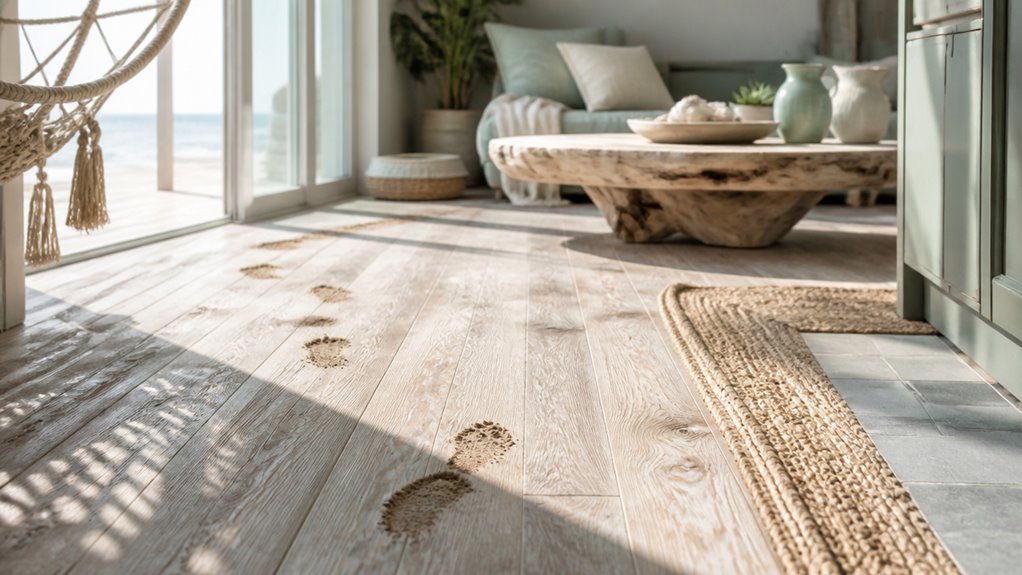
Opt for wide-plank, matte finishes in light, sandy hues to soften wear and glare.
Explore how these materials meet room-specific needs and create smooth indoor-outdoor flow for your coastal retreat.
Key Takeaways
- Choose water-resistant flooring like luxury vinyl plank or porcelain tile to handle moisture and sand common in beach environments.
- Opt for light, sandy tones with matte finishes to reflect sunlight, minimize glare, and conceal scratches and sand accumulation.
- Use wider planks or large tiles to reduce seams where sand can collect and simplify cleaning and maintenance.
- Prioritize textured or matte surfaces with high slip resistance to improve safety on wet floors and hide wear from sand abrasion.
- Incorporate durable rugs and protective coatings to prolong flooring lifespan and protect against sea salt, sand, and humidity.
Choosing the Best Flooring Materials for Coastal Homes

When selecting flooring for your coastal home, you need materials that combine durability with moisture resistance to withstand the unique challenges of sandy, humid environments.
Luxury Vinyl Plank (LVP) stands out for its water resistance and ability to handle sand infiltration without damage.
Luxury Vinyl Plank excels in water resistance and durability against sand infiltration.
Porcelain and ceramic tiles offer inherent waterproofing, perfect for entryways and wet areas.
Engineered hardwood delivers the authentic look of wood with better moisture tolerance than solid varieties.
If you prefer a sleek, modern aesthetic, concrete or stone flooring tolerates high humidity and heavy foot traffic effortlessly.
For an eco-friendly option, natural bamboo flooring adapts well to coastal climates, balancing durability with environmental responsibility.
Choosing the right material guarantees your floors remain beautiful and functional amidst coastal conditions.
Additionally, engineered hardwood can be refinished multiple times, extending its lifespan and maintaining its aesthetic appeal over the years.
Durability Features That Protect Floors From Sand and Salt
When choosing flooring that can handle sand and salt, you definitely want to go for options with waterproof core materials like SPC or WPC. These materials are great for dealing with constant moisture and the effects of salt exposure.
Another thing to keep in mind is the wear layer. Look for scratch-resistant options, ideally 12 mil or thicker. This really helps protect your floors from those pesky abrasive sand particles.
And let’s not forget about safety! High slip resistance is important, especially on wet surfaces. You want to make sure your flooring is safe without compromising on style.
For the best long-term performance, verify the manufacturer specifications and moisture-resistance ratings before making a purchase.
Waterproof Core Materials
Waterproof core materials play a crucial role in safeguarding beach house floors from the relentless wear caused by sand and salt.
When you choose flooring with a durable, water-resistant core, you protect your investment from moisture infiltration and corrosion.
This is essential in coastal environments where humidity and salt exposure are constant challenges.
Materials like Stone Plastic Composite (SPC) and Wood Plastic Composite (WPC) deliver unmatched waterproofing and dimensional stability, preventing warping or swelling.
These cores also enhance the longevity of luxury vinyl plank and engineered hardwood floors, making them ideal for beach houses.
Key features worth noting include:
- Stone Plastic Composite (SPC) cores for rigidity and water resistance
- Wood Plastic Composite (WPC) cores for added comfort and moisture protection
- Engineered hardwood with enhanced moisture barriers
- Porcelain tile’s natural waterproof properties
- Concrete or stone floors’ inherent durability in humid conditions
Additionally, SPC flooring’s high moisture resistance and durability against scratches make it especially suitable for high-traffic and moisture-prone beach house areas.
Scratch-Resistant Wear Layers
Protecting your beach house floors from the abrasive effects of sand and salt requires investing in scratch-resistant wear layers designed for durability.
These wear layers, typically 12 mil or thicker, act as a robust shield, preventing grit from marring your flooring’s surface.
Materials like luxury vinyl plank benefit from this added protection, ensuring the floor withstands heavy foot traffic and the constant presence of coarse sand.
Opt for finishes with subtle texture or matte qualities to help disguise minor scratches and maintain aesthetic appeal.
By prioritizing these durable wear layers, you enhance your floor’s longevity and preserve its coastal charm, all while minimizing maintenance.
This thoughtful layer not only safeguards against physical damage but also supports the overall resilience essential for beachside living.
For the best results in high-moisture environments, consider flooring with premium wear layers and ceramic reinforcement for enhanced durability.
High Slip Resistance
Slip resistance plays an essential role in maintaining safety and preserving your beach house floors amid constant exposure to sand and moisture. You want flooring that guards against slips while withstanding abrasive salt and grit.
Choose materials with strong COF (Coefficient of Friction) ratings and textured surfaces that hide sand without sacrificing style. Consider finishes that balance elegance and grip, ensuring every step feels secure.
Key features to look for include:
- High slip resistance tiles with textured or matte finishes
- Luxury vinyl plank with Stone Plastic Composite cores for durability
- Porcelain or ceramic tiles offering waterproof, anti-slip surfaces
- Brushed or embossed textures that disguise sand accumulation
- Thicker wear layers that protect against abrasion from salt and grit
These elements help keep your floors safe, durable, and visually appealing in coastal environments. Additionally, vinyl flooring’s superior moisture resilience makes it an excellent choice for beach houses constantly exposed to moisture and humidity.
Color Palettes and Finishes to Enhance Coastal Flooring
When choosing color palettes and finishes for your coastal flooring, you want to focus on tones and textures that complement the natural surroundings.
Opt for light hues like sandy beige, driftwood gray, or whitewashed oak to reflect sunlight and create openness.
Choose light tones like sandy beige and driftwood gray to brighten spaces and enhance coastal openness.
Warm neutrals such as sun-bleached pine add an inviting atmosphere, while soft, sandy palettes evoke authentic coastal vibes.
Matte finishes work best as they minimize glare, hide scratches, and reduce slip risks on wet floors.
Consider larger planks or tiles to reduce seams where sand can accumulate.
This thoughtful combination of color and finish will elevate your beach house’s coastal charm while ensuring practical durability suited to seaside living.
Additionally, selecting matte finishes helps hide imperfections and suits the lifestyle demands typical of coastal homes.
Year-Round Maintenance for Beach House Floors
Although beach house floors face unique challenges from sand, salt, and moisture, maintaining their beauty and functionality year-round is entirely achievable with consistent care.
You’ll want to establish a routine that protects your flooring materials from coastal wear and tear while preserving their aesthetic appeal.
Prioritize immediate salt removal and frequent cleaning to prevent corrosion and grit damage. Using strategically placed rugs can reduce direct exposure to harsh elements. Also, renewing protective topcoats keeps surfaces resilient against moisture and chemical stress.
- Vacuum and wipe floors regularly to remove sand and salt deposits.
- Remove sea salt immediately to avoid corrosion and staining.
- Place durable rugs at entrances to minimize direct floor contact.
- Reapply protective coatings periodically for moisture resistance.
- Follow manufacturer care guidelines to extend flooring lifespan.
- Maintain indoor humidity between 35-55% to prevent wood expansion and contraction that can damage floors.
Picking Flooring by Room: What Works Where
When you’re picking flooring for your beach house, it’s super important to think about what each room is all about. For your living areas, you’ll want something durable but still inviting, right? Luxury vinyl plank is a great choice—it gives off that seamless, airy vibe that fits perfectly with beach life.
Now, when it comes to wet rooms, you definitely need to prioritize waterproof options. Tiles that can handle moisture without any fuss are a must. You don’t want to worry about water damage in places like the bathroom or laundry room!
And let’s not forget about the bedrooms. Here, engineered hardwood works wonders. It offers that warm, polished look while still being practical for a coastal setting. You’ll have a cozy retreat that feels stylish and right at home by the beach!
Because engineered hardwood is made from a real wood veneer over plywood, it provides an authentic wood appearance that enhances home aesthetics.
Living Areas Flooring
Choosing the right flooring for your living areas sets the foundation for both style and functionality in a beach house. You’ll want materials that balance durability with coastal aesthetics, handling humidity and sand while creating an inviting atmosphere.
Opt for light, warm tones like sandy beige or driftwood gray to reflect natural light and enhance openness. Flooring with a matte finish minimizes slip risks and camouflages wear from grit.
Consider seamless, wide planks that reduce seams where sand can accumulate, simplifying maintenance.
Luxury vinyl plank (LVP) offers water resistance and durability against beach elements.
Engineered hardwood adds warmth with moisture-resistant properties.
Soft, sandy color palettes create authentic coastal vibes.
Textured surfaces help disguise sand and enhance grip.
Area rugs soften spaces and protect flooring in high-traffic zones.
For living areas prone to moisture and heavy foot traffic, glue-down LVP installation can provide superior stability and durability.
Wet Room Materials
Since wet rooms face constant exposure to moisture and heavy foot traffic, selecting flooring that combines water resistance with durability is essential for your beach house.
Porcelain and ceramic tiles stand out with inherent waterproofing and high slip resistance, making them perfect for bathrooms and laundry areas.
Luxury vinyl plank (LVP) offers excellent water resistance and a durable wear layer, ideal for handling sand and grit.
Concrete or stone flooring brings a sleek, modern aesthetic while tolerating humidity and foot traffic effortlessly.
Choose light, sandy tones with matte or textured finishes to minimize slip risks and conceal wear.
Prioritize materials with minimal seams to reduce sand accumulation, ensuring your wet room flooring remains both functional and visually appealing in your coastal retreat.
For areas prone to moisture, it is also wise to consider finishes that naturally resist damage and require low maintenance, such as stained finishes that adapt well to humid environments.
Bedroom Floor Choices
Create a serene and polished retreat by selecting bedroom flooring that balances comfort, style, and practicality.
Engineered hardwood stands out as an ideal choice, offering real wood aesthetics with enhanced moisture resistance, perfect for coastal climates.
Its warm, neutral tones help craft a calming atmosphere reminiscent of sun-bleached pine or driftwood.
You’ll want flooring that feels soft underfoot yet endures humidity and sand intrusion.
Consider these key factors when choosing bedroom floors:
- Opt for wider planks to minimize seams where sand can accumulate.
- Choose matte finishes to reduce slip risks and hide wear.
- Prioritize waterproof or moisture-resistant materials.
- Incorporate textured surfaces to disguise sand and grit.
- Use area rugs to add warmth and protect high-traffic zones.
This thoughtful selection guarantees your bedroom stays inviting, durable, and true to coastal elegance.
Designing Seamless Indoor-Outdoor Flooring Transitions
When blending indoor and outdoor spaces in a beach house, seamless flooring shifts play an essential role in enhancing flow and visual cohesion.
You want materials that visually connect both areas while standing up to coastal elements. Opt for similar color palettes and textures, like sandy beiges or driftwood grays, to unify spaces.
Wide-plank luxury vinyl plank (LVP) or porcelain tiles with matte finishes work well for smooth transitions and durability. Minimizing grout lines and using slip-resistant surfaces guarantees safety and ease of maintenance.
| Flooring Type | Best Location | Key Benefit |
|---|---|---|
| Luxury Vinyl Plank | Living room to deck | Water-resistant, seamless |
| Porcelain Tile | Entryway to patio | Durable, slip-resistant |
| Engineered Hardwood | Indoor living spaces | Moisture-resistant, aesthetic |
Adding Texture and Warmth to Coastal Flooring With Accents
Bringing texture and warmth to your coastal flooring enhances both comfort and visual appeal, complementing the seamless indoor-outdoor flow you’ve established.
Adding texture and warmth to coastal floors boosts comfort and highlights your smooth indoor-outdoor connection.
Accents like natural fibers and layered textiles create inviting spaces that feel connected to the shore.
You want to balance durability with softness to protect floors while adding depth.
Consider mixing materials and finishes that echo coastal elements for authenticity and charm.
Incorporate jute or sisal rugs to introduce organic texture without overwhelming your flooring.
Use driftwood or bamboo furniture to harmonize with natural floor tones.
Layer soft, sun-bleached throw blankets or pillows nearby to add warmth.
Select matte-finish area rugs to reduce slip risk and hide sand.
Add wicker baskets or decorative accents for tactile interest and storage.
These touches enrich your beach house floor’s aesthetic and function beautifully.
Frequently Asked Questions
How Do Flooring Choices Impact Indoor Air Quality in Coastal Homes?
Your flooring choices directly affect indoor air quality by influencing dust, mold, and allergen levels in coastal homes.
Opting for waterproof, low-VOC materials like luxury vinyl plank or engineered hardwood minimizes moisture buildup and chemical off-gassing.
Matte finishes and textured surfaces reduce dust accumulation and trap less sand.
Regular cleaning and durable, sealed flooring prevent mold growth, ensuring fresh, healthy air.
Choosing wisely means you maintain a cleaner, safer coastal living environment.
What Is the Average Lifespan of Coastal Flooring Materials?
You’ll find that luxury vinyl plank flooring typically lasts 20 to 30 years, thanks to its robust wear layer and water resistance.
Porcelain tiles can endure 50 years or more with proper care, maintaining their sleek look despite humidity.
Engineered hardwood generally lasts 25 years but needs maintenance to retain moisture resistance.
Concrete and stone floors easily surpass 40 years, combining durability with style, making your coastal home both beautiful and long-lasting.
Are There Eco-Friendly Flooring Options for Beach Houses?
Yes, you can choose eco-friendly flooring for your beach house.
Natural bamboo flooring is an excellent option.
It’s sustainable, grows quickly, and handles coastal humidity well.
Engineered hardwood offers real wood aesthetics with better moisture resistance.
It reduces waste compared to solid wood.
Look for products with recycled content or low-VOC finishes to guarantee indoor air quality.
These choices combine environmental responsibility with durability and coastal style, keeping your home green and beautiful.
How Does Salt Air Affect Floor Adhesives and Installation?
Imagine your floor adhesive as a shield constantly battling invisible salt warriors.
Salt air accelerates adhesive breakdown by attracting moisture and causing corrosion.
This compromises bond strength over time.
You’ll need specialized, marine-grade adhesives designed to resist salty, humid conditions to guarantee lasting installation.
Without these, even the best floors risk loosening, much like a fortress crumbling when its walls are eroded by relentless ocean tides.
Can Radiant Floor Heating Be Used With Coastal Flooring Materials?
Yes, you can use radiant floor heating with many coastal flooring materials, but you’ll want to choose those that handle heat and moisture well.
Luxury vinyl plank, engineered hardwood, and porcelain tiles work beautifully with radiant heat systems, providing warmth without compromising durability.
Just make sure the flooring has proper waterproof construction and follows manufacturer guidelines for installation over heated subfloors. This way, you maintain both comfort and long-lasting performance in your coastal home.
Find the Right Flooring for Sand, Salt, and Style
Choosing the right flooring for your beach house is like crafting a seamless breeze that flows through every room.
By focusing on durable materials, coastal-inspired colors, and practical maintenance, you’ll protect your floors from sand and salt while enhancing your home’s natural beauty.
Thoughtful room-by-room choices and smooth indoor-outdoor passages complete the look, letting you enjoy a stylish, warm, and inviting space all year long.