Stair Nose vs Stair Tread: Key Differences Explained
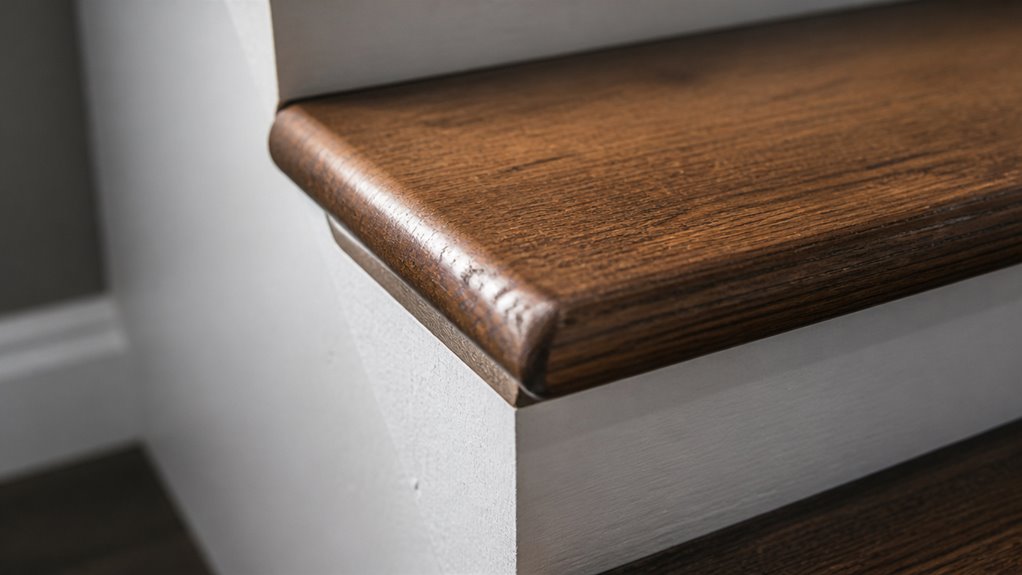
You use a stair tread as the full horizontal surface where your foot lands on each step. The stair nose is the front edge that extends beyond the riser, improving safety and visibility.
The nose isn’t a separate walking surface but enhances footing and reduces wear. Building codes set specific depth and overhang requirements for both.
Choosing appropriately and installing them correctly guarantees durability and compliance. Explore how material choices and safety features impact your stair design next.
Key Takeaways
- Stair tread is the full horizontal surface of a step, while the stair nose is the front edge projecting beyond the riser.
- The tread supports foot traffic load; the nose improves step visibility, safety, and provides an overhang.
- Noses are part of the tread assembly and not considered separate walking surfaces.
- Building codes specify minimum tread depth and nosing overhang dimensions to ensure safety and durability.
- Use full treads for worn steps; apply noses when only the front edge needs finishing or protection.
Stair Nose vs Stair Tread: Key Differences in Function, Safety, Installation, and Durability
| Comparison Factors | Stair Nose | Stair Tread |
|---|---|---|
| Primary Definition | Front leading edge of a stair tread | Horizontal surface of a stair step |
| Main Purpose | Defines and protects the step edge | Provides the main walking surface |
| Position on Staircase | At the front edge of each step | Across the horizontal step surface |
| Coverage Area | Front edge only | Full stepping area |
| Structural Function | Forms part of the tread assembly or an added edge profile | Supports foot traffic when part of the structural stair |
| Overhang Feature | May project beyond the riser | Provides the main tread depth |
| Walking Surface | Leading edge of the walking area, not a separate full tread | Primary foot placement area |
| Safety Benefits | Improves edge visibility and may enhance grip | Provides stable footing across the step |
| Slip Resistance | May include textured or contrasting nosing | May incorporate slip-resistant finishes or coverings |
| Wear Protection | Protects the high-traffic front edge | Provides the main wear surface |
| Common Materials | Hardwood, aluminum, vinyl, and compatible trim materials | Wood, carpet, vinyl, and other stair surface materials |
| Installation Method | Attached or integrated at the tread edge | Installed as the step surface or replacement covering |
| Building Code Considerations | Nosing projection and profile requirements | Tread depth and dimensional consistency requirements |
| Maintenance Requirements | Inspect for looseness, edge damage, and wear | Inspect for surface damage, movement, and deterioration |
| Replacement Considerations | Suitable when only a compatible edge detail needs attention | Suitable when the full step surface requires replacement or refinishing |
| Common Applications | Stair edges, flooring transitions, and edge finishing | Residential, commercial, and interior stair surfaces |
| Overall Recommendation | Choose for suitable step-edge protection and finishing | Choose for complete step coverage and structural support where applicable |
Difference Between Stair Nose and Stair Tread

While both stair noses and stair treads are essential components of stair construction, they serve distinct functions and occupy different physical areas of the step.
The stair tread is the full horizontal surface you stand on, spanning the entire step from side to side and front to back.
In contrast, the stair nose is the leading edge of the tread that projects beyond the riser below, forming an overhang. This nose is part of the tread assembly, not a separate walking surface.
You’ll find that the tread carries the main load of foot traffic, while the nose enhances step visibility and safety by providing a defined edge.
Understanding this physical and functional difference is vital when selecting or installing these components for durability and user safety. For optimal performance and safety, stair treads typically require a minimum thickness of 1 inch or more to ensure durability and resistance to wear.
Building Code Requirements for Stair Noses and Treads
When designing or renovating stairs, you must adhere to specific building code requirements that define the dimensions and features of stair treads and noses.
These codes guarantee safety, uniformity, and accessibility in stair construction. For instance, stair treads generally must have a minimum depth of 10 inches measured from nosing to nosing.
Stair noses need to project beyond the riser within a regulated overhang range. Compliance helps prevent trips and improves step visibility.
Key building code requirements include:
- Nosing depth shouldn’t exceed 4 inches.
- Minimum nosing overhang ranges from 3/4 inch to 1 1/4 inches.
- Tread depth must be at least 10 inches, sometimes 11 inches if no nosing is used.
- Nosing must provide a distinguishable edge for safety.
- Codes vary slightly between residential and commercial applications.
Additionally, using T moulding can help create a smooth, safe transition between stair flooring materials while protecting edges and reducing tripping hazards.
Choosing Between Stair Treads and Stair Noses
Deciding between stair treads and stair noses hinges on the condition and finishing needs of your stairs. If the entire step surface is worn or unfinished, you’ll want full stair treads for thorough coverage. However, if the tread surface remains intact and only the front edge requires finishing or protection, stair noses are your best choice.
Matching your selection to the stair’s state prevents installation issues and maintains a clean, professional look. Additionally, properly sealing the cut edges and using factory-applied finishes can greatly enhance durability and appearance.
| Feature | Stair Tread | Stair Nose |
|---|---|---|
| Coverage | Full step surface | Front edge only |
| Purpose | Surface protection and finish | Edge finishing and passage |
| Installation | Full step replacement | Edge addition on existing tread |
| Wear Resistance | Protects entire step | Reinforces high-traffic front edge |
| Use Case | Worn/unfinished stairs | Intact tread needing edge finish |
How Stair Noses Make Steps Safer and Easier to See?
Stair noses consistently enhance step safety by providing a distinct visual and tactile edge that helps you accurately judge each step’s boundary. This clarity reduces missteps and falls by clearly defining where one step ends and the next begins.
The overhanging nose also increases the usable stepping surface, giving you a more secure footing.
Key safety benefits include:
- Improved edge visibility through contrasting colors or textures
- Enhanced tactile feedback underfoot for better step identification
- Overhang that increases step depth, aiding balance
- Reduced wear at the critical front edge, maintaining consistent step height
- Compliance with building codes that mandate nosing dimensions for safer junctions
For optimal installation, using appropriate adhesives for transition strips ensures the stair nose remains securely attached and durable over time.
Materials and Installation Tips for Stair Noses and Treads
Although both stair noses and treads serve distinct purposes, selecting the right materials and installation methods is essential for durability and safety.
Choose treads when you need full-step coverage, especially for worn or unfinished stairs. Opt for wood, carpet, or vinyl to match your flooring.
For existing tread surfaces, install stair noses to finish edges and conceal expansion gaps. Use noses made from durable materials like hardwood or aluminum to resist wear where foot traffic concentrates.
During installation, precisely align the nose with the tread to prevent uneven edges or gaps that compromise safety. Secure attachments with appropriate adhesives or fasteners per manufacturer guidelines, ensuring a flush fit.
Proper selection and installation maintain structural integrity and reduce trip hazards, enhancing both longevity and stair visibility.
Additionally, incorporating durable materials with corrosion-resistant properties ensures lasting performance in high-traffic areas.
Frequently Asked Questions
Can Stair Noses Be Added to Existing Carpeted Stairs?
Yes, you can add stair noses to existing carpeted stairs, but you need to choose noses designed for carpet application.
These noses have a profile that accommodates carpet thickness and secure attachment methods like adhesive or nails.
Adding stair noses enhances safety by defining the step edge and protecting the carpet’s front edge from wear.
Make sure the nose fits snugly over the carpet without causing unevenness or trip hazards.
How Do Stair Noses Affect Stair Cleaning and Maintenance?
Stair noses can make cleaning easier by providing a defined edge that prevents dirt buildup in corners.
However, their overhang may trap dust underneath, requiring you to clean beneath regularly.
Maintenance demands checking for wear at the nosing since it faces concentrated foot traffic.
You’ll want to inspect for loosening or damage more often to guarantee safety and appearance, especially if the nose is made of a different material than the tread.
Are There Specific Stair Nose Designs for Outdoor Stairs?
You’ll find stair noses designed for outdoor stairs that are tougher than a tank, built to resist weather, moisture, and heavy foot traffic.
These feature non-slip surfaces, corrosion-resistant materials like aluminum or treated wood, and drainage channels to prevent water pooling.
Choosing the right outdoor stair nose guarantees safety and durability, preventing slips and damage from rain or snow.
This ensures your stairs stay secure and long-lasting in any climate.
What Tools Are Needed to Install Stair Noses Properly?
You’ll need a tape measure for precise sizing, a pencil to mark cuts, and a miter saw or circular saw for accurate trimming of stair noses.
Use a drill and screws or a nail gun with finishing nails to secure them firmly. Construction adhesive can enhance bonding.
Also, have a pry bar for removing old trim and sandpaper or a sanding block to smooth edges. Proper tools guarantee a safe, flush, and durable installation.
Can Stair Noses Be Customized to Match Unusual Stair Shapes?
Yes, you can customize stair noses to fit unusual stair shapes. Since stair noses are trim pieces, you can cut, shape, or order them with specific profiles to match curves, angles, or irregular edges.
Use precise measuring and cutting tools like a jigsaw or router for accurate fitting. Custom fabrication or professional milling may be needed for complex designs, ensuring seamless integration, safety, and a clean aesthetic on your unique stairs.
Stair Nose vs Stair Tread: Final Verdict
When deciding between stair nose and stair tread, you’ll want to weigh safety, code requirements, and aesthetics carefully.
Stair noses not only enhance visibility but also reduce wear on edges, making your stairs both safer and longer-lasting.
Don’t cut corners; proper installation and material choice are essential to meeting standards and ensuring durability.
With the right approach, you’ll hit the nail on the head, creating stairs that are functional and visually appealing.