Is Attic Mold Dangerous? Health Risks Explained
Yes, attic mold is dangerous because it can trigger respiratory issues like coughing, wheezing, and allergic reactions. This is especially concerning for those with asthma, allergies, or a weakened immune system.
Mold spores spread quickly, damaging wood, drywall, and insulation. This compromises your home’s structure and air quality.
Moisture from leaks or poor ventilation fuels mold growth, increasing health risks. Understanding how to spot, prevent, and address attic mold can protect both your health and property.
Key Takeaways
- Attic mold exposure can cause respiratory irritation, allergic reactions, and worsen asthma or chronic lung conditions.
- Immune-compromised individuals face high risk of serious complications from attic mold spores.
- Mold spores spreading beyond the attic increase airborne concentrations, elevating health hazards throughout the home.
- Prolonged exposure to attic mold may lead to allergic rhinitis, eczema, and hypersensitivity pneumonitis.
- Structural damage from mold growth can release spores and worsen indoor air quality, posing ongoing health risks.
Health Risks of Attic Mold

Exposure to attic mold poses significant health risks, particularly affecting your respiratory system and immune response. You may experience allergic reactions, irritation, and respiratory symptoms such as a stuffy nose, sore throat, coughing, wheezing, and itchy eyes.
Mold spores can also cause skin rashes. If you have asthma, mold exposure can worsen your symptoms or trigger attacks. Additionally, immune-compromised individuals and those with chronic lung conditions face increased risks of serious complications, including lung infections.
Prolonged exposure to mold in damp buildings is linked to allergic rhinitis, eczema, hypersensitivity pneumonitis, and aggravated asthma conditions. Recognizing these health risks helps you take timely action to mitigate exposure and protect your respiratory health effectively. Mold hidden beneath surfaces can continue to release mold spores and mycotoxins, worsening indoor air quality and health outcomes.
Who Is Most Vulnerable to Attic Mold Exposure?
Because mold spores can trigger a range of reactions, certain groups face higher vulnerability to attic mold exposure. If you have asthma, mold may worsen symptoms or trigger attacks.
Allergies to mold can cause sneezing, congestion, and coughing. Immune-compromised individuals risk lung infections, while chronic lung disease sufferers may experience aggravated respiratory issues.
Even if you’re not allergic, mold spores can irritate your eyes, skin, nose, and throat.
| Vulnerable Group | Potential Reaction | Severity Level |
|---|---|---|
| Asthma Patients | Worsened symptoms, attacks | High |
| Mold-Allergic People | Sneezing, congestion, coughing | Moderate to High |
| Immune-Compromised | Lung infections | High |
| Chronic Lung Disease | Respiratory aggravation | Moderate to High |
Proper moisture control and drying are essential to prevent the regrowth of mold and reduce long-term health risks associated with exposure to attic mold moisture control.
Signs of Mold in Your Attic
Recognizing signs of mold in your attic is important, especially if you or others in your household are vulnerable to its effects.
Identifying attic mold early is crucial for protecting vulnerable household members from its harmful effects.
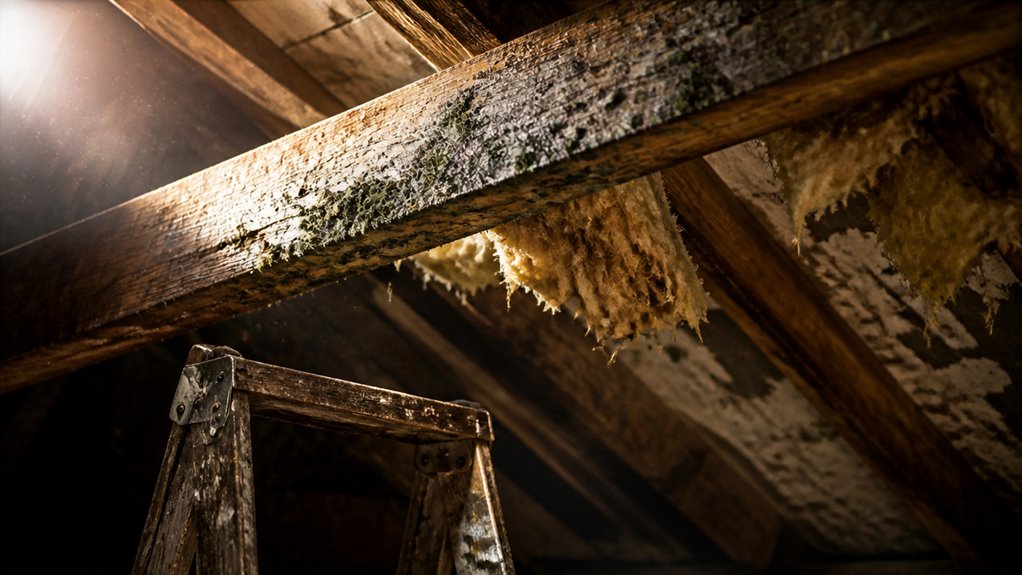
You should look for visible mold growth, which often appears as black, green, or white patches on wood, insulation, or drywall.
Musty odors are another key indicator, as mold produces volatile organic compounds that create a persistent, damp smell.
You may also notice water stains or discoloration on attic surfaces, signaling moisture accumulation that supports mold growth.
Additionally, peeling paint or warped wood can suggest prolonged exposure to moisture and mold activity.
Early detection helps you address mold before it spreads extensively, reducing potential health risks and structural damage.
Regular inspections increase your chances of spotting these signs promptly.
It is also important to check for hidden dampness using a moisture meter, since mold thrives in areas with high humidity and moisture.
What Causes Mold to Develop in Attics?
You know, one of the biggest culprits for mold in attics is roof leaks. When water seeps into the attic materials, it creates those damp conditions that mold just loves.
But it’s not just leaks; condensation plays a role too. Think about it: when warm, moist air hits cooler attic surfaces, that’s a recipe for mold growth.
And let’s not forget about ventilation. Poor airflow can trap moisture in your attic, which really boosts the chances of mold developing. So, keeping everything dry and well-ventilated is key!
Addressing moisture promptly is crucial because mold can begin to grow within 48 hours of water exposure.
Roof Leaks Impact
In attics, roof leaks serve as a primary source of water intrusion that creates ideal conditions for mold growth.
When your roof sustains damage from missing shingles, cracks, or deteriorated flashing, rainwater penetrates attic surfaces.
This saturates wood, insulation, and drywall.
Moisture accumulation raises the relative humidity and dampness within the space, providing mold spores the environment they need to colonize.
If left unaddressed, leaks can lead to persistent wetness, promoting widespread mold development that compromises structural materials.
You must promptly identify and repair leaks to prevent moisture buildup.
Regular attic inspections after storms or seasonal changes help detect leaks early, minimizing mold risks.
Effective leak management is critical to controlling mold growth and maintaining your attic’s structural integrity.
Mold can begin forming on wet drywall within 24–48 hours, making immediate leak repair essential to prevent extensive damage.
Condensation And Moisture
Beyond roof leaks, condensation plays a significant role in creating the damp conditions that foster mold growth in attics.
When warm, moist air from inside your home rises and contacts the cooler surfaces of the attic, it condenses into water droplets.
This moisture accumulates on wood, insulation, and other materials, providing an ideal environment for mold spores to thrive.
Sources of indoor humidity like bathrooms, kitchens, and dryers increase this effect if their exhaust vents release moisture into the attic space.
Additionally, high indoor humidity levels above 50% exacerbate condensation problems, accelerating mold development.
To prevent mold, you need to control moisture by minimizing indoor humidity and ensuring that warm air doesn’t infiltrate the attic.
Running exhaust fans during and after showers or using a dehumidifier can help maintain indoor humidity below 50%, reducing condensation and mold risk.
Poor Attic Ventilation
Poor attic ventilation frequently contributes to mold development by allowing moisture to accumulate and remain trapped in the space.
When air can’t circulate properly, humidity levels rise, creating a damp environment ideal for mold growth. You mightn’t notice this until you see stains or detect musty odors.
Ventilation problems often stem from blocked or insufficient vents and improperly routed exhaust fans. To prevent mold caused by poor ventilation, focus on:
- Ensuring soffit and ridge vents are clear and functional
- Avoiding vent exhaust into the attic space
- Maintaining indoor humidity below 50%
- Inspecting and repairing damaged or blocked vents
- Using fans or mechanical ventilation if natural airflow is inadequate
Proper ventilation reduces moisture buildup, limiting mold risks and protecting attic structural integrity. Regularly monitoring relative humidity levels helps maintain optimal moisture control to prevent mold growth.
How Attic Mold Can Damage Your Home?
Hey there! It’s important to know that attic mold can really mess with the structural materials in your home, like plywood and drywall. This can put your home’s integrity at risk.
Plus, mold doesn’t just stick around in one spot; it can spread to other areas, which means the damage and cleanup can get pretty extensive.
And if the moisture issues that caused the mold are still hanging around, guess what? That mold is likely to come back. So, tackling those underlying water problems as soon as possible is key!
To prevent mold recurrence, maintaining proper humidity control and ensuring good ventilation in your attic is essential.
Structural Material Deterioration
When mold takes hold in your attic, it doesn’t just affect air quality. It actively deteriorates structural materials like plywood, drywall, and insulation.
Mold consumes organic components, weakening the integrity of these materials and compromising your home’s stability. Over time, this degradation can lead to costly repairs and safety hazards.
You should be aware that mold causes:
- Plywood delamination and warping
- Drywall crumbling and loss of strength
- Insulation breakdown, reducing thermal efficiency
- Fastener corrosion, loosening structural connections
- Increased moisture retention, accelerating decay
Addressing mold promptly and controlling moisture are essential to preserving your attic’s structural components and preventing further damage. Proper maintenance and timely remediation help restore thermal performance and prevent energy loss.
Mold Spread Risks
Allowing mold to spread unchecked in your attic can lead to extensive damage beyond the initial growth area.
Mold colonies rapidly extend into porous materials such as plywood, drywall, and insulation, compromising their structural integrity.
As mold consumes organic components, it weakens these materials, increasing the risk of costly repairs.
Furthermore, mold can migrate through air currents and gaps, contaminating adjacent spaces and complicating remediation efforts.
This spread often remains undetected until visible stains, odors, or material deterioration emerge.
Controlling mold growth requires timely identification and removal, along with addressing moisture sources to prevent further contamination.
Failure to contain mold proliferation not only damages building components but also elevates health risks by increasing airborne spore concentrations throughout your home.
Effective mold remediation involves thorough cleaning, sanitizing, and removal of contaminated materials to restore a safe environment and prevent further health hazards associated with biological contaminants.
Recurring Moisture Problems
Recurring moisture problems frequently undermine attic integrity by sustaining conditions favorable for mold growth.
When water intrusion or humidity issues persist, mold can infiltrate structural materials, leading to deterioration and costly repairs.
Addressing recurring moisture requires identifying and controlling the root causes. Key factors you should monitor include:
- Roof leaks allowing water seepage into attic components
- Condensation from warm, moist air contacting cooler surfaces
- Inadequate ventilation causing trapped humidity
- Exhaust vents improperly routed into the attic space
- Elevated indoor humidity levels exceeding 50%
If these issues persist, mold can spread into plywood, drywall, and insulation.
Over time, this compromises your home’s structural soundness and indoor air quality.
Promptly resolving moisture sources is essential to prevent mold recurrence and protect your property’s integrity.
How to Prevent and Safely Remove Attic Mold?
To effectively prevent attic mold, you need to control moisture sources and maintain proper ventilation.
Inspect your attic twice yearly, especially after heavy rain or winter. Repair roof leaks immediately and make certain exhaust vents from bathrooms, kitchens, and dryers vent outside, not into the attic.
Use soffit and ridge vents to promote airflow and keep indoor humidity below 50%.
For small mold areas under 10 square feet, wet the surface before scrubbing with detergent and a stiff brush to minimize airborne spores.
Wear a respirator or mask rated for mold spores during cleanup. Replace mold-infested porous materials like insulation or drywall.
If mold covers a larger area or recurs despite prevention efforts, hire a professional remediation service to address the problem safely and thoroughly.
Frequently Asked Questions
Can Attic Mold Affect My Home’s Indoor Air Quality?
Yes, attic mold can markedly affect your home’s indoor air quality. Mold spores can become airborne, spreading throughout living spaces and causing irritation to your eyes, nose, throat, and lungs.
This airborne contamination may worsen respiratory symptoms, especially if you have asthma or allergies. Controlling attic moisture and promptly addressing mold growth helps maintain healthier indoor air and reduces potential health risks associated with prolonged mold exposure.
How Long Does Attic Mold Take to Develop After Water Damage?
Attic mold can start developing within 24 to 48 hours after water damage occurs.
When moisture infiltrates attic materials from leaks or condensation, it creates an ideal environment for mold spores to grow quickly.
If you don’t address the water intrusion and control humidity promptly, mold colonies can spread rapidly, affecting wood, insulation, and drywall.
Acting fast to dry and ventilate the area helps prevent extensive mold growth and subsequent damage.
Are There Specific Mold Species Common in Attics?
Yes, you’ll often find specific mold species common in attics, such as Aspergillus, Cladosporium, Penicillium, and Stachybotrys (black mold).
These molds thrive in damp, poorly ventilated environments typical of attics. Aspergillus and Penicillium grow on building materials and insulation.
Stachybotrys requires constant moisture. Knowing these species helps you target remediation and prevent further growth by addressing moisture and ventilation issues promptly.
Can Attic Mold Cause Odors Throughout the House?
Yes, attic mold can cause odors throughout your house. Mold produces microbial volatile organic compounds (MVOCs), which emit musty, earthy smells that can permeate living spaces.
Because attics connect to your home’s ventilation system, these odors can spread via air ducts or gaps. If you notice persistent moldy smells inside, it often indicates hidden attic mold growth that requires inspection and remediation to eliminate the source and prevent further spread.
Is Attic Mold Covered by Homeowners Insurance?
Think of attic mold like an uninvited guest sneaking in through cracks. Your homeowners insurance usually won’t cover it.
Mold damage often falls under exclusions tied to neglect or maintenance issues, like unresolved leaks or poor ventilation. However, if a sudden event, like a burst pipe, causes mold, your policy might cover it.
Always review your specific policy details and consider mold endorsements or riders for added protection.
Is Attic Mold Dangerous? Final Safety Tips
You might think attic mold is just an annoying nuisance, but ignoring it could put your health and home at serious risk. Vulnerable individuals are especially at danger, and unnoticed mold can silently damage your structure.
The real question is: how long will you let it grow unchecked? Taking prompt, informed action to prevent and remove attic mold is essential to protect your living environment and avoid costly repairs down the line.