Air Compressor 2 Stage vs Single: Key Differences
If you need pressures up to 145 psi and intermittent use, a single-stage compressor offers simpler design and lower upfront costs.
For sustained high pressures around 175 psi, two-stage models provide better efficiency, reduced wear, and continuous airflow through dual compression and intercooling.
Two-stage units save energy long-term despite higher initial expenses, making them ideal for heavy-duty tasks.
Understanding these trade-offs guarantees you select the best balance of performance, cost, and durability for your application.
Key Takeaways
- Two-stage compressors compress air twice with intercooling, improving efficiency and reducing heat compared to single-stage’s one compression cycle.
- Single-stage compressors operate up to 145 psi, while two-stage units can sustain pressures around 175 psi for heavy-duty use.
- Two-stage designs offer about 12–15% better power efficiency and up to 20% more CFM per kilowatt than single-stage models.
- Single-stage compressors are simpler, cheaper, and ideal for light, intermittent tasks with moderate pressure needs.
- Two-stage compressors suit continuous, high-pressure industrial applications, providing longer life, lower maintenance, and energy savings.
Air Compressor 2 Stage vs Single: Key Differences in PSI, CFM, Efficiency, and Performance
| Comparison Factors | Single-Stage Air Compressor | Two-Stage Air Compressor |
|---|---|---|
| Compression Process | Compresses air in one stage | Compresses air in two sequential stages |
| Number of Compression Stages | One | Two |
| Typical Pressure Range | Approximately 70–145 PSI | Commonly up to around 175 PSI |
| Airflow Capacity (CFM) | Suitable for moderate airflow requirements | Often designed for higher sustained airflow demands |
| Intercooling System | No intermediate cooling stage | Uses intercooling between compression stages |
| Compression Efficiency | Simpler process, suitable for moderate pressure | Potentially higher efficiency at demanding pressures |
| Heat Management | Greater temperature rise during single-stage compression | Reduced interstage air temperature |
| Power Efficiency | Suitable for occasional and intermittent operation | Article describes 12–15% greater power efficiency |
| Mechanical Complexity | Fewer compression components | Additional cylinders, valves, and cooling components |
| Duty Cycle | Often suited to intermittent applications | Commonly designed for sustained heavy-duty applications |
| Operating Pressure Stability | Depends on tank capacity, regulator, and compressor output | Supports higher-pressure operation, depending on model |
| Maintenance Requirements | Simpler servicing with fewer components | More detailed servicing, including intercooling components |
| Portability | Generally more compact and easier to move | Often larger and heavier |
| Typical Applications | Tire inflation, nail guns, woodworking, and light automotive tasks | Industrial tools, fabrication, blast cabinets, and demanding workshop equipment |
| Long-Term Energy Use | Practical for intermittent air demand | May provide energy savings during sustained high-pressure use |
| Best Working Environment | Home garages, DIY workshops, and light-duty settings | Industrial workshops and high-demand applications |
| Overall Recommendation | Choose for simplicity, portability, and occasional use | Choose for higher pressures and demanding workloads |
How Do Single-Stage and Two-Stage Air Compressors Work?

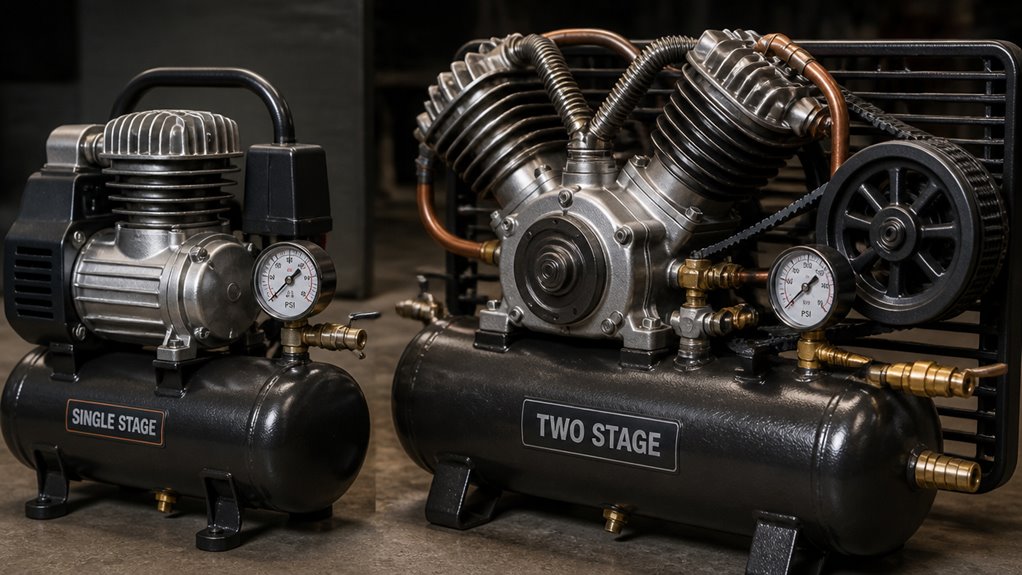
When you compare single-stage and two-stage air compressors, the main difference lies in how they compress air. Single-stage compressors compress air once before sending it to the tank.
The key difference between single-stage and two-stage compressors is how many times they compress air.
In contrast, two-stage compressors compress air twice, with a cooling phase in between to improve efficiency and pressure output.
In a single-stage system, air enters the cylinder, is compressed by one piston stroke, and then moves to the storage tank.
Two-stage compressors first compress air using a larger piston, then cool it before a second piston or smaller cylinder further compresses it, raising the pressure markedly. This two-step process enhances efficiency by reducing heat buildup and workload per stage.
Single-stage designs are simpler, while two-stage units involve added mechanical complexity due to the intercooling and dual compression steps.
For precision and efficiency in mechanical tools, features like brushless motors significantly improve performance and durability.
What Pressure Ranges Do Single-Stage and Two-Stage Compressors Deliver?
Understanding how compressors handle air compression naturally leads to examining the pressure ranges they can achieve.
Single-stage compressors compress air once, typically delivering pressures from 70 to 145 psi. This makes them suitable for moderate tasks.
Two-stage compressors compress air twice with intercooling, reaching around 175 psi. They are ideal for higher-pressure demands.
| Compressor Type | Typical Pressure Range (psi) |
|---|---|
| Single-Stage | 70 – 145 |
| Two-Stage | Up to 175 |
| Application | Light to medium pressure |
| Industrial Use | High pressure, sustained use |
You’ll find single-stage units excel in intermittent, lower-pressure tasks. Two-stage units fit continuous, high-pressure operations.
Why Are Two-Stage Compressors More Efficient Than Single-Stage Models?
Because two-stage compressors divide the compression process into two steps with cooling between them, they operate more efficiently than single-stage models that compress air in a single event.
Two-stage compressors enhance efficiency by splitting compression into two cooled steps, unlike single-stage models.
This staged approach reduces the temperature of the air before the second compression, lowering the work required to increase pressure. By compressing cooler air in the second stage, the compressor minimizes energy losses associated with heat buildup.
Additionally, dividing compression reduces mechanical stress and improves volumetric efficiency. Two-stage designs typically deliver 12 to 15 percent better power efficiency and up to 20 percent more cubic feet per minute (CFM) per kilowatt compared to single-stage units of similar size.
This efficiency advantage makes two-stage compressors more suitable for sustained, high-pressure applications where energy consumption and performance matter most.
Which Tasks Are Best for Single-Stage Compressors?
Single-stage compressors are really handy for tasks that need pressures between 70 and 145 psi. Think about things like spray painting, woodworking, or even inflating tires. They’re designed to handle these jobs easily.
One of the great things about single-stage units is their simpler design. This means they can operate intermittently without the need for a steady high-volume airflow. So, if you’re not looking for something that runs continuously at high pressures, these compressors are both efficient and cost-effective for light to moderate tasks.
Perfect for those DIY projects or occasional use! Many pneumatic tools, such as the NEU MASTER 2-in-1 Pneumatic Brad & Staple Nailer, operate efficiently within this pressure range, making single-stage compressors a good match.
Common Single-Stage Uses
Single-stage compressors frequently serve tasks that require moderate pressure and intermittent airflow, making them ideal for applications like spray painting, woodworking, and auto repair.
You’ll find them well-suited for operations that don’t demand continuous high-volume delivery or pressure above typical single-stage limits.
Their simpler compression process efficiently handles framing, roofing, and tire inflation where brief bursts of air suffice.
Because these compressors operate at moderate pressures without complex staging, they offer cost-effective performance and straightforward maintenance for light to medium-duty cycles.
When your workflow involves tools and tasks with moderate CFM and PSI requirements, single-stage units provide reliable, efficient service without the overhead or complexity of two-stage systems.
This makes them a practical choice for many workshop and service settings. Additionally, understanding activation mechanisms can help ensure safety when using compressed air in fire protection-related equipment.
Ideal Pressure Range
Tasks with moderate air pressure requirements typically fall within the operating range of 70 to 145 psi. This aligns well with the capabilities of single-stage compressors.
You’ll find these compressors ideal for tasks that don’t demand continuous high pressure or airflow.
When selecting a compressor for your work, consider these key pressure-related applications:
- Spray painting, where consistent yet moderate pressure is vital for finish quality.
- Woodworking tools, which operate efficiently within this pressure range.
- Auto repair tasks like tire inflation and impact wrenches that don’t need extreme pressure.
- Framing and roofing jobs requiring reliable but not excessive air pressure.
Regular maintenance and proper use of attachments can help extend the lifespan of your compressor and improve performance.
Intermittent Operation Benefits
Although two-stage compressors excel under continuous heavy use, single-stage models offer distinct advantages for intermittent operation, where demand for airflow and pressure fluctuates.
You’ll find single-stage compressors ideal for tasks like spray painting, woodworking, tire inflation, and light auto repair, where airflow demand is lower and pressure requirements typically remain below 145 psi.
Their simpler design means quicker start-stop cycles and less energy wasted during idle periods, making them more efficient for intermittent duty.
Since these compressors compress air once before storage, they avoid the complexity and higher operating costs associated with two-stage units during sporadic use.
If your work involves sporadic bursts rather than sustained airflow, single-stage compressors provide a cost-effective, reliable solution without overengineering your air supply system.
Additionally, selecting equipment that matches your usage pattern can improve longevity and reduce maintenance, similar to how choosing wood species like ash or white oak depends on the specific demands of your project.
When Should You Choose a Two-Stage Compressor?
When your work demands sustained high pressure and continuous airflow, opting for a two-stage compressor becomes essential. You’ll benefit from its higher outlet pressure, typically around 175 psi, and improved efficiency due to the two-step compression and intercooling process.
For sustained high pressure and continuous airflow, a two-stage compressor offers superior efficiency and higher outlet pressure.
Choose a two-stage compressor if you:
- Require consistent, high-pressure output for industrial or heavy-duty tools.
- Need better energy efficiency during prolonged operation to lower power consumption.
- Operate equipment that demands continuous airflow, such as blast cabinets or fabrication tools.
- Want reduced wear and noise levels over time in heavy-use environments.
In these scenarios, a two-stage unit provides superior performance and durability, justifying its complexity for demanding applications. Proper operation and maintenance ensure long-term efficiency and reliability in heavy-duty use.
How Do Costs Compare Between Single-Stage and Two-Stage Compressors?
You know, one of the first things you’ll notice about single-stage compressors is their lower initial purchase price. That’s mainly because they’ve a simpler design, which makes them more budget-friendly right off the bat.
But here’s the catch: while single-stage compressors are cheaper upfront, two-stage compressors can actually save you money in the long run. They tend to run more efficiently, especially when you’re pushing them hard during heavy use. Proper maintenance and longevity extension of compressors can further improve their cost-effectiveness over time.
Initial Purchase Price
Because two-stage compressors include additional components and a more complex design, they usually come with a higher initial purchase price compared to single-stage models.
When you consider purchasing, keep in mind these cost factors:
- Two-stage units require a second piston and intercooler, increasing manufacturing expenses.
- Single-stage compressors have fewer parts, simplifying production and lowering costs.
- The precision machining for two-stage compressors adds to their upfront price.
- Retail pricing reflects the durability and performance advantages of two-stage models, which demand more investment initially.
If your budget is tight or your application is light-duty, a single-stage compressor offers a cost-effective entry point.
However, be prepared to pay more upfront if you need the higher pressure and efficiency that two-stage compressors provide.
Long-Term Operating Costs
Typically, two-stage compressors deliver lower long-term operating costs than single-stage models due to their higher efficiency and reduced power consumption under heavy use.
Because two-stage compressors split compression into two phases with intercooling, they reduce the work required per unit of compressed air. This lowers energy demands by 12 to 15 percent compared to single-stage units of similar size.
Over sustained operation, this efficiency gain translates into significant savings on electricity bills. While single-stage compressors have lower upfront costs, their higher energy consumption during continuous or heavy-duty tasks raises total expenses over time.
Additionally, two-stage compressors experience less wear under load, potentially reducing maintenance frequency and costs. If you run demanding or continuous applications, investing in a two-stage model often results in a more cost-effective operation in the long run.
Similar to how a 1/2 HP sump pump’s slight oversizing prevents premature wear and ensures reliability, choosing a more efficient compressor stage can extend equipment lifespan and dependability.
Value For Usage
Several factors influence the cost-effectiveness of single-stage versus two-stage air compressors, particularly how you intend to use them. You’ll find that upfront and operating costs vary appreciably based on application demands.
Consider these points:
- Single-stage compressors have lower initial costs, making them attractive for light, intermittent tasks.
- Two-stage models involve higher upfront expenses due to complex design and added components.
- For continuous, heavy-duty use, two-stage compressors deliver superior efficiency, reducing energy costs by up to 15-20%.
- Over time, the operating savings of two-stage compressors often offset their initial price premium in industrial or high-volume settings.
You should weigh purchase price against long-term efficiency and intended duty cycle to determine the best value for your specific needs.
Additionally, selecting equipment based on maintenance frequency and durability can further optimize cost-effectiveness over its lifespan.
Long-Term Energy Use: Single-Stage vs Two-Stage Compressors
When you evaluate long-term energy use, two-stage compressors consistently outperform single-stage models in efficiency, especially under sustained heavy loads.
Two-stage compressors divide compression into two steps with intercooling, reducing the work required per stage and improving volumetric efficiency.
Two-stage compressors split compression into two phases with intercooling, enhancing efficiency and reducing energy per stage.
This design yields about 12 to 15 percent power savings compared to single-stage compressors of similar size.
Over lengthy operations, that efficiency translates to lower kilowatt-hour consumption for the same delivered airflow and pressure.
Single-stage compressors, while simpler, compress air once at higher temperatures, increasing energy demand and wear.
If your application involves continuous or heavy-duty use, the two-stage model’s optimized thermodynamics and reduced energy loss provide measurable cost benefits in electricity consumption and system longevity over time.
Hence, two-stage compressors are preferable when minimizing operational energy costs is a priority.
Key Factors to Choose Between Single-Stage and Two-Stage Compressors
Energy efficiency and operational cost set a strong foundation, but choosing between single-stage and two-stage compressors also hinges on matching compressor characteristics to your specific application requirements.
You need to analyze pressure needs, airflow demand, duty cycle, and cost implications critically.
- Pressure Range: Choose single-stage for pressures up to 145 psi. Opt for two-stage if you require pressures around 175 psi or higher.
- Airflow (CFM): Two-stage compressors deliver higher airflow efficiency, vital for continuous, high-volume use.
- Duty Cycle: For intermittent tasks, single-stage suffices. Sustained heavy workloads favor two-stage for durability and efficiency.
- Cost vs. Use: Single-stage has a lower upfront cost but higher long-term energy expenses under heavy use. Two-stage investments pay off with operational savings in demanding environments.
Match these factors precisely to your tools and workload for peak performance and cost-effectiveness.
Frequently Asked Questions
How Noisy Are Single-Stage Versus Two-Stage Compressors During Operation?
You’ll find single-stage compressors generally produce more noise during operation because their single compression event runs at higher stress and often without intercooling, causing louder vibrations.
Two-stage compressors run smoother and quieter since they compress air in two steps with cooling in between, reducing mechanical strain and noise.
If noise level matters, especially for prolonged use, you’ll benefit from a two-stage unit’s quieter, more balanced operation in demanding environments.
What Maintenance Differences Exist Between Single-Stage and Two-Stage Compressors?
You’ll find two-stage compressors need more maintenance due to their added complexity. Expect extra attention to intercoolers, valves, and oil changes.
Single-stage units are simpler, requiring less frequent servicing and fewer parts to monitor. However, both need regular checks on filters, belts, and lubrication.
If you run heavy-duty work, two-stage upkeep pays off with better longevity and efficiency. It demands more consistent, detailed maintenance than single-stage compressors.
Can Two-Stage Compressors Be Used for Home DIY Projects Effectively?
Sure, you could bring a two-stage compressor home and pretend you’re running an industrial plant.
However, it’s like using a sledgehammer to crack a nut.
Technically, it will power your DIY projects with ease, offering higher pressure and better efficiency under sustained use.
However, its complexity, size, and cost often outweigh benefits for typical home tasks.
Single-stage compressors shine with simpler, lighter-duty operation.
Choose wisely.
How Does Compressor Size Impact Portability for Single-Stage and Two-Stage Units?
Compressor size directly affects portability by influencing weight and dimensions.
Single-stage units are typically smaller and lighter, making them easier to move around for occasional tasks.
Two-stage compressors, due to their added components and intercooling, are bulkier and heavier, reducing portability but increasing capacity and pressure.
If you need mobility for light work, choose smaller single-stage models.
For heavier, continuous use, accept less portability for higher performance.
Are There Significant Differences in Warranty Coverage Between the Two Compressor Types?
You won’t usually see significant differences in warranty coverage solely based on compressor type. Both single-stage and two-stage compressors often come with similar warranty periods and terms, typically covering defects in materials and workmanship.
However, higher-end two-stage models might offer extended warranties due to their industrial-grade components. Always check specific manufacturer policies closely, as warranty length and coverage depend more on brand and model than compression stages.
Choose the Right Compressor for Power and Efficiency
Choosing between single-stage and two-stage air compressors is like picking the right tool from a precision toolbox. Each serves a distinct purpose.
Single-stage models offer simplicity and cost-efficiency for lighter tasks. Two-stage compressors deliver higher pressure and energy savings for demanding, continuous use.
By understanding your specific pressure needs and long-term energy goals, you can make an informed decision. This balances upfront investment with operational efficiency, ensuring peak performance and cost-effectiveness.