Best Way to Paint Plywood: Achieving a Flawless Finish
To get the best paint finish on plywood, start by sanding all surfaces and edges with 120-grit sandpaper. Keep tools flat to avoid rounded corners.
Fill gaps with wood filler, let it dry, then sand smooth. Apply a suitable primer, either water-based for easy cleanup or oil-based for durability.
Seal all sides to prevent warping. Sand between coats with finer grits, maintain even, thin layers, and consider spray application for flawless coverage.
There’s more to perfecting plywood painting you’ll want to explore.
Key Takeaways
- Sand all plywood surfaces and edges with 120-grit sandpaper, keeping tools flat to preserve sharp corners before painting.
- Fill gaps and rough edges with wood filler, let dry fully, then sand smooth with 120-grit before priming.
- Apply a suitable primer (water-borne, oil-based, or shellac) to seal plywood and ensure paint adhesion, priming all sides evenly.
- Lightly sand between coats using progressively finer grits (220, 320, then 400) to smooth surfaces and control raised grain.
- Use thin, even paint coats with a brush, roller, or HVLP sprayer, following the grain and maintaining a wet edge to avoid lap marks.
How to Prepare Plywood for a Smooth Paint Finish?

Start by sanding all plywood surfaces and edges with 120-grit sandpaper immediately after cutting, keeping the sander flat to prevent rounding the corners.
If you’re working with Grade B plywood that’s unsanded, lightly scuff it with the same grit, taking care not to remove the thin 1/16-inch veneer layer.
After sanding, thoroughly wipe the plywood with a rag dampened in mineral spirits or a clean, damp cloth to eliminate dust particles.
This step is critical to guarantee proper adhesion of primers and paints. Avoid sanding beyond what’s necessary to maintain veneer integrity.
Proper surface preparation at this stage sets the foundation for a smooth, even finish and prevents imperfections caused by dust or uneven surfaces during subsequent coating steps.
When working on wood surfaces, always ensure proper ventilation to maintain a safe and healthy environment during sanding and cleaning.
Filling and Smoothing Plywood Edges Before Painting
Once you’ve prepared the plywood surfaces, focus on the edges, which require special attention to guarantee a flawless finish.
Start by sanding the edges with 120-grit sandpaper, keeping the sander flat to avoid rounding the corners. Fill any gaps or rough areas with wood filler or builder’s bog, not drywall compound, as it prevents cracking.
Sand edges flat with 120-grit paper and fill gaps with wood filler, never drywall compound, to prevent cracking.
Allow the filler to harden fully, then sand smooth to match the plywood face. Use a sanding block for consistent pressure and evenness.
After sanding, wipe edges clean with a mineral spirits-soaked rag to remove dust. These steps seal and smooth porous, rough edges, ensuring the primer and paint adhere properly and provide a uniform, professional finish.
Skipping this will result in uneven texture and compromised durability. For added safety during the painting process, it is wise to have a Class K fire extinguisher nearby in case of kitchen-related fire hazards.
How to Pick the Best Primer for Plywood?
Why does choosing the right primer matter when painting plywood? The primer seals the porous plywood surface, preventing moisture absorption and ensuring uniform paint adhesion. It also blocks tannin bleed-through, which can discolor your finish.
Selecting a compatible primer reduces sanding and enhances durability.
| Primer Type | Best Use |
|---|---|
| Water-borne | Easy cleanup, interior/exterior |
| Oil-based | Superior sealing, high wear |
| Shellac-based | Blocks heavy stains/tannins |
Water-borne primers suit most plywood, offering fast drying and easy cleanup. Oil-based primers excel on exterior or high-traffic plywood, providing robust sealing.
Shellac-based primers are ideal if tannin bleed or heavy stains are a concern. Match primer type to your plywood grade and project conditions for ideal results.
For best results, ensure the wood surface is completely dry before priming to avoid trapped moisture and peeling, a common issue highlighted in sealant preparation.
Priming Plywood Edges and Surfaces
Apply primer thoroughly to all plywood edges and surfaces to seal porous areas and create a uniform base for paint adhesion.
Start by sanding edges and surfaces with 120-grit sandpaper, ensuring corners remain sharp.
Remove dust with a mineral spirits-soaked rag before priming.
Use a water-borne primer applied by brush, roller, or spray for even coverage.
Prioritize edges, as they’re more porous and prone to absorb moisture, which can cause paint failure.
After priming two edges and one surface, flip the plywood to reach remaining sides.
Apply a second coat if needed for complete sealing.
Let the primer dry fully before proceeding.
This method locks in wood fibers and filler, prevents paint peeling, and promotes a consistent, durable finish across the entire plywood panel.
For best results, ensure the wood is completely dry before priming to promote strong adhesion and longevity of the finish, as moisture can impede proper paint adhesion.
How to Sand Between Coats for a Professional Look?
To get that smooth, professional finish you’re after, sanding between coats is key. You’ll generally want to grab some 220-grit sandpaper for both primer and paint. Trust me, it makes a difference!
Before you dive into applying the next coat, take a moment to clean the surface. Dust and debris can totally ruin your hard work, so make sure everything’s nice and tidy.
When you’re ready to sand, use light pressure with either a sanding sponge or some fine-grit sandpaper. And remember to follow the wood grain! This little tip helps prevent any unwanted scratches. Happy sanding!
Keep in mind that maintaining a clean and debris-free surface is just as important as sanding for preventing structural damage over time.
Choosing The Right Grit
Selecting the appropriate grit sandpaper between coats is essential for achieving a smooth, professional finish on plywood surfaces. You want to gently scuff the dried primer or paint without removing it entirely. Use finer grits after priming and coarser ones after filler or heavy sanding.
Proper surface cleaning before sanding also helps ensure better adhesion of subsequent layers and durability of the finish, especially when working with all-in-one paints.
| Stage | Sandpaper Grit | Purpose |
|---|---|---|
| After wood filler | 120-grit | Smooth rough patches |
| After priming | 220-grit | Remove raised wood grain |
| Between paint coats | 320-grit | Light scuff for adhesion |
| Final sanding | 400-grit | Ultra-smooth finish |
| Edges | 120-150 grit | Proper edge shaping and smoothing |
Selecting the right grit guarantees peak adhesion and a flawless surface for the next coat.
Cleaning Surface Between
Regularly sanding between coats is essential for achieving a professional, smooth finish on plywood. After each coat dries completely, use a fine 220-grit sanding sponge or sandpaper to lightly scuff the surface.
This step removes any raised wood grain, dust nibs, or brush marks without stripping the underlying layer. Keep the sander or sanding block flat to avoid uneven spots or rounded edges.
After sanding, thoroughly clean the surface with a mineral spirits-dampened rag or a tack cloth to eliminate all dust particles. This guarantees the next coat adheres properly and prevents imperfections.
Consistently performing this cleaning step between coats promotes an even, durable finish and minimizes the need for heavy sanding after the final coat dries.
Proper surface preparation, similar to the careful subfloor preparation required for durable flooring installation, is key to achieving lasting results.
Proper Sanding Technique
Mastering proper sanding technique between coats guarantees a flawless, professional finish on plywood.
After each primer or paint coat dries, use a 220-grit sanding sponge or fine sandpaper to lightly scuff the surface.
Keep the sander or sanding block flat to avoid rounding edges or removing too much material, especially on thin veneers.
Focus on smoothing raised grain from water-borne products without cutting through layers.
Remove all dust with a mineral spirits-soaked rag or damp cloth before applying the next coat.
This step guarantees excellent adhesion and a smooth topcoat.
Avoid aggressive sanding to prevent surface imperfections and maintain the integrity of the filler and primer layers.
Consistent, gentle sanding between coats refines texture and enhances the final paint’s durability and aesthetic quality.
Best Ways to Apply Water-Based Latex Paint on Plywood
To get started, you’ll want to thoroughly prepare your plywood surface. Sand the edges with some 120-grit paper, and make sure to wipe away any dust using a rag soaked in mineral spirits. This step is crucial for ensuring good adhesion later on.
Next up, it’s time to apply a water-borne primer. Make sure to coat all sides evenly. This won’t only seal the wood but also help smooth out any texture left from sanding.
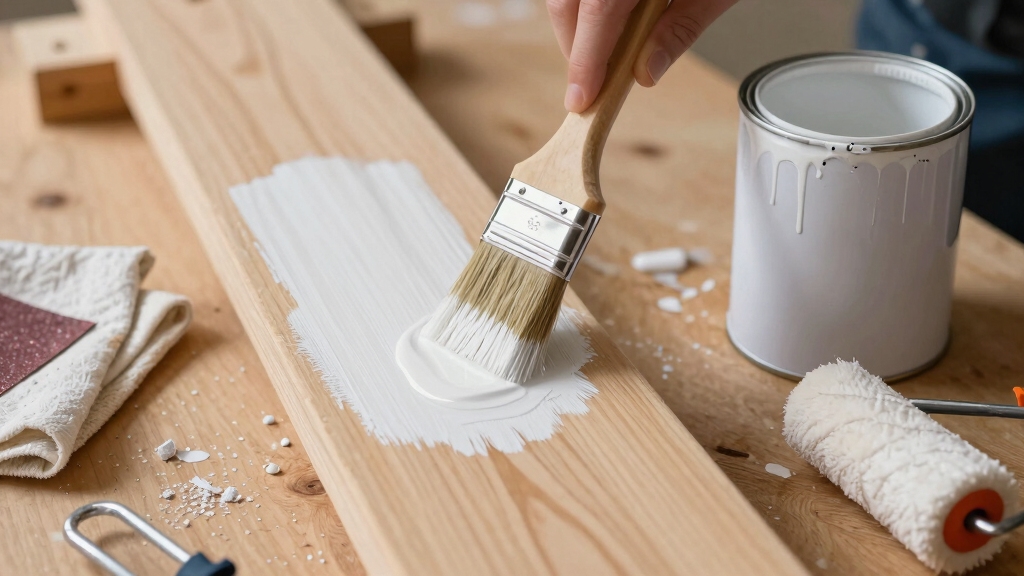
When you get to the painting part, you have a few options: a brush, a roller, or even an HVLP sprayer. Whichever method you choose, aim for thin, even coats and be sure to follow the wood grain. This will give you the best coverage and finish. Happy painting!
For improved durability and protection, consider sealing your painted surface with a compatible sealer or top coat after the paint has dried.
Proper Surface Preparation
Before applying water-based latex paint on plywood, you need to prepare the surface thoroughly to guarantee adhesion and a smooth finish.
Start by sanding all plywood surfaces and edges with 120-grit sandpaper, keeping the sander flat to avoid rounding corners. For unsanded Grade B plywood, scuff lightly with 120-grit, taking care not to remove the thin veneer.
Remove dust with a mineral spirits-soaked rag or damp cloth. Fill exposed edges with wood filler or builder’s bog, let it harden, then sand smooth.
Once filled and sanded, apply a water-borne primer to all sides, two edges and one side first, then flip after drying.
After priming, lightly sand with a 220-grit sanding sponge to smooth raised wood grain before applying your topcoat.
For enhanced durability and moisture resistance, consider using a weather-resistant finish designed for outdoor wood surfaces.
Effective Application Techniques
Apply water-based latex paint to plywood using a brush, roller, or sprayer, selecting the method that best suits your project size and desired finish.
For small to medium surfaces, a high-quality synthetic brush or 3/8-inch nap roller guarantees even coverage and control.
When targeting a flawless finish, use an HVLP sprayer thinned to a 20-25 second viscosity cup drain time.
Paint two edges and one surface at a time to maintain a wet edge and prevent lap marks.
Apply the first coat following the wood grain direction, then lightly sand with a 220-grit sanding sponge before subsequent coats, applying cross-hatch strokes.
Maintain consistent coverage without overloading tools to avoid drips and runs.
Proper technique guarantees adhesion, smoothness, and durability on plywood surfaces.
Ensure the plywood is completely dry before painting to prevent adhesion issues and achieve optimal results.
How to Use Spray Paint for a Flawless Finish?
Achieve a flawless finish on plywood by using a high-volume, low-pressure (HVLP) spray system or an airless sprayer like the Wagner 150.
Prepare your paint by thinning water-based latex to a 20-25 second viscosity cup drain time for optimal atomization.
Hold the spray gun 8-12 inches from the surface, spraying in smooth, overlapping passes parallel to the wood grain for the first coat.
After this dries, sand lightly with a 220-grit sponge to remove raised grain. Then apply subsequent coats with cross-hatch spraying for uniform coverage.
Maintain consistent speed and pressure to avoid runs or pooling.
Make certain all plywood edges are primed and smooth to prevent texture inconsistencies.
Use proper ventilation and protective equipment to guarantee safety during spraying.
This method guarantees an even, durable finish without brush marks or roller texture.
Best Paint Types for Plywood and Why They Work
Choosing the right paint type for plywood guarantees durability and the desired finish for your project. Your choice depends on the plywood’s location and wear level.
Here are four effective paint types for plywood:
- Water-based latex paint offers versatility, quick drying, and easy cleanup. It’s ideal for both interior and exterior plywood.
- Enamel paint provides a hard, durable coating. This makes it perfect for high-traffic surfaces like doors and cabinets.
- Oil-based paint assures excellent adhesion and a smooth finish. It’s suited for interior furniture and trim.
- Acrylic paint delivers good flexibility and color retention. It’s prime for interior walls and shelving.
Each type bonds well with properly primed plywood, enhancing adhesion and minimizing coats needed for a smooth, lasting finish.
Protecting Painted Plywood With Polyurethane or Lacquer
Protecting your painted plywood with a clear topcoat like polyurethane or lacquer markedly extends its durability and enhances its appearance. Both finishes provide a hard, protective barrier that resists moisture, scratches, and UV damage, preserving the paint beneath.
Clear topcoats like polyurethane or lacquer boost durability and protect painted plywood from moisture, scratches, and UV damage.
Apply polyurethane for superior toughness, especially on high-wear surfaces, using three thin coats for even coverage. Choose lacquer for faster drying and a smooth, glossy finish, ideal for decorative pieces.
Always apply in a well-ventilated area using spray cans or HVLP sprayers to avoid brush marks. Before topcoating, make sure the painted surface is dust-free and fully cured.
Lightly sand between coats with fine-grit sandpaper to promote adhesion and smoothness. Proper sealing with polyurethane or lacquer greatly prolongs your plywood’s lifespan and maintains its aesthetic quality.
Common Mistakes to Avoid When Painting Plywood
Applying a clear topcoat like polyurethane or lacquer can markedly extend the life of your painted plywood. However, even the best finish can’t fix errors made earlier in the process.
To guarantee a durable, professional result, avoid these common mistakes:
- Skipping thorough sanding. Neglecting 120-grit sanding on edges and surfaces leads to poor primer adhesion and a rough finish.
- Ignoring primer on all sides. Failing to seal edges invites moisture, causing warping and paint failure.
- Using drywall compound instead of wood filler on edges. Drywall compounds crack and degrade, compromising edge integrity.
- Applying paint too thick or unevenly. Excess paint causes drips and uneven drying, reducing durability and aesthetics.
Follow these technical guidelines closely for a flawless plywood paint job that stands the test of time.
Frequently Asked Questions
Can Plywood Be Painted Without Priming?
You technically can paint plywood without priming, but it’s not advisable.
Without primer, paint won’t adhere well or seal the porous surface, leading to uneven coverage and potential peeling.
Primer blocks tannins and moisture, ensuring a smoother finish and longer durability.
If you skip priming, expect more coats and a less durable surface.
For professional results and lasting protection, always apply a suitable primer before painting plywood.
How Long Should Paint Dry Before Handling Plywood?
You should let paint dry on plywood for at least 24 hours before handling to ensure proper curing and avoid surface damage.
Drying times vary with paint type and environmental conditions. Water-based paints usually dry faster, around 1-2 hours to touch, but full cure takes longer.
For best results, wait until the paint feels hard and no longer tacky. Handling too soon risks smudges or adhesion problems.
Is It Necessary to Seal Plywood Before Staining?
Oh sure, just slap stain on plywood and hope for the best. Who needs sealing?
But if you want your stain to soak evenly and avoid blotchy disasters, you really should seal it first.
Sealing smooths out the porous surface, preventing uneven absorption. Use a wood conditioner or sanding sealer before staining. This step guarantees consistent color and professional results.
It saves you from a patchy, amateur finish you’ll regret later.
Can Exterior Plywood Withstand Direct Sunlight Without Paint?
No, exterior plywood can’t withstand direct sunlight without paint or a protective finish.
UV rays break down the wood fibers, causing fading, warping, and delamination over time.
To protect plywood outdoors, you need to seal it with primer and paint or apply a UV-resistant clear coat.
Otherwise, moisture and sun exposure will degrade the plywood’s structural integrity and appearance, drastically shortening its lifespan.
What Tools Are Best for Cutting Plywood Before Painting?
Don’t worry about splintered edges ruining your project. Using the right tools keeps cuts clean.
Your best bets are a circular saw with a fine-tooth plywood blade or a track saw for precision and minimal tear-out.
For intricate cuts, a jigsaw fitted with a fine blade works well. Always clamp plywood firmly and score cut lines with a utility knife before sawing to prevent splintering.
Proper blades and steady handling make all the difference.
Seal the Beauty: Crafting a Durable, Glossy Finish
Painting plywood is like crafting a flawless canvas. Each step layers strength and smoothness. By prepping, priming, sanding, and choosing the right paint, you build a resilient shield that highlights wood’s natural beauty.
Avoid common pitfalls to guarantee your finish gleams like glass, protected by polyurethane or lacquer. Follow these precise techniques, and your plywood will transform into a masterpiece that stands the test of time, glowing with professional polish and durability.