Best Way to Clean a Humidifier: Full Guide
To clean your humidifier effectively, empty and rinse the tank daily with mild soap and water to prevent stagnant water and bacteria.
Weekly, soak the tank in white vinegar for 20–30 minutes to break down mineral deposits.
Then gently scrub and rinse thoroughly until the vinegar smell disappears.
Always dry parts completely before reassembling to prevent mold.
Use distilled water to reduce buildup and consider disinfecting with diluted bleach if needed.
Following these steps keeps your humidifier safe and efficient. Explore more tips for peak care.
Key Takeaways
- Empty and rinse the water tank daily with mild soap and water to prevent mineral and bacterial buildup.
- Perform a weekly deep clean by soaking the tank in white vinegar for 20–30 minutes to loosen deposits.
- Gently scrub corners and crevices with a soft brush after vinegar soaking to remove stubborn mineral buildup.
- Rinse all parts thoroughly until vinegar smell disappears, then dry completely before reassembling.
- Disinfect mold-prone areas with a diluted bleach solution, rinsing well to avoid bleach residue and odors.
Why Regular Humidifier Cleaning Matters?

Regularly cleaning your humidifier is essential to maintain its performance and guarantee your indoor air stays safe and healthy.
When you skip cleaning, mineral deposits and bacteria can accumulate, reducing efficiency and potentially releasing harmful particles into the air.
Stagnant water creates an ideal environment for mold and germs, which may aggravate allergies or respiratory issues.
By emptying the tank after each use and rinsing it daily with soap and water, you minimize these risks and extend your humidifier’s lifespan.
Neglecting maintenance also leads to clogged components, forcing your device to work harder and increasing energy consumption.
Staying consistent with cleaning protects your family’s health, improves air quality, and ensures your humidifier operates reliably throughout the season.
Using distilled or filtered water can significantly reduce mineral buildup and prevent musty odors.
How to Clean Your Humidifier Daily?
Daily cleaning keeps your humidifier running efficiently and reduces the risk of mold and bacteria growth. Always unplug your device first.
Empty the water tank after each use to prevent stagnant water. Rinse the tank with mild soap and water daily, then dry it thoroughly before refilling. Use fresh water every time to minimize contamination.
To prevent moisture-related issues, ensure your humidifier is completely dry before storing or using again to avoid mold and bacteria growth.
| Step | Action | Purpose |
|---|---|---|
| 1. Unplug | Disconnect power | Guarantee safety during cleaning |
| 2. Empty & Rinse | Drain tank, wash with soap | Remove residue and bacteria |
| 3. Dry & Refill | Wipe dry, add fresh water | Prevent mold and mineral buildup |
Following these precise steps daily maintains your humidifier’s hygiene and functionality safely.
Deep Clean Your Humidifier Weekly to Remove Buildup
Typically once a week, you should give your humidifier a thorough cleaning to remove mineral deposits and prevent mold buildup.
Start by unplugging the unit and removing all detachable parts for easier access.
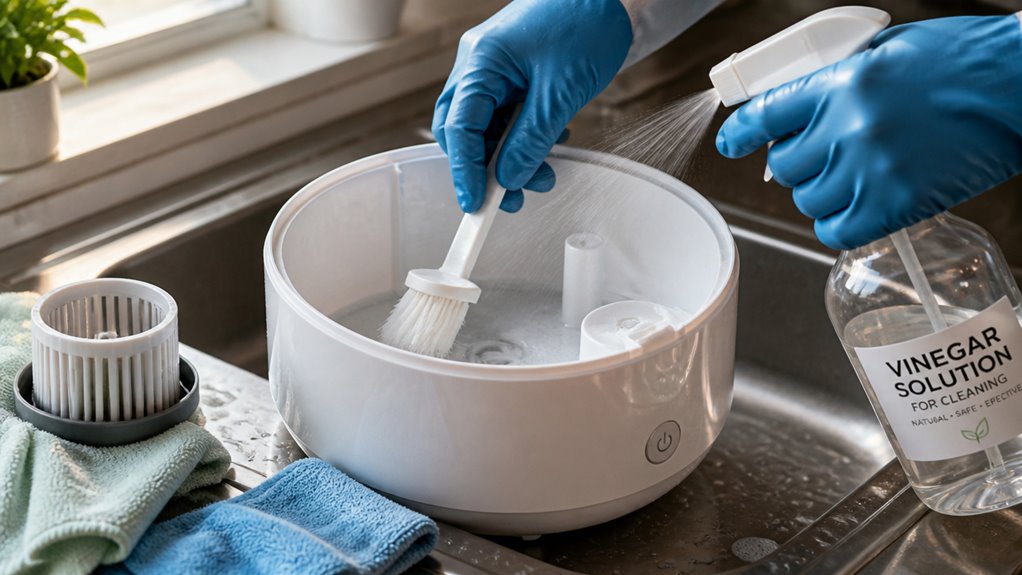
Fill the water tank with white vinegar and let it sit for 20 to 30 minutes to loosen mineral buildup.
Swish the vinegar around to ensure it contacts all interior surfaces evenly.
After soaking, gently scrub deposits with a soft brush or cloth, focusing on corners and crevices where buildup often accumulates.
This method is proven to break down hard water residues safely without harsh chemicals.
Regular weekly deep cleaning reduces risks of mold and bacteria growth, improving your humidifier’s efficiency and ensuring the air you breathe stays healthy.
To maintain optimal air quality and prevent health risks, always wear appropriate personal protective equipment when cleaning your humidifier.
How to Rinse, Dry, and Disinfect Your Humidifier Safely?
Once you’ve finished soaking and scrubbing your humidifier, you need to rinse every part thoroughly to remove all vinegar and loosened deposits.
Pour out the cleaning solution completely, then rinse all components with clean water until the vinegar smell disappears.
Focus on corners, joints, and crevices to prevent residue buildup. After rinsing, wipe the inside and outside dry with a clean cloth or towel.
Air-dry all parts fully before reassembling to reduce mold risk. If you suspect mold or bacteria, disinfect with a diluted bleach solution—use about one teaspoon of bleach per gallon of water.
Let it sit on all interior surfaces, then rinse thoroughly until the bleach odor is gone. Always unplug the humidifier before cleaning to ensure your safety.
Use protective equipment such as N95 respirators and gloves to avoid exposure to airborne spores and contaminants during cleaning.
Tips to Keep Your Humidifier Clean and Buildup-Free
Regularly maintaining your humidifier helps prevent mineral deposits, mold, and unpleasant odors from developing. Always unplug it before cleaning.
Regular maintenance prevents buildup and odors; always unplug your humidifier before cleaning for safety.
Empty and rinse the tank daily with soap and water, then dry it thoroughly. Using distilled water reduces mineral buildup markedly.
Deep clean the unit weekly by soaking the tank in white vinegar for 20–30 minutes. Scrub gently to remove deposits and rinse all parts completely.
Air-dry before reassembly. If you notice mold or bacteria, disinfect with a diluted bleach solution, typically one teaspoon per gallon of water. Rinse thoroughly to eliminate any residue.
Clean or replace filters according to the manufacturer’s guidelines, avoiding harsh chemicals unless specified.
Store your humidifier dry when not in use and increase cleaning frequency during heavy use to maintain ideal hygiene and safety.
Maintaining proper humidity control in your home can also help reduce the likelihood of mold growth in your humidifier.
Frequently Asked Questions
Can I Use Essential Oils in My Humidifier Without Damaging It?
You generally shouldn’t use essential oils in a standard humidifier unless the manufacturer explicitly says it’s safe.
Oils can damage plastic components, clog filters, and affect performance. If you want to use essential oils, consider a diffuser designed for that purpose.
Always check your humidifier’s manual to avoid voiding coverage or causing harm.
Using distilled water and proper cleaning prevents buildup and keeps your device running safely and efficiently.
How Often Should I Replace My Humidifier’s Filter?
Think of your humidifier’s filter as a gatekeeper. When it’s worn out, it can’t protect your air quality well.
You should replace the filter roughly every 1 to 3 months, depending on usage and water quality. Check the manufacturer’s guidelines for exact timing.
If you notice discoloration, odor, or reduced mist output, replace it immediately. Regular replacement guarantees safety, prevents mold, and maintains efficient humidifier performance.
Is It Safe to Run a Humidifier Overnight?
Yes, you can safely run a humidifier overnight if you maintain it properly.
Make sure to use clean, fresh water daily and clean the device regularly to prevent mold and bacteria growth.
Running a humidifier without proper cleaning can disperse harmful microbes into the air.
Also, monitor the humidity level to avoid excess moisture, which can promote mold in your room.
Always follow the manufacturer’s guidelines for safe use.
What Types of Water Are Best for Humidifier Use?
You should use distilled or demineralized water in your humidifier to prevent mineral buildup and reduce white dust.
Tap water contains minerals that can clog your device and promote bacteria growth, affecting air quality and your health.
Using distilled water also minimizes cleaning frequency and extends your humidifier’s lifespan.
Avoid hard or well water to guarantee safe, efficient operation and limit potential respiratory irritants caused by airborne mineral particles.
Can Cleaning Products Other Than Vinegar Damage My Humidifier?
You don’t want to turn your humidifier into a chemical disaster zone!
Yes, cleaning products other than vinegar can damage your humidifier if they’re too harsh.
Bleach or strong detergents might corrode parts or leave harmful residues.
Always follow manufacturer guidelines and use mild, approved cleaners like vinegar or diluted bleach for disinfecting.
Being cautious protects your device’s longevity and keeps the air you breathe safe and clean.
Keep Your Humidifier Clean, Safe, and Efficient
Keeping your humidifier clean is like giving your home’s air a fresh breath every day. By following daily wipes and weekly deep cleans, you’ll prevent harmful buildup and ensure safe, healthy humidity.
Always rinse and dry thoroughly to avoid mold and bacteria growth. Your lungs will thank you. With these simple, evidence-backed steps, you’ll maintain a reliable, safe humidifier that works efficiently and protects your family’s wellbeing all year long.