Can Steam Cleaners Kill Mold? What to Know
You can kill mold on hard, non-porous surfaces using high-temperature steam that destroys mold cells and loosens residues for easier removal.
Steam works best on materials like tiles, glass, and sealed metals, but it’s less effective on porous surfaces since it can push moisture deeper, potentially worsening mold growth.
Steam cleaning alone doesn’t eliminate mold roots or spores, so you’ll need additional steps for thorough remediation and prevention.
Understanding these limits helps you use steam safely and effectively.
Key Takeaways
- Steam cleaners kill mold cells and many spores on direct contact using high heat and dry vapor.
- They work best on hard, non-porous surfaces like tile, grout, and glass, not porous materials.
- Steam loosens mold residues but requires thorough wiping or scrubbing afterward for effective removal.
- Steam cleaning alone cannot eliminate mold roots embedded in porous materials or spores in the environment.
- Proper moisture control and drying after steam cleaning are essential to prevent mold regrowth.
How Steam Cleaners Kill Mold?

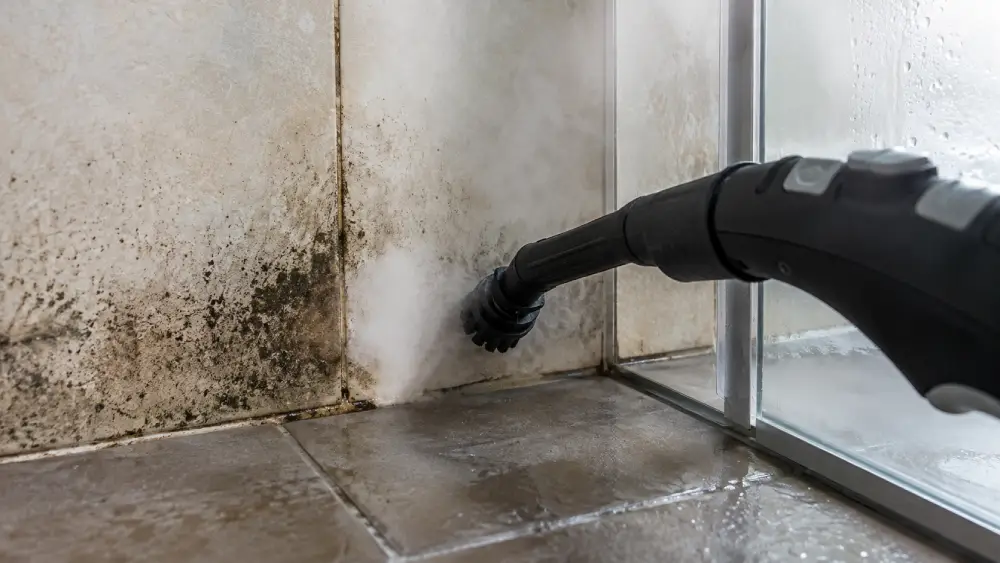
Steam cleaners kill mold primarily through the application of high heat, which destroys mold cells and many spores on direct contact.
You need a sustained temperature at the point of contact because brief exposure won’t reliably kill mold. The steam’s dry, high-temperature vapor penetrates surface layers, breaking down mold structures.
When you use a brush attachment, you enhance this effect by loosening mold from cracks and textured surfaces, improving heat penetration and removal.
However, steam cleaning only sanitizes the surface; it doesn’t eradicate mold roots embedded deeper in porous materials.
You should view steam as a targeted, surface-level treatment rather than a thorough solution.
To maximize effectiveness, make certain the steam is sufficiently hot and maintain direct contact long enough to disrupt mold cell integrity.
For comprehensive mold removal and prevention of recurrence, it is essential to combine steam cleaning with proper moisture control and drying to maintain indoor humidity levels between 30–50%.
Best Surfaces for Steam Cleaner Mold Treatment
Steam cleaners really shine when it comes to tackling mold, especially on hard, non-porous surfaces. Think tiles, grout, glass, and some metals—these are the spots where the high heat can really do its job and zap those mold cells effectively. Plus, if you use brush attachments, you can easily lift mold from textured or cracked areas, which really boosts how well the treatment works.
Just a heads-up, though—steering clear of porous materials like drywall or upholstery is a smart move. When steam hits those surfaces, moisture can seep in and actually encourage mold to come back. So stick to the hard surfaces for the best results! For long-term mold prevention, maintaining proper humidity levels between 30% and 50% is essential to keep mold from recurring after cleaning.
Ideal Non-Porous Surfaces
Targeting mold on hard, non-porous surfaces guarantees the most effective use of a steam cleaner.
These surfaces, like ceramic tiles, glass, sealed grout, and certain metals, allow direct, sustained contact with high-temperature steam. This effectively destroys mold cells and spores.
Because these materials don’t absorb moisture, the heat penetrates mold colonies without pushing spores deeper.
You’ll find steam cleaning less reliable on porous substrates such as drywall or unsealed wood, where moisture can embed mold roots beyond the surface.
When you use a steam cleaner on non-porous surfaces, make sure the temperature stays consistently high at the point of application to maximize mold cell destruction.
After steaming, promptly wipe the area to remove dead mold residues. This helps prevent allergic reactions and reduces the risk of regrowth.
For tougher mold, combining steam cleaning with chemical treatments like bleach-based cleaners can improve removal effectiveness and prevent regrowth.
Benefits of Brush Attachments
Enhancing mold removal on hard surfaces often requires more than just high-temperature steam. Brush attachments play a crucial role in improving treatment effectiveness.
When you use brushes, you mechanically agitate and lift mold from cracks, grout lines, and textured surfaces where steam alone may not penetrate deeply. This physical action increases steam contact with mold cells, boosting the likelihood of thermal destruction.
Brushes also help dislodge spores and residues, making subsequent wiping or scrubbing more thorough. You’ll find that stiffer bristles work well on durable surfaces like tile and metal, while softer brushes suit delicate areas.
For best results, ensure proper ventilation and wear personal protective equipment such as an N95 respirator and gloves during cleaning to reduce exposure to mold spores and fumes.
Avoid Porous Material Use
While brush attachments improve steam cleaning on hard surfaces, it’s important to recognize where steam cleaning is less effective, specifically on porous materials.
Porous substrates like drywall, unsealed wood, carpet padding, and upholstery absorb moisture, allowing mold roots to penetrate deeply.
Steam may push water further into these materials, promoting regrowth rather than eliminating mold.
Additionally, the heat often fails to reach mold embedded below the surface.
Because of this, steam cleaning is unreliable for porous surfaces and can exacerbate moisture problems.
Instead, focus steam treatment on hard, non-porous materials such as tile, glass, or sealed metal.
For porous materials with significant mold contamination, removal or professional remediation is a safer and more effective approach to prevent persistent mold issues.
Proper moisture control through ventilation and dehumidification is essential to prevent mold recurrence after treatment.
Why Steam Cleaning Doesn’t Work on Porous Surfaces?
Because porous materials like drywall, upholstery, and unsealed wood absorb moisture, steam cleaning often fails to eliminate mold effectively on these surfaces.
Porous materials absorb moisture, making steam cleaning ineffective at fully removing mold from these surfaces.
When you apply steam, moisture can penetrate deeply, pushing mold roots further into the substrate where heat can’t reach.
Mold colonies extend below the surface, so surface steam exposure only kills superficial growth, leaving embedded mold intact.
Additionally, steam’s moisture can exacerbate mold proliferation if the treated area doesn’t dry quickly.
You’ll find that wet steam or brief contact at lower temperatures won’t maintain the sustained heat needed to destroy mold cells deep within porous matter.
For these reasons, steam cleaning is unreliable for porous materials, and remediation usually requires removing contaminated sections to fully address mold infestation.
Prompt extraction and drying within 24–48 hours is critical to reduce mold growth and contamination risks after moisture exposure.
Killing Mold vs Getting Rid of It
Although steam cleaners can kill mold cells on contact, actually getting rid of mold requires more than just applying heat. Killing mold only destroys living cells, but dead mold fragments can still cause allergic reactions and health risks.
You need to physically remove mold residues after steam treatment to fully address contamination. Consider these key points:
Dead mold spores remain allergenic and potentially harmful.
Steam loosens mold but doesn’t remove it completely.
Thorough wiping or scrubbing after steaming is essential.
Surface cleaning alone won’t prevent mold recurrence.
Fixing underlying moisture issues is critical for lasting removal.
Thus, steam cleaning is a sanitizing step, not a thorough remediation method. Proper mold removal demands combined strategies beyond heat. Always wear protective gear such as gloves and masks when cleaning mold to ensure personal safety.
How Moisture Affects Mold After Steam Cleaning?
When you apply steam to mold-affected surfaces, the added moisture can inadvertently create conditions favorable for mold regrowth if the area isn’t dried thoroughly and promptly.
Steam introduces water vapor that penetrates surfaces. Without rapid drying, residual moisture elevates humidity levels, encouraging mold spores to reactivate.
Steam adds moisture that seeps into surfaces, requiring quick drying to prevent mold spores from reactivating.
This is particularly critical on porous materials where moisture can remain trapped. This fosters deeper mold growth despite surface treatment.
You must use fans or dehumidifiers immediately after steam cleaning to accelerate evaporation and reduce relative humidity.
Otherwise, the environment remains conducive to mold proliferation. Effective moisture management post-treatment is essential because steam cleaning alone doesn’t remove mold roots or eliminate all moisture.
Controlling ambient humidity and fixing leaks beforehand prevents recurring mold issues after steam cleaning.
Combining steam cleaning with proper humidity control & dehumidifier use is crucial to prevent the return of musty odors and mold growth.
Safe Use of Steam Cleaners on Moldy Surfaces
When using steam cleaners on moldy surfaces, it’s super important to wear protective gear. This helps keep you safe from any airborne spores and fragments that could be harmful.
Also, make sure to have good ventilation going on. It’s a great way to control moisture, which can really help reduce the chance of mold coming back after you’ve treated the area.
If you’re dealing with heavily contaminated spots, it might be wise to consider containment measures or even bring in professionals for remediation. Sometimes, steam cleaning just isn’t enough or safe on its own.
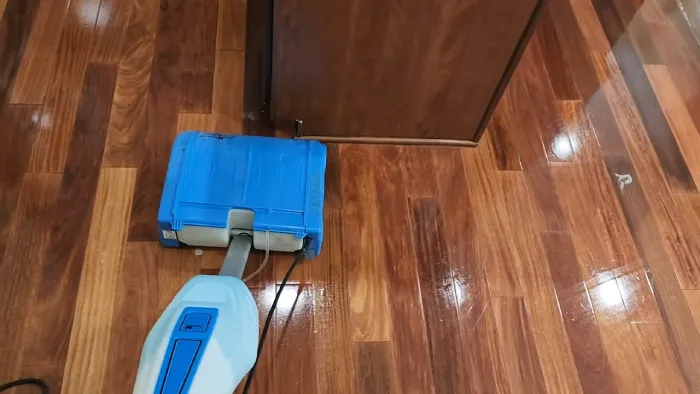
Additionally, be cautious with steam cleaning on surfaces like engineered hardwood floors, as excessive moisture and heat can cause warping and damage.
Protective Gear Recommendations
You should always wear protective gear while using steam cleaners on moldy surfaces to minimize exposure to airborne spores and fragments. Mold disturbance can release allergenic and potentially harmful particles, so proper protection is crucial.
Equip yourself with:
- N95 or higher-rated respirator to filter mold spores
- Chemical-resistant gloves to prevent skin contact
- Long-sleeved clothing to reduce skin exposure
- Safety goggles to shield eyes from steam and spores
- Waterproof boots or shoe covers to avoid contamination
This gear helps limit inhalation and dermal exposure during cleaning. Even though steam kills many mold cells on contact, dead spores can still trigger reactions. Wearing protective gear guarantees you handle steam cleaning safely, particularly in visibly moldy areas where spore release is most likely.
Proper protection complements effective cleaning and reduces health risks. Additionally, it is important to contain the area using polyethylene sheeting and negative air pressure to prevent mold spores from spreading during remediation.
Ventilation and Moisture Control
Wearing protective gear reduces your exposure to mold spores, but managing ventilation and moisture plays a key role in preventing mold regrowth after steam cleaning.
Steam introduces water vapor, which can increase surface moisture and promote mold if not dried promptly. You should ensure good airflow by opening windows or using fans to accelerate drying.
Employing dehumidifiers helps maintain lower humidity levels, vital for inhibiting mold spores from reestablishing. Before steam cleaning, fix any leaks or condensation issues to remove persistent moisture sources.
Without these controls, repeated steam treatments may be ineffective, as damp conditions favor mold return. Proper ventilation and moisture management complement steam cleaning by creating an environment unsuitable for mold proliferation, enhancing the overall success of your remediation efforts.
Handling Heavily Contaminated Areas
Although steam cleaners can effectively sanitize small, surface-level mold infestations, handling heavily contaminated areas requires caution and additional measures to guarantee safety and efficacy.
When facing extensive mold growth, you should consider these key points:
Wear protective gear to avoid inhaling spores or fragments.
Contain the area to prevent mold spread during cleaning.
Use high-temperature, dry steam with brush attachments for effective contact.
Avoid steam on porous materials; removal may be necessary instead.
Assure thorough drying post-treatment to inhibit regrowth.
Steam cleaners can kill mold cells on hard surfaces but don’t replace proper remediation.
Dead mold residues can still trigger health issues, so you must physically remove loosened mold and address moisture sources to prevent recurrence.
For large or hidden infestations, professional remediation is the safest option.
Why Steam Cleaning Alone Isn’t Enough for Mold Removal?
While steam cleaning can kill mold spores on surfaces, it doesn’t fully remove mold or prevent its return.
You need to understand that mold roots often penetrate porous materials, making steam’s heat insufficient for complete eradication.
Steam may kill surface spores but can leave behind dead mold fragments that still trigger allergic reactions.
Additionally, steam introduces moisture, which, if not dried promptly, can worsen mold growth conditions.
Physical removal through wiping or scrubbing after steaming is essential to clear residual contamination.
Also, without addressing underlying moisture problems like leaks or high humidity, mold will likely recur.
Consequently, steam cleaning should be part of a broader mold control strategy—not a standalone solution—to effectively eliminate mold and minimize health risks.
When to Choose Professional Mold Remediation?
If you encounter mold that covers a large area, penetrates porous materials deeply, or keeps returning despite your cleaning efforts, it’s time to contemplate professional mold remediation.
Professionals have the tools and expertise to handle complex infestations safely and effectively.
Experts possess the specialized equipment and knowledge to manage challenging mold issues safely and efficiently.
Consider hiring experts when you face:
- Mold growth exceeding 10 square feet
- Contamination within porous materials like drywall or insulation
- Persistent odors or allergic reactions after cleaning
- Hidden mold behind walls or under flooring
- Water damage or structural issues contributing to mold
Professional remediation involves thorough removal, drying, and moisture source correction, which steam cleaning alone can’t achieve.
They also safeguard proper containment to prevent spore spread.
Choosing professionals protects your health and prevents recurring mold problems, especially when DIY methods fall short.
Prevent Mold From Returning After Steam Cleaning
Consistently controlling moisture is essential to prevent mold from returning after steam cleaning. Since steam introduces water, you must dry the treated area thoroughly and quickly to reduce regrowth risk.
Use fans and dehumidifiers to accelerate drying and maintain relative humidity below 60%. Fix any persistent leaks, condensation, or humidity issues before steam cleaning to eliminate mold’s moisture source.
Remember, steam cleaning kills mold cells on contact but doesn’t remove mold roots embedded in porous materials. It also doesn’t eliminate spores in the environment.
After steam treatment, physically wipe or scrub surfaces to remove loosened mold residues. Assure good ventilation to lower lingering moisture.
Without addressing moisture and physical removal, mold can reestablish, rendering steam cleaning ineffective as a standalone solution.
Frequently Asked Questions
How Long Does It Take for a Steam Cleaner to Kill Mold?
You need to apply steam at a sustained high temperature, typically above 212°F (100°C), for at least 10 to 15 seconds directly on the mold to effectively kill most mold cells and spores.
Brief contact won’t suffice; consistent exposure guarantees heat penetrates and damages mold structures.
Can Steam Cleaners Remove Mold Odors Effectively?
You might think steam cleaners eliminate mold odors completely, but they only reduce surface-level smells by killing mold cells and loosening residues.
Steam’s heat disrupts odor-causing compounds temporarily, yet mold fragments and spores often remain, continuing to emit odors.
To effectively remove mold odors, you must combine steam cleaning with thorough physical removal and moisture control.
Otherwise, odors will likely return as mold regrows from hidden sources.
Is It Safe to Use Steam Cleaners Around Pets and Children?
Yes, you can safely use steam cleaners around pets and children if you take precautions.
Keep them away during operation to avoid burns from hot steam or accidental contact.
Ensure proper ventilation to prevent inhaling loosened mold spores or cleaning residues.
Use protective gear yourself and never leave the cleaner unattended.
After cleaning, allow surfaces to dry fully to minimize moisture that might attract mold or pose slip hazards.
What Temperature Must Steam Reach to Kill Mold Spores?
To kill mold spores effectively, steam must reach at least 140°F (60°C), but ideally around 212°F (100°C) for direct contact.
This high heat disrupts mold cell structures and inhibits spore viability.
You need sustained exposure at these temperatures, not just brief contact.
Visualize mold spores as heat-sensitive particles that break down under prolonged, intense heat.
Can Steam Cleaners Be Used on Mold in HVAC Systems?
You can use steam cleaners on mold in HVAC systems, but with caution.
Steam’s high heat can kill mold on accessible, non-porous surfaces like metal vents. However, porous components and hidden mold inside ducts won’t be effectively treated.
Moisture from steam may worsen mold if not dried quickly. Always combine steam cleaning with thorough drying and professional inspection to prevent regrowth and ensure HVAC safety and functionality.
Final Answer: Can Steam Cleaners Kill Mold?
Steam cleaners can be a powerful tool in your mold-fighting arsenal, but they’re not a silver bullet.
While high heat kills mold spores on non-porous surfaces, steam alone won’t banish mold hiding in porous materials or prevent regrowth if moisture lingers.
Think of steam cleaning as the first line of defense, not the final solution.
Combining it with proper drying, cleaning, and sometimes professional help guarantees you don’t just fight mold’s shadow but eliminate its root.