How to Stop Condensation on Floors: Easy Solutions?
You can stop condensation on floors by controlling indoor humidity between 30–50% using dehumidifiers and ventilation.
Keep floor surfaces warm and above the dew point through consistent heating and insulation.
Fix leaks promptly and ensure proper airflow to prevent moisture buildup.
Avoid drying clothes indoors and use extractor fans to reduce vapor from daily activities.
Maintaining these measures reduces cold spots and moisture accumulation.
Explore further to understand detailed strategies for effectively managing floor condensation.
Key Takeaways
- Maintain indoor humidity between 30–50% using dehumidifiers and hygrometers to reduce moisture and dew point near floor surfaces.
- Keep floors warm and insulated, using underfloor heating or radiators to prevent cold spots and thermal bridges.
- Improve ventilation by using extractor fans, opening windows, and ensuring airflow during and after moisture-generating activities.
- Repair leaks, seal cracks, and apply breathable sealants to prevent external moisture penetration and internal dampness.
- Wipe up condensation immediately and monitor floors regularly for dampness or mold to prevent long-term damage.
Why Floors Get Condensation?

Although you mightn’t notice it immediately, floor condensation occurs when warm, moist air comes into contact with a cooler floor surface that’s at or below the dew point temperature.
The dew point represents the temperature at which air becomes saturated, causing water vapor to condense into liquid.
Floors, especially concrete and basement slabs, are prone to condensation due to their tendency to remain cooler than the surrounding air.
You increase condensation risk if your floor has cold spots or thermal bridges, often caused by uninsulated areas.
This temperature differential allows moisture to collect on the floor surface.
Understanding these precise physical conditions helps you identify why condensation forms and guides effective prevention strategies.
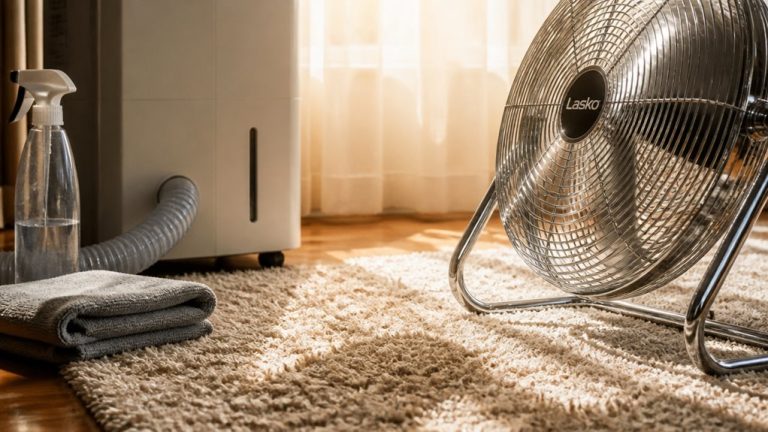
Using dehumidifiers continuously can effectively reduce indoor humidity and minimize condensation on floors.
How Indoor Humidity Causes Floor Condensation?
You know how cooking, showering, and drying clothes can fill your home with moisture? Well, that extra humidity can really add up.
When the air inside gets too humid, it creates a perfect setup for condensation to form on those cooler floor surfaces.
To keep that condensation at bay, it’s super important to manage moisture indoors. Improving ventilation and keeping an eye on humidity levels can make a big difference.
Controlling humidity levels around your home helps prevent mold growth and keeps surfaces dry and comfortable.
Sources Of Indoor Moisture
Generating indoor moisture markedly raises the risk of floor condensation by increasing relative humidity levels. Common sources include cooking, showering, washing, and drying clothes indoors.
Each activity emits water vapor that elevates indoor humidity, especially in poorly ventilated spaces. Occupant respiration and perspiration also contribute to moisture buildup.
Additionally, moisture can infiltrate from external origins such as leaks, ground moisture, or water accumulation near the building’s foundation.
Without adequate airflow or extraction, these moisture sources raise the dew point, causing condensation when warm, moist air contacts cooler floor surfaces.
To minimize condensation risk, you must identify and control these moisture inputs through ventilation, moisture barriers, and maintenance. Understanding these sources is essential for effective humidity management and condensation prevention on floors.
Poorly maintained ventilation systems can significantly contribute to elevated indoor moisture by reducing air exchange efficiency.
Humidity Levels And Impact
When indoor humidity rises above certain thresholds, it markedly increases the likelihood of floor condensation by raising the dew point temperature. This means the air holds more moisture and reaches saturation at a higher temperature, making cooler floor surfaces more prone to condensation.
If your floors remain below this elevated dew point, water vapor condenses into liquid, forming moisture on the floor. You’ll notice this especially on concrete or basement floors, which tend to stay cooler.
Controlling humidity levels is essential because higher relative humidity directly correlates with increased condensation risk. Even small increases in moisture content can cause the dew point to approach typical floor temperatures, creating persistent dampness.
Understanding this relationship helps you identify when and why condensation forms, enabling targeted prevention efforts. Monitoring and maintaining indoor humidity between 30–50% using a reliable hygrometer for relative humidity is key to minimizing condensation and related moisture problems.
Controlling Moisture Indoors
Frequently, indoor humidity levels rise due to everyday activities like cooking, showering, and drying clothes. This directly increases the amount of moisture in the air.
This elevated moisture raises the dew point. When warm, humid air contacts cooler floor surfaces, condensation forms.
You can control indoor moisture by improving ventilation. Use extractor fans, open windows, and keep doors closed during high-moisture tasks.
Maintaining consistent heating prevents floor surfaces from dropping below the dew point. Consider using dehumidifiers in problem areas to reduce relative humidity.
Avoid drying clothes indoors and cover pans while cooking to limit steam generation. Proper airflow behind furniture and around external walls helps moisture dissipation.
Persistent high humidity above 70% can promote white mold growth on organic materials, so controlling moisture is crucial to prevent biological damage indoors.
Fixing Leaks and Water Issues to Prevent Floor Condensation
Address leaks and water ingress promptly to reduce moisture accumulation that contributes to floor condensation.
Inspect plumbing fixtures, pipes, and appliances regularly for leaks or drips. Repair faulty seals, cracked pipes, or damaged fittings without delay.
Regularly check and promptly repair leaks in plumbing fixtures, pipes, and appliances to prevent moisture issues.
Check exterior elements such as gutters, downpipes, and drainage systems to guarantee they divert water away from the building foundation effectively.
Seal any gaps or cracks in walls and floors where water might seep in.
Monitor subfloor areas and basements for signs of dampness or seepage, and implement waterproofing measures if necessary.
By eliminating persistent water sources, you minimize ground moisture and humidity levels near floor surfaces, reducing the likelihood of condensation forming.
Consistent maintenance and timely intervention are essential to maintaining dry floors and preventing moisture-related damage.
Additionally, consider using a moisture meter to measure moisture content in building materials and confirm areas at risk, ensuring thorough identification of hidden dampness.
Ventilation Tips to Reduce Floor Condensation
Although reducing indoor humidity is essential, improving ventilation plays an equally indispensable role in preventing floor condensation.
You should regularly open windows or trickle vents to expel moist air, especially during and after activities like cooking, showering, or laundry.
Use extractor fans in kitchens and bathrooms to actively remove steam and humidity.
Keep doors closed in moisture-generating rooms to contain humidity and prevent its spread to cooler floor areas.
Make certain furniture placement allows airflow near external walls and floors, reducing stagnant moist air pockets.
Additionally, maintain clear subfloor vents or air bricks to promote underfloor airflow and prevent trapped moisture accumulation.
Regular inspection and maintenance of ventilation components ensure continuous airflow efficiency and help prevent moisture buildup.
How Consistent Heating Helps Stop Floor Condensation?
To keep your floors dry and free from condensation, it’s important to maintain even temperatures. When surfaces get too cold, they can drop below the dew point, leading to that pesky moisture buildup. Maintaining consistent humidity and temperature levels indoors also helps prevent expansion and contraction issues in engineered hardwood flooring.
Maintain Even Floor Temperatures
When warm air meets a consistently heated floor, the surface temperature stays above the dew point, preventing moisture from condensing.
You need to maintain an even temperature across the entire floor surface to avoid cold spots where condensation could form.
Uneven heating creates thermal gradients, increasing the risk of localized surface cooling below the dew point.
Using underfloor heating systems or well-distributed radiators helps achieve uniform warmth.
Regularly monitor and control heating output to maintain stable floor temperatures, especially in areas prone to moisture accumulation like basements or concrete slabs.
Consistent heating also reduces relative humidity near the floor by discouraging moisture accumulation.
This approach minimizes condensation risk by ensuring floor surfaces don’t drop to temperatures where water vapor can condense into liquid.
Additionally, maintaining indoor humidity between 30-50% with humidity control devices supports stable conditions that prevent condensation.
Prevent Cold Surface Formation
Maintaining even floor temperatures supports preventing cold surface formation, which directly reduces condensation risk. When your floor remains consistently warm, it stays above the dew point, preventing moisture in the air from condensing on the surface.
You should use reliable, steady heating systems that avoid fluctuations in temperature. Sudden drops encourage cold spots where condensation forms. Consistent heating minimizes thermal bridging and reduces the likelihood of localized cold patches, which are common condensation sites.
Additionally, keeping floor temperatures stable prevents moisture accumulation by maintaining a surface temperature that discourages water vapor from liquefying. By controlling heating effectively, you reduce the temperature differential between the floor and indoor air, ensuring that condensation doesn’t develop.
This approach is essential for managing floor condensation in concrete or basement floors prone to dampness. Using humidity control alongside steady heating further reduces condensation risk by maintaining indoor humidity within optimal levels.
Avoid Intermittent Heating
Avoiding intermittent heating plays a crucial role in preventing floor condensation by keeping surface temperatures consistently above the dew point. When floor surfaces cool during heating gaps, moisture condenses as warm, humid air contacts cooler floors.
Maintaining an even temperature reduces thermal gradients and cold spots where condensation forms. You should program heating systems to provide stable warmth, avoiding abrupt temperature drops. This approach limits moisture accumulation and protects floor integrity.
| Heating Pattern | Floor Surface Temperature | Condensation Risk | Energy Efficiency |
|---|---|---|---|
| Intermittent Heating | Fluctuates below dew point | High | Low |
| Consistent Heating | Maintains above dew point | Low | Optimized |
Consistent heating guarantees floor surfaces remain warm enough to prevent condensation while optimizing energy use.
Using Dehumidifiers to Control Floor Moisture
By operating a dehumidifier in areas prone to floor condensation, you can effectively reduce indoor humidity levels. This minimizes moisture accumulation on cooler surfaces.
Dehumidifiers extract excess moisture from the air, lowering relative humidity and keeping floor temperatures above the dew point. To optimize performance, follow these steps:
- Position the dehumidifier centrally in the affected room to guarantee uniform air moisture reduction.
- Set the device to maintain indoor relative humidity between 40-60%. This range limits condensation without overly drying the air.
- Regularly clean or replace filters to maintain airflow and extraction efficiency.
Using a dehumidifier complements ventilation and heating strategies. It provides precise humidity control to prevent condensation on floors and maintain a dry indoor environment.
Why Insulating Floors Prevents Dampness?
Although floors often feel cool to the touch, insulating them raises their surface temperature. This reduces the likelihood of condensation forming.
Insulating floors warms their surface, significantly lowering the risk of condensation buildup.
When you insulate floors, you minimize thermal bridging and cold spots where warm, moist air can reach the dew point and condense.
Insulation materials act as a thermal barrier, maintaining floor surfaces above critical temperatures that trigger moisture accumulation. This prevents water vapor in the air from converting into liquid on floor surfaces.
Additionally, insulating floors reduces heat loss to the ground. This ensures more consistent indoor temperatures and decreases the risk of localized cooling.
Managing Moisture Sources That Cause Floor Condensation
Control moisture sources promptly to minimize floor condensation risks. You’ll need to identify and address both internal and external contributors to maintain dry floor surfaces. Focus on these key actions:
- Repair leaks and water ingress immediately to prevent dampness accumulation around floors. Check gutters, downpipes, and drainage systems regularly to avoid external water pooling near the foundation.
- Limit indoor humidity by avoiding drying clothes indoors and using lids on pans to reduce steam during cooking. Employ extractor fans and keep doors closed in moisture-prone areas like kitchens and bathrooms.
- Wipe up any visible condensation swiftly to prevent persistent damp patches that encourage further moisture buildup and potential mold growth.
Cleaning and Maintaining Floors After Condensation
Once you’ve addressed moisture sources, maintaining clean and dry floors becomes the next priority to prevent ongoing condensation issues.
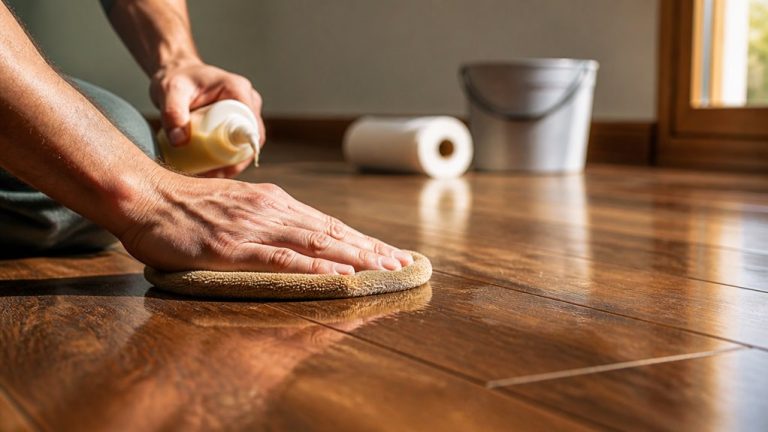
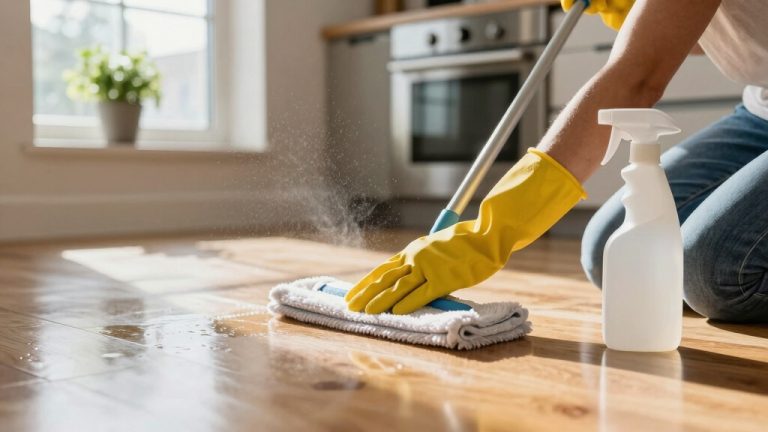
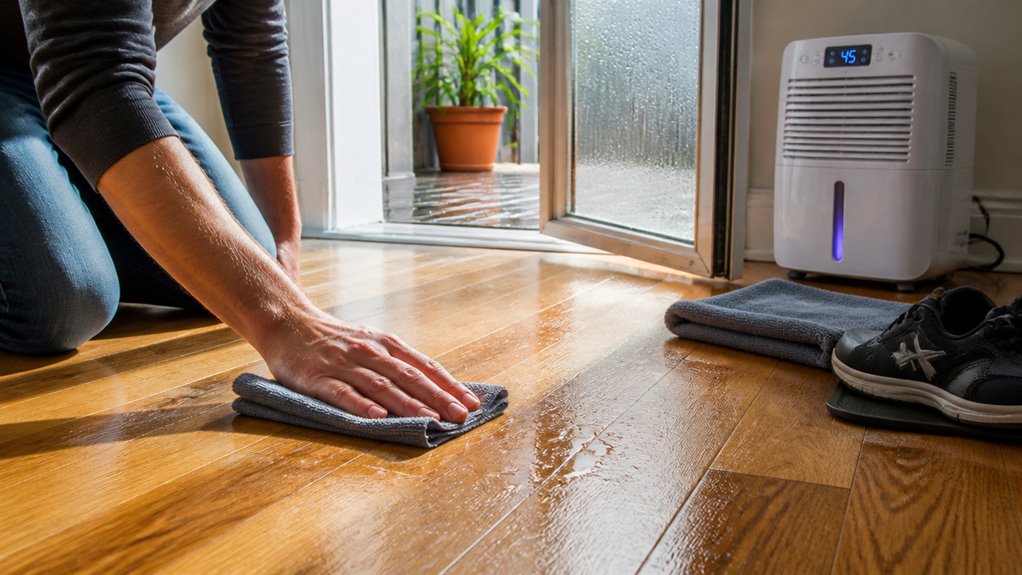
Start by promptly wiping up any visible condensation with an absorbent cloth to reduce surface dampness.
Use a mild detergent solution for routine cleaning to remove residues that can retain moisture.
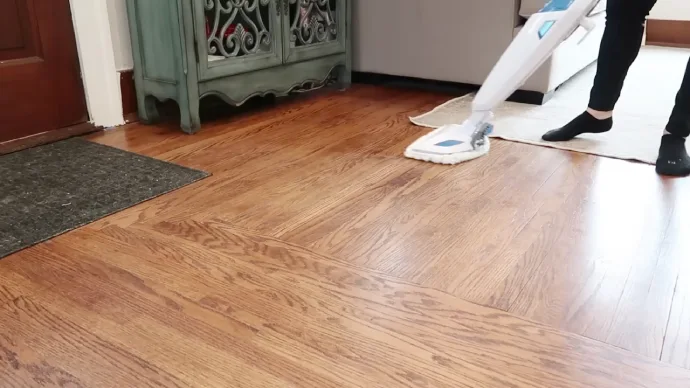
Avoid excessive water use during cleaning, as added moisture can worsen condensation risk.
Make sure floors dry thoroughly after cleaning by improving airflow and using fans if needed.
Regularly inspect floors for signs of dampness or mold growth, addressing problems immediately.
For porous surfaces like concrete, consider applying a breathable sealant to limit moisture absorption without trapping vapor beneath.
Consistent maintenance reduces the likelihood of persistent damp conditions, supporting healthier indoor environments and prolonging floor material longevity.
Frequently Asked Questions
Can Floor Condensation Cause Structural Damage Over Time?
Yes, floor condensation can cause structural damage over time.
When moisture accumulates, it promotes mold growth and wood rot in floor joists and subflooring.
Prolonged dampness weakens concrete slabs and can corrode metal fasteners.
If you don’t address condensation promptly, it compromises structural integrity and indoor air quality.
You should control humidity, improve ventilation, and fix leaks quickly to prevent these long-term risks effectively.
Are Certain Floor Types More Prone to Condensation Than Others?
Concrete floors, especially in basements, are up to 60% more prone to condensation than wood or carpeted floors.
You’ll find condensation forms more readily on surfaces that stay cooler than the air’s dew point.
Materials like concrete and tile conduct heat away, creating cold spots where moisture collects.
In contrast, insulating carpets or wood floors help maintain warmer surface temperatures, reducing condensation risk.
How Does Outdoor Weather Influence Indoor Floor Condensation?
Outdoor weather directly affects indoor floor condensation by influencing indoor temperature and humidity levels.
When it’s cold outside, your floors cool down, increasing the chance condensation forms as warm, moist indoor air meets these cold surfaces.
Conversely, humid or rainy weather raises indoor moisture, elevating condensation risk.
To manage this, you must control indoor humidity and maintain consistent heating.
This prevents floors from dropping below the dew point where moisture condenses.
Can Houseplants Affect Indoor Humidity and Floor Condensation?
Yes, houseplants can increase indoor humidity through transpiration, releasing moisture into the air.
If you have many plants or large species, this added humidity can elevate the risk of floor condensation, especially in poorly ventilated spaces.
To manage this, monitor indoor humidity levels, guarantee adequate ventilation, and avoid overcrowding plants near cold floor surfaces.
Balancing plant placement and airflow helps minimize moisture buildup and reduces condensation potential on floors.
Is Floor Condensation Linked to Mold Growth and Health Risks?
Yes, floor condensation is linked to mold growth and health risks.
When moisture accumulates on floors, it creates a damp environment ideal for mold spores to thrive.
Mold releases allergens and irritants, increasing respiratory issues and allergic reactions.
You should address condensation promptly to prevent mold development and associated health problems.
Proper ventilation, humidity control, and moisture source management are essential to minimize these risks effectively.
How to Stop Condensation on Floors: Final Tips
Think of floor condensation like the fog on a cold mirror. It’s a sign your indoor environment needs balance.
By fixing leaks promptly, improving ventilation, and maintaining consistent heating, you control moisture buildup effectively.
Data shows homes with dehumidifiers reduce indoor humidity by up to 50%. This drastically cuts condensation risks.
Taking these precise steps guarantees your floors stay dry and durable. It also prevents damage and promotes a healthier living space.