
Can You Add Gas to a Generator While It’s Running Safely?
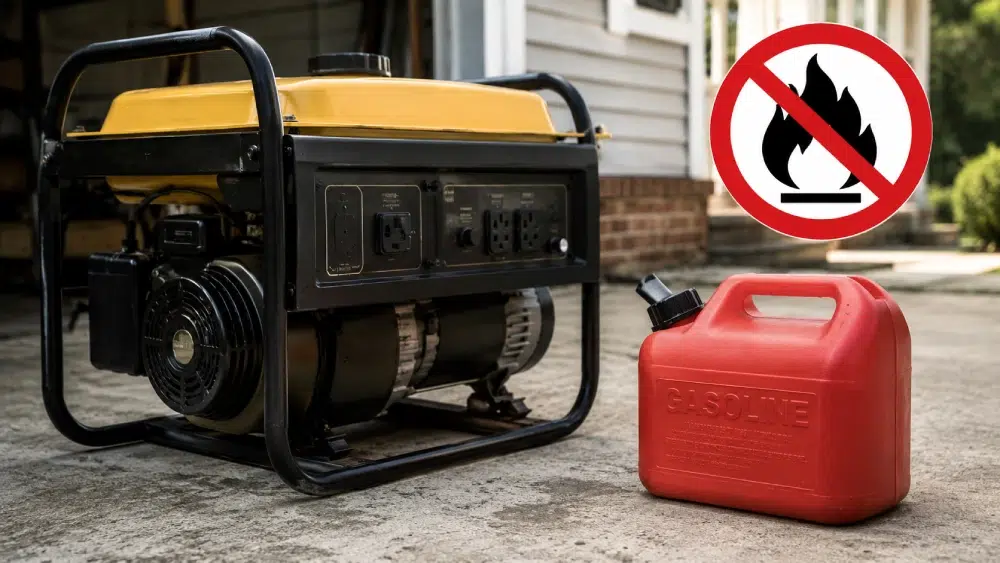
You should never add gas to a generator while it’s running because the heat, sparks, and exhaust fumes create a serious fire hazard.
Gasoline vapors ignite easily near hot engine parts, and spilled fuel can flash into flames within seconds.
Even diesel generators require shutdown to avoid ignition risks from hot surfaces.
Always turn off and let your generator cool thoroughly before refueling to prevent fire, burns, and equipment damage.
Understanding these safety steps is essential for protecting yourself and your equipment.
Key Takeaways
- Never add gas to a generator while it is running due to high fire and ignition risks from hot surfaces and sparks.
- Running generators produce heat and exhaust that can ignite spilled gasoline or vapors instantly.
- Gasoline vapors are highly flammable and can form explosive mixtures near a running engine.
- Always shut down and allow the generator to cool for at least 10–15 minutes before refueling.
- Refuel only outdoors with proper ventilation and use approved containers to prevent spills and vapor buildup.
Why Should You Never Add Gas While a Generator Runs?
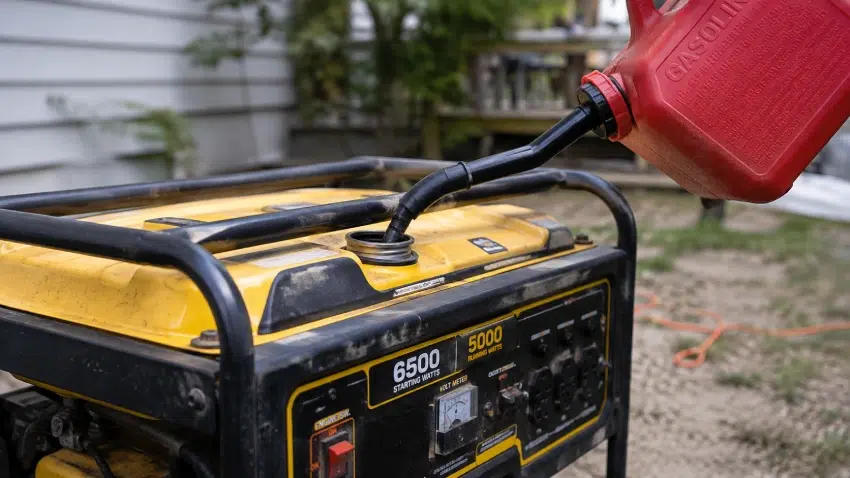
Because a running generator produces heat, sparks, and exhaust fumes, adding gasoline while it operates creates a serious fire hazard.
Gasoline vaporizes above 140°F, and these vapors can ignite instantly when exposed to hot engine parts or sparks.
Spilled fuel on the muffler or engine components can flash into flames within seconds.
Even though diesel is less flammable, refueling during operation still carries significant risks, including burns and equipment damage.
The generator’s combustion process generates constant ignition sources, increasing the chance of fire if fuel contacts any hot surface.
Handling fuel near a running generator also raises your exposure to toxic exhaust gases like carbon monoxide, especially in poorly ventilated areas.
For your safety and equipment integrity, never add gas while the generator runs.
Proper safety protocols when handling fuel are essential to prevent accidents and ensure safe operation.
How to Turn Off and Cool Your Generator Before Refueling?
To safely add fuel, you’ll need to shut down your generator completely and allow it to cool before opening the fuel cap.
First, turn off the engine using the designated power switch or key.
Make certain all moving parts and exhaust components stop running.
Next, wait for the unit to cool thoroughly.
This typically takes 10 to 15 minutes, but always follow your manufacturer’s specific guidance.
Confirm the generator’s surface is cool to the touch to prevent fuel ignition from residual heat.
Perform refueling outdoors in a well-ventilated area, using an approved fuel container.
Avoid overfilling and clean any spilled fuel immediately.
Only after these steps should you restart the generator, guaranteeing safe operation and minimizing fire or burn risks.
It is important to avoid chemical drain cleaners when managing household systems to prevent hazardous reactions during emergencies.
How Fire Risks Increase When Refueling a Running Generator?
When you add fuel while the generator is running, the risk of fire rises dramatically due to the presence of hot engine parts, sparks, and exhaust heat.
These hot surfaces easily ignite spilled gasoline, which can flash fire within seconds.
Sparks generated by the running engine further increase ignition potential.
Fuel vapors, even without direct liquid contact, are highly flammable near these heat sources.
Handling fuel mid-operation also raises the chance of accidental spills on hot mufflers or exhaust pipes, creating immediate fire hazards.
Because running generators produce continuous combustion heat and sparks, refueling without shutdown bypasses essential safety barriers.
To prevent fire incidents, always turn the generator off and allow it to cool before adding gas.
This procedure minimizes exposure to ignition sources and protects both you and your equipment.
Additionally, never operate gasoline-powered pumps or generators indoors to avoid fire and carbon monoxide risks.
What Makes Gasoline Vapors Dangerous Near Hot Engines?
Hey there! Let’s talk about why gasoline vapors can be really dangerous, especially when you’re near hot engines.
You see, gasoline vapors can ignite super quickly when they hit high temperatures—usually over 140°F.
And guess what? That’s pretty common around running engines.
Now, if those vapors happen to come into contact with hot surfaces, like the muffler or exhaust, they can flash into flames almost instantly.
Yikes, right?
So, if you’re handling fuel near a hot generator, the risk of fire and serious injury goes way up.
It’s definitely something to keep in mind for your safety! Always avoid using excessive heat or steam near flammable materials to prevent ignition risks.
Gasoline Vapor Ignition
Understand that gasoline vapors ignite easily due to their low flash point and high volatility.
When gasoline vaporizes above approximately 140°F, it forms an explosive mixture with air that can ignite instantly upon contact with a spark or hot surface.
Near a running generator, these vapors accumulate rapidly, increasing fire risk. Since the engine produces sparks and combustion byproducts continuously, even small vapor concentrations can trigger ignition.
You must avoid any fuel spills, as vapors released from spilled gasoline can flash into flames within seconds.
Handling fuel around a running generator also increases your risk of burns and equipment damage.
Always consider that controlling vapor release and exposure is critical. This is why refueling should occur only when the generator is off and cooled to prevent vapor ignition hazards.
Proper maintenance and using non-porous surfaces around fuel handling areas can reduce vapor buildup and improve safety.
Engine Heat Hazards
Engine heat consistently creates a hazardous environment for gasoline vapors, as these vapors readily ignite upon contact with hot surfaces exceeding gasoline’s flash point temperature.
When your generator runs, engine parts and the muffler can easily surpass 140°F, causing gasoline to vaporize instantly. These vapors are highly flammable and can ignite from minimal sparks or heat exposure.
Adding gas while the engine is hot risks spilled fuel contacting these surfaces, triggering flash fires within seconds. Beyond fire risk, handling fuel near a hot engine increases your chance of severe burns.
Always remember, a running generator produces continuous heat and combustion byproducts, elevating ignition potential.
To protect yourself and your equipment, never refuel while the engine is running or still hot. Always allow sufficient cooldown before adding fuel.
Improper ventilation during generator operation can lead to dangerous buildup of combustion gases, increasing overall safety risks.
Why Diesel Generator Refueling Still Requires Shutdown?
Even though diesel fuel is less flammable than gasoline, you still shouldn’t refuel a diesel generator while it’s running. It can really pose some serious fire hazards. You’ve got to shut down the generator completely to get rid of any ignition risks from hot surfaces and sparks.
I know it might seem more convenient to refuel on the go, but prioritizing safety is the way to go. It helps prevent accidents and keeps your equipment safe during the refueling process. Better safe than sorry, right? Remember that heat detection systems in fire safety rely on sensors that activate at high temperatures, highlighting why managing ignition sources during refueling is critical.
Diesel Fuel Flammability Risks
Although diesel fuel is less volatile than gasoline, you still need to shut down your generator before refueling to prevent fire hazards. Diesel vaporizes at higher temperatures and has a higher flash point, but spilled fuel contacting hot engine parts or exhaust can ignite.
Running engines produce sparks and heat, increasing the risk of fire even with diesel.
| Property | Diesel Fuel |
|---|---|
| Flash Point | ~125°F (52°C) |
| Vapor Pressure | Low, less vapor risk |
| Ignition Risk | Present near hot surfaces |
Because diesel’s ignition risk remains significant near hot components, refueling while the generator runs is unsafe. Always prioritize shutdown and cooldown before adding diesel fuel. Proper maintenance and regular cleaning of fire sprinkler heads can help enhance overall fire safety in environments where fuel handling occurs.
Shutdown Prevents Fire Hazards
Because diesel fuel can still ignite when it contacts hot engine parts or exhaust, you must shut down your generator before refueling to eliminate fire hazards.
Running generators produce heat, sparks, and exhaust gases that can ignite spilled fuel or vapors instantly.
Diesel’s lower flammability doesn’t remove this risk; it only reduces it.
Follow these essential steps to refuel safely:
- Turn off the generator completely and let it cool for at least 10–15 minutes.
- Refuel outdoors in a well-ventilated area to prevent vapor buildup.
- Use approved fuel containers and avoid overfilling to minimize spills.
- Clean any fuel spills immediately before restarting the engine.
Shutting down prevents ignition sources from interacting with fuel, markedly reducing fire hazards during refueling. Additionally, understanding the importance of fire safety systems can help reinforce safe practices around fuel handling.
Safety Over Convenience
While diesel fuel is less flammable than gasoline, you must shut down your generator before refueling to prevent fire hazards. Running engines expose fuel to hot surfaces and sparks, increasing ignition risk.
Prioritizing safety over convenience prevents burns, fires, and equipment damage.
| Hazard Type | Risk Description | Safety Measure |
|---|---|---|
| Fire | Fuel contacts hot engine parts | Always power off first |
| Burns | Handling fuel near exhaust or muffler | Let engine cool down |
| Carbon Monoxide | Toxic exhaust gas exposure | Refuel outdoors |
| Equipment Damage | Fuel spills cause corrosion or leaks | Use approved containers |
Never rush the refueling process. Complete shutdown, cooldown, and ventilation ensure your diesel generator stays safe and operational. Additionally, understanding the importance of fire suppression agents in controlling fire hazards can further enhance safety during refueling.
Why You Need Good Ventilation When Refueling Your Generator?
Making sure good ventilation when refueling your generator is crucial to prevent the buildup of hazardous gases, particularly carbon monoxide, which the exhaust emits in toxic concentrations.
Ensuring proper ventilation while refueling your generator is essential to avoid dangerous carbon monoxide buildup.
Without proper airflow, these gases can accumulate quickly, posing severe health risks.
You must refuel only outdoors or in well-ventilated spaces to minimize exposure.
Here’s why good ventilation matters:
- It disperses carbon monoxide, reducing poisoning risk.
- It lowers the concentration of flammable fuel vapors near the generator.
- It prevents hazardous gas buildup that can ignite from engine heat or sparks.
- It guarantees safer breathing conditions for anyone nearby during refueling.
Prioritize ventilation to protect yourself and others from toxic exposure and fire hazards during generator refueling.
How Long to Wait Before Refueling After Shutdown?
After you shut down your generator, it’s a good idea to let it cool down before you think about refueling. This helps to minimize any fire or burn risks.
Now, the recommended waiting times can vary quite a bit. Typically, you might see suggestions ranging from 5 to 20 minutes, but it really depends on what the manufacturer says.
Recommended Cooling Times
Waiting the appropriate cooling time before refueling a generator markedly reduces the risk of fire caused by contact between gasoline and hot engine components. After shutdown, the engine and exhaust remain dangerously hot, so you must allow sufficient cooldown before adding fuel.
Follow these recommended cooling times for safety:
- Wait at least 5–10 minutes to let immediate surface heat dissipate.
- Extend waiting time to 10–15 minutes if your generator runs hotter or in warm environments.
- For maximum safety, wait 15–20 minutes or until the unit feels cool to the touch.
- Never rush refueling; make certain no residual heat remains to prevent vapor ignition or fire.
Adhering to these precise cooling intervals minimizes fire hazards and ensures a safer refueling process.
Manufacturer Guidance Variations
Different generator manufacturers provide specific recommendations on how long you should wait before refueling, reflecting variations in engine design, materials, and operating temperatures.
Some suggest waiting just 5–10 minutes after shutdown, while others recommend 15–20 minutes to ensure the engine and exhaust components cool sufficiently.
These differences arise because certain engines run hotter or use materials that retain heat longer, increasing fire risk if refueled too soon.
You should always follow the manufacturer’s exact guidance over generic advice. If no specific timing is given, err on the side of caution and wait until the generator is cool to the touch.
This approach minimizes the chance of gasoline vapors igniting on hot surfaces, protecting you from burns, fire hazards, and equipment damage during refueling.
Why Refuel Outdoors and Use Proper Ventilation?
Because gasoline vapors are highly flammable and heavier than air, refueling a generator outdoors in a well-ventilated area is critical to prevent vapor buildup that could ignite.
Gasoline vapors are heavier than air and highly flammable, so always refuel generators outdoors in well-ventilated areas.
When you refuel indoors or in confined spaces, vapors accumulate near the floor, increasing fire risk.
Additionally, generator exhaust emits carbon monoxide, a colorless, odorless toxic gas that can quickly reach dangerous levels without proper airflow.
To assure safety, always:
- Refuel in open air or areas with strong cross-ventilation.
- Position the generator away from walls or enclosed spaces.
- Avoid refueling near ignition sources like pilot lights or electrical equipment.
- Monitor wind direction to prevent vapors from entering living spaces.
Following these steps minimizes fire hazards and carbon monoxide exposure, keeping you and others safe during generator maintenance.
Steps to Take If Gasoline Spills While Refueling
If you spill gasoline while refueling your generator, act immediately to prevent fire hazards and injury. First, turn off the generator if it’s still running.
Move away any ignition sources, including open flames, sparks, and electrical equipment. Use an absorbent material like a rag or commercial spill pad to soak up the spilled fuel promptly.
Avoid spreading the gasoline by sweeping or wiping aggressively. Dispose of contaminated materials safely in a fire-resistant container.
Ventilate the area thoroughly to disperse hazardous vapors. Never use water to clean up gasoline spills, as it can spread the fuel and increase ignition risk.
Inspect the refueling area and generator for residual fuel before restarting. Taking these steps minimizes the risk of fire, explosion, and toxic exposure after a gasoline spill.
How Following Proper Refueling Steps Protects You and Your Equipment?
When you follow proper refueling steps, you markedly reduce the risk of fire, burns, and equipment damage. Shutting the generator off and allowing it to cool prevents gasoline vapors from igniting on hot surfaces.
Refueling outdoors in well-ventilated areas minimizes carbon monoxide exposure and vapor accumulation. Using approved containers and avoiding overfilling lowers spill and leakage risks, protecting both you and the generator.
Follow these key steps:
- Turn the generator off completely before refueling.
- Wait 10–15 minutes for the engine to cool before opening the fuel cap.
- Refuel outdoors using an approved container and avoid overfilling.
- Immediately clean any fuel spills and inspect for leaks before restarting.
Strict adherence protects your safety and extends your generator’s service life.
Frequently Asked Questions
What Type of Fuel Container Is Safest for Storing Generator Gas?
You should use an approved fuel container designed specifically for gasoline storage when storing generator gas.
These containers are typically made of durable, high-density polyethylene with child-resistant caps and proper venting to prevent pressure buildup.
Avoid makeshift or unmarked containers, as they increase spill and vapor hazards.
Always label your container clearly, keep it tightly sealed, and store it in a cool, well-ventilated area away from ignition sources to maximize safety.
Can Using Ethanol-Blended Gasoline Damage My Generator?
Yes, using ethanol-blended gasoline can damage your generator over time.
Ethanol attracts moisture, which may cause corrosion and phase separation in the fuel system.
This leads to clogged carburetors, fuel lines, and engine issues.
To protect your generator, use ethanol-free fuel if possible, or add fuel stabilizers designed for ethanol blends.
Always follow manufacturer recommendations to maintain engine performance and avoid costly repairs.
How Often Should I Check My Generator’s Fuel Filter?
You should check your generator’s fuel filter every 50 to 100 hours of operation or at least once per season.
Studies show clogged fuel filters can reduce engine efficiency by up to 30%, increasing wear and risk of failure.
Inspect for debris, discoloration, or damage, and replace if necessary to ensure clean fuel flow.
Regular checks help maintain performance, prevent engine damage, and avoid costly repairs, keeping your generator safe and reliable.
Are There Signs My Generator Is Overheating During Operation?
Yes, you can spot overheating signs during operation. Watch for unusual smells like burning rubber or fuel, excessive engine noise, or smoke from the exhaust.
The generator may also shut down unexpectedly or fail to produce power efficiently. Feel the engine casing; if it’s too hot to touch, that’s a red flag.
Always monitor temperature gauges if available and shut down immediately to prevent damage or fire risk.
Can Additives Improve Generator Fuel Stability During Long Storage?
Imagine your generator’s fuel tank as a calm reservoir, vulnerable to decay over time.
Yes, additives can greatly improve fuel stability during long storage by preventing oxidation and gum buildup that clog your engine.
When you use stabilizers, you maintain clean fuel flow and protect critical parts.
Just add the recommended amount before storage.
Always store fuel in approved containers away from heat to keep your generator ready and safe for reliable operation.
Final Answer: Can You Add Gas to a Generator While It’s Running?
Never add gas to your generator while it’s running. Doing so is like inviting a firestorm to party under your hood. You risk catastrophic explosions and severe burns, endangering yourself and ruining your equipment.
Always shut down and let the engine cool completely before refueling. Taking these safety steps isn’t just a suggestion; it’s a critical protocol that protects your life and investment from preventable disaster. Don’t gamble with gasoline; refuel safely every time.