
Why Does It Smell Like Gasoline in My House? Safety Guide
If you smell gasoline in your house, it likely comes from leaks in fuel containers, vehicles, or gas-powered tools, or from vapors seeping through attached garages and HVAC systems.
These fumes pose serious health and fire risks due to toxic chemicals. You should leave the area immediately, avoid ignition sources, and ventilate cautiously only if safe.
Persistent or strong odors with symptoms require professional testing and remediation to prevent exposure and damage.
Understanding sources and safety steps helps manage this hazard effectively.
Key Takeaways
- Gasoline odors often come from leaking or poorly sealed fuel containers and gas-powered tools stored indoors.
- Vapors can enter homes from attached garages through cracks, gaps, or HVAC system air pathways.
- Spilled gasoline, petroleum-based solvents, or nearby fuel-related activities may cause persistent indoor gasoline smells.
- HVAC operation can spread gasoline vapors inside, especially if intakes are near garages or contaminated areas.
- Persistent gasoline odors with symptoms like dizziness or nausea indicate a need for professional leak detection and remediation.
Immediate Safety Steps When You Smell Gasoline Indoors
If you smell gasoline indoors, your first priority should be to leave the area immediately to minimize exposure and reduce the risk of ignition. Gasoline vapors are highly flammable and pose significant health hazards, including dizziness and respiratory irritation.
Leaving immediately is crucial if you smell gasoline indoors to avoid health risks and fire hazards.
Avoid turning electrical switches on or off. Don’t use open flames or spark-producing devices. Once safe, if you can do so without entering the vapor cloud, open windows and doors to ventilate the space.
Shut off any visible fuel sources, such as leaking containers or equipment, only if it can be done safely. Contact emergency services or a qualified professional if the odor is strong, persistent, or worsening.
Do not re-enter or resume normal use until the source is identified and the area is declared safe. Proper ventilation reduces the concentration of flammable vapors and lowers the risk of ignition indoors.
Common Indoor Sources of Gasoline Smells
After ensuring your immediate safety when detecting gasoline odors indoors, identifying the specific sources within your home becomes a priority.
You’ll want to inspect areas where gasoline or related vapors may originate, such as storage or equipment zones.
Common indoor sources include:
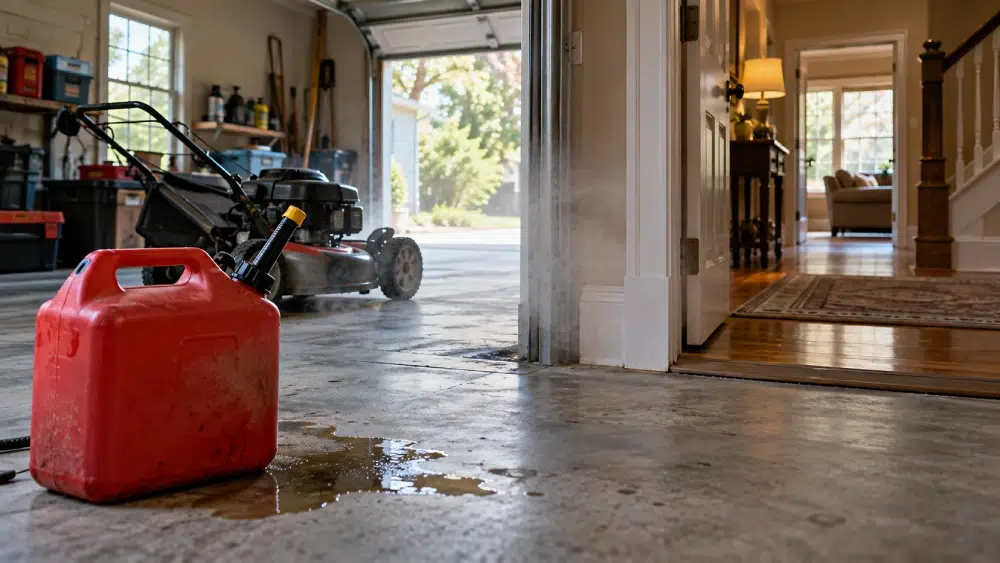
- Leaking or poorly sealed gasoline cans in garages or basements releasing vapors
- Gas-powered tools like lawn mowers and generators off-gassing after use
- Spilled gasoline on floors, clothing, or tools causing lingering odors
- Petroleum-based solvents (paint thinners, adhesive removers) emitting gasoline-like smells
- Vehicles with fuel leaks or loose gas caps near living areas
Pinpointing these sources helps you address the problem effectively and prevent prolonged exposure to harmful gasoline vapors inside your home. Using proper ventilation and dust collection systems can also help reduce airborne gasoline odors and maintain air quality.
How Attached Garages and Ventilation Spread Gasoline Vapors Indoors?
Because attached garages often share walls and air pathways with living spaces, gasoline vapors from stored fuel or vehicles can easily migrate indoors.
Cracks, gaps, and poorly sealed doors between the garage and house create direct channels for vapors.
Additionally, your HVAC system may draw contaminated air if its intake is near the garage or if negative pressure develops indoors.
Without proper ventilation, vapors accumulate in the garage, increasing the concentration that leaks inside.
Even sealed gasoline containers emit vapors due to evaporation, further raising indoor levels.
To minimize vapor intrusion, ensure tight sealing of walls and doors, improve ventilation in the garage, and position HVAC intakes away from potential contamination sources.
Regular maintenance and monitoring of ventilation systems help prevent buildup and spread of hazardous vapors, reducing the risk of indoor air contamination.
Outdoor Sources That Bring Gasoline Odors Indoors
While attached garages and ventilation systems can channel gasoline vapors indoors, outdoor sources also play a significant role in introducing these odors into your home.
You mightn’t realize how external factors contribute to indoor gasoline smells. These vapors can infiltrate through air intakes, open windows, or foundation cracks.
Common outdoor sources include:
Fresh asphalt or roofing tar emissions drifting near your home.
Nearby fuel-related construction or maintenance activities.
Subsurface vapor intrusion from leaking underground storage tanks or contaminated soil.
Chemical odors from sewer or drain issues mimicking gasoline.
Industrial or heavy vehicle emissions carried by prevailing winds into your living space.
Recognizing these external contributors helps you understand how gasoline odors bypass physical barriers and enter your home environment. Proper ventilation and sealing of entry points are crucial to prevent vapor intrusion and maintain indoor air quality.
How to Identify the Source of Gasoline Smells?
To pinpoint the source of gasoline smells in your home, start by systematically evaluating areas where vapors are most likely to originate or accumulate.
Inspect garages, basements, and storage rooms for leaking or improperly sealed gasoline containers and fuel-powered equipment.
Check vehicles in attached garages for fuel leaks, loose gas caps, or recent fuel spills.
Examine floors, clothing, and tools for residual spills that could emit vapors.
Assess ventilation pathways, including gaps between the garage and living spaces and HVAC intake locations, as these can draw fumes indoors.
Don’t overlook petroleum-based solvents stored in the home.
Use your nose in conjunction with a flashlight to detect stains or residue.
If the odor intensifies when HVAC operates or after equipment use, focus on those specific areas for hidden leaks or contamination.
Regularly cleaning floors with a gentle method like sweeping hardwood floors can help reduce dust and particles that might trap and hold odors.
Health Risks of Gasoline Smells Indoors
Exposure to gasoline vapors indoors poses significant health risks due to the toxic chemicals they contain, such as benzene, toluene, ethyl benzene, and xylene.
Indoor exposure to gasoline vapors is hazardous due to toxic chemicals like benzene and toluene.
When you inhale these vapors, they can quickly affect your nervous system and respiratory tract. Prolonged or high-level exposure increases risk for serious health issues.
You might experience:
- Headaches, dizziness, or nausea from central nervous system depression
- Eye, nose, and throat irritation caused by chemical exposure
- Difficulty breathing or exacerbation of asthma symptoms
- Long-term risks like bone marrow suppression or increased cancer risk due to benzene
- Fatigue and impaired cognitive function from chronic exposure
Recognizing these symptoms early helps you mitigate exposure and protect your health effectively. Proper ventilation during and after exposure is essential to reduce inhalation risks and prevent lingering indoor contamination.
When to Call a Professional for Gasoline Odor Problems?
If you notice a strong or lingering smell of gasoline, it’s really important to take it seriously. Especially if you start feeling dizzy or nauseous, don’t hesitate—call a professional right away.
These experts have the training to pinpoint issues like fuel leaks or vapor intrusion. Plus, they can identify any contaminated sources and suggest safe ways to handle the situation.
The sooner you reach out for help, the better. This not only protects your health but also helps prevent any further exposure. So, don’t wait—get the right support! Always prioritize wearing personal protective equipment when dealing with hazardous fumes or spills.
Recognizing Dangerous Odors
When gasoline odors persist or intensify inside your home, you should promptly assess the situation for potential hazards. Recognizing dangerous odors early is critical for your safety.
Pay attention to these signs:
Odor strongest near garages, basements, or utility rooms, indicating a nearby source.
Increasing smell when HVAC or ventilation systems operate.
Sudden gasoline scent after equipment use or refueling activities.
Persistent odor despite cleaning or airing out the space.
Symptoms like dizziness, headache, nausea, or eye irritation accompanying the smell.
If you notice any of these, the gasoline odor likely signals a hazardous vapor presence. Avoid ignition sources and ventilate cautiously.
Immediate professional evaluation is essential to identify leaks, vapor intrusion, or contamination before health risks escalate.
Additionally, maintaining proper ventilation and humidity control can help prevent accumulation of hazardous fumes indoors.
Choosing Qualified Experts
Recognizing the limits of your expertise is crucial when dealing with gasoline odors in your home. If you detect persistent fumes, especially with no obvious source, or experience health symptoms like dizziness or nausea, call a qualified professional immediately.
Certified environmental consultants or licensed HVAC technicians can perform accurate vapor testing, source identification, and remediation. Avoid attempting repairs or cleanup without proper training, as gasoline vapors are flammable and toxic.
Professionals use specialized equipment to assess air quality, inspect hidden leaks, and evaluate vapor intrusion risks. They also guarantee safe ventilation and recommend corrective measures.
When in doubt, prioritize safety by contacting experts who can diagnose and mitigate the problem effectively. This helps prevent potential health hazards and property damage.
Early detection is key, as preventing further damage can reduce health risks and costly repairs.
Frequently Asked Questions
Can Household Pets Be Affected by Gasoline Vapors Indoors?
Yes, household pets can be affected by gasoline vapors indoors.
These vapors contain toxic compounds like benzene that can irritate your pet’s respiratory system, eyes, and skin.
Pets may show symptoms such as coughing, sneezing, lethargy, or vomiting.
If you notice these signs or detect a gasoline smell, you need to ventilate the area immediately and remove your pets until the environment is safe.
Does Gasoline Odor Affect the Value of My Home?
Yes, gasoline odor can reduce your home’s value. Persistent fumes suggest potential fuel leaks, vapor intrusion, or environmental contamination, raising health and safety concerns.
Buyers and inspectors may see this as a red flag, leading to costly remediation or negotiation issues. Addressing the source promptly and ensuring proper ventilation and sealing helps maintain property value and marketability.
Improving indoor air quality and safety for occupants is also essential.
Can Gasoline Fumes Trigger Smoke Alarms or Carbon Monoxide Detectors?
Gasoline fumes typically won’t trigger smoke alarms since these devices detect particles from combustion, not vapors. However, strong gasoline vapors can sometimes cause false alarms in sensitive photoelectric smoke detectors.
Carbon monoxide detectors won’t respond to gasoline fumes directly, as they detect CO gas specifically. Still, if gasoline vapors ignite and cause incomplete combustion, CO might be produced, potentially activating those detectors.
Always make sure proper ventilation and address gasoline odors promptly to avoid hazards.
Are There Natural Remedies to Neutralize Gasoline Smells at Home?
Sure, some simple solutions can markedly suppress stubborn gasoline smells. You can sprinkle baking soda in affected areas to absorb odors.
Alternatively, place activated charcoal in open containers to capture vapors. White vinegar’s volatile vapor also helps neutralize nasty smells when left in bowls around the room.
Just remember, these natural neutralizers work best as temporary tactics, not substitutes for identifying and eliminating the actual gasoline source promptly.
How Long Does Gasoline Vapor Typically Linger Indoors After a Spill?
Gasoline vapor can linger indoors anywhere from several hours to days after a spill, depending on ventilation, spill size, and surface material.
Poorly ventilated areas trap vapors longer, while porous surfaces like concrete or fabric absorb fuel and release fumes slowly.
You should increase airflow and clean affected areas promptly. If the smell persists beyond 48 hours or worsens, it’s vital to investigate further or consult a professional to guarantee safety.
Final Thoughts on Gasoline Smells Inside the House
If you think your house smells like a gasoline factory exploded, don’t ignore it. Gasoline vapors aren’t just annoying; they’re a serious hazard that can cause health problems or even fires.
Act fast: identify the source, improve ventilation, and if needed, call a professional immediately. Tackling the issue quickly protects your home and health from invisible dangers lurking in the air. Don’t let a faint smell turn into a full-blown disaster!