How to Store a Circular Saw Safely and Properly?
To store your circular saw properly, choose a dry, cool spot away from moisture and temperature swings to prevent rust.
Always clean off sawdust before storing, keep the blade guarded and retracted, and elevate the saw off the floor for protection.
Organize blades separately in cases, wrap the cord neatly, and place the saw on a stable surface or mount it on a wall to save space.
Following these tips will help keep your saw sharp, safe, and ready for your next job, with more detailed strategies to protect your tool and workspace.
Key Takeaways
- Store the circular saw in a dry, cool place with low humidity to prevent rust and moisture damage.
- Keep the blade guarded and fully retracted or covered to protect it from impacts and corrosion.
- Clean sawdust and debris from the blade and body before storage to maintain performance and safety.
- Place the saw on a stable, flat surface or hang it securely to avoid tipping and physical damage.
- Wrap the power cord neatly and secure it to prevent tangling, kinks, and wear over time.
Select a Dry, Cool Spot to Store Your Circular Saw

When storing your circular saw, choose a spot that’s dry and cool to prevent moisture buildup and heat damage. Aim for a low-humidity area with stable temperatures, avoiding basements prone to dampness or hot garages exposed to sun.
Keep the saw off concrete floors by placing it on a shelf or platform to reduce moisture exposure from below. Avoid places with temperature swings, as heat can warp components and cold can cause condensation.
Regularly inspect the storage area and saw for signs of corrosion or damage caused by environmental factors. By maintaining these conditions, you’ll protect your saw’s internal parts and ensure it’s ready for use without unexpected issues caused by poor storage conditions. Using corrosion-resistant materials or coatings can further help protect tools stored in challenging environments.
Prevent Rust and Moisture Damage When Storing Your Saw
To keep your circular saw safe from rust and moisture damage, it’s important to store it in a dry, cool spot with low humidity. You want to make sure that the environment is just right for your tool.
Also, try to elevate your saw off the floor or concrete. Using a shelf or platform can really help to minimize any moisture exposure. Trust me, it’s worth the extra effort!
And don’t forget to check your storage area regularly. Just a quick glance for any signs of dampness can save your tool from potential harm. Keeping an eye on things will go a long way in preserving your saw’s lifespan!
Using a dehumidifier can help maintain optimal humidity levels and prevent moisture buildup in your storage area.
Dry Cool Storage
Storing your circular saw in a dry, cool environment markedly reduces the risk of rust and moisture damage.
Choose a space with low humidity to prevent condensation that can corrode metal parts.
Avoid areas prone to temperature extremes, as heat can warp components while cold encourages moisture buildup.
Keep the saw away from damp basements or unventilated garages.
Regularly check for any signs of rust or corrosion and address them immediately to prevent further damage.
Use the blade guard to cover the blade fully and retract it if possible, protecting it from air exposure.
This storage approach keeps your saw ready for use while extending its lifespan by minimizing environmental wear and tear.
Consistent dry, cool storage is key to maintaining your tool’s performance.
Maintain low humidity using dehumidifiers and vapor barriers to further protect metal components from moisture buildup.
Elevate Off Floor
Keeping your circular saw off the floor helps prevent moisture from seeping into the tool, which can cause rust and damage over time.
Use a sturdy shelf, wall-mounted hanger, or platform to raise the saw above concrete or other surfaces that collect dampness.
Avoid placing it directly on the ground, especially in basements or garages prone to humidity.
Elevating the saw also reduces the chance of accidental bumps or knocks.
Make sure the support is stable and wide enough to hold the saw securely by its base plate.
Check the storage spot regularly for signs of moisture or corrosion.
For optimal protection, maintain a cool, dry environment with controlled humidity to prevent rust and deterioration.
Protect Your Circular Saw Blade and Guard Safely
Always secure your circular saw’s blade guard when the tool isn’t in use to prevent accidental contact and damage.
Keeping the guard in place protects both you and the blade from harm.
You’ll also want to store the blade fully retracted or in its safest stable position to avoid accidental contact.
To protect your blade and guard safely, follow these steps:
- Always keep the blade guard engaged and avoid leaving the blade exposed to reduce risk of damage or injury.
- Prevent impacts by storing the saw where it won’t be knocked or bumped, protecting the blade fence and guard alignment.
- If you have multiple blades, store each separately in protective cases to avoid nicks and maintain sharpness.
These precautions extend your saw’s life and keep your workspace safer.
Additionally, maintaining proper tool ergonomics during storage and handling helps ensure long-term durability and user safety.
Clean Your Circular Saw Before Putting It Away
Since protecting your blade and guard helps maintain your saw’s longevity, you’ll want to make sure the tool itself stays clean before putting it away.
Start by removing sawdust and debris from the blade and housing using a brush or compressed air.
Shake out any dust trapped inside the tool to prevent buildup that could affect performance.
Wipe down the blade, guard, and body with a dry or slightly damp cloth to remove residue and prevent rust.
Avoid using water directly on the motor or electrical parts.
Keep the storage area dust-free to minimize contamination.
Finally, cover your saw with a breathable dust cover or tarp if it’s stored in a workshop prone to dust.
This ensures the tool stays clean and ready for your next project.
For enhanced precision and safety during future woodworking tasks, consider storing your saw alongside tools with cast iron construction that minimize vibration.
Choose Cases, Bags, and Cabinets for Safe Circular Saw Storage
When storing your circular saw, choosing the right case, bag, or cabinet makes a significant difference in protecting the tool from damage and organizing your workspace efficiently.
Select a storage solution that prevents dust entry, keeps the blade guard secure, and offers impact protection. Consider these options:
- Use a hard case or dedicated saw case to shield the saw from impacts and keep it stable during transport or storage.
- Opt for a tool bag or canvas bag if you need portable storage that still protects from dust and scratches.
- Store your saw in a tool cabinet or chest when you want a fixed, organized space that safeguards your tool and keeps your workspace tidy.
Picking the right container guarantees your saw stays safe, accessible, and in good condition. For enhanced usability, consider storage options that allow easy access to tools with quick-release mechanisms similar to those found in top brad nailers.
Organize Circular Saw Blades and Accessories for Quick Access
Choosing the right case or cabinet for your circular saw lays the groundwork for an organized workspace.
Keeping your blades and accessories orderly guarantees you can work efficiently. Store blades separately in a labeled blade case or individual sleeves to prevent damage and accidental cuts.
Arrange accessories like wrenches, guards, and spare parts in small compartments or clear containers inside your storage solution. This keeps everything visible and easy to grab.
Avoid tossing loose parts into the saw’s storage area, as they can jam or damage the tool. Regularly check that blades and accessories are clean and rust-free before storing.
Additionally, storing blades with features like heat-management and anti-gum coatings helps preserve their cutting performance and extends their lifespan.
Keep Cords Tidy and Your Saw Stable to Avoid Damage
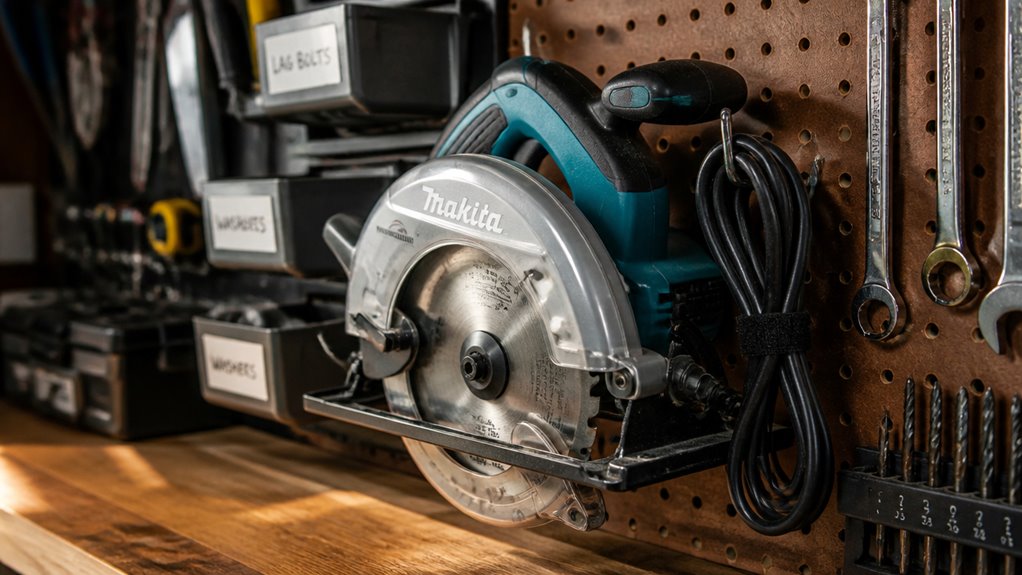
Keep your circular saw’s cord wrapped neatly around the housing or secured with Velcro to prevent tangling and damage.
A tangled cord can cause wear or create tripping hazards. Managing it properly extends the tool’s life and keeps your workspace safe.
Stability during storage is vital to avoid accidental drops and damage.
To keep your saw safe and cords tidy:
- Wrap the cord snugly without kinks or tight bends that can weaken the wire over time.
- Store the saw on a flat, stable surface where it won’t tip or slide.
- Keep loose parts out of the storage area to prevent them from falling into the blade guard or causing scratches.
Additionally, storing your saw with a pivoting shoe helps protect the blade and maintain precision for your next job.
These steps protect your saw and keep it ready for the next job.
Use Wall and Shelf Storage to Save Workshop Space
After wrapping your cord neatly and securing your saw on a stable surface, maximizing your workshop space becomes the next priority.
Using wall and shelf storage keeps your saw accessible yet out of the way. Mount a sturdy wall hanger or pegboard hook to hold your saw safely off benches and floors.
Shelves work well for stable, horizontal storage. Just make sure the base plate rests flat to avoid tipping. You can also create vertical slots or angled racks to save space in smaller workshops.
Keep the saw’s blade guarded and protected while stored.
| Storage Option | Benefit |
|---|---|
| Wall-mounted hanger | Saves bench space |
| Shelf storage | Stable, easy access |
| Vertical slot rack | Compact, space-efficient |
| Pegboard hooks | Flexible, customizable |
| Corner shelving | Utilizes awkward spaces |
Frequently Asked Questions
Can I Store a Circular Saw Outdoors if Covered Properly?
You shouldn’t store a circular saw outdoors, even if it’s covered properly. Moisture, temperature fluctuations, and humidity can cause rust, corrosion, and damage to internal parts.
Covers might block direct rain but won’t prevent condensation or dampness buildup. Instead, keep your saw in a dry, cool place with low humidity.
If outdoor storage is unavoidable, use a hard, waterproof case elevated off the ground. Check it often for rust or damage.
How Long Can a Circular Saw Stay Unused Without Maintenance?
Your circular saw can stay unused for several months without maintenance if stored properly in a dry, cool, low-humidity area.
However, after about three to six months, you should inspect it for rust, corrosion, or dust buildup.
Regular cleaning and checking the blade guard, cord, and moving parts will keep it ready.
Don’t let it sit longer than a year without maintenance to avoid damage or performance loss.
Is It Safe to Store the Saw With the Battery Installed?
Think of your circular saw’s battery like a ship anchored in a storm. Leaving it attached during storage can drain power or cause damage over time.
It’s safer to remove the battery before storing the saw. This prevents slow discharge, overheating, or corrosion.
Store the battery separately in a cool, dry place with moderate charge. Check it periodically. This way, your saw stays ready, and the battery lives longer.
What Should I Do if My Saw Blade Becomes Dull During Storage?
If your saw blade becomes dull during storage, you should remove it and either sharpen it or replace it before use. Don’t try cutting with a dull blade; it risks damaging your saw and ruining your work.
Store blades separately in a protective case to prevent dulling. Regularly inspect blades during storage and clean them to avoid rust buildup that can blunt teeth prematurely.
Keeping blades sharp guarantees safer, efficient cutting every time.
Can I Store Different Types of Blades Together Without Damage?
You might think storing different blades together is fine, but it can actually cause damage.
You shouldn’t store blades loose together because they can knock against each other, dulling teeth and causing nicks.
Instead, keep each blade in its own protective sleeve or case. This prevents contact damage and keeps blades sharp longer.
Organizing blades separately also makes it easier to find the right one when you need it.
Keep Your Circular Saw Safe and Ready to Use
Did you know that 60% of power tool damage happens during storage? By choosing a dry, cool spot and keeping your circular saw clean and rust-free, you’ll extend its life considerably.
Use protective cases and organize blades and cords to prevent accidents and save time. Wall or shelf storage keeps your workspace tidy and ensures your saw stays stable and ready for action whenever you need it.
Store smart, work smart!