
Does Cedar Rot When Wet? Causes and Prevention
Cedar resists rot better than many woods due to natural oils and protective heartwood compounds.
However, it still rots when exposed to prolonged moisture. If cedar’s moisture content stays above 20%–28%, fungal decay can begin, especially in sapwood lacking decay inhibitors.
Poor drainage and limited airflow worsen rot risk by keeping cedar damp longer. While cedar’s rot resistance delays decay, it isn’t waterproof.
You can learn how moisture, wood selection, and maintenance impact cedar’s durability further.
Key Takeaways
- Cedar is naturally rot-resistant but can still rot if exposed to prolonged moisture and poor drainage.
- Heartwood contains protective oils that slow decay, while sapwood is more vulnerable to rot when wet.
- Moisture content above 20%–28% significantly increases the risk of fungal decay in cedar wood.
- Proper installation with good drainage and airflow prevents prolonged wetness and reduces rot risk.
- Regular inspection and water-repellent treatments help minimize moisture absorption and delay cedar rot.
Why Cedar Is Known for Rot Resistance?

Why does cedar stand out for its rot resistance? You’ll find it owes this quality to natural oils and decay-resistant heartwood, which inhibit mold and fungal growth.
These protective compounds reduce moisture absorption compared to less durable woods, slowing decay processes. However, this resistance is strongest in the heartwood, not sapwood, so not all cedar pieces perform equally.
Cedar’s relative durability makes it a preferred material for outdoor applications exposed to wet or humid environments. Still, it’s important to recognize that cedar isn’t rot-proof; its natural chemicals delay decay but don’t eliminate it.
Understanding these properties helps you select and maintain cedar properly. This ensures its longevity while avoiding conditions that overwhelm its natural defenses.
The presence of natural oils and hydrophobic compounds in cedar further enhances its ability to resist rot and insect damage, contributing to its suitability for outdoor use.
How Moisture Affects Cedar Wood?
Understanding how moisture interacts with cedar wood is essential for maintaining its structural integrity and appearance.
Although cedar resists moisture better than many woods due to natural oils and decay-resistant heartwood, it still absorbs water.
Prolonged exposure to moisture causes swelling, warping, and cracking.
These physical changes increase vulnerability to fungal decay by providing the moisture fungi need to develop.
Poor drainage and limited airflow exacerbate this risk by keeping cedar wet for extended periods.
Moisture content above 20% to 28% encourages decay fungi activity, so ensuring timely drying is indispensable.
While cedar’s heartwood offers superior resistance, sapwood absorbs moisture more readily and decays faster.
You must manage moisture through proper ventilation and drainage to preserve cedar’s durability and prevent structural deterioration over time.
Regular cleaning, inspections, and debris removal help preserve cedar’s natural resistance to moisture and decay, making maintenance practices crucial for longevity.
When Does Cedar Wood Start to Rot?
How long cedar wood takes to start rotting depends largely on environmental conditions and wood characteristics. You’ll find that cedar’s natural oils and decay-resistant heartwood slow the process.
Cedar’s natural oils and durable heartwood significantly slow its onset of rot under varying conditions.
Prolonged exposure to moisture, combined with poor drainage and limited airflow, accelerates fungal growth.
Rot fungi need moisture levels above 20% to 28%, oxygen, and favorable temperatures to establish. If cedar remains wet for extended periods, especially in direct contact with soil or trapped moisture, it becomes vulnerable.
While short-term wetness rarely initiates decay, continuous dampness raises the risk markedly.
You should also consider that not all cedar wood is equally resistant; sapwood is much more susceptible to rot than heartwood.
Proper ventilation and drainage are essential to delay or prevent rot onset in cedar wood.
Additionally, applying penetrating oil-based sealers can help protect cedar by enhancing moisture and UV resistance over time.
Why Heartwood Matters More Than Sapwood in Cedar?
Durability in cedar wood hinges markedly on the distinction between heartwood and sapwood.
When you choose cedar for outdoor use, you’ll want to prioritize heartwood because it contains natural oils and extractives that inhibit fungal growth and decay.
Sapwood, by contrast, lacks these protective compounds, making it far more vulnerable to moisture-related deterioration.
Even within the same cedar species, boards with higher heartwood content exhibit superior resistance to rot.
If you use untreated sapwood in wet environments, you increase the risk of fungal decay considerably.
Consequently, understanding this difference helps you select cedar that performs better over time, especially in conditions where prolonged moisture exposure occurs.
This distinction is critical since not all cedar lumber is equally durable, and sapwood’s susceptibility can undermine the wood’s overall longevity.
Applying water-resistant finishes can further protect cedar from moisture damage and extend its lifespan.
Why Poor Drainage and Airflow Cause Cedar Rot?
Selecting cedar with a high heartwood content improves resistance to decay, but even the best heartwood can succumb if environmental conditions promote moisture retention.
Poor drainage traps water against the wood, preventing it from drying properly. Likewise, inadequate airflow limits evaporation, allowing moisture to persist and creating an environment where rot fungi thrive.
You must address these factors to maintain cedar’s durability.
Here’s why poor drainage and airflow cause cedar rot:
- Prolonged wetness keeps moisture content above 20%, encouraging fungal growth.
- Standing water or damp soil contact saturates wood, accelerating decay.
- Limited ventilation slows drying time, extending the period fungi can colonize.
You can’t rely on cedar’s natural resistance alone. Managing moisture through proper site conditions is essential to prevent rot. Additionally, applying a water-repellent preservative can help protect cedar from moisture infiltration and extend its lifespan.
Common Signs Your Cedar Is Rotting
You might first spot some visual clues that your cedar is rotting, like dark discoloration, soft spots, or even surface cracking.
It’s pretty noticeable!
As the wood starts to break down, the texture can become spongy or crumbly, which isn’t a good sign.
And, if you catch a whiff of a musty or moldy smell, that’s usually a telltale sign of fungal activity in the wood.
Pressing the wood with a screwdriver can help reveal soft spots and rot not visible on the surface.
Visual Rot Indicators
Commonly, identifying cedar rot begins with observing specific visual indicators that signal decay. You’ll want to scan your cedar for signs that moisture has compromised its structure. Recognizing these early can help you act before damage worsens.
Here are three key visual rot indicators to watch for:
- Discoloration and Dark Stains: Rotting cedar often shows irregular dark patches or water stains that contrast with the wood’s natural tone.
- Cracking and Splitting: Prolonged wetness causes the wood fibers to swell then shrink, resulting in visible cracks and splits.
- Soft or Spongy Areas: Decay breaks down the wood’s integrity, making affected spots feel soft or crumbly under pressure.
Spotting these signs early helps you maintain your cedar’s durability against prolonged moisture exposure. Cedar’s high lignin content and natural oils slow decay, but wet, humid conditions can accelerate moisture-related deterioration.
Texture And Smell
Noticing discoloration, cracks, or softness in your cedar is a strong indicator that rot may be developing, but texture and smell provide further confirmation.
When cedar begins to rot, the wood’s texture changes noticeably. It often feels spongy or crumbly instead of firm and resilient. You might detect areas where the wood fibers separate easily under light pressure.
Additionally, rotting cedar emits a distinct musty or damp odor caused by fungal activity breaking down the wood’s structure. This smell is a critical diagnostic sign, as healthy cedar typically has a fresh, resinous aroma due to its natural oils.
If you detect both softened texture and a sour or moldy smell, these combined sensory cues strongly suggest decay. This warrants immediate inspection and remediation to prevent structural damage.
Because cedar contains volatile oils that affect its properties, rot can also impact its flammability and combustion behavior during burning.
How to Protect Cedar From Moisture Damage?
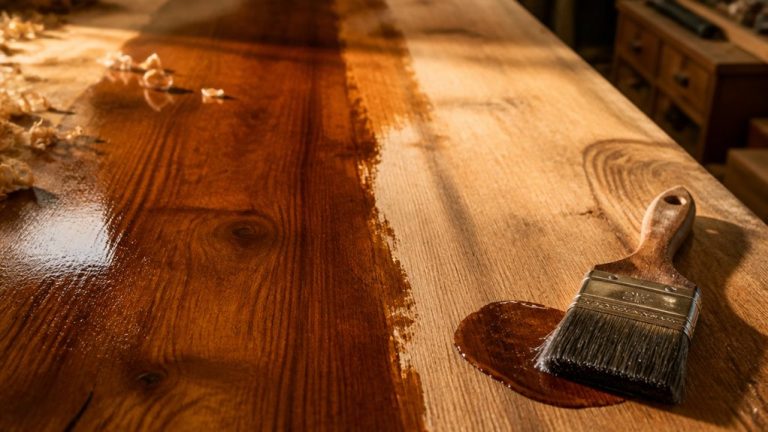
To keep your cedar safe from moisture damage, the first step is to apply a good-quality water repellent treatment. This really helps minimize water absorption. Think of it as giving your cedar a protective coat!
Next, you’ll want to ensure that your installation is set up for proper drainage. It’s super important to prevent water from pooling against the wood. Nobody wants that!
And don’t forget about airflow! Promoting good ventilation around the cedar can really speed up the drying process. This makes it less likely for rot fungi to set up camp. Keeping things dry and breezy is key!
Using a waterproofing sealer with UV protection can extend the life of your cedar by preventing moisture intrusion and damage.
Apply Water Repellent Treatments
Although cedar naturally resists moisture better than many woods, applying a water repellent treatment markedly enhances its durability. This reduces water absorption and limits surface swelling.
You’ll protect cedar from prolonged moisture exposure, which slows decay and prevents warping or cracking.
When selecting and applying treatments, consider these factors:
- Penetration Depth: Choose treatments that penetrate deeply to shield both heartwood and sapwood.
- Reapplication Frequency: Maintain protection by reapplying every 1-3 years, depending on exposure.
- Compatibility: Make sure treatments won’t interfere with cedar’s natural oils or finish coatings.
Adding a proper sealant or coating provides an extra waterproof barrier, preventing water penetration and damage.
Ensure Proper Drainage
When protecting cedar from moisture damage, ensuring proper drainage plays a crucial role in preventing prolonged wetness that accelerates rot.
You need to design your installation so water flows away from the cedar surface, avoiding puddles or standing water.
Use sloped surfaces, gutters, or gravel beds beneath cedar structures to direct moisture away efficiently.
Avoid direct soil contact, which traps humidity and slows drying, increasing rot risk.
If your cedar is part of a deck or fence, maintain a gap between the wood and the ground.
Proper drainage reduces moisture retention time, keeping the wood’s moisture content below the 20%-28% threshold where decay fungi thrive.
Promote Adequate Airflow
Ensuring proper drainage directs water away from cedar surfaces. Promoting adequate airflow completes the moisture management strategy by accelerating drying.
Without sufficient airflow, moisture lingers, increasing the risk of fungal decay despite cedar’s natural resistance. To protect your cedar effectively, focus on these key actions:
- Design for Ventilation: Incorporate gaps or vents in cedar installations to allow continuous air circulation, preventing moisture buildup.
- Elevate Cedar Components: Keep cedar off the ground or other surfaces that trap moisture, enhancing exposure to air.
- Avoid Obstructions: Remove debris, leaves, or other materials that block airflow around cedar to maintain drying efficiency.
How Maintenance and Weather Affect Cedar Lifespan?
Because cedar’s natural oils and heartwood provide decay resistance, proper maintenance and weather conditions play vital roles in extending its lifespan.
You should make certain cedar stays dry by promoting drainage and ventilation to avoid prolonged moisture exposure, which accelerates rot development.
Regularly inspect and repair finishes or water-repellent treatments to maintain the wood’s protective barrier against rain and humidity.
Avoid direct soil contact, as wet soil increases decay risk notably.
Weather conditions such as frequent rain, high humidity, or snow can increase moisture retention, so positioning cedar where it can dry quickly is essential.
Neglecting maintenance or exposing cedar to constant wetness weakens its natural defenses, increasing swelling, warping, and fungal decay.
Consistent upkeep combined with managing environmental exposure maximizes cedar’s durability and functional lifespan.
Why Cedar Rot Resistance Doesn’t Mean It’s Waterproof?
Maintaining cedar’s natural decay resistance requires controlling moisture exposure, but this resistance doesn’t make cedar waterproof. Cedar contains natural oils that slow fungal growth and reduce water absorption. Yet it still soaks up moisture. Over time, prolonged wetness can cause swelling, warping, and ultimately rot. You must understand these limits to protect cedar effectively.
Cedar’s natural oils resist decay but don’t prevent moisture absorption or eventual rot without proper care.
Here’s why rot resistance isn’t waterproofing:
- Cedar absorbs water despite its oils, allowing fungi to thrive if moisture lingers.
- Extended exposure to wet conditions promotes decay even in heartwood.
- Lack of ventilation and poor drainage trap moisture, increasing rot risk.
To preserve cedar, control moisture by ensuring proper drainage, ventilation, and timely drying. Otherwise, rot can develop despite cedar’s natural defenses.
Frequently Asked Questions
Can Cedar Be Treated to Improve Its Rot Resistance?
Yes, you can treat cedar to boost its rot resistance. Applying water-repellent preservatives or sealants helps reduce moisture absorption and fungal growth.
Pressure treatment with preservatives also enhances durability, especially for sapwood, which is less naturally resistant.
You should maintain these treatments regularly and guarantee proper ventilation and drainage to prolong cedar’s lifespan.
While treatment improves resistance, it doesn’t make cedar completely rot-proof, so ongoing care remains essential.
How Does Cedar Compare to Other Woods in Rot Resistance?
You know what they say: “slow and steady wins the race.”
Cedar resists rot better than many woods due to its natural oils and decay-resistant heartwood. Compared to pine or fir, cedar absorbs less moisture and inhibits fungal growth longer.
However, it’s not immune. Prolonged wetness still risks decay.
What Types of Cedar Are Best for Outdoor Use?
You’ll want Western Red Cedar and Alaskan Yellow Cedar for outdoor projects since they’ve high natural decay resistance and dense heartwood.
These types contain protective oils and compounds that fend off rot and insect damage better than others.
Eastern Red Cedar works well too but is less durable in extremely wet conditions.
Always choose heartwood boards and apply water-repellent finishes to maximize longevity in exterior applications.
Does Cedar Rot Faster in Saltwater Environments?
Imagine cedar as a hardy sailor steering salty seas. It resists rot better than many woods but isn’t invincible.
In saltwater environments, cedar’s natural oils slow fungal growth. Yet salt and constant moisture can accelerate cracking and decay.
You should know saltwater’s corrosive nature stresses wood fibers. This increases rot risk compared to freshwater.
Can Painted Cedar Still Develop Rot Underneath?
Yes, painted cedar can still develop rot underneath the paint.
Paint acts as a barrier to moisture, but if it cracks or peels, water can penetrate. This trapped moisture promotes fungal growth and decay, especially if ventilation is poor.
You need to maintain the paint finish regularly and ensure proper drainage and airflow to minimize the risk of rot beneath painted cedar surfaces.
Keep Cedar Dry to Extend Its Lifespan
You might think cedar is indestructible, but even this wood isn’t immune to rot when wet.
If you ignore moisture, poor drainage, and airflow, cedar can start deteriorating faster than you’d expect.
Remember, its heartwood resists decay better than sapwood, but that’s no excuse to skip maintenance.
So, don’t let your cedar turn into a soggy mess. Protect it diligently, or you’ll face costly repairs sooner than you think.