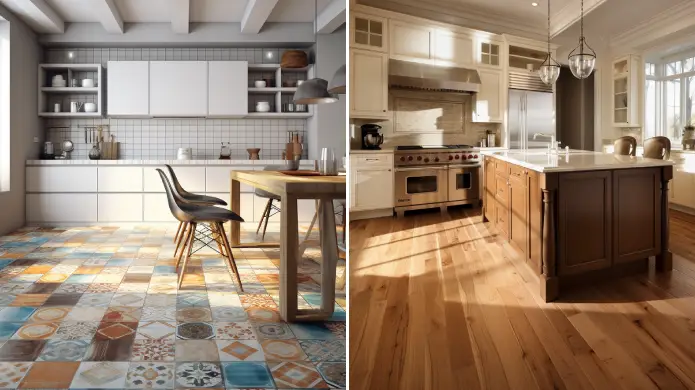

Click Lock vs Tongue and Groove: Which Is Better?
If you want quick, easy installation and the ability to float your floor without glue or nails, click-lock flooring is your best bet.
Its mechanical snap system makes plank removal and repairs simpler, ideal for DIY and renovations.
Tongue-and-groove offers traditional, sturdier connections using nails or glue, better for permanent installations needing extra stability.
Both need proper subfloor prep for durability.
Understanding these differences helps you pick the right fit for your project’s demands and longevity.
Key Takeaways
- Click-lock uses a snap-together mechanical edge for fast, adhesive-free floating floor installation, ideal for DIY and renovations.
- Tongue-and-groove connects planks with a tongue fitting into a groove, often requiring nails, glue, or staples for permanent fastening.
- Click-lock allows easier plank removal and replacement, while tongue-and-groove floors are harder to repair if glued or nailed.
- Tongue-and-groove supports nail-down, glue-down, or floating methods, suited for traditional hardwood and engineered wood flooring.
- Click-lock installation is faster and simpler, but tongue-and-groove offers more durable, long-lasting, and stable floor connections.
Click Lock vs Tongue and Groove: Key Differences in Installation, Stability, and Durability
| Comparison Factors | Click-Lock Flooring | Tongue-and-Groove Flooring |
|---|---|---|
| Joint Design | Mechanical snap-lock connection | Protruding tongue fits into a matching groove |
| Installation Method | Primarily floating installation | Nail-down, glue-down, staple-down, or approved floating installation |
| Installation Difficulty | Generally easier for DIY projects | May require greater installation experience |
| Installation Speed | Faster snap-together assembly | Often slower due to fastening or adhesive work |
| Adhesive Requirements | Typically no glue required | Glue may be necessary depending on installation method |
| Nails or Staples | Usually unnecessary | Commonly used for traditional hardwood installations |
| Joint Strength | Mechanical interlock resists plank separation | Joint alignment supported by appropriate fastening methods |
| Flooring Stability | Secure floating-floor connection when properly installed | Stable fixed installation when properly fastened |
| Subfloor Preparation | Requires a flat, stable, properly prepared subfloor | Requires suitable subfloor conditions and fastening support |
| Plank Removal | May be easier to disassemble from accessible edges | More difficult when permanently fastened |
| Damaged Plank Replacement | May require unlocking surrounding planks | May require cutting or removing secured planks |
| Moisture Sensitivity | Depends on flooring material and core construction | Depends on flooring material and fastening method |
| Sound Insulation | Affected by underlayment and floating-floor construction | Affected by subfloor and installation method |
| Refinishing Options | Depends on surface material and wear-layer thickness | Depends on solid wood thickness or engineered veneer |
| Common Flooring Materials | Laminate, engineered wood, SPC, and luxury vinyl plank | Solid hardwood and engineered wood flooring |
| Best Applications | DIY renovations and floating-floor installations | Traditional hardwood and fixed-floor installations |
| Overall Recommendation | Choose for simpler assembly and installation convenience | Choose for traditional installation flexibility and secure fastening |
Click-Lock vs Tongue-and-Groove Flooring: Key Differences

While both click-lock and tongue-and-groove flooring systems connect planks edge-to-edge, they differ markedly in their locking mechanisms and installation methods.
Click-lock flooring uses a mechanical locking edge that snaps planks together, enabling quick, adhesive-free floating installations ideal for DIY projects.
Click-lock flooring snaps planks together for fast, adhesive-free installations perfect for DIY enthusiasts.
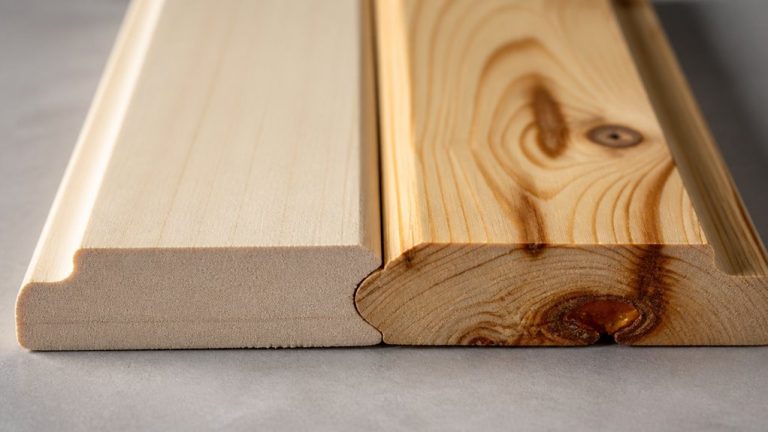
Tongue-and-groove flooring features a protruding tongue fitting into a groove, often requiring nails, staples, or glue for stability.
This method suits traditional wood-floor construction and offers versatile fastening options, including nail-down, glue-down, or floating setups.
Click-lock joints provide a strong, tight fit designed to minimize gaps and allow easier plank removal.
In contrast, tongue-and-groove connections rely more on additional fastening to maintain stability and can be harder to disassemble.
Understanding these differences helps you select the best system based on installation speed, permanence, and project type.
Proper subfloor preparation and leveling are crucial regardless of the locking system used to ensure a stable and long-lasting floor installation, as detailed in subfloor preparation.
How Click-Lock Flooring Works?
Click-lock flooring snaps together using a specially designed interlocking edge that secures planks firmly in place without the need for adhesives or nails.
You align the edges of each plank, then press or angle them until you hear a click, indicating a secure mechanical lock.
This system creates a tight, gap-resistant seam that holds the boards together while allowing the entire floor to float over the subfloor.
The locking mechanism is engineered to resist separation from normal foot traffic and slight subfloor movement.
Because no glue or fasteners are required, you can install or remove planks quickly for repairs or access beneath the floor.
The precision-milled edges ensure consistent fit and alignment, making click-lock flooring ideal for fast, DIY-friendly floating floor installations.
This installation method is commonly used with SPC flooring due to its easy-click system and suitability for DIY projects.
How Tongue-and-Groove Flooring Works?
Tongue-and-groove flooring connects planks by inserting a protruding tongue on one board into a matching groove on the adjacent board. This joint guarantees precise alignment, creating a smooth, continuous surface.
You’ll typically secure the connection with adhesive, nails, or staples, depending on the flooring type and installation method. The tongue-and-groove system offers flexibility; you can install it as nail-down, glue-down, or floating floors.
Its strength relies on both the interlocking edges and the fastening method you choose, providing a durable, stable floor. While the joint itself aligns the boards tightly, the final hold depends on proper fastening.
This traditional method demands careful fitting and fastening but results in a strong, long-lasting connection suited for engineered hardwood and solid wood floors. Proper installation methods, such as glue-down or floating, are especially important for maintaining stability over radiant heating systems.
Installing Click-Lock vs Tongue-and-Groove Flooring
Start your flooring project by understanding the distinct installation processes for click-lock and tongue-and-groove systems.
Click-lock flooring uses a mechanical snapping mechanism, allowing you to quickly and easily fit planks together without adhesive, nails, or staples.
This system is ideal for floating floors and suits DIY projects due to its straightforward, fast installation.
In contrast, tongue-and-groove flooring requires you to insert the tongue into the groove, often needing glue, nails, or staples to secure the planks, depending on the installation method.
This approach demands more time and precision and is typically used for nail-down or glue-down applications.
Knowing these differences helps you decide which installation method aligns with your project’s skill level, timeline, and desired permanence.
Additionally, the ease of installation of click-lock systems makes them particularly suitable for DIY installation compared to the more complex requirements of tongue-and-groove flooring.
Which Flooring Is Stronger and More Stable?
When you’re looking at flooring options, it’s important to compare the joint strength of click-lock and tongue-and-groove systems. This really helps you understand how stable they’ll be during everyday use.
So, click-lock flooring features a mechanical locking edge that does a great job resisting separation—no adhesives needed! On the flip side, tongue-and-groove systems rely more on additional fastening to keep everything securely in place. Additionally, the choice of installation method can impact floor stability and durability, influencing long-term performance.
Joint Strength Comparison
Although both click-lock and tongue-and-groove flooring rely on interlocking edges, click-lock systems provide a more mechanical locking action that enhances joint strength and stability under normal use.
When you install click-lock flooring, the planks snap together with a robust locking mechanism that resists separation without needing adhesive.
Tongue-and-groove joints interlock via a protruding tongue fitting into a groove but typically depend on glue or nails to maintain joint integrity.
This means the inherent joint strength in tongue-and-groove can vary based on fastening quality.
For you, click-lock offers consistent, reliable joint strength through its engineered locking profile, while tongue-and-groove’s strength hinges on installation method.
It is also important to leave proper expansion gaps around the flooring to accommodate natural swelling and contraction, ensuring long-term joint stability.
Stability Under Use
When evaluating stability under regular use, click-lock flooring generally maintains a tighter, more secure fit due to its engineered mechanical locking system that actively resists plank separation and movement.
This locking action reduces gaps and enhances overall floor integrity without relying on adhesives. Tongue-and-groove flooring offers strong alignment but typically requires additional fastening for superior stability, which can affect long-term plank positioning.
| Feature | Click-Lock Flooring |
|---|---|
| Locking Mechanism | Mechanical snap-lock |
| Resistance to Movement | High due to tight interlock |
| Fastening Required | None (floating installation) |
| Gap Formation | Minimal over time |
| Ease of Repair | Easy to disassemble |
You’ll find click-lock floors more stable under everyday stresses, especially in floating installations. Proper acclimation periods before installation are still important to ensure dimensional stability and avoid issues like warping or gapping.
Click-Lock Flooring: Pros, Cons, and Best Uses
Click-lock flooring is a game changer when it comes to installation. You’ll really appreciate how quickly the planks snap together—no glue or nails needed!
This makes it super convenient if you’re looking to get the job done fast.
Plus, if you ever need to remove or repair a section, it’s a breeze. You can easily access the subfloor without a hassle.
This flooring system works wonders in floating-floor setups and during those quick renovations where time and convenience are key.
Its floating click-lock installation tolerates uneven subfloors better than traditional hardwood or flexible vinyl options.
Installation Speed Advantages
Frequently chosen for its quick installation process, click-lock flooring lets you snap planks together without adhesive, nails, or staples.
This system uses a mechanical locking edge, enabling you to fit boards rapidly, reducing installation time markedly compared to tongue-and-groove flooring.
With tongue-and-groove, you often need additional steps like applying glue or securing nails, which extend the project timeline.
Click-lock’s floating-floor design removes curing or drying delays, letting you move through the installation uninterrupted.
Additionally, the straightforward snapping mechanism minimizes alignment adjustments, increasing your efficiency.
If you’re aiming for a fast, reliable flooring update, click-lock provides a clear advantage.
It’s especially suitable for DIY projects or renovations where speed and simplicity are priorities, without compromising the floor’s structural integrity.
Moreover, click-lock flooring is often preferred when installing over existing surfaces like tile, given its compatibility with stable tile surfaces and ease of installation.
Removal And Repair Ease
Click-lock flooring makes removal and repair straightforward thanks to its snap-together design. This allows you to lift out individual planks without damaging adjacent boards.
This mechanical locking system means you can quickly replace a damaged plank by disengaging the lock and removing it. Then, simply snap in a new one.
In contrast, tongue-and-groove flooring often relies on glue, nails, or staples. This makes plank removal more complicated and potentially destructive to surrounding pieces.
If you need to access the subfloor or repair a section, click-lock floors offer clear advantages. They simplify plank extraction and reinstallation.
However, keep in mind that frequent removal might weaken the locking mechanism over time. So, handle with care during repairs to maintain joint integrity.
Additionally, ensuring proper acclimation of engineered hardwood before installation enhances the durability and performance of both click-lock and tongue-and-groove flooring systems.
Ideal Project Scenarios
When your project demands a fast, floating installation without extensive tools or adhesives, this locking system offers a clear advantage.
Click-lock flooring suits DIY renovations where speed and simplicity matter. It’s ideal for residential projects needing quick installation and easy future removal for repairs or subfloor access.
Since click-lock planks snap together mechanically, you avoid glue or nails, reducing labor time and complexity.
However, if you require a traditional wood-floor setup with adhesive or nail-down stability, tongue-and-groove fits better.
It provides versatile fastening options and stronger permanence, favored in engineered hardwood and solid wood installations.
Choose click-lock for floating floors and rapid results; pick tongue-and-groove when you want a time-tested, more permanent connection with traditional installation flexibility.
Tongue-and-Groove Flooring: Pros, Cons, and Best Uses
Tongue-and-groove flooring offers a traditional and reliable method for joining planks through a protruding tongue that fits snugly into a matching groove.
It’s ideal when you want a strong, permanent installation using nails or glue. However, it requires more time and skill compared to click-lock systems and can be harder to repair once installed.
| Pros | Cons | Best Uses |
|---|---|---|
| Versatile fastening | Slower installation | Traditional wood-floor projects |
| Strong interlocking joint | Difficult mid-floor repairs | Glue or nail-down installations |
| Long-established method | Requires adhesive or nails | Engineered hardwood flooring |
| Durable and stable | Less DIY-friendly | Permanent, professional setups |
| Compatible with various methods | More labor-intensive | High-end wood flooring systems |
When to Choose Click-Lock Flooring?
If you want to speed up installation without sacrificing joint strength, opting for a flooring system that snaps together mechanically will serve you well.
Click-lock flooring excels in floating-floor projects where quick, glue-free installation is essential.
It’s ideal for DIYers or fast renovations because the planks snap securely without nails or adhesive, reducing labor time markedly.
This system also allows easier plank removal for repairs or subfloor access, enhancing maintenance flexibility.
However, click-lock is best suited for floating installations and may not be appropriate for traditional nail-down hardwood floors.
Choose click-lock when you need a reliable, tight joint that resists separation under normal use, combined with a practical, user-friendly installation process that minimizes tools and materials.
Choosing Between Click-Lock and Tongue-and-Groove Flooring
While click-lock flooring offers speed and simplicity, choosing the right system depends on your project’s requirements and installation preferences. If you prioritize fast installation and easy removal, click-lock suits DIY or floating floors.
Conversely, if you need a permanent, traditional wood floor with mechanical fastening or adhesive, tongue-and-groove is preferable. Consider installation method, permanence, and ease of maintenance when deciding.
| Aspect | Click-Lock | Tongue-and-Groove |
|---|---|---|
| Installation Speed | Fast, snap-together | Slower, requires glue/nails |
| Removal & Repair | Easy plank removal | Difficult if glued or nailed |
| Installation Method | Floating floors only | Floating, glue-down, or nail-down |
| Best Use | DIY, renovations, floating | Traditional, engineered hardwood |
Frequently Asked Questions
Can Click-Lock Flooring Be Installed Over Radiant Heating Systems?
Yes, you can install click-lock flooring over radiant heating systems, but you need to make sure the flooring material is compatible with heat.
Most click-lock engineered hardwoods and laminates work well if the system’s surface temperature stays below manufacturer limits, usually around 80°F (27°C).
Always follow both your flooring and heating system guidelines, acclimate the flooring properly, and avoid rapid temperature changes to prevent warping or damage.
How Do Moisture Levels Affect Click-Lock Versus Tongue-And-Groove Floors?
You’ll find moisture levels impact both flooring types, but in different ways.
Click-lock floors need stable moisture because excessive humidity can cause swelling, stressing the mechanical lock.
Tongue-and-groove floors, often glued or nailed, tolerate slight moisture fluctuations better due to the adhesive and fastening, which reinforce the joints.
Still, too much moisture can weaken glue bonds and warp wood.
Always control subfloor moisture and acclimate planks before installation for either system.
Are There Differences in Sound Insulation Between the Two Flooring Types?
Yes, you’ll notice some differences in sound insulation between the two.
Click-lock flooring’s tight mechanical fit often reduces gaps where sound can travel, providing better impact noise resistance in floating installations.
Tongue-and-groove can offer solid interlocking, but if glued or nailed, it may transmit sound more directly through the subfloor.
To improve sound insulation, you should use underlayment designed for noise reduction regardless of the joint type.
What Maintenance Is Required to Keep Click-Lock and Tongue-And-Groove Floors in Good Condition?
Keeping your floors shipshape means regular sweeping and damp mopping to prevent dirt buildup and scratches.
For click-lock floors, avoid excess water since they’re floating; use a dry mop or slightly damp cloth.
Tongue-and-groove floors need similar care but watch for gaps. Seal or refasten if needed.
Both benefit from protective pads under furniture and prompt spill cleanup to maintain integrity and appearance over time.
Can Click-Lock Flooring Be Refinished Like Traditional Tongue-And-Groove Hardwood?
You generally can’t refinish click-lock flooring like traditional tongue-and-groove hardwood. Click-lock boards often have a thinner wear layer or are made of laminate or engineered materials.
Tongue-and-groove hardwood, being solid or with a thicker veneer, allows sanding and refinishing multiple times. If you want a floor that can be refinished repeatedly, choose tongue-and-groove solid hardwood rather than click-lock systems with limited surface thickness.
Click Lock vs Tongue and Groove: Final Verdict
When choosing between click-lock and tongue-and-groove flooring, consider that 68% of DIY installers prefer click-lock for its straightforward installation.
You’ll find click-lock offers faster, tool-free assembly. Tongue-and-groove provides exceptional stability for high-traffic areas.
Your choice depends on your skill level and project demands. By understanding these technical differences, you can select the flooring system that best balances ease, durability, and long-term performance for your specific needs.