High Pile Carpet vs Low Pile: Which Is Better?
You’ll find high pile carpet offers plush softness, superior insulation, and excellent sound dampening. It’s ideal for low-traffic, comfort-focused spaces like bedrooms.
However, it demands frequent, intensive cleaning and is prone to matting over time.
In contrast, low pile carpet features dense, short fibers for durability, easier maintenance, and better stability. It’s perfect for high-traffic areas such as hallways.
Understanding these distinctions helps you match carpet choice to your functional needs and lifestyle.
Key Takeaways
- High pile carpets offer plush softness, superior cushioning, and better sound and thermal insulation, ideal for low-traffic, comfort-focused rooms.
- Low pile carpets have shorter, denser fibers that resist crushing, wear, and matting, making them suitable for high-traffic areas.
- Low pile carpets are easier to clean and maintain, trapping less dirt and allergens compared to high pile carpets.
- High pile carpets require more frequent vacuuming and professional cleaning due to deeper particle entanglement and susceptibility to wear.
- Low pile carpets provide firmer, stable surfaces that support mobility aids and improve durability in busy spaces.
High Pile Carpet vs Low Pile: Key Differences in Comfort, Durability, Cleaning, and Maintenance
| Comparison Factors | High Pile Carpet | Low Pile Carpet |
|---|---|---|
| Pile Height | Longer fibers, often over 1/2 inch | Shorter fibers, often under 1/4 inch |
| Surface Texture | Plush, fluffy, and soft | Flat, compact, and firm |
| Walking Comfort | Cushioned, soft underfoot | Firmer and more stable |
| Overall Appearance | Luxurious, cozy, and textured | Clean, neat, and streamlined |
| Durability | Depends on fiber quality; longer piles may mat more readily | Often resists visible crushing in suitable constructions |
| Foot Traffic Suitability | Generally best for lower-traffic areas | Often suitable for high-traffic spaces |
| Vacuuming Difficulty | More challenging due to longer fibers | Generally easier to vacuum |
| Dirt and Debris | Debris may settle deep between fibers | Debris is often easier to access and remove |
| Pet Hair Maintenance | Hair may become entangled in longer fibers | Often easier to remove pet hair |
| Stain Cleaning | Longer pile can make cleaning more involved | Often simpler to spot-clean, depending on material |
| Sound Absorption | May offer greater cushioning and noise reduction | Offers some sound absorption |
| Thermal Comfort | Often feels warmer underfoot | Provides moderate underfoot warmth |
| Furniture Impressions | May show flattening and indentation | Can be less prone to visible impressions |
| Mobility Aid Compatibility | Deep pile may increase rolling resistance | Firm, short pile generally supports easier movement |
| Installation Considerations | Requires suitable installation and padding | Requires suitable installation and padding |
| Best Rooms | Bedrooms and low-traffic relaxation areas | Hallways, stairs, offices, and busy living rooms |
| Overall Recommendation | Choose for softness and plush comfort | Choose for easy maintenance and practical durability |
Key Differences Between High and Low Pile Carpet

Understanding the key differences between high and low pile carpet starts with recognizing their distinct fiber lengths and surface textures.
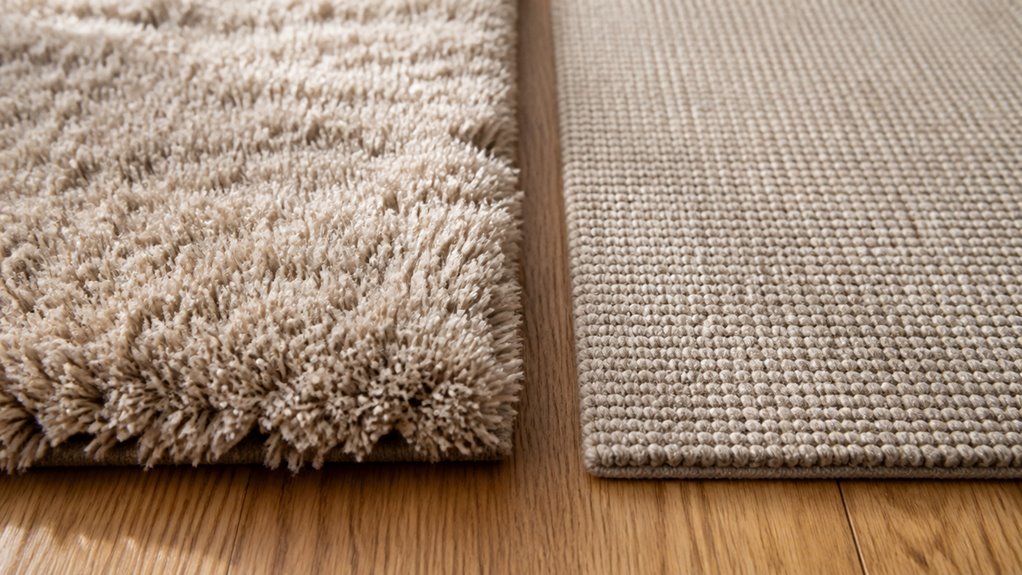
Low pile carpets feature short fibers, typically under 1/4 inch, creating a dense, flat surface that enhances durability and ease of cleaning.
High pile carpets have longer fibers, usually over 1/2 inch, resulting in a plusher, fluffier texture.
This difference in fiber length directly impacts the carpet’s profile and appearance.
Low pile carpets offer a tighter, more compact weave, which resists flattening and wear better in high-traffic areas.
High pile carpets present a deeper, more voluminous surface but are more prone to matting and require more maintenance.
When specifying carpet, these measurable characteristics help determine suitability for your space’s functional demands.
Selecting carpets with low to medium pile heights between 0.2 to 0.5 inches is generally recommended for high-traffic areas due to their better resistance to matting and ease of upkeep.
How Pile Height Affects Comfort and Feel?
When it comes to carpet, pile height really makes a difference in how it feels underfoot. High pile carpets are super soft and cushy, thanks to their longer fibers. You’ll love that plush, padded sensation when you walk on them. It’s like walking on a cloud!
On the other hand, low pile carpets have a firmer, denser texture. This can actually help with walking stability and gives you a bit more surface resilience. So, if you’re looking for something that feels a bit more grounded, low pile might be the way to go.
Understanding these differences is key! It’ll help you pick the perfect carpet that matches your comfort preferences and suits the function of your space. Additionally, choosing fibers with advanced stain resistance can enhance durability and ease of maintenance regardless of pile height.
Softness And Cushioning
How much does pile height influence the comfort you feel underfoot? Quite markedly. High pile carpets, with fibers typically over 1/2 inch, provide enhanced softness and cushioning. They create a plush surface that absorbs pressure and reduces impact. In contrast, low pile carpets, under 1/4 inch, offer a firmer feel due to their shorter, denser fibers, resulting in minimal cushioning.
Consider these key points:
Pressure distribution: High pile fibers compress underfoot, dispersing weight and enhancing comfort.
Fiber resilience: Longer fibers in high pile rebound slowly, adding to the plush sensation.
Padding effect: High pile’s loft increases overall carpet thickness, amplifying cushioning beyond just fiber length.
This makes high pile ideal for spaces prioritizing softness and comfort. However, it is important to note that high pile carpets tend to trap more dust and allergens, which can impact indoor air quality and require more frequent maintenance.
Texture And Walking Feel
While selecting carpet, recognizing how pile height influences texture and walking feel is essential for matching your flooring to your lifestyle. High pile carpets have longer fibers, creating a plush, cushioned surface that feels soft and luxurious underfoot.
Low pile carpets have shorter, denser fibers, resulting in a firmer, flatter texture that offers stability and ease of movement. Your choice impacts comfort, foot fatigue, and usability in spaces like bedrooms versus hallways.
Proper floor preparation and maintenance can also enhance the performance of carpets and their accessories, such as using rug grippers to keep them securely in place.
| Pile Height | Texture | Walking Feel |
|---|---|---|
| High Pile | Plush, fluffy | Soft, cushioned |
| Medium Pile | Moderate plushness | Balanced comfort |
| Low Pile | Dense, flat | Firm, stable |
| Very Low | Tight, compact | Hard, supportive |
Understanding these distinctions helps you optimize comfort versus functionality precisely.
Durability and Wear of High vs Low Pile Carpet
When selecting between high pile and low pile carpet, understanding their durability and wear characteristics is essential for making an informed choice.
Choosing between high pile and low pile carpets requires understanding their durability and wear characteristics.
Low pile carpets feature shorter, denser fibers that resist crushing and matting. This makes them ideal for high-traffic zones.
Conversely, high pile carpets, with their longer fibers, tend to show wear patterns and impressions more quickly under frequent use.
Consider these key points:
Low pile carpets maintain structural integrity longer due to fiber density. They resist flattening even in busy areas.
High pile carpets are prone to fiber crushing and visible wear from furniture and foot traffic.
For longevity in active spaces, low pile offers superior performance. High pile suits low-traffic, comfort-focused rooms.
Choose based on anticipated traffic and longevity needs to optimize carpet performance.
Regular maintenance, including gentle cleaning methods, is important to preserve the quality and appearance of any carpet type over time.
Cleaning and Maintenance for High and Low Pile Carpet
Maintaining cleanliness in your carpet depends markedly on pile height, as it affects dirt retention and ease of vacuuming.
Low pile carpets, with fibers under 1/4 inch, keep dirt closer to the surface. This makes vacuuming more efficient and thorough.
You’ll find they trap less dust, pet hair, and debris, so routine maintenance is quicker and stain removal more straightforward.
Conversely, high pile carpets, typically over 1/2 inch, entangle particles deeper within their longer fibers. This requires more frequent and intensive vacuuming.
Their plush surface demands vacuums with adjustable height and strong suction to reach embedded dirt.
For best upkeep, you should vacuum low pile carpets weekly. High pile carpets benefit from multiple weekly sessions and occasional professional cleaning to preserve appearance and hygiene.
Using a high-quality suction-only vacuum can significantly improve the removal of loose debris and extend carpet lifespan.
Insulation and Sound Control Benefits of Pile Height
When you’re deciding between high pile and low pile carpets, it’s really worth thinking about how pile height impacts sound dampening and thermal insulation in your home. High pile carpets, thanks to their thicker fibers, do a great job at reducing airborne noise. Plus, they feel super warm and cozy underfoot—perfect for those chilly mornings!
On the other hand, low pile carpets bring a different vibe. While they offer some sound control and insulation, they’re more suited for areas where you want a firmer surface. So, it really depends on what you’re looking for in your space! Additionally, low pile rugs often come with non-slip backing to enhance safety and protect hardwood floors from scratches.
Sound Dampening Differences
Typically, high pile carpets provide superior sound dampening and insulation due to their thicker, plusher fibers that absorb and soften noise more effectively than low pile options.
When you choose high pile, you benefit from its ability to reduce airborne and impact sounds, making rooms quieter.
In contrast, low pile carpets offer limited noise absorption because their shorter fibers reflect sound more readily.
Consider these key sound dampening aspects:
Fiber length and density: Longer fibers trap and dissipate sound waves better than dense, short fibers.
Air pockets: High pile’s plush texture creates micro air pockets that disrupt sound transmission.
Impact noise reduction: Thicker pile cushions footsteps and furniture movement more efficiently than low pile.
Selecting pile height based on sound control needs helps you optimize acoustic comfort.
Additionally, choosing carpets with moisture-resistant fibers ensures that sound dampening benefits are maintained without compromising durability in humid basement environments.
Thermal Insulation Impact
Thermal insulation plays a crucial role in enhancing indoor comfort. Carpet pile height greatly influences this property.
When you choose high pile carpet, the longer fibers create a thicker barrier that traps air more effectively. This reduces heat transfer between floors and rooms.
This thicker profile not only conserves warmth but also minimizes cold drafts, making spaces feel warmer without increasing energy consumption.
Conversely, low pile carpet, with its shorter, denser fibers, offers less thermal resistance due to reduced air entrapment. While it still provides some insulation compared to hard flooring, it’s less effective at maintaining warmth.
Consequently, if thermal insulation is a priority, you’ll benefit more from high pile carpets, especially in cooler climates or rooms with less heating efficiency.
Additionally, choosing flooring options with moisture barriers can further improve thermal performance by preventing dampness that compromises insulation.
Room Comfort Enhancement
Beyond conserving heat, carpet pile height markedly influences the acoustic environment and overall room comfort. When choosing between high and low pile carpets, understanding their insulation and sound control benefits helps you secure your space.
High pile carpets, with longer fibers, trap air more effectively, reducing noise transmission and providing superior cushioning.
Low pile carpets, while less insulating, still offer noise reduction compared to hard flooring but with a firmer feel.
Consider these key factors:
Sound absorption: High pile fibers disrupt sound waves more efficiently, lessening echo and ambient noise.
Thermal retention: Thicker piles enhance underfoot warmth by trapping insulating air layers.
Impact mitigation: High pile carpets cushion footsteps, lowering impact noise and increasing comfort.
Selecting pile height aligned with room use secures both acoustic and thermal comfort. For optimal safety and comfort, incorporating non-slip backing beneath carpets can help prevent slips and falls, especially in homes with elderly residents.
When to Choose Low Pile Carpet for Your Home?
Frequently, low pile carpet proves ideal for areas with heavy foot traffic or where durability and ease of maintenance are priorities.
You should choose low pile carpet when you need a surface that resists crushing and matting from constant use.
Its dense, short fibers provide a flatter, firmer texture, minimizing wear patterns and extending carpet life.
If quick cleaning matters, low pile’s surface traps less dust and debris, allowing efficient vacuuming and stain removal.
You’ll also benefit in spaces requiring mobility aids, as low pile’s flatter profile eases movement of wheelchairs or walkers.
While low pile offers less cushioning than high pile, its resilience and practicality make it the logical choice where functional performance outweighs plush comfort.
Best Rooms and Uses for High and Low Pile Carpet
Choosing the right carpet pile for each room hinges on balancing comfort, durability, and maintenance needs. Use high pile carpet in bedrooms or playrooms where plush softness and insulation enhance comfort and noise reduction.
Opt for low pile carpet in busy areas like hallways, stairs, or living rooms to withstand heavy foot traffic and simplify cleaning.
Consider these specifics when selecting carpet types:
High pile carpets offer superior cushioning and warmth, ideal for low-traffic, comfort-focused spaces.
Low pile carpets provide a dense, flat surface that resists crushing and eases vacuuming, suited for high-traffic zones.
Low pile also supports mobility aids better due to its stable, less obstructive texture.
Frequently Asked Questions
How Does Pile Height Affect Carpet Color Appearance?
Pile height affects carpet color appearance by altering light reflection and shadowing.
With high pile, longer fibers create more surface texture, causing light to scatter unevenly. This can make colors appear softer, deeper, or slightly muted.
Low pile carpets reflect light more uniformly due to their short, dense fibers. This results in crisper, more vibrant color perception.
Can Pile Height Influence Allergen Accumulation?
Yes, pile height directly influences allergen accumulation.
Longer fibers in high pile carpets trap more dust, pet dander, and allergens deep within the fibers, making thorough cleaning more challenging.
In contrast, low pile carpets have shorter fibers that hold fewer particles on the surface, reducing allergen buildup.
If you’re sensitive to allergens, choosing low pile carpet helps minimize accumulation and simplifies maintenance.
This choice improves indoor air quality and reduces allergy triggers.
What Impact Does Pile Height Have on Carpet Installation?
Imagine pushing a thick, fluffy carpet into tight corners. Installing high pile demands extra care to stretch and fit without crushing fibers.
You’ll need a stronger knee kicker and more padding to support its plush height. Low pile carpets lay flatter and require less padding, making installation faster and easier.
Are There Pile Height Differences in Eco-Friendly Carpet Options?
Yes, eco-friendly carpets come in varying pile heights, just like conventional options.
You’ll find low pile eco carpets made from recycled fibers or natural materials like jute, which offer durability and easier maintenance.
High pile eco carpets often use organic wool or plant-based yarns, providing plushness but requiring more care.
When choosing, consider your balance of sustainability, comfort, and upkeep.
Pile height impacts these factors even in eco-friendly products.
How Does Pile Height Affect Carpet Cost and Pricing?
Think of carpet pile height as the thickness of a rich velvet cloak. The taller the pile, the more material and craftsmanship it demands, raising the price.
You’ll find high pile carpets cost more because they require longer fibers and denser weaving, increasing production complexity.
Low pile carpets use shorter fibers, making them less expensive and easier to manufacture.
Find the Right Carpet for Every Room in Your Home
Choosing between high and low pile carpet hinges on your specific needs: comfort, durability, maintenance, and insulation.
High pile offers plush softness but demands more upkeep. Low pile excels in resilience and ease of cleaning.
Like two sides of the same coin, each type serves distinct purposes. By understanding these technical nuances, you can make a precise, informed decision that enhances both your living space and lifestyle.