
Does Laminate Flooring Expand? What to Know
Yes, laminate flooring does expand and contract as it absorbs moisture and responds to temperature changes.
This dimensional movement happens in all directions, not just lengthwise, and is inherent to the wood-based core materials.
To prevent warping, buckling, or gaps, you must leave proper expansion gaps, typically 8–10 mm, around fixed edges.
These gaps accommodate natural swelling and contraction from environmental fluctuations.
Understanding the causes and correct installation steps will help you protect your floor’s integrity and longevity.
Key Takeaways
- Laminate flooring expands and contracts due to moisture absorption and temperature fluctuations.
- Wood-fiber cores swell in length, width, and thickness when exposed to humidity.
- Expansion gaps around edges prevent buckling, warping, and joint stress during swelling.
- High humidity and large rooms require wider expansion gaps (8–12 mm) for safe movement.
- Proper acclimation and installation minimize expansion-related damage and maintain flooring integrity.
Why Laminate Flooring Expands and Contracts?

Because laminate flooring is composed of wood-fiber-based core materials, it expands and contracts in response to temperature and humidity changes.
Laminate flooring naturally expands and contracts with changes in temperature and humidity due to its wood-fiber core.
When moisture levels rise, these core materials absorb water, causing the planks to swell in all directions, not just lengthwise.
Conversely, drier conditions lead to contraction and visible gaps between planks.
This movement results from the physical properties of the wood fibers reacting to environmental shifts, regardless of the flooring’s quality level.
You’ll notice this dimensional change as the flooring adjusts to indoor climate variations.
Understanding this behavior is essential for proper installation and maintenance, ensuring the laminate can accommodate natural size fluctuations without damage or distortion over time.
Because the wood-based core is vulnerable to prolonged moisture, prompt spill cleanup is critical to prevent swelling and delamination.
What Causes Laminate Flooring to Change Size?
When humidity levels rise, laminate flooring absorbs moisture from the air, causing its wood-fiber-based core to swell and expand.
This dimensional change occurs because the core material is porous and reacts to moisture variations.
Temperature fluctuations also contribute by causing the material to expand when warm and contract when cool.
Additionally, moisture can infiltrate from the subfloor or surface, accelerating swelling.
Both humidity and temperature changes induce expansion in all directions: length, width, and thickness, not just lengthwise.
Even high-quality laminate flooring experiences this movement, as it’s inherent to the material’s composition.
You’ll notice contraction during dry conditions, which can create gaps between planks.
Understanding these causes helps you control environmental factors to maintain the flooring’s stability and minimize damage.
Proper acclimation of laminate flooring, including controlling temperature and humidity, is essential to reduce the risks of warping and gaps during installation and use, as explained in environmental control during acclimation.
Why Expansion Gaps Are Essential for Laminate Floors?
Leaving expansion gaps around your laminate flooring is really important. These gaps help the floor handle natural swelling and contraction that happens with changes in temperature and humidity.
Typically, you’ll want these gaps to be between 6 to 12 millimeters, but it’s always best to check the manufacturer’s guidelines to be sure.
When you install your flooring, make sure those gaps are clear and unobstructed. This way, you can prevent any buckling and keep your floor looking great for years to come!
Using an appropriate underlay thickness also supports the stability of the floor and helps protect against moisture damage during expansion and contraction.
Purpose Of Expansion Gaps
In laminate flooring installation, expansion gaps play a critical role in accommodating the natural movement of the material caused by temperature and humidity fluctuations.
These gaps provide necessary space for the laminate planks to expand and contract without applying pressure on adjacent boards or fixed structures.
Without these gaps, the flooring can buckle, warp, or tent as swelling occurs.
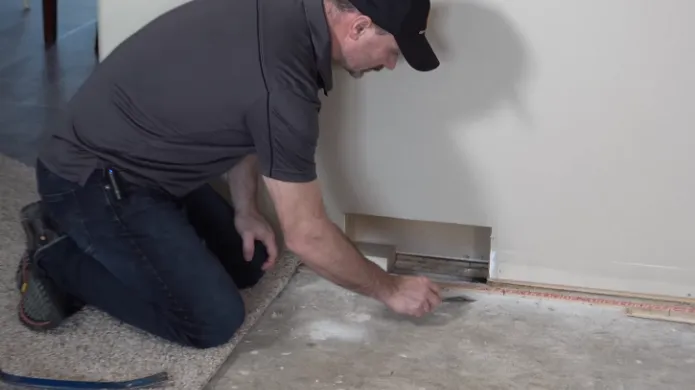
You must leave expansion gaps along walls, around door frames, pipes, and any immovable objects to prevent structural damage.
Since laminate flooring is installed as a floating floor, it relies on these perimeter clearances to move freely.
Properly implemented expansion gaps guarantee long-term stability and performance by mitigating stress on joints and preventing deformation due to environmental changes impacting the wood-fiber core.
Floating floors are flexible, tolerating minor subfloor imperfections, which makes proper expansion gap maintenance essential for durability.
Ideal Gap Sizes
Expansion gaps must be carefully measured to accommodate the natural movement of laminate flooring without compromising the installation’s integrity.
You’ll need to leave enough space around the perimeter and fixed objects to prevent buckling or joint stress caused by expansion and contraction.
Typical gap sizes range between 6 mm and 12 mm, with many manufacturers recommending 8 mm to 10 mm.
In some cases, 1/4 inch to 3/8 inch gaps are specified, particularly in larger rooms or areas with high humidity.
Keep these points in mind when planning your expansion gaps:
- Use manufacturer guidelines as your primary reference.
- Adjust gap width for room size and environmental conditions.
- Make sure gaps remain unobstructed beneath trim or molding.
Proper gap sizing guarantees your laminate floor expands and contracts freely without damage. Additionally, maintaining proper acclimation of the flooring before installation helps minimize excessive expansion or contraction that could affect gap requirements.
Installation Best Practices
Allowing proper expansion gaps during laminate floor installation prevents damage caused by natural dimensional changes.
You must leave consistent gaps, typically 8 to 10 mm, around all fixed edges, including walls, door frames, and pipes.
These gaps accommodate swelling from moisture absorption and temperature fluctuations, preventing buckling or tenting.
Ensure the expansion space remains unobstructed beneath trim or molding to allow free movement.
Before installation, acclimate the flooring for up to 48 hours in the room’s environment to minimize post-installation shifts.
For large or complex layouts, incorporate expansion breaks or connector strips to relieve stress.
Follow manufacturer specifications closely; they may require wider gaps in high-humidity areas.
Properly executed expansion gaps protect your floor’s structural integrity and help maintain coverage by preventing joint damage and warping.
Additionally, avoid excessive moisture during installation and use pH-neutral cleaners for ongoing maintenance to prevent damage to the flooring.
What Size Expansion Gaps Should You Leave?
When it comes to leaving expansion gaps, it’s generally a good idea to aim for a space between 6 mm and 12 mm. Most people find that 8 mm to 10 mm works just fine.
However, the exact size can vary based on a few factors.
For instance, think about the size of the room, the humidity levels, and what the manufacturer recommends. By adjusting your gaps according to these variables, you’ll ensure your flooring can move properly and avoid any potential damage down the line. So, keep those factors in mind when you’re planning! Proper acclimation of flooring materials is essential to prevent issues like warping and buckling, so always follow manufacturer recommendations before installation.
Recommended Gap Dimensions
Leave appropriate gaps around your laminate flooring to accommodate natural movement caused by temperature and humidity changes. Typically, you should leave expansion gaps between 6 mm and 12 mm (about 1/4 inch to 3/8 inch) along walls and fixed objects.
These gaps prevent buckling and allow the floor to expand evenly in all directions.
Keep in mind these key recommendations:
Use 8 mm to 10 mm gaps for standard residential installations. Increase gap size in larger rooms or areas with high humidity. Always follow the manufacturer’s specified gap dimensions for best results.
Properly sized expansion gaps assure your laminate flooring remains stable and intact despite environmental fluctuations. This reduces the risk of joint stress and warping over time.
For flooring options like engineered hardwood, which is susceptible to swelling and warping, maintaining these expansion gaps is especially critical to prevent damage.
Factors Influencing Gap Size
When determining the appropriate expansion gap size, several environmental and installation factors come into play.
You need to take into account humidity levels, temperature fluctuations, room size, and flooring material composition. These directly affect laminate expansion.
Higher humidity and temperature variations increase moisture absorption, causing greater swelling. Larger rooms require wider gaps, typically 8 to 12 mm, to accommodate cumulative expansion.
The type of subfloor and proximity to fixed objects like walls, radiators, or door frames also influence gap dimensions. Additionally, manufacturers’ guidelines and acclimation time impact gap size recommendations.
You must make certain the gap remains unobstructed by trim or molding to allow free movement. Failing to account for these factors risks buckling, warping, or joint stress. This compromises the floor’s integrity and performance over time.
Using the proper underlayment installation can also help manage expansion and improve floor stability.
How to Acclimate and Install Laminate Flooring With Expansion Gaps?
Although proper acclimation is essential before installing laminate flooring, guaranteeing consistent expansion gaps around the perimeter is equally critical to accommodate natural dimensional changes.
Proper acclimation and consistent expansion gaps are vital for accommodating laminate flooring’s natural dimensional changes.
You should acclimate the flooring in the installation room for 24 to 48 hours, allowing planks to adjust to local temperature and humidity.
Next, maintain expansion gaps between 6 mm and 12 mm along walls and fixed objects. Use spacers to keep gaps uniform during installation.
Key steps include:
- Acclimate planks flat in the room to stabilize moisture content.
- Install with uniform expansion gaps around all edges, including doorways and pipes.
- Leave the expansion space open beneath trim or molding to permit movement.
Following these practices guarantees your laminate floor expands and contracts without damage. Additionally, ensuring the subfloor is level and stable is vital to prevent future issues during expansion and contraction.
Problems Caused by Skipping Expansion Gaps
Failing to include proper expansion gaps during laminate flooring installation can cause significant structural issues, such as buckling and tenting.
When you skip these gaps, the flooring has no room to expand as temperature and humidity increase, causing pressure buildup.
This pressure forces planks to lift or warp, damaging the floor’s integrity and appearance.
Additionally, tight installations stress joints and edges, increasing the risk of separation and premature wear.
Moisture exposure exacerbates swelling, making gaps even more critical.
Without proper clearance, you may encounter coverage complications due to installation errors.
To prevent these problems, always follow manufacturer guidelines for expansion gaps around walls, fixed objects, and junctions.
Proper gaps guarantee your laminate floor can move naturally without compromising durability or aesthetics.
Frequently Asked Questions
Can Laminate Flooring Expansion Damage Furniture Placed on It?
Yes, laminate flooring expansion can damage furniture placed on it if the floor buckles or warps due to insufficient expansion gaps. When the flooring swells, it may push upward, causing instability or uneven surfaces that strain furniture legs or bases.
To prevent this, you should guarantee proper installation with recommended expansion gaps and maintain stable indoor humidity. This avoids pressure buildup beneath furniture, protecting both the flooring and your items.
How Often Should Laminate Floors Be Checked for Expansion Issues?
You should check your laminate floors for expansion issues at least twice a year, especially during seasonal humidity shifts.
Since laminate can expand by up to 8-12 mm, regular inspections near walls, doorways, and radiators help catch buckling or gaps early.
Pay extra attention after extreme weather changes or if you notice joint stress.
Consistent monitoring and maintaining stable indoor humidity will prolong your floor’s durability and prevent costly damage.
Does Underfloor Heating Affect Laminate Flooring Expansion?
Yes, underfloor heating affects laminate flooring expansion. When the heating system raises the temperature, the laminate planks expand due to thermal movement.
You need to guarantee proper expansion gaps around the room perimeter and avoid restricting movement under trim or molding.
Also, monitor humidity levels, since heat can dry out the air, causing contraction. Proper acclimation and following manufacturer guidelines are vital to prevent buckling or joint stress with underfloor heating.
Can Expansion Gaps Be Hidden Without Causing Damage?
Yes, you can hide expansion gaps without causing damage by using appropriate trim or molding that allows the floor to move freely beneath it.
Make sure the molding isn’t nailed directly into the flooring; instead, fasten it to the wall or subfloor. This way, the laminate can expand and contract within the concealed gap.
Avoid filling gaps with rigid materials that restrict movement, as this can lead to buckling or damage over time.
Are Certain Laminate Brands More Resistant to Expansion?
You might imagine some laminate brands as superheroes resisting expansion, but the truth is all laminate flooring reacts to moisture and temperature.
While certain brands use denser cores or better coatings to minimize movement, no laminate is completely immune.
You should focus on quality products with proven stability and follow precise installation guidelines, including proper expansion gaps.
This approach reduces risks more than relying solely on brand claims about resistance.
So, Does Laminate Flooring Expand Over Time?
Think of your laminate flooring like a living organism. It breathes and moves with changes in temperature and humidity.
By leaving proper expansion gaps, you’re giving it room to flex and settle without damage. Skipping these gaps is like cramming a growing plant into a tiny pot. It leads to buckling and warping.
To guarantee a durable, smooth floor, always acclimate your laminate and install with the right expansion space for long-lasting performance.