Best Way to Sand Cabinet Doors: Perfect Cabinet Prep Revealed
The best way to sand cabinet doors starts by removing them and their hardware to access every surface evenly. Clean and dry doors thoroughly to avoid moisture problems.
Use a systematic grit progression from coarse to fine to smooth the wood. Match tools to door style: orbital sanders for flats, sponges for curves, and hand sanding for details.
Always sand with the grain and control pressure to prevent damage. Keep dust under control between grit stages for a flawless finish. Explore how door types and prep steps impact your approach.
Key Takeaways
- Remove cabinet doors and hardware, label them for reinstallation, and work on a flat, stable surface for efficient and even sanding.
- Start sanding with coarse grit (80–100) for finish removal, progress to medium, and finish with fine grit (220) for a smooth surface.
- Use a random orbital sander on flat surfaces and hand sanding with sponges or pads for edges, profiles, and recessed areas to avoid damage.
- Sand along the wood grain with consistent, light pressure to prevent scratches, dips, and uneven surfaces.
- Vacuum dust thoroughly and wipe with a tack cloth between grit stages to ensure a clean, paint-ready finish.
How Removing Cabinet Doors Makes Sanding Easier?
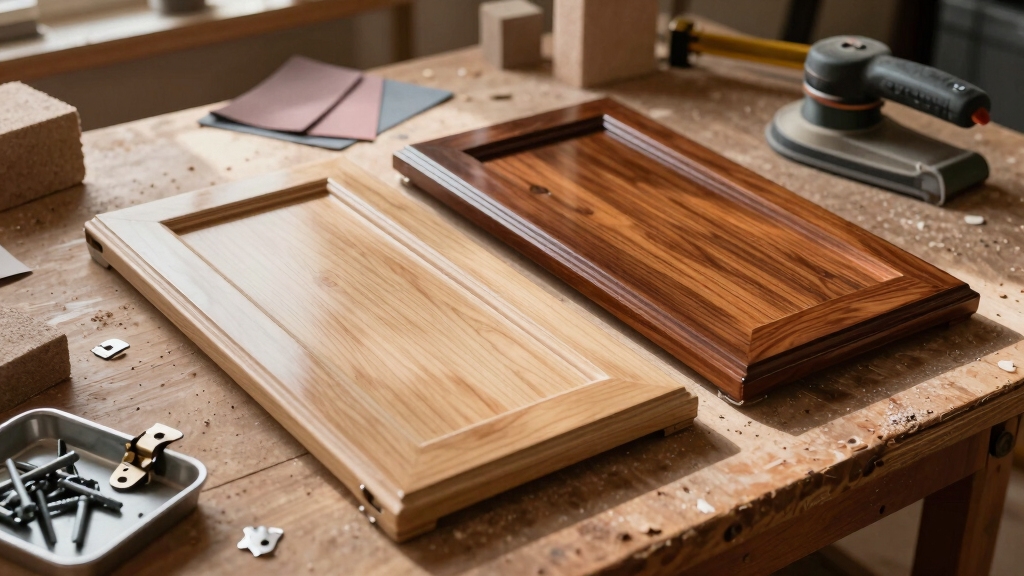
Taking off your cabinet doors before sanding sets you up for a smoother, more controlled process. When you remove the doors, you gain full access to every surface, edge, and corner, allowing you to sand evenly without missing spots.
Removing cabinet doors before sanding ensures even access and a smoother, more controlled refinishing process.
You can lay the doors flat on a stable table, which prevents wobbling and guarantees consistent pressure while sanding. Detaching hardware like handles and hinges eliminates obstacles that could damage sandpaper or cause uneven sanding.
Label each door and its corresponding frame position to avoid confusion during reinstallation. Avoid sanding doors while attached, as limited access leads to uneven surfaces and harder-to-reach areas.
This methodical removal streamlines your workflow, reduces errors, and ultimately produces a professional-quality finish ready for priming and painting. Additionally, using appropriate tools during removal helps prevent damage and ensures a smooth refinishing process.
How to Clean and Prep Cabinet Doors for Sanding?
Once you’ve removed the cabinet doors and labeled them for easy reinstallation, the next step is to clean and prep each door thoroughly. This ensures sanding is effective and the finish adheres properly.
Start by wiping away grease, dirt, and residues using a degreaser or mild soap with water. Work on a flat, stable surface like a table for control and safety.
Remove all hardware such as handles and hinges to avoid damage and allow full surface access. Use a degreaser or mild soap to eliminate grease and grime.
Dry doors completely before sanding to prevent moisture issues. Place doors on a flat surface to stabilize during sanding.
Remove all hardware to guarantee even sanding and avoid scratches. Thorough prep sets you up for smooth, even sanding results.
For best results, avoid using abrasive cleaners or excessive water during cleaning to protect the wood surface and prevent damage to the finish, following recommended cleaning methods.
Choosing the Right Sandpaper Grit for Cabinet Doors
To choose the right sandpaper grit for your cabinet doors, the first step is to check their condition. If you’re dealing with a heavy finish that needs to go, you’ll want to start with a coarse grit, like 40 to 80. This will make that tough job a lot easier!
Once you’ve tackled the heavy stuff, it’s time to smooth out any rough patches. For this, medium grit sandpaper in the range of 100 to 150 will do the trick. It’s perfect for getting those surfaces nice and even.
Finally, to achieve that polished look and prepare the surface for painting, grab some fine grit sandpaper, like 220. Progressing through these stages won’t only ensure a smooth finish but also help with better adhesion for your paint. Happy sanding!
Remember to always sand with the grain to prevent surface damage and achieve the best results.
Grit Progression Stages
Selecting the right sandpaper grit is essential for achieving a smooth, professional finish on your cabinet doors.
Start with a coarse grit (40-80) to strip old finishes and smooth major imperfections.
Next, move to a medium grit (100-150) to even out roughness from the coarse sanding.
Finally, finish with a fine grit (220) to create a silky surface ready for paint or stain adhesion.
Progressing methodically prevents over-sanding and guarantees uniformity.
Begin coarse for effective finish removal and smoothing.
Shift to medium grit to refine and prep the surface.
Use fine grit to create a smooth, paint-ready finish.
Follow grit progression stages carefully for consistent results.
This sequence preserves wood integrity and optimizes final appearance.
For professional results, consider using tools with adjustable depth control to ensure precise finishing and prevent damage.
Selecting Grit Based On Condition
Assess the condition of your cabinet doors carefully before choosing sandpaper grit to guarantee efficient sanding and ideal results.
If your doors have thick old paint, heavy finish, or noticeable imperfections, start with a coarse grit between 40 and 80 to remove buildup effectively.
For doors with minor wear or light finish removal, opt for medium grit, around 100 to 125, to smooth surfaces without over-sanding.
When the surface feels relatively smooth and free of major damage, use fine grit, such as 220, to prepare for primer or paint.
Always progress through grits methodically, avoiding skipping steps.
Using the correct grit based on door condition prevents damage and guarantees a smooth, even finish ready for the next stage.
For the best results and ease of use, pairing your sandpaper with an ergonomic sander design can significantly reduce fatigue during sanding.
Best Tools to Speed Up Cabinet Door Sanding
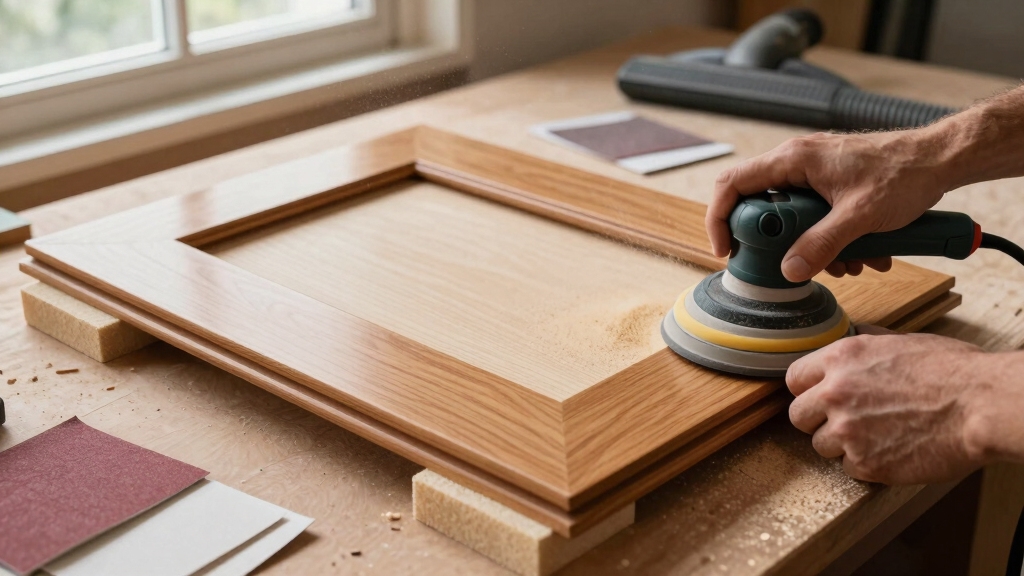
Maximize your sanding efficiency by using the right tools designed to handle both flat panels and intricate profiles. For flat cabinet doors, an orbital sander with 3×4 inch or 5-6 inch discs speeds up surface prep while ensuring even finish removal.
When tackling contours and recessed areas, foam abrasive sponges like EKASILK PLUS conform perfectly to shapes, saving time. Sanding sponges work well for corners and edges, providing precision where machines can’t reach.
Hand sanding pads, such as EOD Diamond 180 grit, give you control over profiled edges without over-sanding.
- Random orbital sanders for large flat surfaces
- Foam abrasive sponges for curves and recesses
- Sanding sponges for detailed corners and edges
- Hand sanding pads for delicate profiles
Using these tools methodically helps you finish faster and achieve smooth, professional results. Remember to maintain consistent pressure during sanding to avoid uneven areas and ensure a flawless finish.
How Door Style Affects Your Sanding Approach?
When you’re sanding flat panel doors, it’s pretty easy to get into a rhythm. You can grab a large disc or random orbital sander and pair it with some 5mm sanding sponges. This combo really helps you achieve those smooth surfaces quickly.
Now, when it comes to profiled doors, things get a bit trickier. You’ll want to switch gears and do some careful hand sanding. Using sponges here is key, as they let you navigate those edges and corners without risking damage to the details.
And if you’re dealing with recessed panels, make sure to select some cut-to-fit ProFoam sponges. They’re perfect for reaching those tight profiles and help you maintain consistent pressure throughout the sanding process. Happy sanding!
To achieve a flawless finish after sanding, consider using the right brush material for applying varnish to avoid streaks and blotches.
Flat Panel Techniques
Typically, flat panel cabinet doors respond well to sanding with larger tools. This allows you to cover surface areas quickly and evenly.
You’ll want to use a 5-6 inch random orbital sander or large disc sander to maintain flatness and avoid uneven spots. Always sand with the grain direction to prevent scratches.
For edges, switch to a 5mm foam abrasive sponge to reach tight spots without damaging the panel. Keep these tips in mind:
- Start with 80-100 grit for finish removal, then progress to 220 grit for smoothness.
- Use even pressure to avoid dips or curves.
- Work on a stable, flat surface to control sanding.
- Vacuum and wipe dust after each grit stage to ensure a clean surface.
This method guarantees a consistent, professional finish on your flat panel doors. Proper preparation, including ensuring a flat, smooth surface, is key to achieving long-lasting results.
Profiled Door Methods
Tackle profiled cabinet doors with careful hand sanding to preserve their intricate shapes and avoid damage. Use fine-grit sanding sponges or hand sanding pads to reach edges, curves, and detailed contours. Always sand in the direction of the wood grain to prevent scratches.
Avoid power sanders on profiles, as they risk rounding edges or removing too much material unevenly. Apply even pressure and work in small sections, focusing on one profile at a time. Progress through grits starting at medium (100-150) if the finish is intact, or coarser if needed, finishing with 220 grit for smoothness.
Between grit changes, vacuum dust and wipe with a tack cloth to maintain clean surfaces. This method makes certain the profile’s detail stays crisp and ready for priming or painting. Proper cleaning, sanding, and repair before finishing is essential to ensure a smooth, durable surface.
Recessed Panel Tools
Profiled doors demand delicate hand sanding to maintain their intricate contours. Recessed panel doors require a different set of tools to effectively reach tight corners and edges.
When sanding recessed panels, prioritize tools that conform precisely to the panel’s depth and shape. This ensures even abrasion without damaging the surrounding frame.
Focus on these tools for best results:
- Cut-to-fit ProFoam sponges for snug access inside recesses
- Sanding sponges to navigate corners and edges gently
- Small hand sanding pads for detailed, controlled work
- Vacuum-enabled sanding discs to reduce dust in confined spaces
Using these tools methodically helps you avoid uneven surfaces or rolled edges. This prepares a flawless finish ready for priming and painting. Additionally, always sand along the grain with light pressure to maintain the wood’s natural texture and avoid scratches.
How to Sand Profiles, Edges, and Detailed Contours by Hand?
When sanding profiles, edges, and detailed contours by hand, you’ll want to use sanding sponges or pads designed for precision work to maintain the integrity of the shapes.
Select flexible foam sponges or hand sanding pads like EOD Diamond 180 grit to carefully follow curves and intricate details.
Choose flexible foam sponges or EOD Diamond 180 grit pads to gently contour curves and fine details.
Work slowly, sanding along the wood grain and applying even pressure to prevent dips or uneven surfaces.
Pull the door along the abrasive instead of sanding back and forth to avoid rounding sharp edges.
Tackle small sections at a time for better control, guaranteeing you remove old finish while preserving profiles.
Use progressively finer grits as you go, finishing with 220 grit for a smooth surface ready for priming and painting.
This method protects detail and guarantees an even, professional finish.
How to Clean and Inspect Doors Between Sanding Stages?
Regularly cleaning and inspecting your cabinet doors between sanding stages guarantees a flawless finish and prevents imperfections from settling into the surface.
After each sanding pass, vacuum the dust thoroughly to remove loose particles.
Next, wipe the door with a tack cloth to pick up fine dust that can interfere with adhesion.
Carefully examine the surface, especially profiles and edges, for uneven sanding, rolled edges, or missed spots.
Look for any rough patches or caked-on residue that could cause flaws.
Focus your inspection on these key points:
- Smoothness and uniformity of the sanding surface
- Dust and residue removal from all contours and crevices
- Consistent edge profiles without over-sanding
- Signs of damage or missed imperfections
This methodical approach guarantees you catch issues early and prepare the door perfectly for the next grit stage.
Best Sanding Techniques to Avoid Damage on Cabinet Doors
To prevent damage while sanding cabinet doors, always sand in the direction of the wood grain. This minimizes scratches and swirl marks.
Sanding with the wood grain is essential to avoid scratches and achieve a smooth, flawless finish.
Work on small sections at a time to maintain control and ensure even sanding. Apply consistent, moderate pressure to avoid creating dips or uneven surfaces.
Use hand sanding pads or foam sponges on edges, corners, and detailed profiles to protect delicate contours. For flat panels, employ orbital sanders with appropriate grit discs.
Never use power tools on profiled or recessed areas where they can cause damage. Pull the sanding abrasive along the grain rather than pushing it to reduce gouging.
After each grit stage, vacuum and wipe surfaces to check for imperfections. Correct any rolled edges or rough spots before moving to finer grits.
Prep Cabinet Doors for Priming and Painting
Making sure cabinet doors are perfectly clean and smooth after sanding sets the foundation for flawless priming and painting. Once you finish sanding, remove all dust thoroughly using a vacuum and tack cloth.
Inspect all profiles and edges to ensure they’re evenly sanded without rolled edges or uneven spots. Clean the doors with a degreaser or mild soap and water to eliminate any grease or residue that could affect adhesion.
Allow doors to dry completely before moving on. Focus on these key steps:
- Vacuum and wipe with a tack cloth after sanding each grit.
- Inspect for smoothness and consistent sanding across all surfaces.
- Clean with a degreaser or mild soap to remove grease and dirt.
- Ensure doors are fully dry before applying primer for peak results.
Frequently Asked Questions
Can I Sand Cabinet Doors Without Removing Them?
You shouldn’t sand cabinet doors without removing them. Keeping doors attached limits your access, making it tough to sand evenly and thoroughly.
You’ll struggle to reach edges, corners, and recessed panels properly, which can cause uneven surfaces and missed spots.
Removing doors lets you work on flat, stable surfaces, ensuring precise sanding and better finish adhesion. Plus, it protects surrounding areas from dust and damage during sanding.
How Long Should I Wait Between Sanding and Painting?
Think of waiting between sanding and painting like letting fresh ink dry on a letter. It needs time to settle.
You should wait about 15 to 30 minutes after sanding before painting, ensuring the surface is dust-free and completely dry.
This pause lets the primer or paint adhere properly, preventing peeling or bubbling. Always wipe with a tack cloth and inspect for smoothness, so your finish stays flawless and long-lasting.
What Safety Gear Is Recommended During Sanding?
You should wear a dust mask or respirator to protect your lungs from fine particles. Use safety goggles to shield your eyes from dust and debris.
Gloves will protect your hands from abrasions and splinters, especially when hand sanding edges and profiles. Consider hearing protection if you’re using power sanders.
Make sure your workspace is well-ventilated to reduce dust buildup and avoid inhaling harmful particles during sanding.
Can I Reuse Old Sandpaper for Multiple Doors?
You can reuse old sandpaper for multiple doors, but only if it’s still abrasive and not clogged with dust or finish residue. Inspect it carefully. If the grit feels smooth or clogged, replace it to maintain effective sanding.
Reusing worn sandpaper leads to uneven surfaces and longer sanding times. Always keep various grits handy and switch to fresh sheets as needed to ensure consistent, smooth results across all your cabinet doors.
How Do I Fix Deep Scratches Before Sanding?
To fix deep scratches before sanding, start by cleaning the area thoroughly. Apply wood filler or putty that matches your cabinet’s material, pressing it firmly into the scratch.
Let it dry completely according to the product instructions. Once dry, lightly sand the filled spot with medium grit sandpaper to level it with the surface.
Then, blend the edges smoothly before progressing with your regular sanding steps for an even finish.
Transform Your Cabinets with Proper Preparation
Removing cabinet doors before sanding can cut your work time by up to 40%, making the process more efficient and thorough. By carefully cleaning, selecting the right grit, and using proper tools, you ensure a smooth finish without damage.
Pay close attention to profiles and edges, sanding by hand when needed. Consistently inspect and clean between stages to prep your doors perfectly for priming and painting, guaranteeing a professional, long-lasting result.