
Aspen vs Alder Wood: Which Is Better?
If you need lightweight, low-odor wood that’s heat-sensitive and easy to machine, aspen is your best pick. It offers a pale, uniform grain ideal for painted or light finishes.
Alder gives you warmer, richer tones with excellent machinability and finer finishes, perfect for detailed furniture and millwork.
Both aren’t great outdoors due to low durability, so choose based on finish style and project needs. Explore more to understand their strength, workability, and ideal uses.
Key Takeaways
- Aspen has a pale, uniform appearance with fine grain, ideal for minimalist, painted, or light finishes, while alder offers warmer, richer tones suited for traditional finishes.
- Aspen is lightweight with low density and moderate stability, best for indoor utility uses; alder has medium density and better stability for fine furniture.
- Both woods machine well, but alder excels in detailed turning, shaping, and gluing with less fiber tear-out compared to aspen.
- Aspen requires careful sanding to remove surface fuzz and benefits from primer; alder sands smoothly but needs thin, multiple finish coats to avoid burn marks.
- Choose aspen for cost-effective, low-odor, heat-sensitive projects like sauna components; select alder for higher-end furniture and decorative millwork needing superior finishes.
Aspen vs Alder Wood: Key Differences in Strength, Durability, Appearance, and Workability
| Comparison Factors | Aspen Wood | Alder Wood |
|---|---|---|
| Wood Classification | Soft hardwood | Soft hardwood |
| Typical Density | Low-density, lightweight wood | Medium-density wood |
| Natural Color | Pale cream to light whitish tones | Light tan to warm reddish-brown |
| Grain Pattern | Fine, straight, relatively uniform grain | Fine, even grain with subtle character |
| Wood Texture | Soft, fine, and uniform | Smooth, fine, and consistent |
| Hardness | Generally softer and more dent-prone | Generally harder than aspen |
| Bending Strength | Relatively low strength | Moderate strength for suitable interior uses |
| Dimensional Stability | Moderate; affected by moisture changes | Generally suitable for stable interior furniture |
| Machinability | Easy to cut and shape; may develop fuzzy fibers | Machines cleanly and supports detailed shaping |
| Sanding Performance | Requires care to avoid surface fuzziness | Usually sands to a smooth surface |
| Painting Suitability | Suitable for painted and light finishes | Suitable for painted and decorative finishes |
| Staining Characteristics | Pale appearance; preparation affects absorption | Warm appearance; may stain unevenly without preparation |
| Gluing and Joinery | Suitable for light interior joinery | Good gluing properties for furniture and cabinetry |
| Moisture Resistance | Low natural resistance to prolonged dampness | Low natural resistance to prolonged dampness |
| Outdoor Durability | Generally unsuitable for untreated outdoor exposure | Generally unsuitable for untreated outdoor exposure |
| Common Applications | Sauna seating, packaging, pallets, and interior components | Furniture, cabinets, doors, and decorative millwork |
| Overall Recommendation | Choose for lightweight, pale, practical interior projects | Choose for warmer appearance and refined furniture finishes |
Key Differences Between Aspen and Alder Wood

While both aspen and alder are classified as soft hardwoods, they differ markedly in density, strength, and typical applications. These are key factors to consider when selecting wood for your project.
Aspen is lighter with low density, offering low strength and moderate stiffness. This makes it suitable for lightweight, utility uses like pallets, sauna seating, and interior joinery.
Aspen’s low density and moderate stiffness make it ideal for lightweight, practical applications like pallets and interior joinery.
Alder, by contrast, has medium density and slightly better stability. It’s still low in bending strength and shock resistance, which suits it well for furniture, cabinetry, and millwork requiring finer finishes.
Aspen machines easily with minimal splitting, though its surface may fuzz. Alder excels in turning, gluing, and finishing.
You’ll find aspen better for cost-conscious, low-odor, or heat-sensitive uses. Alder fits higher-end interior applications demanding smoother finishes and durability.
Both woods’ performance characteristics are influenced by their cellular structure and density, which impact strength and workability.
Aspen vs Alder Wood: Appearance and Aesthetic Appeal
Selecting between aspen and alder also means considering their distinct visual characteristics, which markedly influence their suitability for various projects.
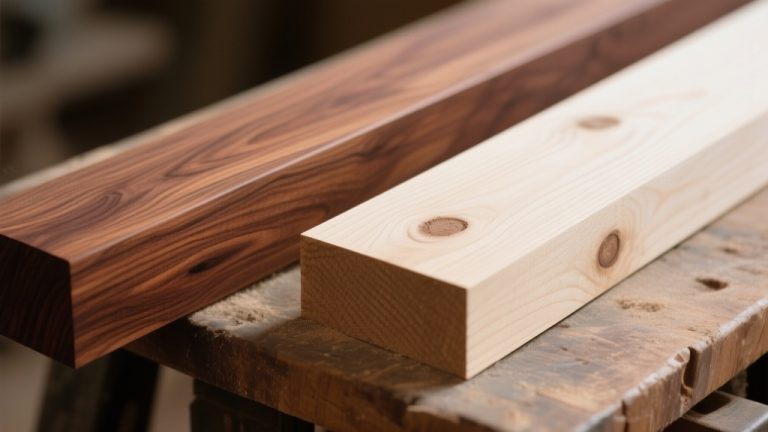
Aspen exhibits a pale, uniform appearance with fine, straight grain and a very soft texture. Its light color suits painted or light-finish applications, providing a clean, minimalist aesthetic.
Alder, by contrast, offers a warmer, richer tone ranging from light tan to reddish-brown, combined with an even grain that enhances its furniture-like appeal. This wood’s surface finishes smoothly, making it popular for visible interior work where a refined, natural look is desired.
When you choose between these woods, consider whether a light, subtle look (aspen) or a warmer, more traditional finish (alder) best complements your design intent and project requirements. Both woods’ differences in grain patterns significantly influence their finishing techniques and visual impact.
Aspen vs Alder Wood: Strength and Durability Compared
Evaluating the strength and durability of aspen and alder wood reveals key differences that impact their practical applications. Aspen is a fast-growing hardwood with low density, low bending strength, moderate stiffness, and moderately low shock resistance. Alder, although soft, has medium density and exhibits lower stiffness and shock resistance than aspen. However, it’s generally more stable for furniture use.
When comparing their durability:
- Aspen is better suited for indoor or protected uses due to poor outdoor durability.
- Alder resists rot when kept wet but is soft and porous.
- Both species lack high structural strength and weather resistance.
- Alder often outperforms aspen in furniture stability despite similar softness.
You should select alder for slightly more durable indoor applications and aspen for lightweight, low-stress uses. Additionally, the Janka hardness rating provides a useful benchmark for understanding their relative resistance to dents and wear.
Workability and Finishing Tips for Aspen and Alder Wood
Both aspen and alder are a breeze to machine, but there’s a little quirk with aspen. If you don’t sand it just right, the surface can turn out a bit fuzzy. So, to get that perfect finish, it’s important to pay attention to these differences and use the right surface preparation techniques.
And when it comes to staining and painting, each wood species has its own personality. By understanding how aspen and alder respond, you’ll be able to choose the best finishing methods for both. Happy working!
Remember that using the right tools and sanding methods is crucial to achieve a smooth finish, as seen in woods like maple which require finer grit sanding for optimal results.
Machining Characteristics
When machining aspen, expect smooth processing with minimal splitting. It machines easily and holds nails well. However, you might notice slight surface fuzziness, which requires careful sanding.
Alder, on the other hand, machines cleanly and excels in turning and shaping tasks. Both woods respond well to standard woodworking tools. However, alder offers better glue adhesion and a finer finish.
Keep these machining characteristics in mind:
- Aspen’s low density guarantees easy cutting but can produce fuzziness on surfaces.
- Alder machines smoothly with less fiber tear-out, ideal for detailed turning.
- Both woods nail and screw well without splitting.
- Alder’s glue bonding is superior, supporting strong joints in furniture applications.
Use sharp, well-maintained tools and controlled feed rates for best results. Additionally, alder’s denser structure compared to aspen contributes to its better finishing qualities and durability.
Surface Preparation Tips
Getting your aspen or alder wood surfaces ready for finishing means understanding their unique textures and tendencies. Aspen’s fine, soft texture can develop fuzziness during sanding. Use progressive grits and consider a light sanding sealer to smooth the surface.
Alder machines cleanly and sands to a smooth finish. However, its medium density requires careful sanding to avoid burn marks.
| Wood Type | Sanding Tips | Surface Traits |
|---|---|---|
| Aspen | Use fine grit, light sealer | Soft, prone to fuzziness |
| Alder | Sand evenly, avoid heat build-up | Medium density, smooth finish |
| Both | Clean dust before finishing | Stable, good dimensional stability |
Proper prep guarantees peak adhesion and finish quality. Always sand with light pressure and sand with the grain to prevent damage and achieve a smooth, even surface.
Finishing Techniques
Finishing aspen and alder wood requires understanding their distinct machining and surface characteristics to achieve ideal results.
Aspen machines easily but may develop a fuzzy surface, so you’ll want to sand carefully and apply a primer before painting or staining.
Alder, denser and smoother, responds well to sanding and polishing, making it ideal for fine furniture finishes.
To optimize your finishing process, follow these tips:
- Sand aspen progressively to eliminate fuzziness; alder needs less aggressive sanding.
- Use a quality primer on aspen to ensure even stain absorption.
- Apply multiple thin coats of finish on alder for a rich, smooth surface.
- Avoid excessive moisture exposure for both woods to maintain finish integrity.
These techniques ensure durable, aesthetically pleasing results for your projects. Additionally, using finishes with Aluminum oxide can enhance scratch resistance and durability on alder surfaces.
Picking Aspen or Alder Wood for Furniture and Millwork
Choose between aspen and alder wood carefully to match your furniture or millwork project’s specific needs.
If you prioritize a lightweight, pale wood with fine, uniform texture suitable for painted or light finishes, aspen is ideal.
It machines easily without splitting and offers moderate dimensional stability, making it practical for interior components and utility furniture parts.
Conversely, alder provides a warmer, richer tone with an even grain, excelling in smooth finishes and furniture-grade applications.
Its medium density and good gluing properties support cabinetry, doors, and decorative millwork, where appearance and finish quality matter.
Both woods have low durability outdoors, so you should confine their use to protected interior environments.
Your choice hinges on balancing weight, aesthetic warmth, and the finish quality your project demands.
For projects requiring enhanced durability and resistance to wear, considering the density and hardness of the wood species can be crucial.
Best Projects for Aspen and Alder Wood Based on Their Qualities
Aspen is a fantastic choice if you’re looking for lightweight and low-odor applications. Think about sauna seating, packaging, or even interior components. Its softness and pale, uniform appearance really shine in these projects.
On the other hand, if you’re leaning toward higher-end furniture or cabinetry, alder might be your best bet. It has a denser, more stable structure that gives it a warm finish, perfect for decorative millwork. Alder’s strength and durability make it suitable for projects requiring moderate hardness and stability.
Ideal Aspen Applications
Aspen excels in projects where lightweight, low-odor, and non-heat-retentive wood is essential. Its low density and fine, uniform texture make it ideal for applications demanding easy machining and minimal odor interference.
You’ll find aspen especially useful in:
- Sauna seating and interior sauna components, due to its low thermal conductivity and odorless nature.
- Lightweight furniture parts like drawer sides and interior joinery, where moderate strength and smooth finishing suffice.
- Packaging materials, pallets, and crates, leveraging its cost-effectiveness and softness for easy processing.
- Turned articles and picture frames, benefiting from its fine grain and good dimensional stability.
Choose aspen when you need a light, stable wood that machines well without compromising on odor or heat retention. For projects requiring protective finishes, applying thin, even coats of polyurethane ensures durability without compromising the wood’s natural qualities.
Best Alder Uses
While aspen suits lightweight and odor-sensitive applications, alder stands out for projects demanding a warmer appearance and finer finish.
You’ll find alder ideal for furniture, cabinetry, and millwork where its medium density and even grain deliver smooth surfaces and good dimensional stability.
Its excellent machinability and glue adhesion make it perfect for turning, molding, and detailed joinery.
Alder’s light tan to reddish-brown color enhances interior doors, sash, and panel stock, providing a richer tone than pale aspen.
Although alder has low bending strength and shock resistance, it’s stable enough for indoor furniture and decorative veneer.
You should avoid outdoor or high-stress uses but leverage alder’s finishing qualities to achieve a high-end look in cabinetry and custom woodwork.
Project Suitability Comparison
When selecting wood for your project, understanding the distinct characteristics of aspen and alder helps guarantee peak material performance and aesthetic outcome.
Aspen’s lightweight, low-odor, and fine-textured nature suits utility and interior applications, while alder’s denser, warmer tone excels in furniture and millwork.
Consider these project suitability points:
- Choose aspen for sauna seating, packaging, and light interior joinery due to its dimensional stability and softness.
- Opt for alder in high-finish cabinetry, doors, and decorative veneer where smooth machining and richer color are crucial.
- Avoid both woods in outdoor or load-bearing structures because of their low bending strength and weather resistance.
- Use alder for turned articles and furniture components demanding superior finishing and moderate durability.
This approach makes certain material selection aligns perfectly with your project’s functional and aesthetic demands.
Frequently Asked Questions
Can Aspen or Alder Wood Be Used for Outdoor Decking?
You shouldn’t use aspen or alder wood for outdoor decking because both lack the durability and weather resistance needed.
Aspen doesn’t hold up well against moisture and outdoor exposure, while alder’s softness and porosity make it prone to rot unless constantly wet, which decking isn’t.
Instead, choose woods specifically rated for outdoor use or treated for weather resistance to guarantee longevity and safety in your decking project.
How Do Aspen and Alder Woods Respond to Moisture Over Time?
Think of moisture as a slow drip wearing away at a stone.
Aspen struggles with moisture over time, showing poor outdoor durability and swelling or warping if exposed.
Alder resists rot only when kept wet but otherwise absorbs moisture easily.
This leads to dimensional changes and reduced stability.
You’ll want to avoid prolonged water exposure with both woods, especially outdoors, to maintain their structural integrity and appearance over time.
Are Aspen and Alder Woods Safe for Food-Contact Surfaces?
Yes, you can safely use aspen wood for food-contact surfaces because it has low thermal conductivity and doesn’t impart odor or taste.
This makes it ideal for items like sauna seating or cutting boards.
Alder wood, however, is less common for direct food contact due to its porosity and moisture sensitivity, which might harbor bacteria.
If you use alder, make sure it’s properly sealed and maintained to prevent contamination and moisture damage.
What Are the Environmental Impacts of Harvesting Aspen vs Alder?
When it comes to environmental impact, you’re skating on thin ice if you ignore growth rates.
Aspen grows fast and regenerates quickly, making it more sustainable for frequent harvesting.
Alder, slower to mature, requires more time and careful management to avoid ecosystem disruption.
Both species support biodiversity, but choosing aspen lets you harvest with less long-term damage.
You’ll want to take into account local forestry practices to minimize soil and habitat impact regardless of choice.
Which Wood Is More Cost-Effective for Large-Scale Manufacturing?
You’ll find aspen more cost-effective for large-scale manufacturing due to its faster growth rate, lower density, and widespread availability. This reduces raw material costs.
It machines easily and suits lightweight, utility applications, minimizing production expenses. Alder, while offering superior finish and furniture-grade qualities, comes at a higher price point and slower growth.
Find the Right Wood for Furniture and Millwork
When choosing between aspen and alder wood, consider the subtle contrasts in grain and strength that define your project’s success.
Imagine the smooth, pale aspen shaping delicate furniture, while rich, reddish alder stands firm in millwork.
Your decision hinges on balancing aesthetic appeal with durability and workability.
Ready to unleash the full potential of your design?
The wood you pick will reveal its true character only when your vision meets its natural qualities.