Tso Parallel Guide: Accurate Cuts Made Easy
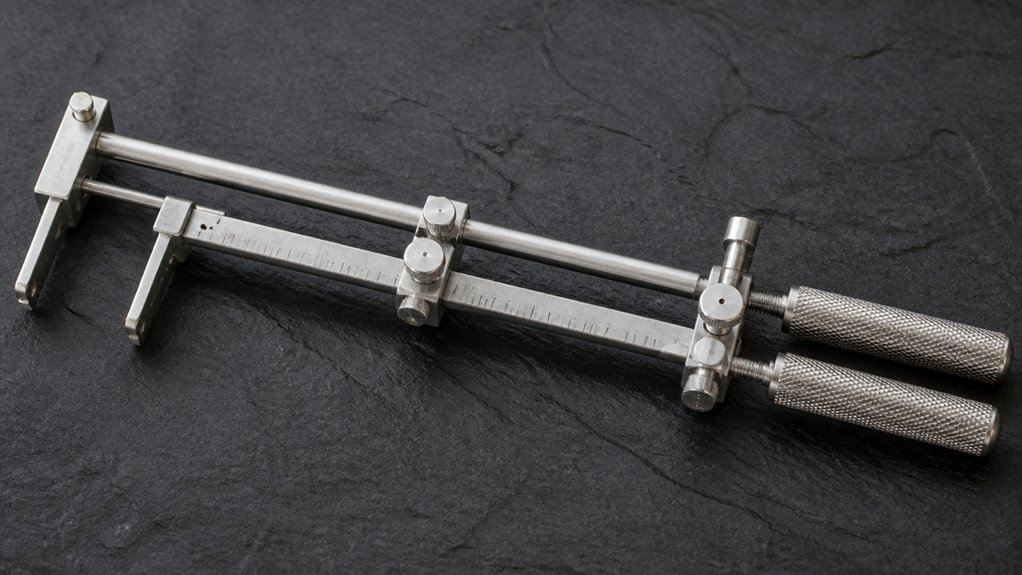
You’ll find the TSO Parallel Guide system offers precise, repeatable parallel cuts with secure mounting on TPG Parallel Guide T-Tracks using M6 x 10 mm knobs.
It fits Festool rails and works smoothly with multiple tool brands like Makita and DeWalt.
Choose between 30- or 50-inch lengths based on your workspace and panel size.
Calibration rods guarantee exact cut widths by firm contact with your workpiece.
Follow proper setup and locking techniques to maximize accuracy.
Explore how these features optimize your woodworking projects.
Key Takeaways
- The Tso Parallel Guide mounts securely on Festool guide rails using M6 x 10 mm knobs for stable, precise cuts with various tool brands.
- Calibration rods ensure exact parallelism to workpiece edges, allowing consistent, repeatable cut widths with no gaps for accuracy.
- The guide’s locking mechanism features a reliable lever or button that clicks firmly to prevent play and ensure stable operation.
- Available in different lengths, the guide balances portability and reach, with shorter versions reducing deflection and longer versions supporting larger panels.
- Regular maintenance includes cleaning T-tracks and raising the guide rail slightly during setup to reduce friction and improve sliding performance.
How the TSO Parallel Guide System Delivers Precision in Woodworking?

Because precision is critical in woodworking, the TSO Parallel Guide System employs a T-track mounted on a guide rail square to guarantee exact parallel cuts.
You’ll secure the T-track with two M6 x 10 mm knobs, assuring stable attachment that resists movement during operation.
The system’s FlipStop cursor slides onto the T-track and locks firmly with a knob, allowing you to set precise width measurements.
Calibration rods contact the workpiece edge, enabling you to set consistent, repeatable cut distances.
The narrow part rod option accommodates wider materials without sacrificing accuracy.
By raising the guide rail slightly during setup, you reduce friction for smoother calibration adjustments.
This methodical design guarantees your cuts remain parallel, stable, and reliable, elevating your woodworking precision to professional standards.
For enhanced control and reduced user fatigue during prolonged use, incorporating tools with ergonomic handles can significantly improve your woodworking experience.
Choosing Between TSO 30-Inch and 50-Inch Parallel Guides
When you’re deciding between the TSO 30-inch and 50-inch parallel guides, think about how the length impacts your cutting precision and the layout of your workspace.
A shorter guide, like the 30-inch, is great for portability and gives you that tight control you need in smaller areas.
On the flip side, the 50-inch guide lets you handle larger materials and offers more extended reach. So, it really comes down to what you need for your project.
Are you working on something big, or do you need to move around a lot? Balancing these factors will help you pick the right one!
For enhanced precision in your cuts, consider using a laser guide to provide a clear and accurate cutting line.
Length Impact On Precision
Selecting between the TSO 30-inch and 50-inch parallel guides directly affects the precision and versatility of your cuts.
The 30-inch guide offers enhanced control for smaller workpieces, minimizing deflection and ensuring tighter tolerances.
Its reduced length minimizes potential play in the guide rail, delivering consistently accurate parallel cuts for detailed work.
Conversely, the 50-inch guide excels on larger panels, providing extended reach without sacrificing alignment due to its robust T-track mounting and secure M6 x 10 mm knob attachments.
However, increased length may introduce slight flex if not properly supported.
When precision is paramount, shorter guides reduce error margins.
The 50-inch option balances precision with capacity for broader projects.
Choose based on your workpiece dimensions, prioritizing guide length that maintains rigidity and peak calibration rod contact for reliable parallelism.
For optimal results, consider the balance and center of gravity for your setup to reduce vibration and maintain control during cutting.
Workspace And Portability
The choice between the TSO 30-inch and 50-inch parallel guides influences precision and impacts your workspace efficiency and portability.
If you operate in confined or mobile setups, the 30-inch guide offers superior maneuverability and easier storage without sacrificing essential accuracy.
Conversely, the 50-inch guide excels in handling larger workpieces, reducing repositioning and improving workflow continuity.
Keep in mind, the longer guide demands more bench space and may complicate transport.
Both guides mount securely via M6 x 10 mm knobs on the TPG Parallel Guide T-Track, ensuring stability regardless of size.
Assess your project scale and workspace constraints carefully. Selecting the appropriate length optimizes both cut quality and operational convenience.
This strategic choice enhances your overall woodworking precision and efficiency.
For optimal results, pairing your parallel guide with tools that feature ergonomic grips and vibration reduction can significantly improve control and reduce fatigue during extended use.
Setting Up Your Gen 2 TSO Parallel Guide
Begin by securely mounting the TPG Parallel Guide T-Track onto your GRS-16 Square or adapter using the two M6 x 10 mm knobs.
Make sure the knobs are tightened firmly to prevent any movement during operation.
Next, slide the FlipStop onto the T-track from the cursor end and secure it with its knob.
Attach the entire GRS-16 Square plus Parallel Guide assembly onto your guide rail, verifying it aligns precisely.
Check that the locking lever or button mechanism engages fully for stable fixation.
Position the parallel guide so it rests flat on your workbench to maintain accuracy.
Confirm the system’s rigidity by attempting slight lateral force; no play should be present.
This setup preps your Gen 2 TSO Parallel Guide for precise, repeatable cuts without calibration adjustments at this stage.
For enhanced precision in finish work, consider using a brad nailer with tool-free depth adjustment to secure your workpieces effectively.
Calibrating With Rods for Accurate Parallel Cuts
To get those precise parallel cuts you’re after, the first step is choosing the right calibration rod type—either standard or narrow. This decision really depends on the width of your material.
Once you’ve got your rod in hand, you’ll want to set it firmly against the edge of your workpiece. Next, adjust the cursor to match the exact cut width you need. This little setup is key, as it ensures everything aligns perfectly and helps cut down on friction while you’re working.
For optimal results, consider the capacity and adjustment features of your sander to maintain accuracy during use.
Calibration Rod Types
Calibrating with the correct rod type guarantees your parallel cuts maintain consistent accuracy across different material widths.
The TSO Parallel Guide system offers two primary calibration rods: the standard rod and the narrow part rod.
Use the standard rod for typical material widths, ensuring firm contact with the workpiece edge to establish precise alignment.
When working with wider materials, switch to the narrow part rod, which replaces the standard rod to prevent binding and maintain smooth sliding along the T-track.
Both rods are engineered for easy adjustment and secure positioning, allowing you to calibrate the guide rail accurately before cutting.
Selecting the appropriate rod type minimizes friction and ensures the parallel guide remains locked in position, delivering repeatable, error-free cuts every time.
For best results, always measure accurately and use proper measurement tools to ensure precise calibration of your parallel guide.
Setting Accurate Widths
Choosing the correct calibration rod sets the foundation for accurate width adjustments on the TSO Parallel Guide. To make certain precise parallel cuts, you must calibrate the guide properly using the rods designed for the material thickness.
Follow these steps:
- Select the standard or narrow calibration rod based on your workpiece width.
- Position the rod head firmly against the workpiece edge, making certain no gaps.
- Adjust the parallel guide by sliding it on the T-track until the rod contacts the edge consistently, then lock it securely.
Raise the guide rail slightly to reduce friction during adjustment. Then lower and lock the guide for stability. This method guarantees repeatable, exact cut widths, optimizing your workflow and minimizing measurement errors. For optimal results, ensure your setup is compatible with your saw’s blade diameter and arbor size to maintain safe and precise operation.
How to Use the TSO Guide With Festool and Other Tools?
Getting started with the TSO Parallel Guide system alongside Festool and other compatible tools involves securely mounting the guide onto the Festool guide rail square or the appropriate adapter.
You’ll use the M6 x 10 mm knobs to fasten the T-track firmly, guaranteeing stability during cuts. Adjust the calibration rod against the workpiece edge for precise parallel alignment.
This setup guarantees repeatable accuracy across various tool brands like Makita and DeWalt.
For best results, ensure you maintain consistent pressure during adjustments to avoid uneven alignment and maximize precision.
| Emotion | Reason |
|---|---|
| Confidence | Secure mounting prevents slippage |
| Precision | Calibration rod ensures exact parallelism |
| Control | Compatibility with multiple tools |
| Satisfaction | Smooth integration with Festool rails |
Tips for Smooth Operation and Reliable Locking
Although the TSO Parallel Guide system boasts robust construction, assuring smooth operation and reliable locking requires correctly engaging the lever or button mechanism securing the guide to the T-track.
To optimize performance, follow these key steps:
- Engage Fully: Always push the lever or press the button until you feel a firm click, confirming the guide locks securely in place without play.
- Maintain Clean Tracks: Remove dust and debris from the T-track and guide surfaces regularly to prevent friction that can impair smooth sliding and locking.
- Check Spring Tension: Assure the spring mechanism remains responsive; replace or service it if the guide doesn’t retract or lock consistently.
Additionally, ensuring a stable base by preparing and maintaining the subfloor properly can prevent misalignment and improve the guide’s locking reliability.
Frequently Asked Questions
What Materials Are Compatible With the TSO Parallel Guide System?
You can use the system with a variety of wood materials, including hardwoods, softwoods, plywood, and MDF.
The parallel guide’s precise calibration rods guarantee accurate cuts on different thicknesses, accommodating wider boards with the narrow part rod.
Its design supports consistent, parallel cuts on typical woodworking materials without damaging the workpiece.
Just make sure your material fits securely against the calibration rod for best alignment and cutting accuracy.
Can the TSO Parallel Guide Be Used for Metal Cutting?
Sure, if you enjoy sparks flying and your guide rail looking like a modern art sculpture, go ahead and use it for metal.
But seriously, the TSO Parallel Guide is designed primarily for woodworking materials. Its calibration rods, locking mechanisms, and T-track mounting suit wood’s softness and precision needs.
For metal cutting, you’d risk damaging the guide and compromising accuracy. Stick to wood or compatible materials to maintain performance and tool longevity.
Are Replacement Parts Available for the Gen 2 TSO Parallel Guide?
Yes, replacement parts are available for the Gen 2 TSO Parallel Guide. You can source components like M6 x 10 mm knobs, calibration rods, and FlipStop cursors individually.
These parts guarantee you maintain precise functionality and secure attachment to the guide rail square. For best results, obtain genuine replacements from authorized dealers or the manufacturer to ensure compatibility and preserve system performance during your woodworking projects.
How Does the Spring Mechanism Affect Long-Term Maintenance?
You might think the spring mechanism wears out quickly, but it actually enhances long-term maintenance by ensuring consistent retraction and reliable locking.
Its stiffness reduces unnecessary movement, minimizing wear on components.
However, you’ll need to regularly check tension and clean debris to prevent buildup that could impair function.
Proper upkeep keeps the mechanism smooth, extending the system’s lifespan and maintaining precise, repeatable cuts over time.
Is the TSO Parallel Guide System Portable for Job Site Use?
Yes, you’ll find the system highly portable for job site use. Its modular components, including 30″ and 50″ parallel guides, are lightweight and easy to disassemble.
The T-track mounts with simple M6 knobs, allowing quick setup and breakdown. You can transport it without hassle and integrate it with common tool brands on site.
This design guarantees precision cuts without sacrificing mobility or efficiency in varied work environments.
Final Thoughts on Tso Parallel Guide Performance
Using the TSO Parallel Guide is like having a master craftsman’s steady hand guiding your cuts, ensuring precision every time.
Whether you choose the 30-inch or 50-inch model, setting up and calibrating with rods guarantees unmatched accuracy.
Pairing it with your Festool or other tools enhances versatility and control.
Follow the tips for smooth operation and reliable locking, and you’ll consistently achieve flawless, professional-grade woodworking results with confidence and ease.