
Is Oak Wood Strong? Key Facts Explained
You’ll find oak wood strong due to its dense cellular structure and tight grain alignment, which maximize mechanical properties like compressive strength up to 64 N/mm² and bending strength as high as 120 N/mm² along the grain.
Its hardness, measured by a Janka value around 6.1–6.3 kN, resists denting and abrasion effectively.
Oak’s durability against moisture and decay makes it ideal for outdoor and structural use.
Understanding its strength fully requires considering grain direction and density effects.
Key Takeaways
- Oak wood exhibits high compressive strength (42–64 N/mm²) and bending strength (60–120 N/mm²), making it strong for structural uses.
- Strength is maximized when load is applied along the grain due to fiber continuity and anisotropic behavior.
- Oak’s density (0.65–0.80 g/cm³) correlates with increased mechanical strength and surface hardness, enhancing durability.
- Live Oak has exceptional hardness (Janka 2,680 lbf), providing strong resistance to denting and abrasion.
- Oak’s tight grain and dense cellular structure contribute to long-term strength, stability, and durability in furniture and construction.
Why Oak Wood Is Stronger Than Other Woods
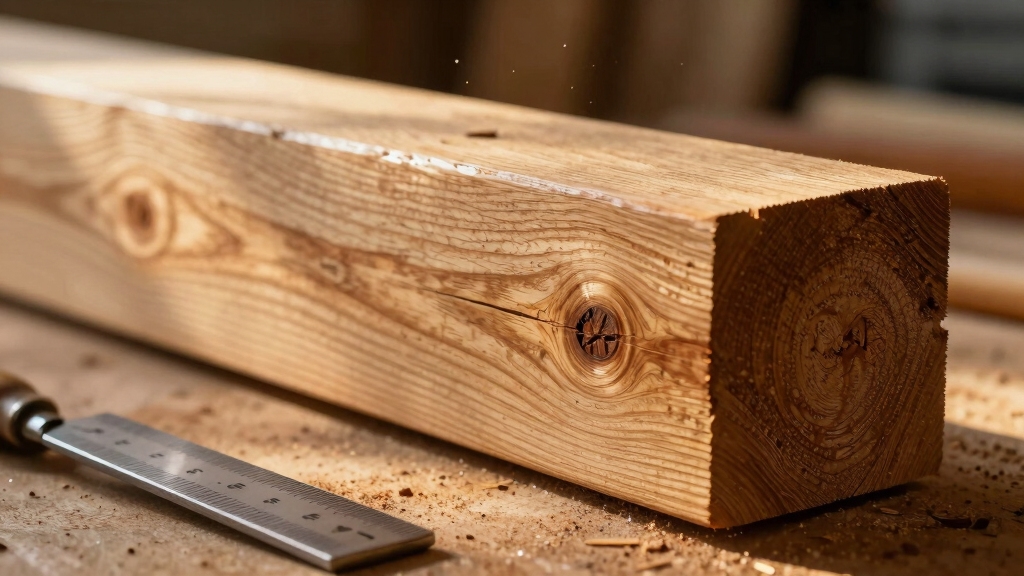
Because oak wood combines high density with strong mechanical properties, it outperforms many other woods in strength and durability.
You’ll find its compressive strength ranges from 42 to 64 N/mm², and bending strength spans 60 to 120 N/mm², values that exceed many common hardwoods.
Oak’s modulus of elasticity, between 10,200 and 15,700 N/mm², indicates its stiffness and resistance to deformation under load.
Both red and white oak exhibit similar mechanical profiles, with static bending moduli of elasticity near 1.8 and high bending strength.
The wood’s strength varies with grain direction, being notably stronger along the grain.
Oak’s combination of these mechanical properties, grain structure, and relatively high density makes it inherently stronger and more reliable than many other species in structural and furniture applications.
Among oak species, Live Oak hardness is exceptional, with a Janka hardness of 2,680 lbf, surpassing both white and red oak.
How Oak’s Density Boosts Strength and Durability?
Did you know that oak’s density plays a crucial role in its strength and durability? With a density ranging from 0.65 to 0.80 g/cm³, this wood is pretty impressive. This density directly boosts its mechanical strength, which means it excels in both compressive and bending resistance. So, if you’re looking for wood that can handle heavy loads and resist surface wear, oak is a fantastic choice.
But that’s not all—oak’s compact cellular structure is another factor that enhances its durability. This structure helps limit fungal decay, which is especially important in demanding environments. As a result, oak can provide a long service life, making it a reliable option for various applications. European Oak, in particular, offers enhanced dimensional stability and resistance to warping due to its tighter pore structure.
Density and Strength Link
A significant factor contributing to oak’s strength and durability lies in its relatively high density, which ranges from 0.65 to 0.80 g/cm³ in air-dry conditions.
This density correlates directly with oak’s mechanical properties, such as compressive strength (42–64 N/mm²) and bending strength (60–120 N/mm²).
When you work with oak, its dense cellular structure results in greater resistance to deformation under load, enhancing both stiffness and load-bearing capacity.
The modulus of elasticity, varying between 10,200 and 15,700 N/mm², further demonstrates how density influences its rigidity.
By understanding this density-strength relationship, you can better assess oak’s suitability for structural applications requiring both strength and durability without compromising performance.
This precise link makes oak a dependable choice where high mechanical demands exist.
Additionally, oak’s density allows it to conduct heat more efficiently, making it a preferred species for use with radiant floor heating systems.
Durability Through Density
Many factors contribute to oak’s exceptional durability, but its high density plays a vital role in enhancing both strength and resistance to wear.
You’ll find oak’s density ranges between 0.65 and 0.80 g/cm³, which directly correlates with its mechanical properties like compressive strength (42–64 N/mm²) and bending strength (60–120 N/mm²).
This dense cellular structure increases load-bearing capacity and improves hardness, with Janka values around 6.1–6.3 kN, helping oak resist denting and surface damage.
Consequently, oak maintains dimensional stability and withstands decay better than less dense woods, making it suitable for both interior and exterior applications.
When you select oak, you’re leveraging its density-driven durability to guarantee longevity and performance under demanding conditions.
Additionally, the tyloses-filled cellular structure in oak blocks moisture, rot, and insect damage, further contributing to its suitability for exterior use.
Why Grain Direction Affects Oak’s Strength?
When you’re looking at oak’s strength, it’s really important to think about the grain direction. It plays a huge role in how the wood performs mechanically.
You see, oak is strongest along the grain. That’s where the fibers really shine, effectively resisting bending and compression.
On the flip side, if you measure strength across the grain, things change dramatically. The strength drops significantly because the fiber bonding isn’t as strong in that direction. So, keeping grain orientation in mind is key when evaluating oak’s overall strength!
Additionally, the presence and size of knots can disrupt grain flow and reduce oak’s tensile and compressive strength, affecting its structural integrity.
Grain Orientation Impact
How does grain orientation influence the strength of oak wood? You need to understand that oak’s mechanical properties vary markedly with grain alignment.
When you apply force parallel to the grain, the wood fibers resist stress effectively due to their longitudinal arrangement. Conversely, forces applied perpendicular or at angles to the grain disrupt fiber continuity, reducing strength.
This anisotropy arises because oak’s cellular structure is elongated along the grain, with strong lignin bonds supporting load transfer. Additionally, grain deviations such as knots or cross-grain reduce strength by creating stress concentration points.
Consequently, when working with oak, you must consider grain orientation carefully to optimize load-bearing capacity and structural integrity. Proper grain alignment enhances compressive, bending, and tensile strengths, making oak a reliable material under designed stress conditions.
Strength Along Grain
Because oak’s cellular fibers are oriented longitudinally along the grain, the wood exhibits its greatest strength when loaded parallel to that direction. This alignment allows the wood to resist compressive and tensile forces more effectively, maximizing mechanical performance.
When you work with oak, you’ll notice that strength values such as bending strength and modulus of elasticity peak along the grain due to fiber continuity.
Key reasons grain direction affects oak’s strength include:
- Load transfer efficiency along aligned fibers
- Higher compressive strength parallel to grain (42–64 N/mm²)
- Enhanced bending strength (60–120 N/mm²)
- Modulus of elasticity optimized along grain (10,200–15,700 N/mm²)
- Reduced risk of fiber buckling or shear failure under load
Understanding this helps you optimize oak’s structural applications. Additionally, the open grain texture of oak influences its surface feel and finish absorption, which can indirectly affect the wood’s long-term durability in structural uses.
Weakness Across Grain
Although oak wood demonstrates impressive strength along the grain, its mechanical properties decline markedly across the grain due to the orientation of its cellular structure.
You need to understand that wood fibers run longitudinally, providing high tensile and compressive strength along this axis.
Across the grain, however, the bonding between fibers relies on weaker radial and tangential connections, substantially reducing strength.
This anisotropic behavior means oak’s bending strength and modulus of elasticity drop when forces act perpendicular to the grain.
For example, compressive strength may fall below 20 N/mm² across the grain, compared to over 40 N/mm² along it.
When designing or using oak, you must account for this directional weakness to prevent failure.
Ensuring load paths align with the grain allows you to fully leverage oak’s inherent strength.
Additionally, the tight grain pattern of hardwoods like oak contributes to their overall strength and durability, especially when load is applied along the grain.
Oak’s Mechanical Strength Numbers and Their Applications
Understanding oak’s mechanical strength numbers allows you to accurately assess its suitability for various structural and design applications.
Oak’s high density (0.65–0.80 g/cm³) directly correlates with its strength, making it ideal for load-bearing uses. Key mechanical properties include:
- Compressive strength: 42–64 N/mm²
- Bending strength: 60–120 N/mm²
- Modulus of elasticity: 10,200–15,700 N/mm²
- Static bending modulus of elasticity: ~1.78–1.82 for white and red oak
Strong performance along the grain supports structural integrity.
You can rely on these quantified values to select oak for furniture, flooring, or outdoor structures requiring durability and resistance to mechanical stress.
This data-driven approach guarantees prime use of oak’s inherent mechanical capabilities.
Additionally, oak’s pronounced, open grain allows for even stain absorption and easier maintenance, enhancing its long-term performance in both structural and aesthetic applications.
How Oak’s Hardness Protects Against Wear and Damage?
Beyond its impressive mechanical strength, oak’s hardness plays a significant role in its ability to withstand everyday wear and surface damage.
Oak’s exceptional hardness significantly enhances its durability against daily wear and surface damage.
With a Janka hardness of approximately 6.1 to 6.3 kN, both red and white oak resist denting and abrasion effectively.
This hardness translates to higher Brinell hardness values, typically between 4.8 and 9 N/mm², which directly impacts oak’s surface resilience.
When you use oak for flooring or furniture, its hardness reduces indentation from foot traffic, impacts, and furniture movement.
Additionally, the wood’s dense cellular structure limits surface deformation, maintaining appearance and structural integrity over time.
This protective hardness makes oak an excellent choice where surface wear is a concern, minimizing maintenance needs and prolonging service life under typical domestic or commercial use conditions.
Why Oak Is Durable Enough for Outdoor and Structural Use?
When you select oak for outdoor or structural applications, you benefit from its natural resistance to decay and wood-destroying fungi. This resistance, combined with oak’s mechanical properties, makes it an ideal choice for demanding environments.
Oak’s durability stems from several key factors:
White oak heartwood rates durability class 2 (-4) under DIN EN 350-2, indicating a protected service life exceeding 15 years.
High density (0.65–0.80 g/cm³) contributes to strength and decay resistance.
Compressive strength (42–64 N/mm²) and bending strength (60–120 N/mm²) support load-bearing uses.
Oak resists rot, making it suitable for exterior construction exposed to moisture.
Its hardness (Janka 4.8–9 kN) helps maintain surface integrity over time.
These attributes guarantee oak performs reliably in outdoor and structural contexts. Additionally, applying fire retardant treated wood methods can enhance oak’s fire resistance for improved safety in construction.
How Oak’s Stability Helps Furniture and Flooring Last Longer?
Oak’s durability and strength make it a popular choice for outdoor and structural applications. Its dimensional stability is equally important for furniture and flooring.
Oak exhibits moderate radial (2.3–3.1%) and tangential (4.0–6.1%) shrinkage, which limits seasonal movement and reduces warping or cracking risks. This stability guarantees that oak furniture and flooring maintain their form and fit over time, even with humidity fluctuations.
Its dense grain structure and consistent moisture response minimize deformation, preserving joints and surface integrity. When you install oak flooring or build oak furniture, you benefit from its ability to resist dimensional changes better than many other hardwoods.
This extends product longevity and maintains aesthetic appeal. Consequently, oak’s stability directly contributes to the durability and lifespan of interior wood applications. Maintaining indoor relative humidity within the recommended 35–55% range further helps oak retain its dimensional stability and prevents separation or damage.
Frequently Asked Questions
How Does Oak Wood Compare in Cost to Other Hardwoods?
You won’t find oak wood costing an arm and a leg compared to many hardwoods.
Oak generally sits in the moderate price range, more affordable than exotic hardwoods like mahogany or teak but pricier than softwoods or lower-grade hardwoods.
Its balance of strength, durability, and availability keeps costs reasonable.
When you factor in oak’s performance, you get excellent value without overspending on premium hardwood alternatives.
What Are the Best Finishes to Use on Oak Wood?
You’ll get the best results by using finishes like polyurethane, varnish, or tung oil on oak wood.
These finishes enhance oak’s durability and highlight its grain without compromising strength.
Water-based polyurethane offers clear, non-yellowing protection, while oil-based versions deepen color.
Tung oil penetrates well, providing a natural, resilient finish.
Avoid heavy paints that obscure grain, and always prepare the surface with sanding to guarantee peak adhesion and even coverage.
Can Oak Wood Be Easily Stained or Painted?
You can easily stain or paint oak wood due to its open grain structure, which absorbs finishes well.
However, oak’s prominent grain may cause uneven stain absorption.
Using a wood conditioner or pre-stain helps achieve uniform color.
When painting, proper sanding and priming are essential to guarantee adhesion and smoothness.
How Sustainable Is Oak Wood Harvesting?
You rely on sustainable oak harvesting when you choose certified forests, practice selective logging, and support reforestation efforts.
Oak’s slow growth demands careful management. Responsible harvesting guarantees long-term supply without degrading ecosystems.
You minimize environmental impact by following guidelines that protect biodiversity, soil, and water quality.
Sustainable oak sourcing balances economic needs with ecological stewardship. This helps you maintain strength in your projects while preserving resources for future generations.
What Common Pests Affect Oak Wood?
You’ll find that common pests affecting oak wood include the oak borer beetle, ambrosia beetles, and powderpost beetles.
These insects bore into the wood, causing structural damage and reducing durability.
Additionally, oak is susceptible to fungal decay if moisture control is poor, despite its natural resistance.
To protect your oak wood, you should monitor for pest activity, maintain dryness, and apply appropriate insecticides or preservatives when necessary.
Oak Wood Strength: What to Remember
You can rely on oak wood’s impressive strength and durability for both structural and aesthetic applications. Its high density, ideal grain direction, and hardness make it resistant to wear and damage, ensuring long-lasting performance.
Remember, “strength lies in unity.” Oak’s combined mechanical properties work together to provide exceptional stability and resilience. Whether for furniture, flooring, or outdoor use, oak consistently delivers reliable, enduring results you can count on.