How to Clean Paint Brushes With Mineral Spirits?
To clean paint brushes with mineral spirits, first remove excess paint by brushing onto scrap material to save solvent. Choose odorless, high-purity mineral spirits suitable for oil-based paints.
Submerge and vigorously agitate the brush in mineral spirits. Then use a brush comb to separate bristles and dislodge paint.
Employ a two-container system: one for initial cleaning, another for a final rinse to extend solvent life.
Afterward, rinse brushes with warm soapy water and dry thoroughly. Proper technique preserves brush quality and longevity; there’s more to optimize your cleaning process.
Key Takeaways
- Remove excess paint by brushing it off onto scrap material before using mineral spirits to minimize solvent use.
- Use a two-container system: first for bulk paint removal, second for final rinse with cleaner mineral spirits.
- Submerge and agitate the brush vigorously in mineral spirits to penetrate and dissolve paint in bristles.
- Run a brush comb through bristles after solvent agitation to dislodge stubborn paint and maintain brush shape.
- Rinse thoroughly with warm, soapy water after mineral spirits to remove solvent residues and protect bristle integrity.
Remove Excess Paint From Brushes Before Cleaning

Begin by removing as much paint as possible from your brush before introducing mineral spirits. Use a scrap surface like cardboard or paper to brush off excess paint efficiently.
This step is vital because it minimizes solvent consumption, extending the life of your mineral spirits. Work swiftly to prevent paint from drying on the bristles, which complicates cleaning and may damage the brush.
Removing the bulk paint mechanically reduces the load on the solvent, improving cleaning effectiveness and reducing waste. By thoroughly stripping excess paint beforehand, you guarantee that subsequent solvent immersion targets only residual paint.
This optimizes both the cleaning process and solvent longevity. This preparation step sets a solid foundation for efficient brush care and prolongs both brush and solvent usability. For best results, consider the paint type, as water-based and oil-based paints may require different cleaning approaches based on their adhesion and durability characteristics.
Select the Right Mineral Spirits for Brush Cleaning
Choose mineral spirits specifically designed to dissolve oil-based paints and stains effectively, ensuring thorough brush cleaning.
Opt for odorless mineral spirits if you need a low-odor, less irritating solvent without compromising cleaning power.
Verify that the product is labeled for brush cleaning and compatible with your paint type to avoid damaging bristles or leaving residues.
Utilize high-purity mineral spirits to maximize solvent efficiency and minimize impurities that can affect drying time or brush condition.
Store mineral spirits in tightly sealed glass jars to maintain solvent integrity and enable reuse.
Selecting the right mineral spirits not only enhances cleaning performance but also extends brush life and reduces solvent consumption.
Avoid generic or multipurpose solvents lacking specific formulation for oil-based paint removal.
For best results, always ensure brushes are cleaned promptly after use to prevent paint from drying and damaging the brush bristles.
Agitate and Work Mineral Spirits Through Brush Bristles
Once you’ve selected the appropriate mineral spirits and prepared your cleaning setup, it’s time to focus on thoroughly agitating the solvent through the brush bristles.
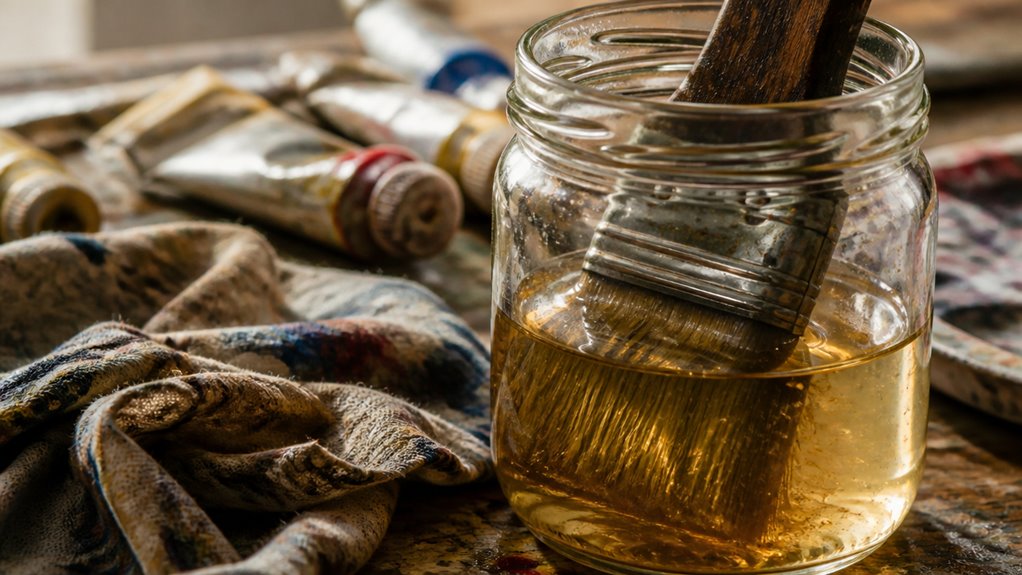
Submerge the brush fully in the mineral spirits container. Move it back and forth vigorously. This mechanical action forces the solvent deep into the bristle layers, loosening and dissolving paint residues.
Fully submerge and vigorously move the brush to let the solvent penetrate and dissolve paint residues.
Simultaneously, massage the bristles between your fingers to dislodge embedded particles without damaging their shape. Continue this agitation for at least several seconds, ensuring the solvent penetrates every section of the brush head.
Consistent agitation maximizes paint removal efficiency, reducing the need for excessive solvent use. Effective solvent work at this stage is critical for restoring brush performance and extending its usable life.
Proper surface preparation, including cleaning and drying, is essential for optimal adhesion when using hot glue on wood.
Use a Brush Comb to Protect Bristles and Remove Paint
Use a brush comb to carefully separate bristles and remove trapped paint particles without causing damage.
After agitating the brush in mineral spirits, run the comb through the bristles to dislodge stubborn paint. This prevents bristle clumping and maintains brush shape, guaranteeing peak paint application in future use.
Work systematically from the ferrule to the tip, avoiding excessive force that could bend or break bristles.
| Step | Purpose |
|---|---|
| Separate bristles | Prevent clumping and damage |
| Remove trapped paint | Assure thorough cleaning |
| Maintain brush shape | Preserve performance |
| Work ferrule to tip | Avoid bending bristles |
| Repeat after solvent use | Maximize paint removal |
Employing a brush comb extends brush life and enhances cleaning efficiency. Be sure to use personal protective equipment such as gloves and work in a well-ventilated area when handling mineral spirits to ensure safety.
Set Up Two Containers to Save Solvent and Reduce Waste
When you’re cleaning brushes, it’s a good idea to set up two containers. This way, you can easily separate the heavy paint residue from the cleaner solvent.
Start with the first container for that initial paint removal. It really helps to get the bulk of the paint off. Then, move on to the second container for a final rinse with fresher mineral spirits.
This two-container system does wonders! Not only does it extend the life of your solvent, but it also cuts down on waste. Plus, you’ll find that it helps lower your overall cleaning costs. Using products with low-emission adhesives can further reduce harmful environmental impact during cleanup.
Two-Container System
To maximize the efficiency of mineral spirits and minimize waste, establish a two-container system for cleaning your paint brushes. Use the first container to remove the bulk of paint, capturing most solids and contaminants. The second container holds clean solvent for final brush rinsing, ensuring thorough paint removal. This setup extends the solvent’s usability and simplifies disposal by allowing solids to settle in the first container. Always ensure proper ventilation when using mineral spirits to avoid respiratory issues.
| Container Number | Purpose | Maintenance Tip |
|---|---|---|
| 1 | Bulk paint removal | Replace solvent when solids build |
| 2 | Final rinse solvent | Keep covered to prevent evaporation |
| 1 & 2 | Solvent reuse system | Store with tight lids |
| 1 | Paint sedimentation | Dispose sediment safely |
| 2 | Clean solvent | Use repeatedly before replacement |
Solvent Reuse Benefits
Maximizing solvent efficiency hinges on implementing a two-container system that separates bulk paint removal from final rinsing. This method extends solvent life, reduces waste, and maintains brush quality. Here’s why you should adopt it:
- Preserves Solvent Purity: The second container holds cleaner mineral spirits, ensuring thorough final cleaning without contamination from heavy paint particles.
- Facilitates Solids Settling: Paint solids settle at the bottom of the first container, allowing you to decant clean solvent above for reuse.
- Cost-Effective: Reusing mineral spirits reduces the frequency of solvent replacement, cutting down material expenses.
- Environmentally Responsible: Minimizing solvent disposal decreases hazardous waste, aligning with best safety and environmental practices.
Additionally, using proper tools that are clean and free of debris before cleaning helps prevent residue buildup on brushes and prolongs their lifespan.
How the Two-Container Method Improves Cleaning and Cost?
When you use the two-container method, you separate the bulk of paint from the brush in the first container. This preserves cleaner solvent in the second, extending solvent life and reducing waste.
It enhances cleaning efficiency by avoiding premature contamination of fresh mineral spirits. The first container captures paint solids, allowing solvent in the second container to remain effective for final brush cleaning.
| Step | Function | Benefit |
|---|---|---|
| Container 1 | Bulk paint removal | Minimizes solvent contamination |
| Container 2 | Final cleaning | Maintains solvent purity |
| Settling time | Paint solids settle | Easy disposal of residue |
| Solvent reuse | Multiple cleaning cycles | Cost savings |
| Brush lifespan | Cleaner brushes | Prolonged brush usability |
This method optimizes both cleaning performance and solvent cost-efficiency. Using proper application control techniques can further reduce waste and improve cleaning precision.
Rinse Brushes With Warm Soapy Water to Remove Solvent
To keep your brushes in top shape, start by rinsing them with warm water and a mild soap. This is really important for getting rid of any mineral spirits residue. You’ll want to pick a detergent that can break down those oily solvents but won’t harm the bristles.
After you’ve lathered them up, make sure to rinse thoroughly. This step is key to ensuring that no solvent is left behind. Taking the time to do this will help protect the integrity of your brushes and extend their lifespan.
Using gentle, suitable cleaners is essential to preserve the finish and appearance of your tools, similar to how polyurethane floors must be maintained.
Trust me, your brushes will thank you!
Warm Water Importance
Rinsing paint brushes with warm soapy water effectively removes residual mineral spirits and solvent traces that remain after cleaning.
Warm water opens the bristles, allowing soap to penetrate deeper, thoroughly dissolving remaining solvent. This step is critical to prevent solvent buildup that can degrade brush quality over time.
Follow these steps to maximize cleaning efficiency:
- Use water at a comfortable warm temperature; too hot can damage bristles.
- Apply mild dish soap to emulsify and lift solvents from the brush.
- Massage the bristles gently to guarantee complete removal of residues.
- Rinse thoroughly until no soap or solvent odor remains, assuring brush longevity and peak performance in future use.
Because mineral spirits are solvents, proper cleaning and maintenance help preserve the durability and appearance of brushes over time.
Soap Selection Tips
Carefully selecting the right soap markedly influences how effectively you remove mineral spirits and solvent residues from your paint brushes.
Opt for a mild dish soap with strong degreasing properties; this combination breaks down oily residues without damaging bristles.
Avoid harsh detergents or abrasive cleaners, as they can weaken bristle fibers or strip natural oils, reducing brush lifespan.
Concentrated, pH-neutral soaps work best to maintain bristle integrity while efficiently emulsifying solvent traces.
When rinsing, use warm water to activate the soap’s cleaning agents, improving residue removal.
Make certain to thoroughly lather and gently brush to reach the base of bristles where solvent collects.
This targeted approach prevents lingering solvent odors and prepares brushes for drying and storage, optimizing their performance and longevity in subsequent painting tasks.
Thorough Residue Removal
Although mineral spirits effectively dissolve oil-based paint, they leave behind residues that can degrade your brush if not fully removed.
To maintain your brush’s integrity and performance, you need to rinse it thoroughly with warm soapy water. This final cleaning step eliminates residual solvent, preventing bristle damage and odor retention.
Follow these critical steps:
- Submerge the brush in warm water mixed with mild dish soap.
- Agitate the bristles gently, working the soap through to break down solvent traces.
- Rinse thoroughly under running warm water until no soap or solvent smell remains.
- Squeeze excess water from the bristles and reshape them for drying.
This process guarantees complete removal of mineral spirits, extending your brush’s lifespan.
Dry and Store Brushes to Make Them Last Longer
Ensuring your paint brushes dry thoroughly after cleaning is essential to maintaining their shape and performance. Use a paint brush spinner or shake the brush vigorously to remove excess water.
Then blot the bristles with a clean, dry rag. Store brushes upright or horizontally in a well-ventilated area to prevent moisture buildup and bristle deformation.
| Drying Method | Storage Recommendation |
|---|---|
| Paint brush spinner | Upright position |
| Vigorous shaking | Horizontally on flat surface |
| Blot with dry rag | Avoid cramped spaces |
| Air dry in ventilated area | Keep away from direct sunlight |
Proper drying and storage extend brush life by preventing mildew, rust in ferrules, and distortion of bristles. Follow these steps diligently for long-lasting tools.
Store Brushes Overnight With Paint for Easy Next Use
After drying and properly storing your brushes, you might encounter situations where you need to pause painting but want to keep the brush ready for the next session.
To store brushes overnight with paint still on them effectively, follow these steps to prevent drying and maintain brush integrity:
- Wrap the brush tightly in plastic wrap to seal out air and prevent paint from drying.
- Place the wrapped brush in an airtight container or zip-lock bag for additional protection.
- Store the brush in the refrigerator to slow paint drying and extend usability.
- Before resuming work, allow the brush to reach room temperature to avoid condensation and maintain paint consistency.
This method saves cleaning time and preserves brush shape for efficient, immediate reuse.
Frequently Asked Questions
Can Mineral Spirits Be Used on Synthetic Brushes?
Yes, you can use mineral spirits on synthetic brushes, but it’s essential to check the brush manufacturer’s recommendations first.
Mineral spirits effectively dissolve oil-based paints, which synthetic bristles can tolerate. However, repeated exposure might degrade some synthetic fibers over time.
To protect your brushes, clean them promptly after use and avoid soaking them for extended periods.
Always follow with a thorough soap and water rinse to preserve bristle integrity and brush lifespan.
How Should Mineral Spirits Be Disposed of Safely?
You absolutely can’t just pour mineral spirits down the drain or toss them in the trash. They’re hazardous waste!
Instead, store used mineral spirits in a tightly sealed, clearly labeled container.
Take it to your local hazardous waste disposal facility or a household hazardous waste collection event.
This prevents environmental contamination and fire hazards.
Always follow your local regulations for disposal to keep yourself and the environment safe. You’re responsible for handling this solvent properly.
Are There Health Risks When Using Mineral Spirits Indoors?
Yes, you face health risks using mineral spirits indoors. They emit volatile organic compounds (VOCs) that can cause headaches, dizziness, respiratory irritation, and long-term neurological effects if exposure is prolonged.
Always make sure you work in a well-ventilated area, use protective gloves, and avoid inhaling fumes directly.
Employing odorless mineral spirits can reduce irritation, but proper ventilation and personal protective equipment remain essential to minimize health hazards effectively.
Can Mineral Spirits Remove Dried Paint From Brushes?
Mineral spirits can remove some dried paint from brushes, but effectiveness decreases as paint hardens. You’ll get better results if you act quickly before paint fully cures.
For dried paint, soak the brush in mineral spirits longer, then agitate and massage the bristles to loosen residue. However, extremely hardened paint may require mechanical removal or replacement, as mineral spirits alone won’t fully restore brush condition once paint has thoroughly dried.
How Long Can Mineral Spirits Be Stored Before Losing Effectiveness?
You can store mineral spirits for several months to a year if kept in a sealed, airtight container like a glass canning jar.
Make sure it’s stored in a cool, dry place away from direct sunlight to maintain effectiveness.
Over time, solids settle at the bottom; allow them to separate and decant the clear liquid to reuse.
Regularly inspect for cloudiness or odor changes; discard if it degrades or loses solvent power.
Final Tips for Cleaning Paint Brushes Properly
By properly cleaning your paint brushes with mineral spirits, you extend their lifespan by up to 50%, saving both money and waste.
Using the two-container method guarantees effective solvent reuse, reducing costs and environmental impact.
Always remove excess paint first, agitate thoroughly, and rinse with warm soapy water to maintain bristle integrity.
Dry and store brushes correctly to preserve their shape.
Following these precise steps guarantees peak brush performance for every project.