
How Thick Is Carpet and Pad for Homes?
Carpet thickness combines pile height, backing, and padding, typically ranging from about 0.5 to 2 inches.
Pile height usually measures 0.25 to 1.5 inches, with backing adding 0.10 to 0.20 inches.
Padding varies from 1/4 to 1/2 inch depending on carpet type, foot traffic, and cushioning needs.
Choosing the right pad thickness and density guarantees durability, comfort, and installation compliance.
Understanding these factors helps you match carpet and pad for peak performance and longevity.
Key Takeaways
- Carpet pile height typically ranges from 0.25 to 1.5 inches, depending on carpet type and use.
- Total carpet thickness includes pile height plus backing (0.10–0.20 inch) and padding beneath.
- Residential padding thickness usually ranges from 1/4 to 1/2 inch, with 3/8 to 7/16 inch most common.
- Padding thickness and density affect carpet cushioning, stability, and installation compliance.
- High-traffic areas require thinner, denser pads (around 3/8 inch) to prevent carpet flex and wear.
How Carpet Thickness Is Measured?

Understanding carpet thickness starts with knowing how it’s measured. It’s primarily expressed in two ways: pile height and total thickness.
Pile height refers to the visible yarn length from the backing to the tip, typically ranging from 0.25 inches in low-pile styles up to 1.5 inches in high-pile carpets.
Total thickness adds the backing, which usually contributes 0.10 to 0.20 inches, to the pile height.
When stores or blogs mention carpet thickness, they often mean pile height, not the full build-up including backing or padding.
For precise measurement, use a ruler or thickness gauge, ensuring you measure perpendicularly from the backing surface to the tip of the fibers.
This distinction helps you select the right carpet for your specific needs without confusion.
Proper maintenance, such as regular cleaning methods like vacuuming hardwood floors, can help preserve the longevity of flooring materials.
How Pile Height Affects Carpet Thickness?
Pile height directly influences the overall thickness you’ll experience in a carpet. It measures the visible yarn length from backing to tip and typically ranges from 0.25 to 1.5 inches.
As pile height increases, carpet thickness grows, affecting cushioning and appearance. Understanding pile height helps you select the right carpet for your needs, especially when matching padding.
| Pile Height Range | Description | Typical Use |
|---|---|---|
| 0.25 – 0.50 inch | Low pile | High-traffic areas |
| 0.50 – 1.00 inch | Medium pile | Residential rooms |
| 1.00 – 1.50 inch | High pile (plush) | Bedrooms, lounges |
Selecting the appropriate pile height lets you balance aesthetics, comfort, and durability effectively. For areas prone to moisture and heavy use, choosing materials with wear resistance can help maintain carpet longevity.
What Total Carpet Thickness Includes?
When you measure total carpet thickness, you’re looking beyond just the pile height to include the face fiber, the backing, and the padding underneath.
The visible pile height typically ranges from about 0.25 inches for low-pile carpets to 1.5 inches for high-pile styles.
Next, the carpet backing adds roughly 0.10 to 0.20 inches to the overall thickness, providing structure and durability.
Finally, the padding beneath, the carpet cushion, varies but usually falls between 3/8 and 7/16 inches for residential use.
Total carpet thickness is the combined height of these layers, impacting the floor build-up and installation requirements.
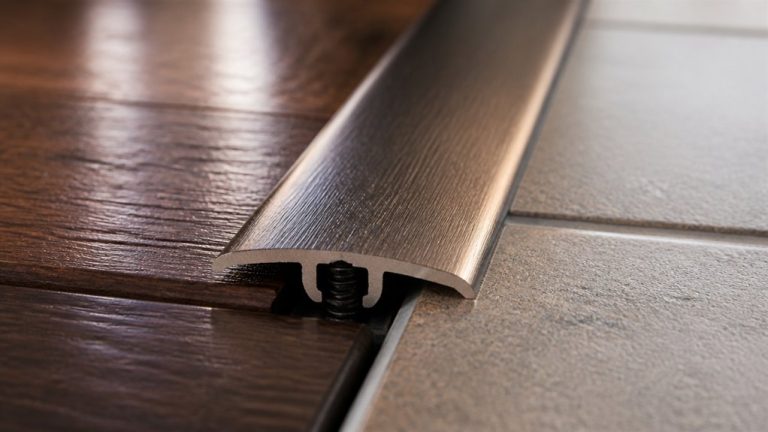
Understanding this layered measurement helps you anticipate the finished floor height and guarantees compatibility with door clearances and threshold strips.
Choosing the appropriate carpet thickness, such as low-pile options with non-slip backing, can also enhance safety and maintenance on hardwood floors.
How Pad Thickness Affects Comfort and Durability?
The total carpet thickness you calculate includes the padding, which plays a significant role in how the carpet feels underfoot and how long it lasts. Thicker pads generally provide more cushioning, enhancing comfort. However, without adequate density, they can compress quickly, reducing durability.
Conversely, thinner, denser pads offer firm support, preserving carpet structure and extending wear life. Your choice impacts not only softness but also carpet stability and installation compliance.
Consider how pad thickness affects you:
- Softer steps with thicker, quality padding
- Reduced joint separation and wrinkling
- Longer carpet life with firm, dense support
- Enhanced protection against floor impact
- Peak performance when pad thickness matches carpet type
Selecting the right pad thickness guarantees both comfort and lasting durability. Additionally, choosing carpet and padding with moisture-resistant backing is essential for basement environments to prevent mold and maintain longevity.
Typical Carpet and Pad Thickness Ranges
Carpet pile heights usually range from about 0.25 to 1.5 inches. Plus, the backing adds an extra 0.10 to 0.20 inches, so that’s something to keep in mind.
When it comes to residential carpet padding, you’re typically looking at thicknesses between 3/8 and 7/16 inch. This range strikes a nice balance between providing cushioning and support, which is really important for comfort.
Just remember, both the thickness and density of your carpet can significantly affect its performance and how it meets standard requirements. It’s always good to consider these factors when making your choice! Additionally, the choice between cut pile and loop pile can influence carpet durability and maintenance needs.
Carpet Pile Height
Understanding carpet pile height is essential for selecting the right combination of carpet and padding to meet your flooring needs.
Pile height measures the visible yarn from the carpet backing to the fiber tips, ranging typically from 0.25 inches for low-pile carpets to about 1.5 inches for high-pile styles.
This measurement affects comfort, durability, and the overall thickness of your flooring. Keep in mind, the backing adds roughly 0.10 to 0.20 inches but isn’t included in pile height.
Selecting the appropriate pile height influences wear resistance and maintenance.
Feel the plushness or firmness underfoot.
Guarantee carpets fit door clearances and transitions.
Avoid premature wear from excessive pile height.
Balance softness with ease of cleaning.
Match pile height to room function and foot traffic.
For maintaining the longevity and cleanliness of your carpet, consider using vacuum mops for hardwood floors as they provide efficient cleaning without damaging delicate surfaces.
Padding Thickness Range
Choosing the right padding thickness complements your carpet’s pile height and directly impacts comfort, durability, and installation success. Residential carpet padding typically ranges from 1/4 inch to 1/2 inch, with 3/8 inch to 7/16 inch being the most common.
Thicker padding isn’t always better; it must balance with carpet type and room use to avoid issues like seam separation or carpet flex.
| Padding Thickness | Typical Use |
|---|---|
| 1/4 inch | Thin, firm pads for Berber |
| 3/8 inch | Standard for high-traffic areas |
| 7/16 inch | Most residential installations |
| 1/2 inch | Maximum practical thickness |
Selecting padding within these ranges helps maintain peak performance and specification compliance. However, using carpet padding under hardwood floors can compromise the floor’s stability and support, so it is important to remove padding when installing hardwood.
Thickness Impact Factors
Although carpet thickness often focuses on pile height, the combined thickness of carpet and pad critically affects installation quality and floor performance.
You must consider that low-pile carpets start near 0.25 inches, high-pile can reach 1.5 inches, and backing adds 0.10 to 0.20 inches.
Residential pads usually range from 3/8 to 7/16 inch, with density equally vital for durability.
Matching pad thickness to carpet type and room use prevents issues like seam separation and premature wear.
Feel the difference: thicker padding cushions footsteps but may destabilize seams.
Avoid costly mistakes: exceeding thickness limits can void approvals.
Choose wisely: firmer, thinner pads suit high-traffic or Berber carpets.
Protect your investment: proper thickness guarantees longevity.
Experience comfort: balance thickness and density for peak performance.
For high-traffic areas, selecting a low-pile carpet combined with an appropriately dense pad enhances durability and resists matting.
Choosing the Right Carpet Pad Thickness for Your Carpet Type
When selecting carpet padding, you need to match the thickness to the carpet type to ensure durability and performance. For cut-pile carpets, a pad thickness between 7/16 and 1/2 inch provides ideal cushioning without compromising stability.
Loop-pile carpets like Berber require firmer, thinner padding, typically capped at 3/8 inch, to prevent excessive stretch and seam stress. Low-profile carpets also benefit from thinner padding to maintain floor stability and avoid wrinkling.
Avoid exceeding manufacturer-recommended pad thickness, as too much padding can cause carpet flex and seam separation. While thickness is important, balancing it with appropriate firmness guarantees the carpet performs well under foot traffic. Additionally, choosing padding with cushioning and airflow features can enhance comfort and prolong carpet life.
Why Pad Density Matters for Longevity and Comfort?
Choosing the right carpet pad density is super important. It really affects how long your carpet lasts because a good pad helps prevent premature crushing.
You want to find that sweet spot where comfort meets firm support. This balance ensures your carpet stays in great shape, even with all the daily foot traffic it sees.
Plus, let’s not forget about your carpet coverage! Meeting the right density requirements is essential for keeping that coverage valid.
It’s all about protecting your investment and making sure you get the most out of your carpet. So, take your time and pick wisely!
Additionally, considering subfloor preparation before installation can further enhance the longevity and performance of your carpet.
Impact On Carpet Life
Frequently overlooked, pad density plays a crucial role in extending your carpet’s lifespan and maintaining comfort underfoot. A higher-density pad supports fibers better, reducing crushing and matting, which keeps your carpet looking new longer.
It also stabilizes the carpet, preventing wrinkles and seam separation that often lead to early replacement. Low-density padding compresses quickly, accelerating wear and lowering your investment’s durability.
Consider these impacts of pad density on carpet life:
- Protects carpet fibers from premature crushing
- Maintains carpet structure and appearance under heavy traffic
- Minimizes rippling and seam failure risks
- Enhances resilience in high-use areas like hallways and stairs
- Supports maintenance compliance through proper manufacturer guidelines
Choosing the right density guarantees your carpet performs reliably and lasts as intended.
Balancing Comfort And Support
How much pad density you choose directly influences both comfort and durability underfoot. A denser pad, typically 6 to 8 pounds per cubic foot or higher, provides firmer support that resists crushing and maintains carpet stability over time.
If the pad is too soft or low in density, it compresses quickly, causing uneven wear and reducing carpet longevity. Balancing comfort means selecting a pad that cushions without sacrificing structural integrity, especially in high-traffic areas like hallways or stairs where durability is critical.
Conversely, less dense padding may feel softer initially but fails to support the carpet adequately, leading to premature deterioration. By prioritizing pad density alongside thickness, you ensure peak performance, prolong the life of your carpet, and maintain consistent comfort underfoot.
Density And Standard Compliance
Pad density plays a vital role in meeting manufacturer compliance requirements while ensuring long-term carpet performance.
If you ignore density, even the thickest padding won’t prevent premature carpet wear or void your coverage.
Manufacturers typically require densities between 6 and 8 pounds per cubic foot for residential use, with higher traffic areas needing firmer, denser pads.
Using a pad that’s too soft, regardless of thickness, risks crushing, wrinkling, and seam separation.
Remember these points to protect your investment and comfort:
- Dense padding supports carpet structure under heavy foot traffic.
- Policy often ties acceptance to both pad thickness and density.
- Insufficient density can cause carpet instability and early failure.
- Thicker pads without density compromise durability and feel.
- Proper density improves comfort while preserving carpet life.
Choose your pad wisely to balance policy compliance and lasting comfort.
How Room Use Changes Carpet and Pad Thickness Needs?
Because different rooms experience varying foot traffic and usage patterns, you’ll need to adjust carpet and padding thickness accordingly to maintain durability and comfort.
Adjust carpet and padding thickness based on room traffic to ensure lasting comfort and durability.
High-traffic areas like hallways and stairs demand thinner, denser pads, around 3/8 inch with 8+ pounds per cubic foot density, to prevent premature crushing and maintain carpet stability.
In contrast, bedrooms and low-traffic zones can accommodate thicker padding, up to 7/16 inch, for enhanced cushioning without compromising performance.
Loop-pile carpets in busy rooms require firmer, thinner pads to avoid seam stress and fiber distortion.
Matching pad thickness and density to each room’s function minimizes wear, reduces wrinkling, and extends carpet life.
Selecting the proper pad thickness based on room use guarantees optimal carpet performance and adherence to manufacturer guidelines.
Usage and Installation Limits for Carpet Padding
When you install carpet padding, adhering to manufacturer specifications is essential to keep your coverage valid. Exceeding recommended thickness or using incorrect density can void coverage, causing costly repairs.
Carpet guidelines often specify maximum pad thickness, commonly 7/16 inch for residential and 3/8 inch for Berber or loop-pile styles. Overly thick padding may lead to seam separation, carpet flex, and instability. Always verify limits before installation to avoid these issues.
Protect your investment by following padding guidelines strictly. Prevent premature carpet damage from improper pad thickness.
Make certain stable flooring to avoid tripping hazards and discomfort. Maintain support eligibility for future peace of mind.
Avoid costly reinstallation by choosing compatible pad thickness and density.
Frequently Asked Questions
How Does Carpet Thickness Impact Indoor Air Quality?
Carpet thickness affects indoor air quality by influencing dust and allergen accumulation.
Thicker carpets with higher pile heights tend to trap more particles, which can worsen air quality if not regularly cleaned.
However, denser padding beneath can also reduce dust infiltration from subfloors.
To maintain good air quality, you’ll need frequent vacuuming and proper ventilation, especially with thick or plush carpets that hold more contaminants compared to low-pile options.
Can Carpet Thickness Affect Energy Efficiency in a Home?
Yes, carpet thickness can affect your home’s energy efficiency by providing extra insulation. Thicker carpet and padding reduce heat transfer through floors, helping keep rooms warmer in winter and cooler in summer.
When you choose a higher pile height combined with dense padding, you improve thermal resistance. This reduces your heating and cooling demands, potentially lowering energy bills.
Just make sure the padding thickness fits manufacturer guidelines to maintain durability and warranty coverage.
What Tools Are Used to Measure Carpet and Pad Thickness Accurately?
Think of measuring carpet and pad thickness like a jeweler evaluating a precious gem’s depth. You need precision tools.
You’ll want a digital caliper or a micrometer for exact readings of pile height and total thickness. These tools grip the fibers without compression, giving you accurate millimeter measurements.
For quick checks, a standard ruler with fine gradations works. But rely on calipers or micrometers when you need precision and consistency.
How Does Humidity Influence Carpet and Pad Thickness Over Time?
Humidity causes carpet fibers and padding materials to absorb moisture, which can temporarily increase their thickness and soften the pad.
Over time, repeated humidity fluctuations lead to expansion and contraction cycles, potentially weakening padding density and compressing carpet pile height.
You should control indoor humidity to maintain carpet and pad integrity, preventing premature crushing, wrinkling, or seam separation due to moisture-induced dimensional changes.
Proper ventilation and moisture barriers help manage this.
Are There Eco-Friendly Carpet Pads That Still Provide Good Thickness?
You might think eco-friendly carpet pads sacrifice thickness or durability, but that’s not true. You can get natural fiber or recycled material pads offering thickness between 3/8 inch and 7/16 inch, matching standard residential pads.
These pads combine sustainable materials with adequate density, ensuring stability and comfort. When choosing, check the density rating to avoid premature wear. Confirm compatibility with your carpet type and warranty requirements for peak performance.
Final Answer: How Thick Is Carpet and Pad?
Think of your carpet and pad as a dynamic duo, where thickness and density dance together to create comfort and durability.
Understanding pile height and pad thickness helps you tailor your flooring to your room’s rhythm, ensuring longevity and support.
Don’t just walk on any surface; choose wisely, considering use, warranty, and installation limits.
By mastering these technical details, you’ll craft a foundation that cushions every step with precision and lasting strength.