
Hardwood vs Engineered Wood vs Bamboo: Key Differences
When choosing between hardwood, engineered wood, and bamboo, know hardwood offers solid timber’s classic look but is prone to moisture shifts and dents.
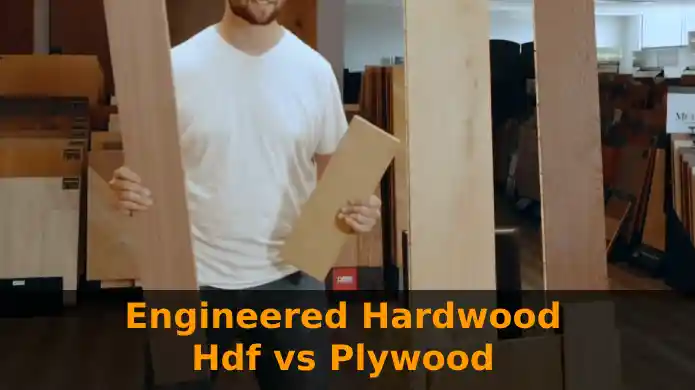
Engineered wood layers real hardwood veneer over stable plywood or HDF, enhancing durability and moisture resistance.
Bamboo, especially strand-woven, is ultra-dense and scratch-resistant with excellent hardness, rivaling or exceeding hardwood.
Each varies in refinishing capacity and cost, with bamboo being sustainably fast-growing.
Understanding these will help you match performance to your space’s demands and budget.
Key Takeaways
- Hardwood is solid timber offering uniform density but is less dimensionally stable and more prone to dents than engineered wood or bamboo.
- Engineered wood features a hardwood veneer over plywood or HDF layers, providing greater moisture resistance and dimensional stability than solid hardwood.
- Strand-woven bamboo is the hardest, densest option with superior dent resistance and durability, often outperforming many hardwood species.
- Bamboo and engineered wood generally handle moisture better than solid hardwood but still require controlled indoor humidity and proper installation.
- Solid hardwood allows multiple refinishing cycles, whereas engineered wood’s refinishing depends on veneer thickness; bamboo has limited refinishing options.
Hardwood vs Engineered Wood vs Bamboo Comparison
| Feature | Hardwood | Engineered Wood | Bamboo |
|---|---|---|---|
| Construction | Made from solid timber throughout the plank | Uses a real hardwood veneer over plywood or HDF layers | Made from compressed bamboo fibers, especially in strand-woven products |
| Hardness | Depends heavily on the wood species | Mainly determined by the hardwood wear layer | Strand-woven bamboo can be harder than many traditional hardwoods |
| Dent Resistance | Good, but softer species can dent more easily | Varies according to veneer species and thickness | Excellent with strand-woven bamboo due to its dense construction |
| Moisture Stability | More likely to expand and contract with humidity | Offers strong dimensional stability because of its layered core | Generally handles moisture changes better than many solid hardwoods |
| Expected Longevity | Can last for decades with proper care | Can also last for decades depending on wear-layer thickness | Strand-woven bamboo can provide a long service life with suitable care |
| Refinishing | Can usually be sanded and refinished multiple times | Refinishing depends on veneer thickness | Typically has more limited refinishing potential |
| Installation Options | Commonly nailed or stapled over wood subfloors | Can often be nailed, glued, stapled, or floated | Often available in click-lock or glue-down formats |
| Humidity Response | Requires careful humidity control | Better suited to environments with changing humidity | Dense bamboo offers good stability, but humidity still matters |
| Sustainability | Depends on species and responsible sourcing | Uses less solid hardwood because of its layered construction | Bamboo is fast-growing and renewable |
| Best Suited For | Homes prioritizing traditional appearance and refinishing | Spaces needing stability and installation flexibility | Areas needing high hardness and strong wear resistance |
What Hardwood, Engineered Wood, and Bamboo Are Made Of?

Although all three flooring types—hardwood, engineered wood, and bamboo—appear similar at first glance, they differ fundamentally in composition.
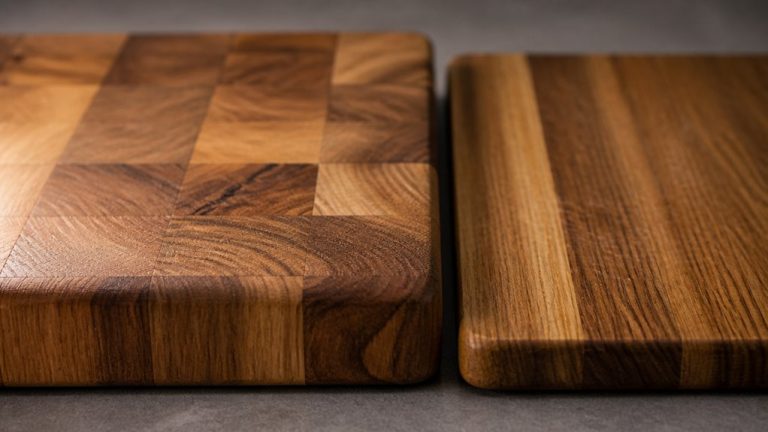
Hardwood boards are solid timber cut directly from species like oak or maple, making each plank a single piece of wood.
Engineered wood combines a real hardwood veneer on top of multiple plywood or HDF layers, allowing for enhanced dimensional stability while maintaining a natural wood surface.
Bamboo, unlike wood, originates from grass, processed and compressed into planks.
Strand-woven bamboo is manufactured by compressing bamboo fibers tightly, resulting in a denser and more stable product than traditional horizontal or vertical bamboo.
Understanding these material differences helps you anticipate performance, stability, and refinishing potential, which hinge more on construction methods than the species or source alone.
Engineered wood with an HDF core tends to offer superior moisture resistance and impact durability compared to plywood cores.
Hardness and Dent Resistance of Each Flooring Type
When you’re looking at dent resistance in flooring, Janka hardness ratings are really important. They give you a solid idea of how well different materials can handle impact.
Now, with engineered wood, its durability really depends on the type of hardwood used in the veneer. So, it’s good to check that out before making a decision.
On the other hand, strand-woven bamboo is pretty impressive; it can actually outperform a lot of traditional hardwoods when it comes to hardness.
Don’t forget, the construction method matters a lot too. It affects not just how tough the flooring is but also how it will hold up over time. So, keep that in mind as you weigh your options!
Additionally, the thickness and layers of engineered wood play a crucial role in its overall durability and ability to withstand wear.
Janka Hardness Ratings
The Janka hardness rating measures a wood material’s resistance to denting and wear, providing a practical benchmark for comparing flooring durability.
When you look at hardwoods, red oak scores around 1,290, while white oak rates about 1,360. Engineered wood’s hardness closely follows the species used in its wear layer, so it varies accordingly.
Bamboo shows the broadest range: natural horizontal bamboo rates near 1,380, while carbonized drops to 1,000–1,100. Strand-woven bamboo jumps markedly, reaching 3,000 to 5,000.
This density makes strand-woven bamboo exceptionally dent-resistant, surpassing many hardwoods. Keep in mind, though, that Janka ratings don’t capture all performance factors.
Finish quality, plank construction, and environmental conditions also influence how well your floor resists dents and wear over time.
For example, wood density and grain structure, such as the higher density of white oak compared to ash, impact hardness and durability beyond just Janka numbers.
Impact of Construction Method
Because the construction method determines how wood fibers are arranged and bonded, it directly influences hardness and dent resistance across hardwood, engineered wood, and bamboo flooring.
Hardwood’s solid timber composition provides consistent density and uniform hardness.
However, it’s more prone to dents under heavy impact.
Engineered wood’s layered core enhances dimensional stability.
Yet, the hardness and dent resistance depend primarily on the species and thickness of the hardwood veneer wear layer.
Bamboo varies widely: strand-woven bamboo’s compressed fibers deliver exceptional hardness (3,000–5,000 Janka), outperforming many hardwoods.
Horizontal or carbonized bamboo is softer.
You’ll find that durability is a balance between material density, layer construction, and finish quality.
None rely solely on hardness ratings.
Understanding these differences helps you select flooring suited to your traffic and wear conditions.
Additionally, selecting materials with proper moisture management is crucial to maintain durability and prevent damage over time.
Durability and Lifespan of Hardwood, Engineered Wood, and Bamboo
When it comes to flooring options, solid hardwood really takes the cake for longevity. With the right care, it can last for decades—talk about a long-term investment!
Now, engineered wood is a bit different. Its durability really depends on a couple of key factors, like the thickness of the wear layer and how well it’s installed. So, you’ll want to keep that in mind when making your choice.
Then there’s bamboo. Its lifespan can vary quite a bit depending on the product you pick. If you’re looking for something tough enough for high-traffic areas, strand-woven bamboo is usually your best bet.
In the end, understanding these factors can really help you find the perfect flooring that balances performance and longevity for your unique needs. Engineered hardwood also offers the advantage of being refinishable multiple times, which can significantly extend its lifespan.
Lifespan Comparisons
When evaluating lifespan, consider that solid hardwood often outlasts many replacement cycles if maintained properly.
It can serve for decades, and its ability to be sanded and refinished multiple times extends its usable life markedly.
Engineered wood’s lifespan depends heavily on the thickness of its hardwood veneer.
Thicker wear layers allow for more refinishing, pushing longevity up to several decades under ideal conditions.
Bamboo’s lifespan varies by type.
Strand-woven bamboo, with its high density, can endure for 20 to 50 years, often rivaling hardwood in durability.
However, lower-quality bamboo products generally have shorter service lives.
While engineered wood can sometimes last up to 100 years, practical lifespan usually hinges on installation quality and wear layer thickness.
These technical factors are essential in your material choice.
Additionally, features like the 2mm wear layer in engineered hardwood flooring contribute significantly to its durability and potential lifespan.
Durability Factors
Though lifespan estimates provide a useful overview, the actual durability of hardwood, engineered wood, and bamboo flooring depends on factors like material density, surface finish, installation quality, and environmental conditions.
Hardwood’s solid timber offers excellent longevity if properly maintained, with refinishing extending its life.
Engineered wood’s durability hinges on wear layer thickness and core stability; a thicker veneer allows multiple refinishes, while quality installation prevents moisture-related issues.
Bamboo’s durability varies widely. Strand-woven types exhibit high density and superior dent resistance, making them suitable for heavy traffic, but lower-quality bamboo can degrade faster.
Surface finishes also impact scratch and moisture resistance across all types.
Keep in mind, no option is waterproof. Controlling humidity and avoiding standing water are critical to maximizing lifespan regardless of material choice.
Additionally, finishes like Aluminum Oxide provide superior scratch resistance and durability, especially in high-traffic areas, enhancing the overall lifespan of hardwood floors.
Moisture and Humidity Resistance Compared
Because moisture and humidity fluctuations can severely impact flooring integrity, understanding how hardwood, engineered wood, and bamboo respond is essential for selecting the right material.
Solid hardwood is the least dimensionally stable, expanding and contracting markedly with humidity changes. This risks warping or cupping.
Engineered wood’s layered plywood or HDF core enhances dimensional stability, reducing movement and making it preferable in environments with variable moisture.
Bamboo, especially strand-woven or engineered types, generally offers improved moisture tolerance compared to many hardwoods, thanks to its dense, compressed structure.
However, none of these materials are waterproof, so exposure to standing water or high humidity should be minimized.
Proper acclimation and controlled indoor humidity remain critical regardless of your flooring choice to maintain long-term performance and structural integrity.
Additionally, unlike these natural materials, SPC flooring provides superior moisture resistance and durability, making it a strong alternative for moisture-prone areas.
Refinishing and Repair: What You Need to Know
Understanding how to refinish and repair your flooring can greatly extend its lifespan and maintain its appearance.
Solid hardwood allows multiple sanding and refinishing cycles since it’s solid wood throughout the plank. You can restore it thoroughly, removing deep scratches or stains.
Solid hardwood can be sanded and refinished multiple times, fully restoring deep scratches and stains.
Engineered wood’s refinishing potential depends on the veneer thickness. Thin veneers limit sanding to light surface treatments, and damage beyond the wear layer can be tough to repair.
Bamboo varies widely; strand-woven types may handle refinishing better, but many bamboo floors aren’t designed for repeated sanding.
For all three, surface scratches and dents are common issues. Regular touch-ups, like filling dents or applying new finish coats, help preserve aesthetics. Always assess the wear layer and manufacturer guidelines before refinishing to avoid damaging your floor. Monitoring the wear layer thickness is essential to prevent over-sanding and ensure the longevity of refinishing efforts.
Cost and Sustainability of Hardwood, Engineered Wood, and Bamboo
After you’ve considered refinishing and repair, the next factor to weigh is cost alongside sustainability. This often guides the final choice between hardwood, engineered wood, and bamboo flooring.
Bamboo typically costs between $1.50 and $12 per square foot. It offers a renewable option due to its rapid growth cycle.
Solid hardwood ranges from $4 to $8 per square foot. Species and sourcing impact both price and environmental footprint.
Engineered wood overlaps the mid-to-premium price range ($4 to $12 per square foot). It uses less slow-growth hardwood by employing a thin veneer over a layered core, enhancing sustainability. Its layered construction also provides greater moisture resistance and stability compared to solid hardwood.
Frequently Asked Questions
How Do Installation Processes Differ Among Hardwood, Engineered Wood, and Bamboo?
You’ll find hardwood usually requires nailing or stapling to a wood subfloor. It needs acclimation to moisture beforehand.
Engineered wood offers more options; you can nail, staple, glue, or float it over various subfloors, including concrete.
Bamboo often installs like engineered wood, with click-lock or glue-down methods. Acclimation’s essential for all, but engineered and bamboo handle moisture shifts better during installation.
This makes them more versatile in different environments.
Which Flooring Type Is Best for Radiant Floor Heating Systems?
Think of radiant floor heating like a gentle, consistent hug from beneath.
Engineered wood works best here because its layered core handles heat and moisture fluctuations better than solid hardwood. This reduces warping risks.
Bamboo can tolerate heat, but performance varies widely by type; strand-woven fares better.
Hardwood’s solid structure is less stable with temperature swings.
Are There Specific Maintenance Routines Unique to Each Flooring Type?
Yes, you’ll want to tailor maintenance for each flooring type.
Solid hardwood needs regular dusting and occasional refinishing to handle scratches and dents.
Engineered wood requires gentle cleaning with a damp mop but avoid excess moisture to protect the layered core.
Bamboo flooring benefits from non-abrasive cleaners and prompt spill cleanup to prevent warping.
In all cases, use protective pads under furniture and maintain consistent indoor humidity to prolong lifespan.
How Do These Flooring Options Affect Indoor Air Quality and Allergens?
You want a floor that doesn’t turn your home into a sneeze factory, right?
Engineered wood and bamboo often use less toxic adhesives than some hardwood finishes, so they can emit fewer volatile organic compounds (VOCs).
Solid hardwood, if sealed well, also keeps allergens low but might off-gas during installation.
Bamboo’s dense strand-woven types resist dust buildup better.
Proper sealing and ventilation are your best bets for cleaner indoor air quality.
What Coverage Options Are Typically Offered for Each Flooring Type?
You’ll typically find hardwood floors come with coverage periods ranging from 20 to 50 years, depending on manufacturer and finish quality.
Engineered wood often offers 10 to 30 years, influenced by wear layer thickness and core construction.
Bamboo coverage terms vary widely, usually between 10 and 25 years, with strand-woven bamboo often backed by longer coverage.
Always check for specific terms on moisture resistance and refinishing limits to avoid surprises.
Choose Flooring Based on Durability, Moisture, and Lifestyle
When choosing between hardwood, engineered wood, and bamboo, consider your home’s moisture levels, traffic, and budget.
Hardwood offers timeless durability but demands care. Engineered wood balances stability with refinishing options.
Bamboo impresses with eco-friendliness and hardness but varies in quality. The theory that bamboo is always the hardest isn’t absolute; species and manufacturing matter.
By understanding these technical nuances, you’ll make an informed, lasting flooring choice tailored to your lifestyle and environment.