Difference Between Marble and Quartz: Countertop Guide
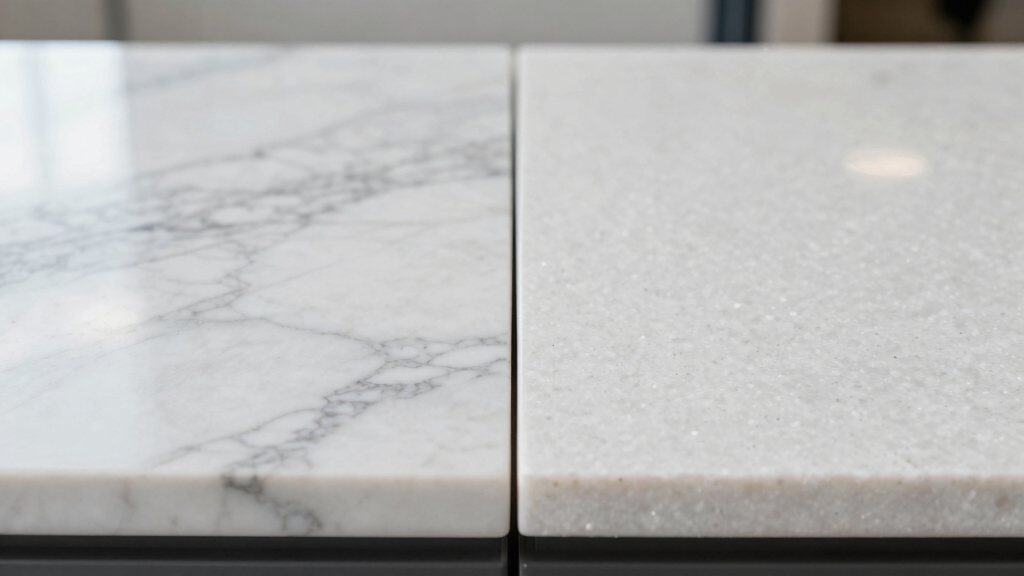
You’ll notice marble offers natural, unique veining with luxurious charm. However, it needs regular sealing and gentle care to avoid stains and scratches. Quartz, engineered from natural quartz and resins, gives you consistent color and durability without sealing.
It resists stains and impacts better. Marble suits classic, elegant spaces, while quartz supports modern, low-maintenance lifestyles. Understanding these differences helps you pick the perfect surface.
Exploring further reveals how each performs under heat, maintenance, and style demands.
Key Takeaways
- Marble is a natural stone with unique veining, while quartz is engineered for consistent color and pattern uniformity.
- Marble is porous and requires regular sealing to prevent stains, whereas quartz is non-porous and stain-resistant without sealing.
- Quartz is more scratch, chip, and impact resistant; marble is softer and prone to etching and scratches.
- Marble tolerates heat well, allowing hot pans directly; quartz is heat sensitive and requires trivets for protection.
- Marble generally costs more upfront and demands higher maintenance; quartz offers cost-effective durability with easier upkeep.
Marble vs Quartz Countertops: Key Differences
| Feature / Factor | Marble | Quartz |
|---|---|---|
| Composition | Natural stone formed from limestone under heat & pressure; unique veining | Engineered from ~90% natural quartz + resins; uniform patterns and colors |
| Appearance | One-of-a-kind veining and patterns; luxurious, classic charm | Consistent, predictable color and pattern; versatile for modern designs |
| Porosity & Stain Resistance | Porous; prone to stains, etching; requires regular sealing | Non-porous; stain-resistant without sealing |
| Durability & Scratch Resistance | Softer; vulnerable to scratches, chips, and etching | Strong; resistant to scratches, chips, and impacts |
| Heat Tolerance | High; can handle hot pans directly | Moderate; use trivets recommended to avoid damage |
| Maintenance | High; sealing and careful cleaning required | Low; easy cleaning with soap and water |
| Longevity | Long-lasting with proper care | Longer-lasting with minimal upkeep |
| Cost | Higher upfront cost; maintenance adds to lifetime cost | Moderate upfront cost; cost-effective over time |
| Style Suitability | Classic, elegant, traditional interiors | Modern, minimalist, contemporary spaces |
| Best Lifestyle Fit | Ideal for low-traffic or careful use; appreciates patina | Ideal for busy kitchens; low-maintenance, practical |
| Outdoor Use | Can be used outdoors; may weather and stain | Not recommended; resins sensitive to UV & extreme temperatures |
| Eco-Friendliness | Biodegradable; quarrying impacts environment | Less recyclable; often uses recycled materials in production |
Composition and Formation of Marble vs Quartz Countertops
While both marble and quartz countertops bring elegance to your space, their compositions tell very different stories.
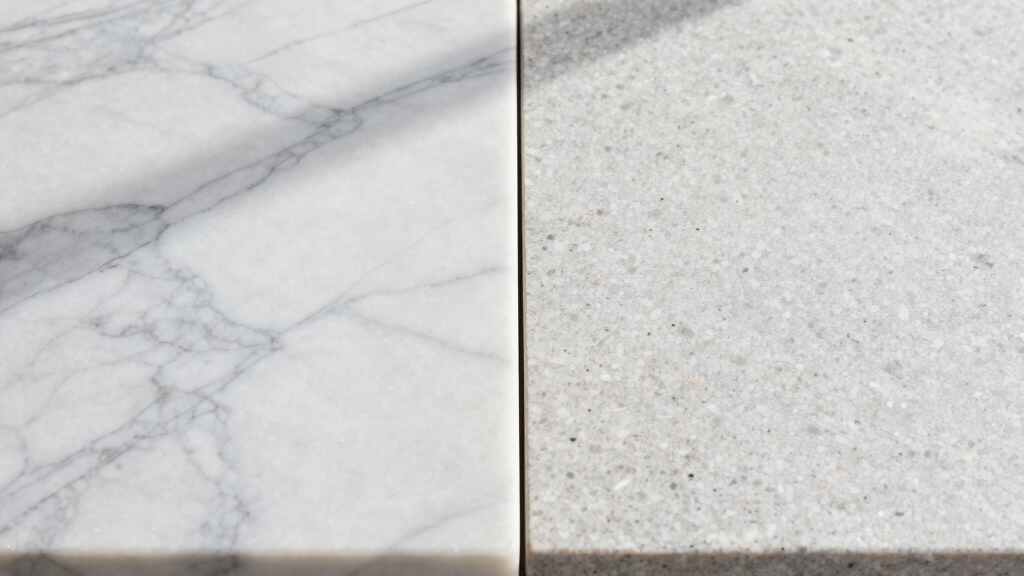
Marble forms naturally when limestone endures intense heat and pressure, primarily composed of calcite. This natural origin grants each slab unique veining and patterns, making your countertop truly one-of-a-kind.
Marble’s natural formation creates unique veining, ensuring each countertop is a one-of-a-kind masterpiece.
Quartz, on the other hand, is engineered and crafted from about 90% natural quartz crystals combined with resins and pigments. This process guarantees consistent strength and uniformity, allowing you to select from a broad palette of colors and designs.
Marble’s natural stone roots offer unmatched authenticity, while quartz delivers tailored durability and design flexibility. Understanding these foundational differences helps you choose a surface that not only complements your aesthetic vision but also aligns with your lifestyle needs.
How Porosity Affects Stains and Durability in Marble and Quartz?
Porosity plays a pivotal role in how marble and quartz respond to stains and wear over time.
Marble, as a natural stone, is porous, allowing liquids to seep in and cause stains if you don’t act quickly. This openness also makes marble more vulnerable to etching and scratches, affecting its luxurious surface.
Quartz, engineered to be non-porous, resists stains and moisture absorption effortlessly. This means you don’t have to worry about spills damaging its consistent beauty.
Its durability shines in busy kitchens or bathrooms where wear and tear are constant. When choosing between these materials, consider how much maintenance you’re willing to commit to.
Marble demands regular sealing to maintain its elegance, while quartz offers you ease without compromising resilience.
Choosing the right sealant with proper durability & longevity can further enhance the protective qualities of both materials.
Appearance: Unique Veining vs Consistent Patterns

Because your countertop is a centerpiece in any space, its appearance matters deeply. When you choose marble, you embrace natural artistry. Each slab showcases unique veining, colors, and patterns that no two pieces share. This distinctiveness adds luxurious charm and character, evolving over time with a subtle patina.
On the other hand, quartz offers you consistency and versatility. Engineered with precision, quartz surfaces display uniform color and patterns that often mimic marble’s elegance but with predictable repetition. This consistency makes quartz an excellent choice if you prefer a sleek, modern look or need to match multiple slabs seamlessly.
Ultimately, your choice between marble’s one-of-a-kind veining and quartz’s consistent patterns hinges on whether you value natural uniqueness or controlled design in your space. Quartz, like LVP flooring, provides a reliable and uniform appearance through engineered design, contrasting with the natural variability found in marble.
Durability of Marble vs Quartz Countertops
When it comes to countertops, you’ll find that quartz really stands strong against scratches, stains, and moisture. Its engineered non-porous surface is a big plus!
On the other hand, marble is undeniably stunning, but it’s softer and a bit more vulnerable to etching and stains.
Now, let’s talk about heat. Marble can handle those hot pans like a champ, while quartz? Well, it prefers you to use trivets to keep it in tip-top shape. So, understanding these differences is key to picking a countertop that not only looks great but can also withstand the hustle and bustle of everyday life.
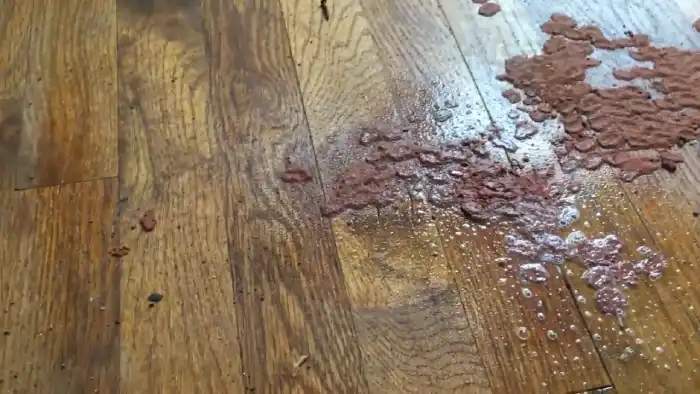
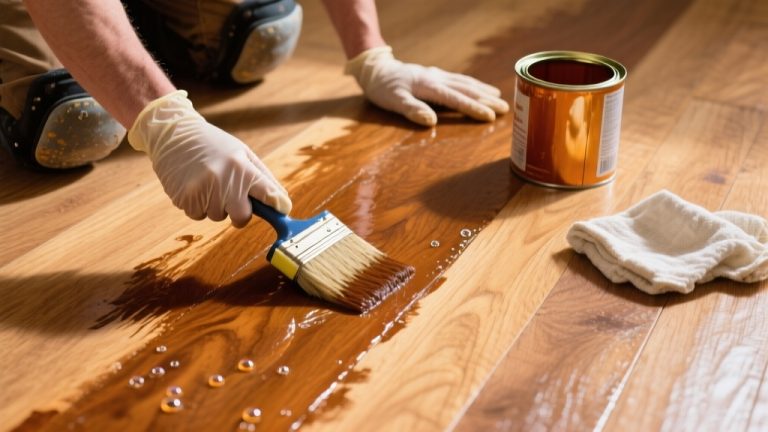
For long-lasting results, maintaining proper surface care and avoiding exposure to excessive moisture is essential for both materials, similar to the precautions taken when varnishing hardwood floors.
Scratch And Impact Resistance
When choosing between marble and quartz for your countertops, understanding their scratch and impact resistance is essential.
Marble, with its natural calcite composition, is softer and more prone to scratches and etching. This can dull its elegant surface over time. You’ll need to handle it with care to maintain its luxurious look.
Quartz, engineered from tough natural quartz crystals and resins, offers superior resistance to scratches, chips, and cracks. It stands up well to everyday wear, making it ideal if you want a durable surface without sacrificing style.
Additionally, quartz withstands impacts better, avoiding the stun marks that marble can develop. If durability combined with a refined aesthetic matters to you, quartz is the smarter choice for lasting beauty in your kitchen.
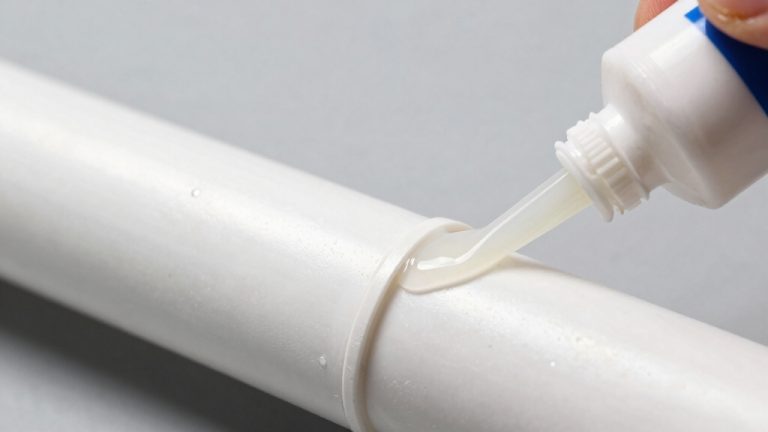
For installation, using a moisture-resistant adhesive ensures that the countertop remains firmly bonded and protected against environmental damage over time.
Stain And Moisture Absorption
Although both marble and quartz bring elegance to your space, their ability to resist stains and moisture differs markedly. Marble’s natural porosity means it readily absorbs liquids, leading to stains if spills aren’t cleaned immediately.
Quartz, engineered to be non-porous, offers superior resistance against moisture and staining. This makes it ideal for busy kitchens or bathrooms where durability matters without sacrificing beauty.
When choosing your countertop, consider these key points:
- Marble requires regular sealing to protect against stains and etching from acidic substances.
- Quartz’s resin binders create a smooth, impermeable surface that resists absorption and bacteria growth.
- Stains on marble can become permanent; quartz surfaces clean easily with just soap and water.
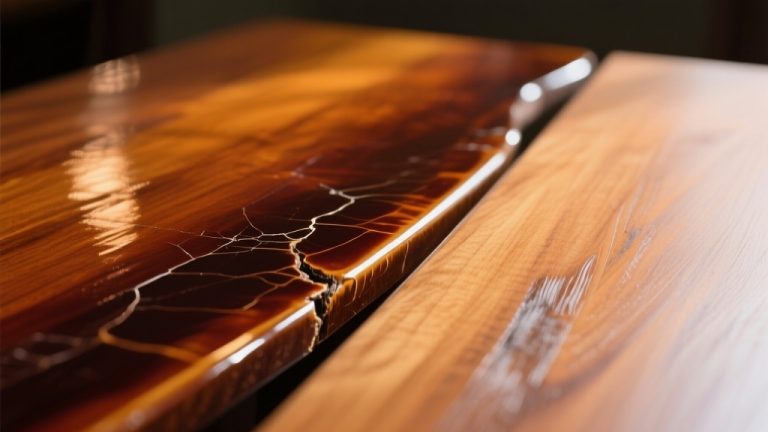
Proper sealing with a clear protective coating enhances the durability and longevity of your countertop surfaces. Your choice depends on how much maintenance and durability you want alongside style.
Heat Tolerance Comparison
Beyond moisture and stain resistance, heat tolerance plays a major role in how your countertop performs daily.
Marble stands out with better resistance to heat, letting you place hot pans directly without worry.
Quartz, engineered for durability, can handle moderate heat but benefits from a trivet to avoid damage.
Knowing these limits helps you maintain your countertop’s beauty and longevity effortlessly.
Considering maintenance routines alongside heat tolerance ensures your surfaces remain pristine over time.
| Feature | Marble | Quartz |
|---|---|---|
| Heat Resistance | High; withstands hot pans | Moderate; use trivets recommended |
| Surface Impact | Can discolor or etch with heat | Less prone but avoid direct heat |
| Maintenance | Requires care with hot items | Simple with heat precautions |
| Longevity | Durable if managed properly | Longer-lasting with less risk |
Maintenance: Caring for Marble and Quartz Surfaces
To keep your marble looking pristine, you’ll want to seal it regularly. This helps protect against pesky stains and etching.
Now, if you’re considering quartz, you’re in for a treat! It offers a low-maintenance surface that cleans up easily with just some soap and water. Additionally, quartz surfaces provide durability and scratch resistance that make them ideal for long-term use in busy areas.
Sealing Requirements
When you choose marble for your surfaces, you’ll need to commit to regular sealing to protect its delicate, porous nature from stains and etching.
Sealing acts as a protective barrier, preserving marble’s natural beauty and preventing liquid absorption that can cause damage over time.
Unlike quartz, which is non-porous and requires no sealing, marble demands this ongoing care to maintain its luxurious appearance.
Here’s what to keep in mind for marble sealing:
- Apply a high-quality penetrating sealer every 6 to 12 months depending on use.
- Make certain surfaces are clean and dry before sealing for optimal absorption.
- Avoid sealers that alter the marble’s natural sheen or color.
Choosing penetrating sealers ensures deep protection without compromising the surface’s natural look.
Cleaning And Stain Removal
Maintaining the timeless elegance of marble and the sleek consistency of quartz depends heavily on how you clean and handle stains.
With marble’s porous nature, you’ll want to wipe spills immediately using a soft cloth and mild, pH-neutral cleaner to prevent etching or discoloration. Avoid acidic or abrasive products that can dull its natural veining.
Quartz, being non-porous, offers you more forgiveness. Clean it with warm soapy water or a gentle cleanser to keep its surface flawless.
For stubborn stains on marble, a poultice can draw out deep discolorations, but quartz rarely needs such treatment.
Always remember to address causes promptly to prevent permanent staining and maintain the beauty of your surfaces.
Heat Resistance of Marble and Quartz Countertops?

Although both marble and quartz stand up well to everyday kitchen temperatures, marble offers superior heat resistance that makes it ideal for handling hot pans directly.
You’ll appreciate marble’s natural ability to withstand high temperatures without damage, making it perfect for heat-exposed areas.
Quartz, while durable, contains resins sensitive to heat and benefits from using trivets to avoid discoloration or warping.
Consider these heat-resistance points when choosing your countertop:
- Marble: Tolerates direct heat; ideal for hot pots and pans.
- Quartz: Handles moderate heat; avoid prolonged exposure to hot items.
- Both: Provide durability for typical kitchen heat but differ in heat tolerance.
This knowledge helps you select a surface that balances beauty with practical heat resilience.
Cost Differences and Value of Marble vs Quartz
Beyond heat resistance, your choice between marble and quartz also comes down to cost and long-term value.
Marble generally commands a higher upfront price, ranging from $40 to $200 per square foot, reflecting its natural rarity and luxurious, unique veining.
Quartz, priced between $40 and $150 per square foot, offers a more predictable budget with consistent patterns and colors.
While marble’s initial investment is steeper, quartz often proves more cost-effective over time because it demands less maintenance.
No sealing, fewer repairs, and stain resistance reduce ongoing expenses.
Choosing quartz means you get durable beauty and practicality without frequent upkeep.
With marble, you invest in timeless elegance but should be prepared for higher care costs.
Ultimately, your decision balances immediate aesthetic impact against long-term ease and value.
It is important to consider the maintenance requirements of each material to ensure your investment retains its appearance and value over time.
Matching Marble and Quartz Countertops to Your Design Style
When you select marble or quartz countertops, you’re shaping the visual heart of your space. It’s important to align their unique qualities with your design style.
Marble’s natural veining and luxurious patina suit classic, elegant, or traditional interiors, adding timeless beauty. Quartz’s uniformity and broad color palette work well with modern, minimalist, or vibrant designs, providing consistent aesthetics and durability.
Marble’s timeless veining enriches classic spaces, while quartz’s consistent hues complement modern, vibrant interiors seamlessly.
Consider these style matches:
- Marble: Ideal for sophisticated, high-end looks with natural variation.
- Quartz: Perfect for contemporary spaces needing durability and design flexibility.
- Transitional: Blend both by choosing quartz that mimics marble for balance.
Tailor your choice to reflect your personality while complementing your décor’s tone and texture for a cohesive, stunning environment.
When to Choose Marble or Quartz Based on Your Lifestyle?
Choosing the right countertop material goes beyond matching your design style. It also depends on how your lifestyle interacts with the surface every day.
If you cook frequently and need durability with low upkeep, quartz suits you perfectly. For those who cherish timeless elegance and don’t mind extra care, marble offers unmatched luxury.
Consider your daily habits to pick a surface that complements your routine.
| Lifestyle Factor | Best Choice |
|---|---|
| Heavy cooking | Quartz |
| Entertaining guests | Marble |
| Low maintenance | Quartz |
| Appreciation for patina | Marble |
| Heat exposure | Marble |
Your lifestyle guides the choice. Select what enhances your space and life seamlessly.
Frequently Asked Questions
Can Marble or Quartz Countertops Be Recycled or Eco-Friendly?
You’ll find that both marble and quartz countertops can be eco-friendly, but recycling options vary.
Marble is a natural stone, so it’s biodegradable and can be repurposed, yet quarrying impacts the environment.
Quartz, being engineered, is less recyclable but often made with abundant quartz crystals and resins designed for longevity.
If sustainability matters to you, opt for responsibly sourced marble or quartz brands emphasizing recycled content and eco-conscious manufacturing.
How Do Marble and Quartz Compare in Terms of Resale Property Value?
If you want timeless luxury, marble adds unique elegance that can boost resale appeal.
If you want durability and low upkeep, quartz offers consistent beauty that attracts practical buyers.
Both can increase your property’s value, but marble’s natural veining and prestige often sway high-end markets, while quartz’s resilience and variety appeal more broadly.
You’ll find marble impresses with exclusivity, while quartz wins with lasting performance and versatility.
Are Marble or Quartz Better for Bathroom Vanity Tops?
You’ll find quartz better for bathroom vanity tops because it’s non-porous, stain-resistant, and easy to maintain.
This makes it perfect for damp environments.
Marble offers unmatched luxury and natural beauty but demands regular sealing and careful cleaning to avoid etching from bathroom products.
If you prioritize durability with elegant looks, quartz is your best bet.
But if you love classic charm and don’t mind extra care, marble makes a stunning statement.
Do Marble or Quartz Countertops Emit Any Odors or VOCS?
You won’t notice any odors or VOCs from either marble or quartz countertops once installed.
Marble, being natural stone, is inert and odorless.
Quartz, engineered with resins, may release minimal VOCs during manufacturing, but by the time it reaches your home, it’s fully cured and safe.
Both materials are client-friendly, ensuring your space stays fresh and healthy without compromising on the elegant, timeless beauty you’re after.
Can Marble or Quartz Be Used Outdoors Without Damage?
You can use marble outdoors, but keep in mind it’s porous and may weather, stain, or etch over time, especially exposed to acids and moisture.
Quartz isn’t ideal outdoors since its resins can fade or degrade under prolonged UV exposure and extreme temperatures.
If you want lasting beauty outside, marble’s natural patina can add charm, but quartz’s durability shines best indoors.
Protect your investment accordingly.
Design Smart, Live Beautifully: Your Countertop Guide
Choosing countertops calls for careful consideration of composition, care, and cost. Marble’s mesmerizing, natural veining offers timeless elegance but demands diligent maintenance and delicate handling.
Quartz, with its consistent colors and commendable durability, caters perfectly to busy, modern lifestyles craving convenience without compromising charm.
By balancing beauty, budget, and behavior, you’ll confidently create a compelling kitchen canvas that complements your style and sustains your daily demands seamlessly.