Best Way to Cut Composite Decking: Precision Wins
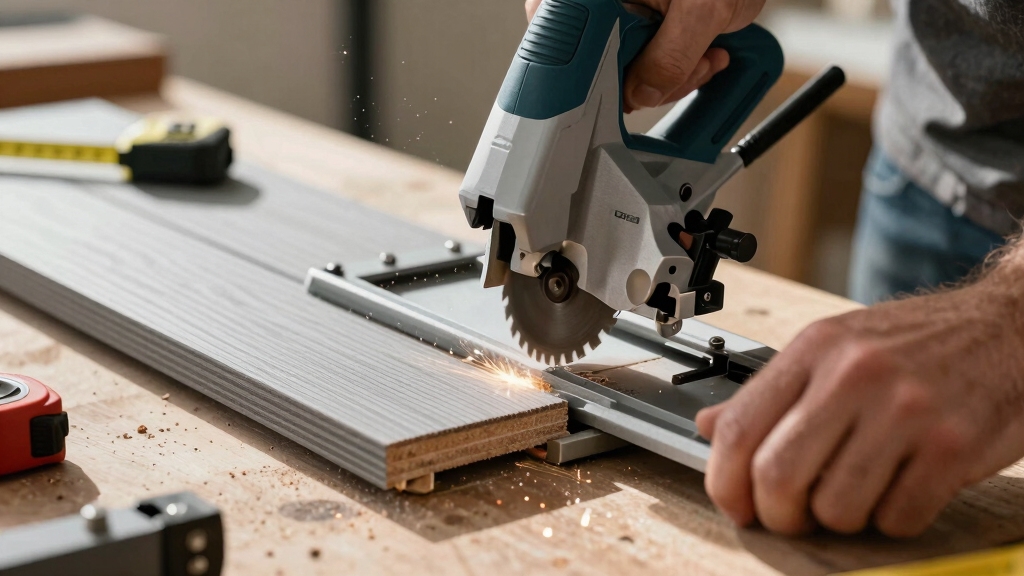
To cut composite decking accurately, use a circular saw with a fine-toothed, carbide-tipped blade matching your saw size (20–40 teeth).
Measure twice, mark your cut line on the side you’ll trim, and clamp a straight edge to guide the saw for clean, straight cuts. Set blade depth slightly beyond board thickness to reduce tear-out.
Don’t forget safety gear and secure your workpiece firmly. Proper handling and storage after cutting also preserve board quality. More detailed tips guarantee your project’s precision and safety.
Key Takeaways
- Use a circular saw with a fine-toothed, carbide-tipped blade sized 20–40 teeth for clean, precise cuts on composite decking.
- Set blade depth just beyond the board thickness to minimize tear-out and achieve smooth edges.
- Clamp a straight edge or rafter square as a guide to ensure accurate, straight cuts.
- Position the textured side down when cutting with a circular saw for a cleaner finish on the visible side.
- Measure twice, mark cut lines on the waste side, and cut slowly to avoid forcing the blade and damaging the deck boards.
Essential Tools for Cutting Composite Decking
Selecting the right tools is crucial when cutting composite decking to guarantee clean, accurate cuts and maintain the material’s integrity. You’ll want a circular saw for long, straight cuts and a miter saw for angled or cross cuts.
A jigsaw works best for curves and intricate cutouts. A table saw guarantees consistent cuts when handling multiple boards. If space or portability is an issue, a compact circular saw serves as a reliable alternative.
Choosing the ideal blade is equally important. Opt for fine-toothed, carbide-tipped blades with low tooth counts: 20 teeth for 6-inch blades, 24 teeth for 7.25-inch, and 40 teeth for 12-inch blades. Proper tool and blade selection will make your cutting process efficient and precise.
For optimal results, using tools with ergonomic handles and accessories designed for stability can help reduce fatigue and improve control during cutting tasks, ensuring a professional finish with minimal errors, especially when working with ergonomic handles.
Cutting Safety Tips to Protect Yourself
When working with the right tools and blades for cutting composite decking, you also need to prioritize your personal safety.
Always wear safety goggles to protect your eyes from flying debris, ear defenders to guard against loud noise, and a dust mask to prevent inhaling fine particles.
Prioritize eye, ear, and respiratory protection to stay safe from debris, noise, and dust while cutting.
Avoid loose clothing and secure long hair to prevent entanglement with power tools.
Inspect your equipment before use, guaranteeing blade guards are in place and functioning.
Keep your hands at a safe distance from the blade and use clamps or guides to stabilize boards during cutting.
Work in a well-ventilated area to minimize dust accumulation.
Using tools with ergonomic handles can help reduce strain and improve control during cutting tasks.
Measuring and Marking Composite Decking Boards
Accurate measurements and clear markings are essential for cutting composite decking boards to fit your substructure perfectly.
First, trim 1/8 inch off one end to create a square edge. Then remove at least 3/16 inch from the factory end to guarantee proper fit.
Measure the board length precisely based on your substructure, using a tape measure. Mark your cut lines with a pencil and a speed square for accuracy.
Always measure twice before making any cuts to avoid costly mistakes. When marking, use a rafter square as a fence to keep lines straight and consistent.
Position marks clearly on the side where you intend to cut, guaranteeing alignment with your layout plan. This systematic approach reduces errors and streamlines your cutting process.
To ensure durability and performance, it’s important to consider the moisture resistance properties of composite decking during installation.
How to Make Clean Cuts in Composite Decking?
Achieving clean cuts in composite decking relies on the right combination of tools, blade choice, and cutting technique.
Use a circular saw or miter saw equipped with a fine-toothed, carbide-tipped blade matched to your saw size (20-40 teeth). Always set the blade depth just beyond the board thickness to minimize tear-out.
Follow these steps for clean cuts:
- Clamp a straight edge or rafter square to guide your saw for precise, straight cuts.
- Position the board textured side down for circular saws; for jigsaws, cut with the good side up to avoid splintering.
- Align the blade on the waste side of your mark to preserve the desired length.
- Cut slowly and steadily, avoiding forcing the blade.
These practices guarantee smooth, accurate cuts without damaging the composite surface. Additionally, maintaining a controlled feed rate helps reduce heat buildup and prevents edge chipping during cutting.
Storing, Handling, and Finishing Cut Composite Boards
Proper handling and storage of cut composite boards markedly affect their performance and appearance. Always store boards flat, off the ground, and shielded from direct sunlight to prevent warping and discoloration.
When moving boards, support them evenly to avoid bending or damage. Keep cut edges clean and free from debris to maintain structural integrity. Avoid sanding composite decking, as it can damage the surface finish.
Instead, use a fine-toothed blade during cutting for smooth edges. After cutting, inspect boards for splinters or rough spots; if necessary, carefully trim with a sharp blade.
Promptly install boards after cutting to minimize exposure to moisture or dirt. Following these protocols guarantees your composite decking maintains durability and a professional, polished look. Additionally, using proper cutting techniques helps prevent the release of harmful dust particles, ensuring a safer work environment.
Frequently Asked Questions
Can I Use a Hand Saw to Cut Composite Decking?
Using a hand saw to cut composite decking is like trying to carve a statue with a butter knife. It’s possible but inefficient.
You can use one, but it’ll take more effort and won’t produce clean, precise cuts.
For best results, opt for power saws with fine-toothed blades designed for composite materials.
This guarantees smooth edges, reduces splintering, and saves time.
It gives your decking a professional finish without frustrating labor.
How Do Weather Conditions Affect Cutting Composite Decking?
Weather conditions directly impact cutting composite decking.
When it’s hot, boards expand, so you should measure and cut early in the day when temperatures are cooler to avoid tight fits later.
In cold weather, materials contract, so cut slightly longer to accommodate expansion.
Avoid cutting wet boards, as moisture can cause slippery surfaces and affect tool performance.
Always store boards flat and shaded to maintain stable conditions before cutting.
What Is the Best Way to Dispose of Composite Decking Scraps?
You should dispose of composite decking scraps by first checking local recycling programs that accept composite materials.
Many can’t be recycled curbside. If recycling isn’t available, bag the scraps securely to prevent debris spread.
Place them in designated construction waste bins. Avoid burning scraps since composite decking contains synthetic materials.
Consider donating usable offcuts to community projects or reuse them for small outdoor projects to minimize waste.
Are There Specific Brands of Blades Recommended for Composite Decking?
You’ll want blades like Freud Diablo and Amana Tool, both known for cutting composite decking cleanly.
Choose carbide-tipped blades with low tooth count—20 to 40 teeth depending on blade size—for smooth, splinter-free cuts.
These brands offer fine-toothed blades optimized for composite materials, ensuring durability and precision.
Always match blade size to your saw and maintain proper blade depth for efficient, safe cutting without damaging the board’s surface.
Can Composite Decking Be Recycled After Cutting?
Yes, you can recycle composite decking scraps, but it’s not as straightforward as with pure wood or plastic.
Approximately 50% of composite decking material can be reclaimed and reprocessed by specialized facilities. You’ll need to separate metal fasteners and keep the waste clean.
Contact your local recycling center to confirm if they accept composite decking since it’s a mix of wood fibers and plastic, requiring specific processing methods.
From Rookie to Decking Ninja: Mission Complete
So, you’ve armed yourself with the right tools, measured like a pro, and followed all the safety rules. Congratulations, you’re basically a composite decking ninja.
Just remember, cutting composite isn’t rocket science, but pretending it’s a breeze will only ruin your boards and your day. Stay precise, stay cautious, and handle those cuts with respect.
After all, your deck deserves more than a butcher’s touch. Now, go forth and cut cleanly!



![How to Clean Scratched Hardwood Floors: 7 DIY Steps [Effective]](https://anyshelter.com/wp-content/uploads/2023/06/How-to-Clean-Scratched-Hardwood-Floors.webp)