Best Way to Clean Hardwood Floors With Pets: Easy Tips
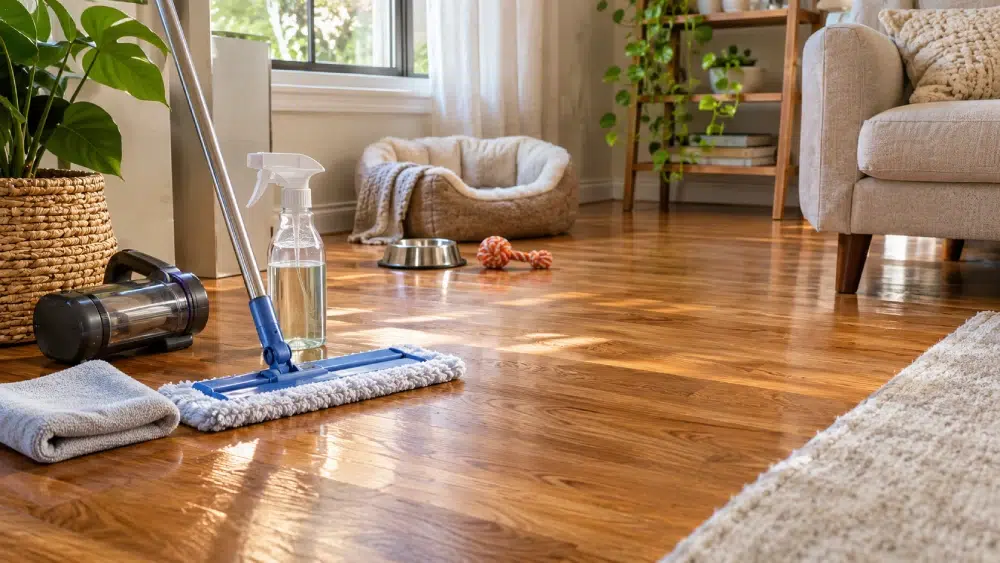
To keep hardwood floors looking great with pets, first remove loose hair and dirt using a soft brush or vacuum with a hard-floor attachment.
Choose a pet-safe, pH-neutral cleaner and avoid harsh chemicals like vinegar or ammonia.
Mop with a lightly damp microfiber pad, never soaking the floor, and dry fully before pet contact.
Act quickly on accidents using enzyme-based cleaners.
Regular maintenance, like trimming nails and placing mats in key spots, protects your floors.
Exploring these details will help you maintain pet-friendly hardwood floors effectively.
Key Takeaways
- Remove pet hair and dirt regularly using a soft-bristled vacuum or dry mop to prevent scratches and floor damage.
- Use pet-safe, pH-neutral hardwood cleaners that are fragrance-free and plant-based to protect floors and pets.
- Mop with a lightly damp microfiber mop, applying cleaner to the mop pad and avoiding excess moisture to prevent warping.
- Blot pet accidents immediately and treat with enzyme-based cleaners to remove stains and odors effectively.
- Trim pet nails regularly and use entry mats and rugs to reduce wear and protect vulnerable floor areas.
Remove Pet Hair and Dirt Before Cleaning Hardwood Floors

Before you start any liquid cleaning on your hardwood floors, always remove pet hair and dirt first to prevent scratches and damage.
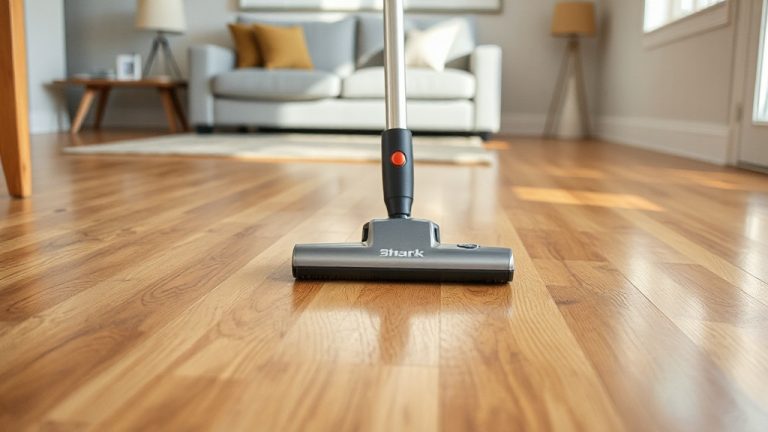
Begin by dry sweeping or dust mopping to pick up loose fur and grit. Alternatively, use a hardwood-safe vacuum equipped with a hard-floor attachment or soft brush head to avoid harming the finish.
Regularly brushing your pet reduces shedding, minimizing fur on the floor. Place entry mats at doors to trap dirt from paws before it reaches your hardwood.
Additionally, position rugs in high-traffic areas to protect vulnerable spots and reduce wear. By consistently removing pet hair and dirt first, you create a cleaner environment and safeguard your hardwood floors from scratches and premature deterioration.
This step is essential before applying any liquid cleaner. Using soft-bristled brush attachments on your vacuum helps prevent damage while effectively removing debris.
Choose a Pet-Safe Hardwood Floor Cleaner
When you’re picking a hardwood floor cleaner, it’s super important to choose one that’s labeled safe for pets once it’s dry. You definitely want to keep your furry friends in mind!
Look for options that are plant-based or water-based. They’re usually gentler and won’t harm your pets. Just try to avoid harsh chemicals like bleach, ammonia, and formaldehyde. Choosing a cleaner with a pH-neutral formula helps protect both your floors and your pets’ health.
Safe Ingredients to Use
While selecting a hardwood floor cleaner, you’ll want to prioritize formulas that are specifically labeled safe for pets once dried.
Focus on plant-based, water-based, or biobased ingredients, as these are generally gentler and less likely to cause irritation.
Avoid cleaners containing harsh chemicals like bleach, ammonia, formaldehyde, phthalates, or phenols, which can be harmful to your pets.
Opt for fragrance-free or lightly scented products to prevent respiratory issues or discomfort.
Always use the recommended amount to prevent residue buildup, which can cause slipperiness or attract dirt.
Choosing products with EPA Safer Choice certification ensures both pet safety and environmental responsibility.
Avoid Harmful Chemicals
Protecting your pets means avoiding hardwood floor cleaners that contain harmful chemicals. Choosing a pet-safe cleaner guarantees your floors stay clean without risking your pet’s health.
Here’s how to select the right product:
1. Check ingredients
Avoid bleach, ammonia, formaldehyde, phthalates, and phenols. Opt for plant-based or water-based formulas labeled safe for pets after drying.
2. Prefer mild scents****
Fragrance-free or lightly scented cleaners reduce the risk of irritating your pet’s sensitive nose and respiratory system.
3. Follow usage instructions
Use only the recommended amount to prevent residue buildup that can harm your pets and dull your floor’s finish.
Many effective pet-safe options are plant-based hardwood floor cleaners that are hypoallergenic and dermatologist tested, ensuring safety around kids and pets.
Mop Hardwood Floors With Minimal Moisture
When it comes to cleaning your hardwood floors, keeping moisture to a minimum is key. You’ll want to use a lightly damp mop, so you avoid any excess water that could potentially damage the wood.
Instead of applying the cleaner directly to the floor, try putting it on the mop pad. This helps control how much moisture is actually getting onto the surface. And don’t forget to wring out any extra moisture before you start mopping!
Using microfiber pads is a great idea, too. They really help control moisture and do a fantastic job of picking up dirt. Plus, this method ensures that your floors dry quickly, making it safer for your pets to walk around. Happy mopping!
Regular sweeping or vacuuming before mopping is essential to remove dirt and prevent scratches and damage from debris.
Lightly Damp Mop
When you mop hardwood floors, stick to using as little moisture as possible to prevent damage. Overly wet floors can warp wood and ruin the finish, especially with pets tracking in dirt and spills.
Follow these steps for a lightly damp mop:
- Prepare the mop: Apply your pet-safe hardwood cleaner to the microfiber mop pad, never directly on the floor. Wring out excess liquid thoroughly to avoid saturation.
- Mop efficiently: Use gentle, even strokes to clean the surface. The damp mop will pick up dirt without leaving puddles.
- Dry and protect: Allow the floor to air dry completely before letting pets walk on it. This prevents slips and paw prints.
This method keeps your floors clean, safe, and in great shape with minimal moisture. Using a microfiber mop that is well wrung out helps prevent streaking and damage caused by excess water.
Controlled Moisture Use
Controlling the amount of moisture you use while mopping hardwood floors is essential to prevent warping and finish damage.
Always wring out your mop or cloth thoroughly before use, leaving it just damp enough to pick up dirt without saturating the wood.
Apply your pet-safe hardwood cleaner directly onto the mop pad rather than the floor to maintain controlled moisture levels.
Use microfiber mop pads; they absorb cleaner efficiently and minimize water exposure.
After mopping, allow the floor to dry completely before letting your pets walk on it to avoid slips and marks.
Maintaining indoor humidity between 35-55% helps prevent warping and keeps your hardwood floors in optimal condition.
Handle Pet Accidents Quickly to Prevent Damage
Act quickly to blot pet accidents like urine or vomit with paper towels or a clean cloth to minimize damage and staining.
Avoid rubbing, which spreads moisture and worsens stains. After blotting, use a hardwood-safe cleaner designed for pet messes to treat the area thoroughly.
Follow these steps for best results:
- Blot the spill immediately using paper towels or a clean, absorbent cloth without rubbing.
- Apply a pet-safe hardwood cleaner sparingly to the spot, following product instructions.
- Repeat spot treatment if stains or odors persist, ensuring the floor dries completely before allowing pet traffic.
Keep pet-cleanup supplies handy near entryways for fast response.
Prompt action prevents moisture from seeping into the wood and damaging the finish, preserving your hardwood floor’s integrity. Using enzyme-based cleaners can also help break down organic matter and eliminate odors effectively.
Prevent Pet Damage to Hardwood Floors
To protect your hardwood floors from pet-related wear, focus on minimizing direct damage caused by claws, spills, and dirt.
Keep your pet’s nails trimmed regularly to prevent scratching the finish. Place food and water bowls on waterproof mats to catch spills and avoid standing water on the floor.
Trim your pet’s nails and use waterproof mats to protect floors from scratches and spills.
Wipe your pet’s paws after outdoor activities to reduce dirt and moisture indoors. Use entry mats at doors and rugs in high-traffic areas to trap grit and protect the wood.
Frequent brushing of your pet reduces loose fur that can cause scratches. These steps create a barrier against common sources of damage, preserving your floors’ appearance and extending their lifespan.
Consistent effort in prevention is key to maintaining hardwood floors in a pet-friendly home. Additionally, placing a cat mat in front of the litter box helps trap particles and minimize spillage to protect the floor.
Avoid Cleaning Mistakes That Damage Hardwood Floors With Pets
Although keeping hardwood floors clean is essential when you have pets, using the wrong cleaning methods can cause lasting damage.
To protect your floors, avoid these common mistakes:
- Don’t steam mop or wet-mop: Excess heat and moisture warp wood and ruin finishes. Use a lightly damp microfiber mop instead.
- Avoid harsh chemicals: Stay clear of vinegar, ammonia, bleach, and oil-based cleaners. They strip protective coatings and can harm pets.
- Prevent residue buildup: Use only recommended amounts of pet-safe hardwood cleaners to avoid slippery or dull surfaces.
- Always use approved cleaning products to prevent discoloration and finish damage.
Frequently Asked Questions
How Often Should I Deep Clean Hardwood Floors With Pets?
You should deep clean your hardwood floors every 1 to 3 months, depending on your pets’ activity level and how much dirt they track in.
Frequent sweeping or vacuuming helps, but deep cleaning removes buildup that regular mopping misses.
If you have multiple pets or high traffic, lean toward monthly deep cleans.
Always use pet-safe hardwood cleaners and avoid soaking the floors to protect the finish and your pets’ health.
Can Essential Oils Be Used Safely on Hardwood Floors Near Pets?
You shouldn’t use essential oils directly on hardwood floors near pets. Many oils can be toxic to animals, and their residues might harm your floor’s finish.
Instead, choose pet-safe, hardwood-specific cleaners without added fragrances or oils. If you want a pleasant scent, use a diffuser away from your pets and floors.
Always prioritize your pets’ safety and the integrity of your hardwood by avoiding harsh or unknown substances on the floor.
What Is the Best Way to Remove Pet Odors From Hardwood Floors?
When pet odors stick around like unwelcome guests, you’ll want to act fast.
First, blot any messes immediately; don’t rub or spread them. Then, use a pet-safe hardwood cleaner designed to neutralize odors without harming your floor or pets.
Lightly damp mop with this cleaner, avoiding excess moisture.
Repeat spot treatments as needed, and keep a cleanup kit handy.
This method tackles odors effectively while protecting your hardwood’s finish.
Are Certain Hardwood Finishes More Resistant to Pet Damage?
Yes, certain hardwood finishes resist pet damage better. You’ll want to choose finishes like aluminum oxide or polyurethane, which create a durable, protective layer against scratches and moisture.
Water-based finishes tend to be more pet-friendly because they dry hard and resist wear. Avoid softer finishes like oil or wax, which can scratch or stain easily.
Regular maintenance combined with a tough finish helps keep your floors looking great despite pet activity.
How Can I Prevent My Pet From Slipping on Hardwood Floors?
You can prevent your pet from slipping on hardwood floors by placing non-slip rugs or mats in high-traffic areas and near food and water bowls.
Regularly trim your pet’s nails to improve traction.
Wipe their paws after outdoor walks to reduce dirt and moisture buildup.
Also, keep the floor clean and dry, avoiding excess water or slippery residues.
These steps will help your pet move safely without slipping.
Keep Your Hardwood Floors Clean and Pet-Friendly
By following these steps, you’ll keep your hardwood floors looking pristine despite your pets’ antics.
Always remove hair and dirt first, use pet-safe cleaners, and mop with minimal moisture to protect the wood.
Act swiftly on accidents to avoid lasting damage.
Just like a meticulous scribe preserving ancient scrolls, your careful attention prevents wear and tear.
Avoid common cleaning mistakes, and your floors will remain beautiful and durable for years to come.