Best Way to Remove Musty Smell From Basement: Guide
To remove the musty smell from your basement, start by finding and fixing any moisture sources like leaks or foundation cracks.
Use dehumidifiers to keep humidity below 50%. Improve ventilation by opening windows or running exhaust fans.
Clean moldy areas with bleach solutions and remove water-damaged materials promptly.
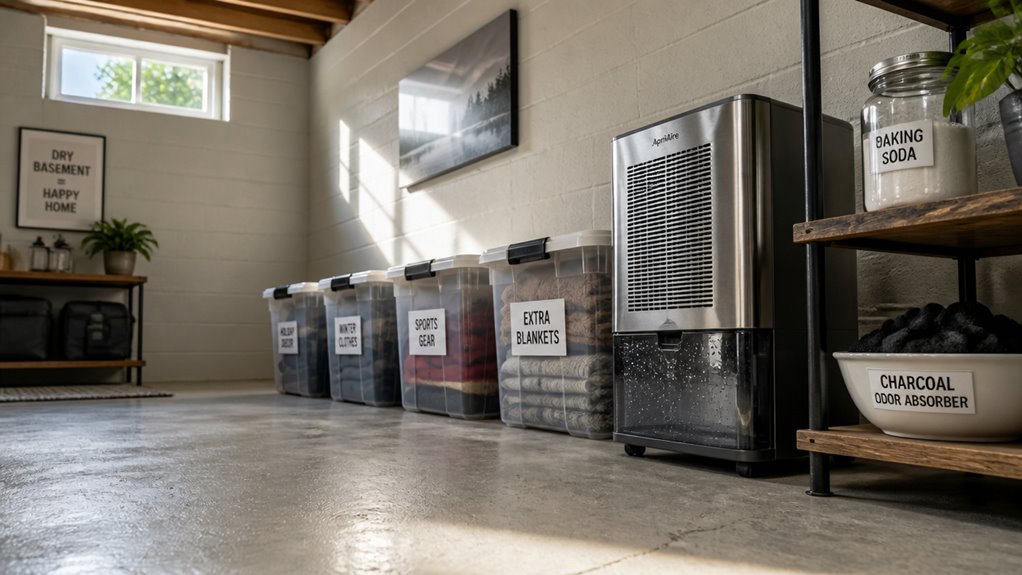
Absorb lingering odors with baking soda or charcoal, and keep your basement clean and clutter-free.
Taking these steps will help you freshen the space and prevent future odors. There’s more you can do to fully tackle the problem.
Key Takeaways
- Identify and seal foundation cracks and moisture sources to prevent water entry and dampness in the basement.
- Use a dehumidifier to maintain basement humidity between 30–50% and prevent mold and musty odors.
- Improve ventilation by opening windows, using fans, and installing exhaust fans to circulate fresh air and reduce moisture.
- Clean mold and mildew with a bleach or vinegar solution, and remove water-damaged porous materials promptly.
- Place odor absorbents like baking soda or activated charcoal in corners to trap and reduce lingering musty smells.
Find What’s Causing Your Basement’s Musty Smell

Start by thoroughly inspecting your basement to pinpoint the source of the musty smell.
Check walls, floors, windows, pipes, and stored items for any signs of dampness or mold growth.
Pay close attention to areas where moisture tends to accumulate, such as corners or near windows.
Look for visible water stains, peeling paint, or warped materials.
While plumbing leaks and water entry are common causes, focus here on identifying other moisture sources like condensation or failed waterproofing.
Remember, the musty odor often signals excess moisture, not just a surface smell.
Identifying where that moisture is coming from is vital because treating the source is the only way to permanently eliminate the odor and prevent it from returning.
Use a moisture meter to measure moisture content in building materials and confirm areas at risk.
Inspect Basement for Plumbing Leaks and Water Entry
Although you may have already checked for general dampness, closely inspecting your basement for plumbing leaks and water entry can reveal hidden moisture sources fueling the musty smell.
Start by examining visible pipes, joints, and connections for drips or corrosion. Don’t forget to check around your water heater, sump pump, and laundry area.
Next, look for water stains or discoloration on walls, floors, and near windows, as these often indicate groundwater intrusion or leaks. Inspect stored items for dampness too; they can trap moisture and worsen odors.
Addressing these issues promptly stops moisture from accumulating, which is key to eliminating the musty smell permanently. Fixing leaks and sealing entry points should always come before deodorizing or cleaning to guarantee lasting results.
Additionally, running fans toward damp walls and corners can accelerate evaporation and help reduce lingering moisture, preventing mold growth and further odors from developing in the basement. (effective drying techniques)
Lower Basement Humidity to 50% or Below
To keep your basement feeling fresh, try to lower the humidity to 50% or below. An effective dehumidifier can really help with this! Just make sure to pick one that has the right capacity for your space.
Run it consistently until the air feels nice and dry. Remember, maintaining that steady dryness is super important. It’ll help prevent mold growth and keep those musty odors from coming back. So, stay on top of it, and your basement will thank you!
Also, improving basement ventilation can significantly reduce moisture intrusion and help maintain lower humidity levels.
Use Effective Dehumidifiers
Effectively lowering your basement’s humidity to 50% or below is crucial for preventing musty odors and mold growth.
To achieve this, you need a reliable dehumidifier suited to your basement’s size. For spaces larger than 1,500 square feet, choose a high-capacity model to handle excess moisture efficiently.
Run the dehumidifier continuously until the musty smell disappears, as consistent operation keeps humidity levels stable. Place the unit where air circulation is good, and regularly empty its water reservoir or connect a drain hose for hassle-free use.
Keep filters clean to guarantee peak performance. By maintaining lower humidity with an effective dehumidifier, you directly reduce the dampness that causes odors and mold.
This creates a fresher, healthier basement environment. Monitoring and stabilizing humidity between 30–50% is essential to prevent mold recurrence and maintain air quality.
Maintain Consistent Dryness Levels
Consistently keeping your basement’s humidity at or below 50% plays a vital role in preventing musty odors and mold growth.
High humidity creates the perfect environment for mold spores to thrive, which leads to persistent damp smells.
To maintain this dryness level, use a reliable dehumidifier suited for your basement size. Larger spaces may need a high-capacity model.
Run it continuously until the musty odor disappears.
Also, monitor humidity with a hygrometer to catch fluctuations early.
Alongside controlling moisture sources like leaks or condensation, keeping humidity low stops mold before it starts.
Regularly cleaning and drying surfaces helps prevent microbial colonization that contributes to musty odors.
Use Dehumidifiers to Reduce Basement Moisture
To tackle basement moisture effectively, it’s important to pick a dehumidifier that’s the right size for your space. Ideally, you want to keep the humidity at or below 50%. Trust me, this makes a huge difference!
Running your dehumidifier continuously can help maintain those ideal levels and also speeds up the removal of any musty odors. Seriously, you’ll notice a fresher atmosphere in no time!
With the right settings and consistent operation, you’ll turn your basement into a much drier, more inviting space. It’s all about creating that comfortable environment you can enjoy!
Additionally, regular inspection of foundation cracks can help identify and prevent water intrusion that contributes to basement moisture.
Choosing The Right Dehumidifier
Selecting the right dehumidifier is essential for tackling basement moisture and musty odors efficiently.
Begin by measuring your basement’s size. Larger spaces need higher-capacity units, especially over 1,500 square feet.
Look for a dehumidifier rated for your square footage to ensure it removes enough moisture.
Consider features like continuous drainage or a built-in pump to avoid frequent emptying.
Energy efficiency is important since you’ll likely run it for extended periods.
Also, check the unit’s humidity control settings to maintain consistent moisture levels.
Portable models are versatile, but if your basement is very damp, a whole-house dehumidifier may be more effective.
Choosing the right dehumidifier lets you control humidity properly, which is key to eliminating that persistent musty smell.
Regularly test and replace backup batteries in related basement systems to prevent power issues that could worsen moisture problems.
Optimal Humidity Levels
Maintaining basement humidity at or below 50% is vital for preventing musty odors and mold growth. You’ll find that controlling moisture is the key to a fresh-smelling basement.
Using a dehumidifier helps reduce excess dampness effectively, creating an environment where mold and mildew struggle to thrive. For larger basements, a high-capacity unit guarantees you keep humidity in check.
While setting your dehumidifier, monitor humidity levels with a hygrometer to stay at or below that 50% mark. Remember, even if your basement feels dry, elevated humidity can still cause mustiness.
Maintaining indoor relative humidity within the recommended 30%–50% range helps prevent moisture-related problems like musty odors and wood swelling.
Continuous Operation Benefits
Regularly running your dehumidifier keeps basement moisture consistently low, preventing dampness from returning and musty odors from lingering.
When you operate it continuously, you maintain humidity at or below 50%, which is essential to stopping mold growth and musty smells.
Running the dehumidifier only intermittently allows moisture to build back up, making odor control temporary.
Continuous operation also helps you avoid frequent spikes in humidity caused by changes in weather or indoor activities.
For larger basements, a high-capacity unit running nonstop guarantees consistent moisture removal.
Pairing this with proper ventilation accelerates drying and odor elimination.
In short, keeping your dehumidifier on without breaks is the most effective way to create a dry, fresh basement environment and keep musty smells at bay for good.
It is important to maintain relative humidity between 30–50% because higher levels create a high-risk environment for mold growth.
Improve Basement Ventilation to Reduce Musty Smell
Boosting ventilation in your basement helps push out stale, moist air that causes musty odors.
Increasing basement ventilation removes damp, stale air that leads to musty smells.
You can improve airflow by opening windows, doors, and using fans to circulate fresh air. If possible, install exhaust fans to vent damp air directly outside, especially after activities that add humidity.
Make sure vents and air filters are clean to avoid blocking airflow. Remember, ventilation works best when outdoor air is dry enough to reduce indoor moisture.
By increasing air movement, you help lower humidity levels and speed up drying, which reduces the environment where musty smells thrive.
Combine ventilation with dehumidifiers for even better results. Consistent airflow prevents stagnant air pockets, cutting down musty odors effectively without masking the problem.
For persistent odors, consider addressing underlying moisture sources and follow methodical cleaning techniques to restore air quality fully.
Clean Mold and Mildew From Basement Surfaces
After improving ventilation to reduce humidity and stale air, tackling mold and mildew on basement surfaces is the next step to eliminate musty odors.
You’ll want to scrub affected areas to remove odor-holding spores and prevent regrowth. Use a solution of bleach and water (1:10) or vinegar and water (1:3) for effective cleaning.
Focus on walls, floors, and stored items that show visible mold or mildew.
| Cleaning Solution | Mixing Ratio |
|---|---|
| Bleach and Water | 1 part bleach:10 parts water |
| Vinegar and Water | 1 part vinegar:3 parts water |
| Application Tip | Wear gloves and ventilate well |
Be thorough and patient; deep cleaning is key to lasting freshness.
Remove Water-Damaged Basement Materials
Remove any water-damaged materials from your basement promptly to prevent lingering odors and mold growth.
Promptly removing water-damaged materials prevents mold and persistent basement odors.
Carpets, rugs, upholstery, and porous items like drywall can trap moisture and odors. It’s essential to remove or replace them if soaked.
Check stored items such as boxes, bookshelves, and bins. Wipe them down or clean thoroughly to eliminate absorbed smells. Decluttering regularly helps you spot moisture problems faster and reduces odor reservoirs.
After removing damaged materials, address the root cause of moisture to avoid recurrence.
Maintain gutters, improve exterior drainage, and consider professional waterproofing if leaks persist.
Absorb Lingering Basement Odors With Baking Soda and Charcoal
You know, baking soda is a fantastic way to tackle those musty odors in your basement. Just grab some open containers and place them around—corners and any trouble spots are the best places to start.
And don’t forget about activated charcoal! It does a great job of trapping those airborne smells and can really help improve the air quality over time.
For the best results, it’s a good idea to spread these absorbents out in multiple areas. Oh, and remember to replace them regularly, especially after you’ve tackled any moisture issues. That’ll make a big difference!
Baking Soda Benefits
Baking soda works as a natural and cost-effective odor absorber that can help clear lingering musty smells in your basement.
You can simply place open containers of baking soda around the space to draw out moisture and neutralize odors. It’s non-toxic, easy to use, and requires no electricity or special equipment.
For best results, swap the baking soda every 30 days until the smell diminishes.
Here’s a quick look at how baking soda helps:
| Feature | How to Use | Benefit |
|---|---|---|
| Odor Neutralizer | Open containers in corners | Absorbs musty smells |
| Moisture Absorber | Spread on carpets or shelves | Reduces dampness |
| Non-toxic | Safe around pets and kids | No harmful fumes |
| Low-cost | Affordable and widely available | Budget-friendly solution |
| Easy Maintenance | Replace monthly | Continuous odor control |
Activated Charcoal Uses
Alongside baking soda, activated charcoal offers a powerful way to absorb lingering musty odors in basements.
You can place activated charcoal in open containers to trap airborne odors effectively. Its porous structure attracts and holds moisture and odor-causing molecules, improving air quality without masking smells.
Unlike sprays or air fresheners, charcoal works naturally and requires no chemicals. After addressing moisture and mold sources, using charcoal helps eliminate residual smells that cleaning alone can’t remove.
You’ll find activated charcoal in various forms, such as bags, pellets, or powder, making it easy to use. Just refresh or replace the charcoal regularly to maintain its odor-absorbing ability.
Combining baking soda and activated charcoal gives you a straightforward, non-toxic solution to keep your basement smelling fresh.
Placement Tips
When placing baking soda and activated charcoal in your basement, location matters to maximize their odor-absorbing effectiveness.
Put open containers in corners and near known problem areas, like damp spots or where airflow is limited. Avoid placing them directly on the floor if it’s often wet; instead, use shelves or elevated surfaces.
Spread several small containers rather than one large one to cover more area and trap odors more efficiently. Replace or refresh baking soda every 30 days, while charcoal may last longer but should also be checked regularly.
Keep Your Basement Clean and Clutter-Free
Since clutter traps moisture and restricts airflow, keeping your basement clean and organized plays an essential role in preventing musty odors.
Clutter traps moisture and restricts airflow, so a clean, organized basement helps prevent musty odors.
When you remove unnecessary items and tidy up regularly, you reduce places where dampness and mold can hide.
It also makes it easier to spot leaks or water damage early.
To maintain a clutter-free basement, focus on:
- Storing items in plastic bins with tight lids instead of cardboard boxes.
- Regularly sweeping and wiping down surfaces to remove dust and mildew.
- Avoiding storing porous materials like rugs or upholstered furniture that can trap moisture.
Prevent Basement Moisture With Waterproofing
To keep moisture out of your basement, you’ll want to focus on effective waterproofing methods that stop water before it enters.
Start by inspecting your foundation for cracks and sealing them with appropriate waterproof sealants.
Installing exterior drainage systems, like gutters and downspouts, directs rainwater away from your home’s base, reducing groundwater intrusion.
Interior solutions, such as vapor barriers on walls and floors, also block moisture.
If you notice persistent dampness or leaks despite these efforts, consider professional waterproofing services that apply specialized coatings or install sump pumps.
Remember, without stopping water entry, you’ll only mask the musty smell temporarily.
Proper waterproofing is your best defense in maintaining a dry basement and preventing mold growth, which ultimately eliminates the source of that unpleasant odor.
Frequently Asked Questions
Can Air Purifiers Help Eliminate Basement Musty Odors?
You might think air purifiers alone can banish that musty basement odor, but they can only do so much.
While they help filter airborne particles and some odors, they don’t fix the root cause: moisture.
To truly eliminate the smell, you’ve got to tackle dampness first.
Use dehumidifiers and improve ventilation, then let an air purifier support your efforts by cleaning the air, not replacing moisture control.
How Long Does It Take for a Basement to Stop Smelling Musty?
It usually takes a few days to several weeks for your basement to stop smelling musty, depending on moisture levels and how quickly you address the problem.
If you fix leaks, lower humidity with a dehumidifier, and increase ventilation, you can speed up the process.
Persistent odors mean moisture or mold remains, so be thorough. Continuous moisture control and cleaning are key to fully eliminating the smell for good.
Are Natural Remedies Effective for Musty Basement Smells?
Imagine your basement as a garden: natural remedies like baking soda or vinegar are like friendly bees. They help by absorbing odors but can’t uproot the real weeds causing the smell.
You can use them to freshen the air temporarily, but unless you fix moisture and mold issues, the musty scent will return.
Can Houseplants Reduce Basement Humidity and Odors?
You can use houseplants to help reduce basement humidity and odors, but don’t rely on them as your main solution.
Certain plants like English ivy or peace lilies absorb moisture and improve air quality, but their effect is limited in damp basements.
To really tackle musty smells, you’ll need to control moisture with dehumidifiers, ventilation, and fixing leaks.
Think of plants as a helpful supplement, not a complete fix.
Is Professional Mold Testing Necessary for Musty Basements?
You don’t always need professional mold testing for a musty basement, but it’s a smart move if you suspect hidden mold or serious contamination.
If you notice persistent health issues, extensive visible mold, or can’t find the moisture source, testing helps identify the mold type and guides effective cleanup.
Otherwise, thorough cleaning, moisture control, and ventilation often solve the problem without extra expense or hassle.
Final Thoughts on the Best Way to Remove Musty Smell From Basement
You don’t have to live with that stubborn musty smell lurking in your basement.
By finding the source, cutting down humidity, improving airflow, and removing damp materials, you’re taking powerful steps toward a fresher, healthier space.
Remember, a clean, dry basement isn’t just about comfort; it’s about protecting your home and peace of mind.
So, roll up your sleeves and breathe new life into your basement. It’s worth every effort.