Best Way to Disinfect Floors: Doing It the Right Way
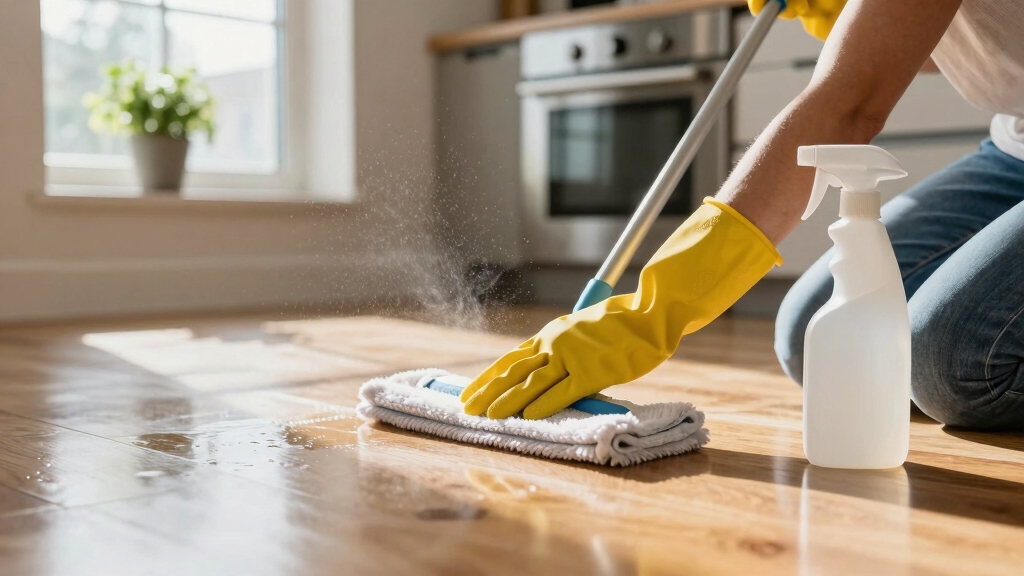
To disinfect floors effectively, start by thoroughly removing dirt and debris using a dry microfiber mop. This type of mop releases disinfectants better than cotton mops.
Select a compatible disinfectant like accelerated hydrogen peroxide for broad, quick action without damaging surfaces. Make sure you apply it evenly and allow the recommended contact time to kill germs effectively.
Avoid overwetting to maintain disinfectant potency. Using proper techniques protects your floors while maximizing sanitation.
Keep going to uncover detailed tips on mop management, surface care, and optimizing disinfectant use.
Key Takeaways
- Remove dust and debris by sweeping or dusting before mopping to ensure effective disinfection and prevent dirt trapping.
- Use single-use microfiber mops with compatible disinfectants for better disinfectant release and reduced bacterial contamination.
- Select pH-neutral disinfectants for wood and natural stone floors to protect surface finishes and prevent damage.
- Follow manufacturer’s recommended disinfectant dwell time, ensuring thorough soil removal prior to application for maximum pathogen kill.
- Replace or sanitize mops regularly, especially after isolation rooms or spills, to prevent cross-contamination during floor cleaning.
Why Proper Floor Cleaning Matters More Than Germicides?

Although disinfectants play a critical role in reducing pathogens, you must recognize that physically removing soil and debris from floors is equally, if not more, important for effective sanitation.
When you clean properly, you eliminate organic matter that can shield bacteria and viruses, reducing disinfectant efficacy.
Start by thoroughly dusting and sweeping to avoid trapping dirt during mopping.
Use wet mopping techniques after soil removal, ensuring you change or launder mops frequently to prevent cross-contamination.
Remember, residual grime compromises disinfectant contact with pathogens.
Double scrubbing with automatic scrubbers enhances soil removal on large surfaces.
Heat above 40°C during cleaning not only improves dirt breakdown but also inhibits bacterial growth.
This methodical approach guarantees that germicides can perform at their best, making your floor sanitization both efficient and reliable.
Always use wood-safe, pH-neutral disinfectants to protect your hardwood floor’s finish while effectively sanitizing.
How to Choose the Right Mop and Disinfectant for Your Floors?
Selecting the right mop and disinfectant is essential to maintaining hygienic floors and preventing contamination.
Choosing the proper mop and disinfectant is crucial for clean, safe, and contamination-free floors.
Opt for single-use microfiber mops when possible, as they release more disinfectant and reduce bacterial load better than cotton string mops. Cotton mops can harbor contaminants, especially with QUAT disinfectants.
Consider your floor type: use pH-neutral disinfectants for wood and natural stone to preserve finishes. Alkaline or oxygenated bleach cleaners suit tile and grout.
Choose disinfectants with proven efficacy and contact times. Oxidants like accelerated hydrogen peroxide (AHP) act quickly and broadly, while QUATs require longer contact and may bind to microfiber, reducing effectiveness.
Always pair your mop and disinfectant based on compatibility and surface needs. This ensures thorough disinfection without damaging floors or compromising safety.
Additionally, regular vacuuming hardwood floors before mopping can remove debris and enhance the effectiveness of your disinfecting routine.
How to Prevent Cross-Contamination When Managing Mops?
Proper mop management plays a key role in preventing cross-contamination and maintaining floor hygiene. Always use sterile or freshly laundered wet mops, and replace them after cleaning isolation rooms, blood spills, or a set number of routine rooms.
Avoid reusing cotton string mops with QUAT, as they increase contamination risk. Opt for single-use microfiber mops when possible. Hot water washing and timely replacement prevent bacterial growth and mop odors.
| Management Practice | Purpose |
|---|---|
| Fresh or sterile mop use | Prevents pathogen transfer |
| Mop replacement frequency | Limits cross-room contamination |
| Using single-use microfiber | Enhances disinfection efficacy |
Additionally, it is important to sanitize reusable tools after cleaning to prevent pathogen spread and maintain disinfection efficacy.
Adhering to these protocols guarantees effective floor disinfection and minimizes pathogen spread.
What Floor Types Need Special Disinfection Care?
When disinfecting floors, you must consider the specific type of surface to avoid damage and guarantee effective cleaning.
Wood floors require pH-neutral cleaners to protect their finish; harsh agents like bleach or vinegar can strip coatings.
Wood floors need gentle, pH-neutral cleaners to preserve their finish and avoid damage from harsh chemicals.
Natural stone also demands pH-neutral soaps and routine sealing to prevent bacteria absorption and preserve integrity.
Tile and grout tolerate stronger alkaline or oxygenated bleach cleaners, which effectively target embedded dirt and microbes without harming the surface.
Avoid using acidic or overly alkaline disinfectants on delicate surfaces, as they can cause irreversible damage.
Always check manufacturer guidelines before applying disinfectants to maintain warranties and surface longevity.
Tailoring your disinfection approach to each floor type assures both microbial control and surface preservation, maximizing safety and durability.
Regular sweeping or vacuuming prior to disinfecting is essential to remove debris and prevent scratching of the floor’s protective finish, especially on polyurethane finished hardwood floors.
How to Maximize Floor Disinfectant Effectiveness and Contact Time?
Although disinfectant choice plays a crucial role, maximizing floor disinfectant effectiveness depends heavily on making certain adequate contact time and proper application methods.
First, always follow the manufacturer’s recommended dwell time. Oxidants like Accelerated Hydrogen Peroxide (AHP) require only one minute, while Quaternary Ammonium Compounds (QUAT) need up to ten.
Use single-use microfiber mops to prevent disinfectant binding and ensure consistent coverage. Avoid reusing cotton string mops with QUAT, as they increase contamination risks.
Apply disinfectant evenly without overwetting floors to maintain contact time and prevent premature drying. Employ electrostatic sprayers for hard-to-reach areas to enhance adherence.
Finally, remove physical soil thoroughly before disinfection, since soil impedes disinfectant action. Additionally, selecting non-toxic, VOC-free formulas helps maintain indoor air quality while ensuring effective cleaning.
Frequently Asked Questions
Can Electrostatic Sprayers Be Used on All Floor Types Safely?
You can use electrostatic sprayers on most floor types safely, but you need to take into account the floor material and disinfectant compatibility.
For sensitive surfaces like wood or natural stone, opt for pH-neutral cleaners to avoid damage. Always check manufacturer guidelines first.
Avoid harsh chemicals like bleach or acidic solutions on delicate floors.
Using electrostatic sprayers with appropriate disinfectants enhances coverage, especially in hard-to-reach areas, but tailor your approach based on floor-specific requirements.
How Often Should Natural Stone Floors Be Resealed for Protection?
You should reseal natural stone floors every one to two years to maintain protection against bacteria and stains.
Regular sealing prevents absorption and damage, especially in high-traffic areas.
Always follow the manufacturer’s guidelines and inspect the floor periodically for signs of wear or dullness.
If water no longer beads on the surface, it’s time to reseal.
Proper sealing preserves both appearance and durability effectively.
Is Hot Water Washing Effective for Mop Odor Prevention?
Hot water washing is like a fresh breeze for your mops. It effectively prevents odors by sanitizing fabrics thoroughly.
When you wash mops in hot water, you kill bacteria and break down organic matter that causes smells. This method not only keeps your mop heads fresher but also extends their usability.
For peak hygiene, combine hot water with proper detergent and guarantee mops dry completely before reuse to avoid bacterial growth and residual odors.
What Disinfectants Work Best for Quick Turnaround Cleaning?
For quick turnaround cleaning, you want disinfectants with short contact times.
Accelerated Hydrogen Peroxide (AHP) works well. It kills bacteria within one minute and has broad efficacy.
Chlorine bleach also acts fast but can be harsh on surfaces.
Avoid QUAT if speed is critical since it requires about 10 minutes contact time and can bind to microfiber mops, reducing effectiveness.
Use single-use microfiber mops with AHP for ideal, fast disinfection.
Are Single-Use Microfiber Mops More Cost-Effective Than Reusable Cotton Mops?
Yes, single-use microfiber mops can be more cost-effective than reusable cotton mops when you factor in contamination risks and cleaning efficiency.
They cover 250 square feet per use, release 37% more disinfectant, and avoid bacterial buildup linked to cotton mop reuse.
Though microfiber mops may have longer drying times and initial costs, their ability to reduce cross-contamination and improve disinfection makes them a smart investment for consistent, hygienic floor care.
Your Path to Consistently Clean and Sanitized Floors
You might think disinfecting floors is just about spraying germicide, but proper cleaning is key to real effectiveness. By choosing the right mop and disinfectant, and preventing cross-contamination, you make sure your floors are truly sanitized.
Remember, different floor types need specific care, and allowing disinfectants the correct contact time maximizes their power. Follow these steps methodically, and you’ll maintain a safer, healthier environment with confidence and precision.
![How to Clean Scratched Hardwood Floors: 7 DIY Steps [Effective]](https://anyshelter.com/wp-content/uploads/2023/06/How-to-Clean-Scratched-Hardwood-Floors.webp)