
What Is Pallet Wood Made of? Key to Durable
Pallet wood is made from select hardwoods and softwoods chosen based on strength, weight, cost, and regional availability.
You’ll commonly find southern yellow pine and oak in U.S. pallets, with the former favored for affordability and the latter for durability.
Softwoods like spruce and cedar are lighter and cost-effective, while hardwoods handle heavier loads and repeated use. The wood is often kiln-dried to stabilize moisture and enhance durability.
Understanding wood type and processing helps optimize pallet performance and suitability.
Key Takeaways
- Pallet wood is commonly made from hardwoods like oak and maple, prized for their strength and durability.
- Softwoods such as southern yellow pine and fir are widely used for lightweight, cost-effective pallets.
- Regional availability influences wood choice, with southern yellow pine in the Southeast and oak in the Midwest being popular.
- Kiln-dried wood is often used to reduce moisture, prevent warping, and meet hygiene standards.
- Pallet components are precisely cut, assembled, and fastened to ensure structural stability and load-bearing capacity.
Common Types of Pallet Wood and Their Uses
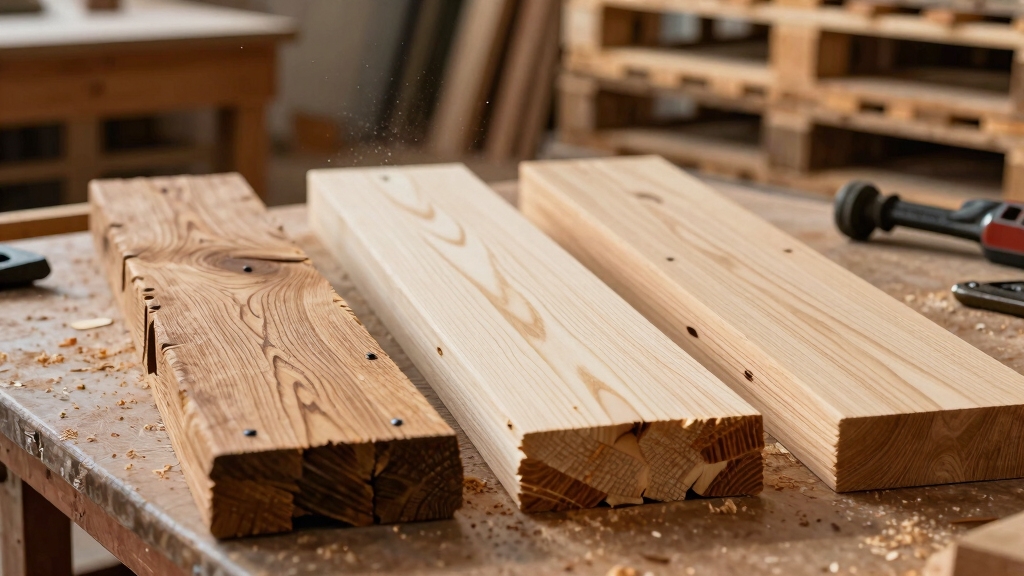
Several common wood types dominate pallet manufacturing due to their balance of strength, availability, and cost.
Southern yellow pine leads, making up 18.9% of U.S. pallets by volume, favored for its lightweight nature and affordability.
Oak follows closely at 17.1%, prized for durability. You’ll also find poplar used as a low-density hardwood alternative, while eucalyptus is occasionally imported for specific needs.
Softwoods like cedar, spruce, and fir appear less frequently but offer cost-effective options.
Knowing these types helps you select wood based on availability and budget, while ensuring necessary strength.
This technical understanding supports efficient pallet production, matching wood properties to intended load capacities and durability requirements without compromising cleanliness or performance.
Additionally, choosing wood with the right durability and stability characteristics is essential for maximizing pallet longevity and performance.
Why Hardwood and Softwood Matter for Pallets?
Understanding the distinction between hardwood and softwood is crucial when selecting materials for pallets. It directly impacts strength, durability, and cost.
Hardwood species like oak and maple offer higher density and superior load-bearing capacity. This makes them ideal for heavy-duty pallets that require longevity.
Softwoods such as southern yellow pine and spruce are lighter and less costly. They’re often used where weight reduction and budget constraints take priority.
You’ll find softwood pallets are typically expendable, suited for short-term use. In contrast, hardwood pallets accommodate repeated handling and heavier loads.
Your choice depends on intended application, regional availability, and cost-efficiency. By weighing hardwood’s strength against softwood’s economy, you can optimize pallet performance without overspending or compromising structural integrity.
Additionally, choosing FSC-certified hardwood can provide environmental benefits by acting as a carbon sink during the wood’s growth cycle.
How Wood Density Affects Pallet Strength and Durability?
Wood density directly influences a pallet’s strength and durability by determining how well it can bear loads and resist wear.
Denser woods like oak and maple provide superior load capacity and nail-holding ability, making pallets more resilient under heavy, repeated stress.
Conversely, lower-density woods such as poplar or southern yellow pine offer lighter weight but less strength, which suits expendable or lightweight applications.
You’ll find that hardwood pallets, especially those made from high-density species, endure longer and withstand more impact, reducing replacement frequency.
Softwood pallets, while cost-effective, typically handle lighter loads and wear out faster.
When selecting pallet wood, consider density as a key factor for performance. Balance strength needs with weight and cost to optimize durability and functionality in your specific use case.
Using adhesives with proper moisture resistance can further enhance pallet longevity by preventing wood damage in humid environments.
How Regional Availability and Cost Influence Pallet Wood Choice?
When it comes to choosing pallet wood, you’ll notice that regional availability and cost play a big role. For instance, in the U.S. South, Southern yellow pine is the go-to choice. Why? Well, it’s not only affordable but also easy to find.
On the other hand, in regions where durability is key, oak tends to be favored, even if it comes with a higher price tag. It’s all about finding that sweet spot between what’s available and what fits your budget.
Ultimately, balancing these factors is crucial. You want your pallets to meet load requirements without breaking the bank on materials. Additionally, selecting wood with enhanced decay resistance can extend the lifespan and reliability of pallets used outdoors.
Regional Wood Preferences
Because pallet manufacturers must balance cost and availability, regional wood preferences play a crucial role in material selection.
You’ll find that southern yellow pine dominates in the southeastern U.S. due to its abundance and low price. Oak is preferred in the Midwest for its strength.
In the Pacific Northwest, fir and cedar are common choices, reflecting local forestry.
| Region | Common Wood Types | Reason for Preference |
|---|---|---|
| Southeast | Southern Yellow Pine | Abundant, inexpensive |
| Midwest | Oak | High strength, durability |
| Pacific Northwest | Fir, Cedar | Local availability |
| Northeast | Mixed Hardwoods | Furniture industry leftovers |
| Southwest | Pine, Mesquite | Cost-effective, available |
This regional variance guarantees you get prime material for specific pallet demands. Proper wood condition assessment is essential to ensure the selected wood meets durability and structural requirements.
Cost Versus Durability
Three key factors: regional availability, cost, and durability directly influence your choice of pallet wood.
In regions abundant with southern yellow pine, you’ll likely opt for this softwood due to its low cost and lightweight nature, despite its lower density.
If you need stronger pallets, hardwoods like oak offer superior durability and load capacity, but they come at a higher price.
Mixed hardwoods balance strength and cost efficiently, leveraging leftover lumber from furniture production.
You’ll also consider wood density, as it affects nail-holding capacity and overall pallet lifespan.
Kiln-dried softwoods provide cleanliness and suitability for sensitive goods but may increase expenses.
Ultimately, your selection depends on balancing upfront material costs against the pallet’s expected durability for your specific application and regional supply constraints.
Proper maintenance and timely repairs can significantly extend pallet life, preserving wood durability and reducing replacement costs.
Why Kiln-Drying Makes a Difference for Pallet Wood Quality?
When wood undergoes kiln-drying, it markedly improves the pallet’s cleanliness and structural integrity.
Kiln-drying reduces moisture content to a controlled level, preventing warping, splitting, and fungal growth.
Kiln-drying controls moisture to prevent warping, splitting, and fungal growth, enhancing wood stability and durability.
This process also eliminates pests and pathogens, ensuring compliance with international shipping standards like ISPM 15.
You’ll find kiln-dried pallets often stamped “KD,” signaling enhanced durability and hygiene.
By stabilizing the wood’s moisture, kiln-drying increases strength and nail-holding capacity, vital for load-bearing pallets.
Moreover, it minimizes shrinkage and dimensional changes over time, maintaining consistent pallet performance.
Whether you use hardwoods like oak or softwoods such as southern yellow pine, kiln-drying ensures the wood meets quality requirements for industries including food and pharmaceuticals.
In these sectors, cleanliness and structural reliability are paramount.
Additionally, selecting materials with low VOC emissions helps enhance indoor air quality and environmental safety during pallet manufacturing.
How Pallet Wood Is Manufactured: Basic Steps Explained?
Kiln-drying prepares pallet wood by stabilizing moisture and enhancing durability, setting the stage for manufacturing.
You start by selecting wood based on load capacity needs and availability; southern yellow pine and oak are common choices.
Next, you cut the wood into precise dimensions for deck boards, stringers, and blocks.
Then, you notch stringers for forklift entry when required.
After that, you assemble components using nails or staples, ensuring tight joints for strength and stability.
Chamfering edges comes last, improving safety and handling.
Throughout, you rely on wood density and moisture content measurements to optimize load-bearing performance and prevent warping.
The manufacturing process also involves strict control of moisture levels and adhesive application to maintain structural stability in the final product.
This streamlined process balances cost and durability, producing pallets fit for diverse shipping applications.
Frequently Asked Questions
How Is Pallet Wood Treated to Prevent Pest Infestation?
You treat pallet wood to prevent pest infestation primarily through heat treatment or fumigation.
Heat treatment involves heating the wood to at least 56°C for 30 minutes to kill pests, ensuring compliance with ISPM 15 standards.
Alternatively, you can fumigate with methyl bromide, though it’s less common due to environmental concerns.
Always look for stamps like “HT” for heat-treated pallets, confirming they’re safe for international shipping and pest-free.
Can Pallet Wood Be Safely Used for Indoor Furniture Projects?
You can cautiously repurpose pallet wood for indoor furniture, but you should first make certain it’s clean and safe.
Choose kiln-dried pallets marked with a KD stamp to avoid chemical treatments.
Avoid wood treated with harsh substances or those showing signs of pest treatment.
Sand thoroughly and seal the wood properly to prevent splinters and contamination.
This way, you’ll create durable, eco-friendly pieces without compromising indoor air quality or safety.
What Environmental Impacts Come From Using Pallet Wood?
You reduce environmental impact by reusing pallet wood since it diverts waste from landfills and lessens demand for new lumber.
However, be aware that some pallets are treated chemically, which can release toxins if improperly handled or burned.
Also, transporting pallets consumes energy and emits greenhouse gases.
Choosing kiln-dried, untreated pallets minimizes contamination risks, and repurposing wood supports sustainable resource use by extending the wood’s lifecycle effectively.
How Long Does Pallet Wood Typically Last Under Heavy Use?
Think of pallet wood like the tires on a truck. They endure heavy loads but wear out over time.
Under heavy use, pallet wood typically lasts 3 to 5 years, depending on the wood species and conditions.
Hardwoods like oak endure longer because of their density and strength, while softwoods wear out faster. Proper maintenance and kiln-drying can extend lifespan. However, expect regular replacement when pallets face constant heavy-duty handling.
Are There Regulations on Recycling or Reusing Pallet Wood?
Yes, you’ll find regulations on recycling and reusing pallet wood, especially related to safety and contamination.
Pallets treated with chemicals or used in hazardous material transport often can’t be reused without proper processing.
You must follow ISPM 15 standards if shipping internationally, ensuring heat treatment or fumigation.
Locally, recycling programs may require pallets be free of nails and contaminants.
Always check specific regional rules to comply with environmental and safety guidelines.
Reliable Operations Begin with the Right Pallet Wood Choice
Think of pallet wood as the backbone of your supply chain. Each type and treatment shapes its strength and reliability. Whether you choose hardwood or softwood, consider density, regional availability, and cost to match your specific needs.
Kiln-drying enhances durability by reducing moisture, ensuring consistent quality. Understanding these factors helps you select pallet wood that stands up to the demands of your operations. This makes your logistics smoother and more efficient.