What Are Wood Knots and Why Do They Matter?
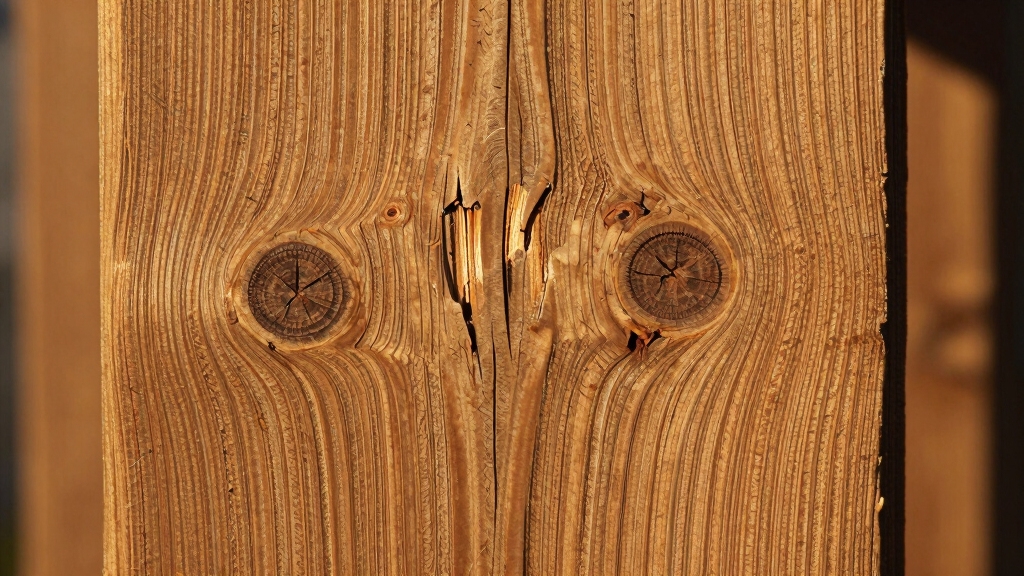
Wood knots are natural branch remnants trapped within a tree’s growth rings, causing circular grain patterns and localized grain deviations.
You’ll find live knots tightly joined to surrounding wood, offering better strength and stability.
In contrast, dead knots loosen and weaken lumber.
Knot size, type, and placement directly affect wood’s mechanical properties and appearance, influencing grading suitability for structural or decorative use.
Understanding these factors helps you select wood that balances performance and aesthetics effectively.
Key Takeaways
- Wood knots are remnants of branches embedded within a tree’s growth rings, causing natural deviations in the wood grain.
- Knots form as annual growth rings curve around branches, creating circular grain patterns distinct from the trunk’s linear grain.
- Live knots form from branches alive during enclosure and remain tight and strong; dead knots come from dead branches and are loose or voids.
- Knot size ranges from small pin knots to large knots over 1½ inches, affecting both wood strength and visual appearance.
- Knots disrupt fiber alignment, weakening tensile and compressive strength and creating stress points that may lead to cracks or splits.
Wood Knots: Definition and Formation
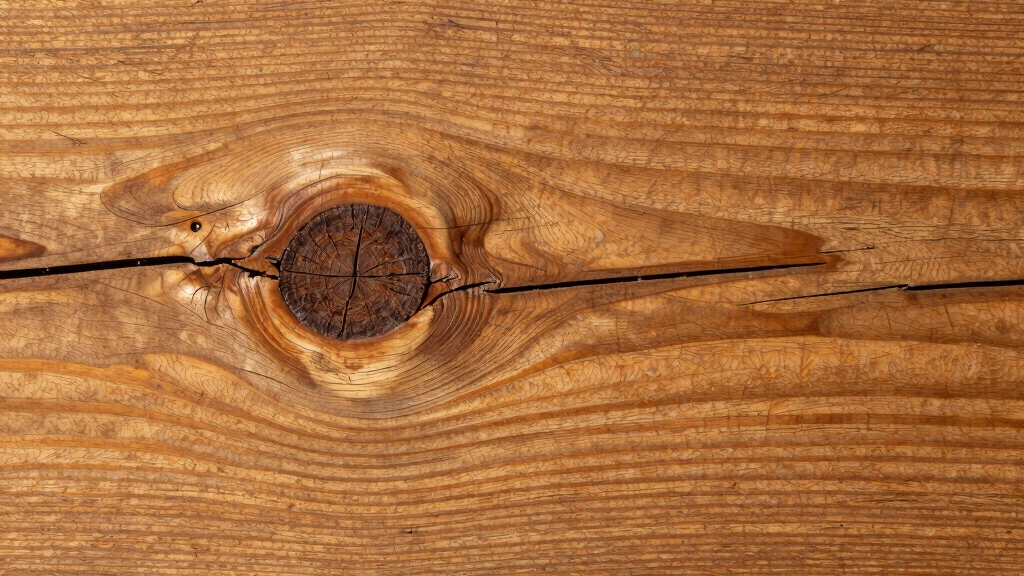
When you examine a piece of lumber, you’ll come across knots. These are the remnants of branches that the tree’s growth layers have enveloped over time.
Knots form as the tree’s annual growth rings surround and incorporate branches, creating circular grain patterns distinct from the trunk’s linear grain. This integration causes irregularities in the wood’s structure.
Knots classify by size, form, and quality, but fundamentally they represent either live knots, which are branches still alive and firmly connected to surrounding wood, or dead knots, where branches died and detached partially or fully before being enclosed by growth.
Environmental factors influence knot frequency. Dense forests lead to fewer knots, while open-grown trees develop more branches, increasing knot occurrence.
Understanding knot formation is essential for evaluating lumber strength and suitability in construction and woodworking. The presence of knots can affect a wood’s mechanical properties, including its hardness and durability.
Types of Wood Knots and Their Characteristics
When it comes to wood knots, it’s important to know the difference between live knots and dead knots. Live knots are those that are still firmly embedded in the wood, and they actually help maintain its strength. On the other hand, dead knots can loosen over time, which can weaken the wood.
Now, let’s talk about knot sizes. They range from tiny pin knots—those are under half an inch—to larger knots that can be over one and a half inches. The size of these knots can really impact lumber grading and how suitable the wood is for different applications.
The presence of knots can also influence the wood’s durability and its resistance to pests, which is an important consideration when choosing between types like cedar and hardwood pest resistance.
Live Versus Dead Knots
Understanding the distinction between live and dead knots is essential for evaluating wood quality and performance.
Live knots form from branches still alive when the tree grows, resulting in tight, intergrown wood fibers that maintain structural integrity. These knots remain firmly fixed, preserving the wood’s strength.
Dead knots originate from branches that died before being enclosed by subsequent growth, often becoming loose or falling out. This leaves holes that weaken the lumber.
While live knots cause minimal grain deviation, dead knots disrupt continuity, reducing tensile and compressive strength. You should prioritize lumber with live knots for structural applications due to their superior mechanical properties.
Recognizing this difference helps you select wood that balances appearance with durability and prevents structural issues caused by loose, unsound knots.
Additionally, the grain structure around knots influences workability and finishing quality, affecting both the aesthetic and mechanical performance of the wood.
Knot Size Classifications
Classifying knot sizes helps you assess wood quality and determine its suitability for various applications.
Knots are categorized by diameter into pin knots (up to ½ inch), small knots (up to ¾ inch), medium knots (up to 1½ inches), and large knots (over 1½ inches).
This size classification directly affects lumber grading and usage decisions.
Smaller knots generally indicate higher-quality lumber, while larger knots often reduce structural integrity.
When evaluating lumber, note that knot size influences not just appearance but also mechanical performance.
Pin and small knots typically have minimal impact, whereas medium and large knots can markedly alter grain flow and weaken the wood.
Accurately identifying knot size guarantees you select the right material for your project’s strength and aesthetic requirements.
For applications requiring high stability and minimal warping, consider wood with tight grain and dimensional stability characteristics.
Knot Structural Impact
Although knots add character to wood, they markedly affect its structural performance. When evaluating wood, you must consider how knot type and placement alter strength.
Live knots, being tightly intergrown, maintain better mechanical integrity. In contrast, dead knots weaken wood and may fall out, creating voids.
You should evaluate the structural impact by:
- Noting grain deviation around knots, which reduces tensile and compressive strength.
- Recognizing that knots near edges compromise board integrity more than central knots.
- Understanding perpendicular forces to grain amplify weakening effects at knots.
- Considering higher knot density lowers load-bearing capacity considerably.
Additionally, the presence of knots affects the wood’s compressive and bending strength, which varies among species and influences overall durability.
How Wood Knot Size Affects Lumber Strength and Appearance?
You know, when it comes to knots in lumber, they’re actually categorized by size—from pin-sized to large. And believe it or not, each size has a different impact on the strength of the wood. Larger knots? Well, they really disrupt the grain continuity, which can lead to reduced load-bearing capacity. This means there’s a higher structural risk, and that’s definitely something to keep in mind.
Now, let’s talk about appearance. The size of the knots doesn’t just affect strength; it also plays a big role in how the wood looks. Larger knots can create inconsistencies in the surface, which can impact the wood’s aesthetic appeal. So, if you’re considering finish work, you’ll want to think carefully about the knot size and how it fits into your overall design. Proper selection and grading of veneer can help minimize the visual impact of knots and improve surface quality.
Knot Size Categories
Knot size plays a pivotal role in determining both the strength and appearance of lumber. It directly influences its suitability for various applications.
When evaluating lumber, you’ll categorize knots based on their diameter to gauge impact:
- Pin Knots: Up to ½ inch; minimal visual and structural effect.
- Small Knots: Up to ¾ inch; slight influence on aesthetics and grading.
- Medium Knots: Up to 1½ inches; noticeable effect on grain deviation and appearance.
- Large Knots: Over 1½ inches; significant impact on lumber integrity and visual uniformity.
Smaller knots tend to preserve both strength and clean appearance. Larger knots can alter grain patterns and reduce usability for high-grade applications.
Proper classification helps optimize lumber selection for your specific structural or decorative needs. European Oak, known for its prominent knots, often displays tighter, wavy grain patterns that contribute to its rustic character and visual texture.
Strength Reduction Effects
When evaluating lumber strength, the size of knots plays a critical role in determining both mechanical performance and visual consistency.
Larger knots cause significant grain deviation, which weakens tensile and compressive strength by interrupting uniform load paths.
Knots near board edges reduce integrity more than centered ones, increasing susceptibility to splitting under stress.
You’ll also find that boards with high knot density bear less load, as cumulative grain irregularities compound weakness.
Live knots retain better mechanical properties since they remain intergrown with surrounding wood, while dead knots often lead to structural defects.
Because of these factors, grading systems limit knot size and frequency for structural lumber, ensuring safety and reliability.
Understanding these effects helps you select lumber appropriate for strength-critical applications while recognizing knot influence on performance.
However, wood’s greater rigidity compared to metal can increase the risk of cracking or structural failure under extreme conditions.
Visual Impact Considerations
Although wood knots can enhance the natural character of lumber, their size markedly affects both the material’s strength and aesthetic appeal.
When you select lumber, consider how knot dimensions influence visual and structural qualities. Large knots often create prominent focal points but reduce load capacity, while smaller knots maintain better uniformity and strength.
Keep these considerations in mind:
- Large knots (over 1-1/2 inches) interrupt grain continuity, weakening boards and drawing attention.
- Medium and small knots introduce subtle texture without severely compromising integrity.
- Knot clustering can create visual imbalance and localized weakness.
- Live, tight knots generally appear more stable and blend better than dead, loose knots.
Proper selection of lumber with regard to knot size is essential, similar to how selecting a drill press with the right motor power and stability ensures optimal performance for specific tasks.
Why Wood Knots Weaken Strength and Durability?
Since wood grain naturally deviates around embedded branches, you’ll find that knots cause localized disruptions in the fiber structure.
Knots form where branches grow, causing natural deviations in wood grain and disrupting fiber alignment.
These interruptions reduce the uniform alignment of wood fibers, which weakens tensile and compressive strength in that area.
When you apply load, stresses concentrate around knots, increasing the likelihood of cracks or splits.
Knots near board edges are especially detrimental, compromising structural integrity more than those centered within the grain.
Additionally, a high density of knots further diminishes load-bearing capacity by interrupting continuous grain flow.
You should note that live knots, being firmly intergrown, retain better mechanical properties than dead knots, which are prone to loosening and decay.
In engineered panels like hardwood plywood, the selection of veneer grades, such as A-grade veneers, helps minimize the impact of knots on strength and surface quality.
How Tree Growth Affects Wood Knot Formation?
Because tree growth patterns directly influence branch development, they play a crucial role in how knots form within lumber.
As you observe a tree’s growth, note these key factors affecting knot formation:
- Branch Density: Open-grown trees promote more branches, increasing knot frequency.
- Growth Rings: Annual rings curve around branches, embedding them and creating knots.
- Branch Vitality: Live branches form tight knots; dead branches lead to loose knots or voids.
- Environmental Competition: Crowded forests suppress branch growth, reducing knot occurrence.
Understanding these factors helps you predict knot size, location, and type during lumber processing.
How Different Wood Knots Influence Lumber Grading?
When you evaluate lumber for grading, the type, size, and placement of knots markedly influence its classification and suitability.
Evaluating lumber grading hinges on knot type, size, and placement, which determine its strength and suitability.
Live or tight knots, being firmly intergrown with wood, maintain better mechanical properties, thereby favoring higher grades.
Dead or loose knots weaken structural integrity, often lowering grade due to potential falling out and voids.
Knot size directly affects grading: pin and small knots have minimal impact, while medium and large knots substantially reduce strength.
Placement matters too; knots near edges weaken boards more than centered ones, and clustered knots reduce uniformity.
Graders prioritize fewer, smaller, sound knots scattered throughout the lumber to guarantee load-bearing capacity.
Understanding these distinctions helps you select lumber with appropriate strength and visual quality for your construction needs.
Picking the Right Wood Knots for Your Project
Choose wood knots carefully to match your project’s structural and aesthetic requirements. Selecting the right knots affects both the strength and look of your woodwork.
Here’s what to take into account:
- Knot Type: Opt for live or intergrown knots if strength is critical. Avoid dead or loose knots that weaken integrity.
- Knot Size: Smaller knots maintain better structural properties. Large knots reduce load capacity and may cause defects.
- Placement: Scattered knots distribute stress better than clustered ones. Edge knots are more detrimental than center-located.
- Project Purpose: For structural elements, prioritize sound, tight knots. For decorative surfaces, aesthetic knot patterns can be embraced despite minor compromises.
Frequently Asked Questions
How Do Wood Knots Affect Wood Finishing and Staining?
Wood knots affect finishing and staining by absorbing finishes unevenly due to their dense, irregular grain.
You’ll notice knots often appear darker or blotchy, which can disrupt uniform color.
To manage this, you should sand knots thoroughly and apply a wood conditioner or sealer before staining.
This prevents excessive absorption and promotes even finish.
Dead knots might also bleed sap, so sealing them properly is vital for a consistent, durable surface.
Can Wood Knots Cause Splitting or Cracking Over Time?
Imagine a zipper stuck halfway. Wood knots act like that, disrupting grain flow.
Yes, knots can cause splitting or cracking over time because they create stress points where grain deviates.
Dead knots especially increase this risk since they’re loosely held. If you’ve seen boards split along knots after drying or under load, it’s due to weakened tensile strength there.
To prevent damage, select lumber with fewer, tight knots for structural uses.
Are Wood Knots More Common in Certain Tree Species?
Yes, you’ll find wood knots more frequently in species that grow with many branches, like pine and fir. Open-grown trees of these species produce more knots due to abundant branch development.
In contrast, species like maple or cherry, especially when grown densely, tend to have fewer knots.
How Do Wood Knots Impact the Cost of Lumber?
You might think knots in wood could cost you an arm and a leg, and in a way, they do!
Knots reduce lumber’s strength and structural value, forcing sellers to charge less for knotty boards.
Live, tight knots cost more because they maintain integrity, while dead, loose knots tank the price.
The bigger and more frequent the knots, the lower the grade, and the cheaper the lumber you’ll pay for.
Can Wood Knots Be Removed or Repaired in Finished Wood Products?
You can’t fully remove knots without damaging the wood, but you can repair or conceal them. Use epoxy resin or wood filler to stabilize dead or loose knots, preventing further deterioration.
For aesthetic fixes, sanding and staining help blend repaired areas. Structural concerns require reinforcement or replacing affected sections. Keep in mind, live knots bonded tightly to the wood are more stable and less likely to need repair.
Select Smarter: Use Wood Knots to Your Advantage
Just like knots in a sailor’s rope tell tales of the sea, wood knots reveal the story of a tree’s growth and resilience.
You’ll want to choose knots wisely, balancing strength and appearance to fit your project’s demands.
Remember, understanding how knots form and affect lumber can steer you clear of weak spots. This ensures your work stands firm, solid as a ship’s hull, yet crafted with the finesse only a skilled hand can achieve.