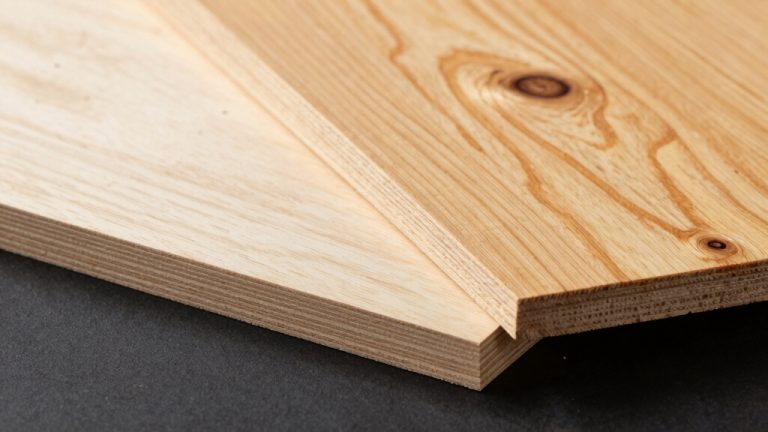

Rift Sawn vs Quarter Sawn White Oak: Choose Your Aesthetic
You’ll find rift sawn white oak offers a linear, tight grain with minimal ray flecks, providing superior dimensional stability and a sleek appearance ideal for modern designs.
Quarter sawn white oak features prominent medullary rays and a varied grain pattern, enhancing durability and moisture resistance, making it perfect for traditional styles.
Rift sawn costs more due to waste and complexity, while quarter sawn is more common and textured. Exploring further reveals how these differences impact your project’s look and performance.

- DECORATIVE KITCHEN HOODS – Made of solid hardwood and thick in-house shop sawn veneer to give you a…
- CUSTOMIZABLE – Choose between maple, walnut, white oak, and a primed, ready to paint option. Each…
- SIMPLE INSTALLATION – Make your dream kitchen come true with this simple to install decorative hood…
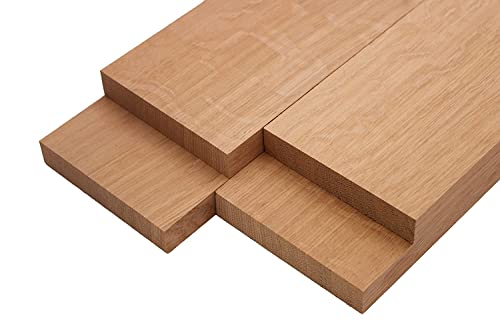
- Beautiful Grain
- Two sides sanded to 3/4″ thickness
- Kiln dried
Key Takeaways
- Rift sawn white oak features a straight, uniform grain with minimal ray flecks, while quarter sawn displays prominent, textured ray flecks and vertical striping.
- Quarter sawn oak offers superior moisture resistance and durability, ideal for flooring, whereas rift sawn provides enhanced dimensional stability for fine furniture.
- Rift sawn wood is rarer and more expensive, costing $14.50–$17.50 per board foot, compared to quarter sawn’s $10.50–$14.50 range.
- Quarter sawn oak responds well to oil-based finishes highlighting figure; rift sawn absorbs stains evenly, favoring clear, water-based finishes.
- Choose rift sawn for modern, minimalist designs and quarter sawn for traditional, rustic aesthetics requiring pronounced grain character.
Rift Sawn or Quarter Sawn White Oak – Difference Table
| Aspect | Rift Sawn White Oak | Quarter Sawn White Oak |
|---|---|---|
| Cutting Method | Cut radially at 30°–60° (ideal ~45°). Produces narrow boards and more waste due to spiral cutting. | Cut perpendicular (60°–90°) to growth rings, slicing from inside out. Produces wider but fewer boards. |
| Grain Pattern | Extremely tight, straight, uniform grain. Minimal figure. | Vertical striping, cathedral grain, and varied figure with more visual movement. |
| Medullary Rays Visibility | Subtle to nearly invisible ray flecks aligned with the grain. | Highly prominent ray flecks—shimmering, ribbon-like patterns. |
| Visual Texture & Aesthetic | Clean, minimalist, contemporary look. Smooth texture with minimal visual noise. | Rich, textured, traditional appearance with distinctive ray flecks and vertical striping. |
| Color & Tone Variation | Low color variation, very consistent tone. | Medium color variation, ray flecks absorb stain differently. |
| Stain Absorption | Even, predictable staining with minimal blotching. | Variable absorption; prone to patchiness—often requires conditioners or gel stains. |
| Finishing Needs | Minimal prep; clear water-based finishes work best. | Needs pre-stain conditioner or gel stain; oil-based finishes deepen ray flecks unpredictably. |
| Dimensional Stability | Very stable; straight grain minimizes warping and shrinkage. Ideal for precise joinery and modern furniture. | Excellent stability; superior moisture resistance and reduced cupping—ideal for flooring. |
| Functional Strength | Hard, consistent surface; great for precision components and clean joinery lines. | Strong and durable; better for high-wear surfaces like floors and stairs. |
| Board Yield | Lower yield, more waste; boards are generally narrower. | Higher yield per quarter; boards are wider. |
| Waste Level | High waste due to angled radial cuts. | Moderate waste; more efficient than rift sawing. |
| Market Availability | Rare; offered by fewer mills; long lead times. | Moderately available; often special-order but easier to source. |
| Best Use Cases | Modern cabinetry, minimalist furniture, architectural millwork, high-precision applications (e.g., musical instruments). | Traditional furniture, Craftsman/Mission style décor, flooring, doors, high-moisture-resistant applications. |
| Design Style Fit | Perfect for modern, minimalist, sleek interiors. | Best for traditional, transitional, rustic interiors. |
| Overall Look | Calm, uniform, linear, elegant. | Dynamic, warm, textured, visually rich. |
Understanding the Cutting Methods of Rift Sawn and Quarter Sawn White Oak

While both rift sawn and quarter sawn white oak start by quartering the log, their cutting approaches diverge considerably to achieve distinct grain orientations.
Quarter sawing slices boards from the inside out, prioritizing the widest boards first, with grain running 75-90 degrees perpendicular to the face. This method helps ensure proper weight distribution in hardwood applications, reducing risks of damage.
Rift sawing cuts boards radially at 30-60 degrees, ideally 45 degrees, aligning grain nearly parallel to board edges. This method results in very stable, straight-grained lumber suitable for contemporary designs.
Both methods require rotating or flipping quarters strategically to maintain these angles. You’ll prefer straight, defect-free logs for consistent results; larger logs complicate cutting and affect board dimensions.
Quarter-sawn boards are wider and fewer, while rift-sawn boards are narrower due to proximity to log edges. Rift sawing generates more waste due to its spiral cutting, demanding specialized expertise for precision and quality.
Comparing Grain Patterns in Rift Sawn and Quarter Sawn White Oak
When it comes to choosing between rift sawn and quarter sawn white oak, the grain patterns really stand out.
With rift sawn white oak, you’ll notice the grain is consistently straight. It has a clean look with minimal visibility of medullary rays, which gives it a very uniform visual texture. This makes it a great option if you’re after a sleek and modern appearance.
The cutting process involves sawing the log radially at approximately 30°–60° to the growth rings, producing that distinct straight, linear grain. Rift sawn boards tend to have less warping and shrinkage due to their grain orientation, making them more dimensionally stable.
On the flip side, quarter sawn white oak is a whole different story. It features those pronounced ray flecks that create a unique, flaky pattern. These flecks break up the linear grain structure, adding a bit of character and warmth.
Quarter sawn wood is known for its cathedral grain and enhanced resistance to moisture compared to flat sawn lumber, which adds to its durability and aesthetic appeal.
Grain Structure Differences
Because the cutting angle relative to the growth rings differs between rift sawn and quarter sawn white oak, you’ll notice distinct grain patterns in each.
Quarter sawn white oak is cut perpendicular to the growth rings (60°–90°), producing varied grain with vertical striping and diverse ray fleck orientations. This perpendicular cut results in more complex grain structure and visible figure variation.
Quarter sawn white oak emphasizes medullary rays and vertical striping, creating a distinctive look. Its fire resistance can be enhanced when treated with fire retardant chemicals, adding safety for wood applications.
Rift sawn white oak, cut at a 30°–60° angle (commonly ~45°), yields a tight, linear grain pattern that’s consistently uniform and minimally figured. The angled cut aligns growth rings nearly parallel to the board face, producing a clean, straight grain with ray flecks running primarily parallel.
You’ll find rift sawn grain uniform throughout, ideal for sleek designs, while quarter sawn boards offer more natural texture and visual interest.
Medullary Rays Visibility
Although both rift sawn and quarter sawn white oak showcase medullary rays, their visibility and prominence vary considerably due to the cutting angle.
Quarter sawn white oak slices perpendicular to the growth rings, producing prominent medullary rays that intersect nearly at right angles to the board surface. This creates multidirectional, shimmering ray flecks visible as ribbon-like patterns, enhancing light reflection and texture.
The cutting angle also influences the visibility of medullary rays and overall grain pattern distinctiveness. To maintain the beauty and durability of quarter sawn wood, it is important to consider wood treatment methods that can protect it from environmental damage.
Conversely, rift sawn white oak cuts at an angle up to 30 degrees off the grain, causing ray flecks to align primarily with the grain and markedly reducing their prominence.
As a result, ray flecks in rift sawn wood range from subtle to nearly invisible, lacking the bold, blocky, or wavy patterns characteristic of quarter sawn white oak’s distinctive medullary rays.
Visual Texture Impact
When selecting between rift sawn and quarter sawn white oak, understanding their distinct grain patterns is essential for achieving the desired visual texture.
Rift sawn white oak offers a highly consistent, linear grain with arrow-straight lines running parallel to the board’s face. It is cut at approximately 45 degrees to the growth rings. This creates a sleek, modern texture with minimal visual noise, ideal for seamless installations and contemporary designs.
Additionally, rift sawn boards tend to produce a straight, elegant grain pattern with fewer flecks compared to other cuts. Proper maintenance, including regular gentle sweeping, helps preserve the wood’s clean appearance over time.
In contrast, quarter sawn white oak features grain lines cut perpendicular to growth rings. This produces straight but sometimes subtly wavy patterns. This variation adds depth and movement, lending richness and character suited to traditional or transitional interiors.
Rift sawn’s uniformity minimizes surface imperfections, while quarter sawn’s unique grain details highlight individuality and visual interest in cabinetry and furniture.
Visual Characteristics and Aesthetic Differences
Since the visual appeal of white oak largely depends on its sawing method, understanding the grain pattern and texture differences between rift sawn and quarter sawn boards is essential.
Rift sawn oak shows a uniform, tight, straight grain without medullary ray flecks, creating a clean, minimalist look. This cut is known for its minimal ray flecking, providing a subtle organic texture ideal for contemporary interiors.
Proper maintenance is necessary to preserve its appearance, especially when exposed to construction dust like drywall particles that can affect hardwood floor finishes.
Quarter sawn oak reveals perpendicular cuts to growth rings, exposing distinctive ray flecks and vertical striping that add depth and shimmer.
Key differences include:
- Rift sawn grain is consistently linear; quarter sawn shows varied grain with pronounced ray flecks.
- Quarter sawn’s texture features ribbon-like shimmer; rift sawn has subtle, smooth texture.
- Color in quarter sawn varies due to fleck absorption; rift sawn offers uniform tone.
- Quarter sawn suits traditional aesthetics; rift sawn complements modern, clean designs.
Staining and Finishing Considerations
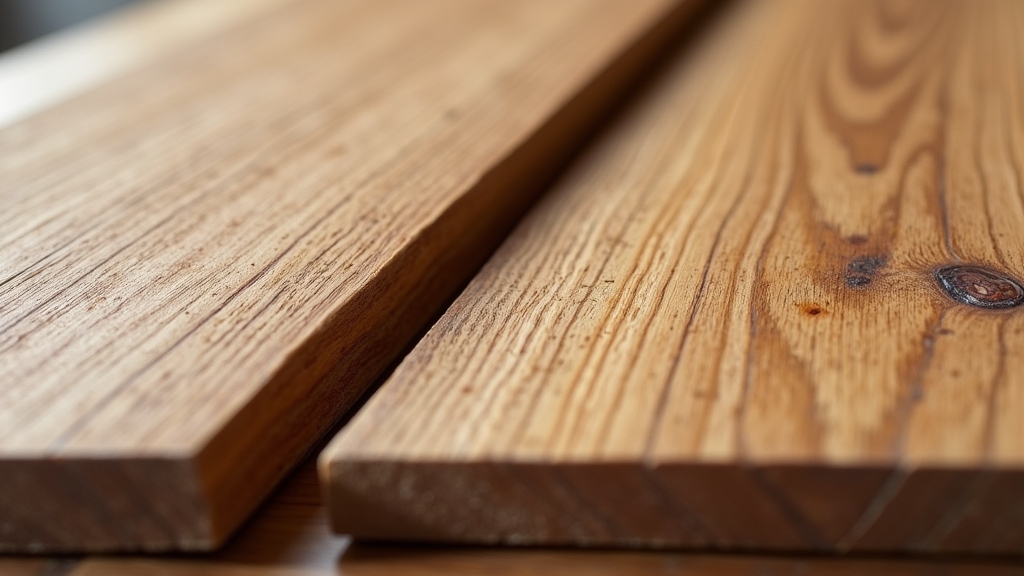
Understanding how rift sawn and quarter sawn white oak absorb stain and respond to finishing techniques is essential for achieving your desired aesthetic and durability. Selecting the appropriate depth for cabinetry can also influence the overall functionality and appearance of your wood pieces, especially in bathroom settings with specific space considerations.
Rift sawn’s uniform grain absorbs stain evenly, while quarter sawn’s medullary rays cause variable absorption. This variability requires pre-stain conditioners or gel stains for balance. The wood’s distinctive characteristics are enhanced with lighter stains like Natural, Buff, Sable, and Sparrow.
Clear water-based finishes preserve natural tones in both cuts. In contrast, oil-based finishes deepen color but can darken quarter sawn’s ray fleck unevenly. Proper finishing also involves considering accessibility and maintenance to ensure long-lasting beauty and usability within the cabinetry’s standard depth ranges.
| Aspect | Rift Sawn White Oak | Quarter Sawn White Oak |
|---|---|---|
| Grain Pattern | Tight, straight | Prominent medullary rays |
| Stain Absorption | Consistent, minimal blotching | Variable, may cause patchiness |
| Finish Preparation | Minimal | Requires pre-stain conditioners |
| Finish Type Preference | Clear, water-based | Gel stains, wipe-on stains |
| Color Variation | Low | Medium, with ray fleck highlights |
Functional Benefits and Applications
Although both rift sawn and quarter sawn white oak offer enhanced stability compared to plain sawn lumber, their distinct grain orientations deliver specific functional advantages.
Rift sawn wood’s consistent grain angle (30°–60°) minimizes warping, making it ideal for precision furniture and cabinetry where linear grain aids joinery. This sawing method also results in minimal ray fleck, which appeals to modern design aesthetics. For installations involving these woods alongside other materials, using the proper transition strips can ensure a smooth interface.
Quarter sawn white oak’s perpendicular cut enhances moisture resistance and showcases medullary rays, which are favored in flooring and traditional furniture. Its dimensional traits make it compatible with various floor transition solutions to accommodate slight height differences between wood and tile.
Key benefits include:
- Rift sawn provides superior dimensional stability for high-precision applications like musical instruments.
- Quarter sawn balances durability and decorative figure, suited for rustic cabinetry and flooring.
- Both cuts yield denser, harder boards than plain sawn, increasing wear resistance.
- Rift sawn’s uniform grain supports predictable finishing; quarter sawn accepts varied stains better.
Price Differences and Market Availability

When selecting between rift sawn and quarter sawn white oak, you’ll notice significant price disparities driven by their distinct production processes and market availability. It is important to consider market timing and demand fluctuations when planning your purchase to ensure availability.
Rift sawn commands the highest price, typically $14.50 to $17.50 per board foot, due to its labor-intensive milling and substantial waste, resulting in low yield.
Quarter sawn white oak costs less, around $10.50 to $14.50 per board foot, but still exceeds plain sawn pricing by 20% to 25%. The cutting technique also influences the wood’s stability and appearance, factors that contribute to its market value.
Market availability reflects these factors: rift sawn is rare, offered by few mills with longer lead times, while quarter sawn is moderately available but often requires special orders.
Regional variations further influence pricing, with higher costs in areas where supply is limited. You’ll find many suppliers list quarter sawn but not rift sawn white oak.
Choosing the Right Cut for Your Project
When you’re trying to decide between rift sawn and quarter sawn white oak, it’s really important to think about a few key factors. First off, consider the design style of your project. If you’re leaning towards a modern or minimalist look, rift sawn might be the way to go. It usually has a consistent grain that fits perfectly with those styles.
On the other hand, if your project is more traditional, quarter sawn can really shine with its unique ray fleck patterns. Keep in mind that both rift and quarter sawn white oak cuts have limited supply and generally cost 25-30% more than plain sawn due to their rarity.
Next, don’t forget about your budget and the availability of the wood. Sometimes, the cost can play a big role in what you ultimately choose.
Also, think about the functional requirements of your project. Do you need the wood to be particularly stable or have a uniform finish? Making sure that the cut aligns with your performance needs is crucial in the decision-making process.
Project Style Compatibility
Selecting the appropriate cut of white oak hinges largely on your project’s stylistic goals, as each sawing method imparts distinct visual and structural qualities.
Quarter sawn white oak suits classic and transitional designs with its pronounced ray flecks and ribbon grain. It offers rich visual depth and dimensional stability.
Rift sawn white oak excels in modern, minimalist spaces due to its tight, straight grain and uniform texture. It provides a clean and cohesive appearance.
Consider these factors when choosing:
- Style: Traditional favors quarter sawn; modern aligns with rift sawn.
- Grain Texture: Quarter sawn shows prominent ray flecks; rift sawn is linear and subtle.
- Visual Complexity: Quarter sawn adds movement; rift sawn ensures calm uniformity.
- Finish Compatibility: Quarter sawn highlights with lighter stains; rift sawn accepts even stain absorption.
To maintain the beauty and durability of your white oak flooring, regular cleaning and prompt care for any stains or damage, such as dark spots on hardwood floors, is essential.
Budget and Availability
Beyond stylistic considerations, budget and availability play a significant role in deciding between rift sawn and quarter sawn white oak for your project.
Rift sawn white oak demands a premium, costing roughly 25 to 30% more than plain sawn due to its labor-intensive milling and high waste from cutting at tight 30 to 60-degree angles.
Quarter sawn is somewhat less expensive but still pricier than plain sawn, reflecting its complex quartering process. Both cuts face limited availability caused by specialized milling, low yield, and fewer mills capable of production. This often results in longer lead times and regional price fluctuations.
Prices vary significantly based on location, with eastern coast and Midwest generally higher regional price disparities. Rift sawn’s higher waste volume increases raw material costs, impacting budgeting.
To control expenses, consider bulk purchasing quarter sawn lumber when possible, as discounts may apply. Also, plan for potential supply delays.
Functional Performance Needs
Although both rift sawn and quarter sawn white oak offer enhanced strength compared to plain sawn cuts, your choice should hinge on specific functional requirements such as dimensional stability, durability, and visual consistency.
Consider these factors:
- Dimensional Stability: Quarter sawn excels in resisting warping and shrinkage due to perpendicular growth rings. This makes it ideal for flooring and cabinetry. Rift sawn provides consistent stability with straight grain at 30–60° angles, minimizing distortion.
- Durability: Rift sawn’s tight grain yields a harder surface, enhancing longevity. Quarter sawn better resists cupping and twisting in humid conditions.
- Visual Consistency: Rift sawn delivers uniform, straight grain for modern aesthetics. Quarter sawn offers medullary rays, creating intricate patterns favored in traditional styles.
- Finish Absorption: Rift sawn stains evenly. Quarter sawn requires careful stain selection to avoid blotching due to grain variation. Choose based on your project’s stability and visual demands.
Frequently Asked Questions
How Does Humidity Affect Rift Sawn Versus Quarter Sawn White Oak?
Humidity affects both rift sawn and quarter sawn white oak by causing minimal dimensional changes, primarily in thickness rather than width.
You’ll find rift sawn wood responds with more consistent shrinkage and swelling due to its radial grain orientation. In contrast, quarter sawn’s perpendicular grain limits width-wise expansion and contraction.
Both cuts reduce risks of cupping or warping, but you must guarantee proper drying and humidity control to maintain their superior stability in fluctuating environments.
Can Rift Sawn White Oak Be Used Outdoors Effectively?
You might think rift sawn white oak isn’t ideal outdoors due to cost, but it’s actually excellent for exterior use. Its dense cellular structure filled with tyloses blocks moisture, preventing warping, rot, and insect damage.
The clean, straight grain enhances stability, while its natural water resistance suits decks, siding, and furniture. Plus, it accepts penetrating finishes well, ensuring long-lasting protection and durability in harsh weather conditions.
Are There Environmental Impacts Specific to Rift Sawn or Quarter Sawn Oak?
Yes, rift sawn oak creates about 50% more wood waste than quarter sawn, increasing raw material demand and environmental footprint.
You’ll use more energy processing rift sawn lumber due to precise cuts, possibly raising water and chemical use for waste treatment. Quarter sawn produces less waste but still more than plain sawn.
Both maintain durability, reducing preservative needs, but efficient use of all wood and sustainable forestry practices remain vital to minimize ecological impacts.
What Tools Are Best for Working With Rift Sawn White Oak?
Taming rift sawn white oak is like sculpting granite; you’ll need precision tools.
Use a sharp table saw at slow feed rates to avoid burning. A joiner-planer combo with helical cutters guarantees smooth, even surfaces.
Routers require sharp bits and shallow passes to prevent splintering. Keep a miter saw with fresh blades handy for angled cuts.
For joinery, a drill press and sharp chisels provide accuracy and clean edges.
How Does the Drying Time Compare Between Rift Sawn and Quarter Sawn Oak?
You’ll find that drying times for rift sawn and quarter sawn oak are nearly identical, both requiring about 20% longer than flat-sawn oak.
This similarity stems from their radial grain orientation, which demands slower moisture extraction to avoid internal stress and checking.
To guarantee quality, you’ll need to follow specialized drying protocols, including mild kiln schedules and extended air seasoning, to manage moisture loss effectively and maintain dimensional stability.
Medullary Rays or Modern Minimalism? Choose Your Aesthetic
When choosing between rift sawn and quarter sawn white oak, think of your project as a finely tuned instrument. Each cut offers distinct resonance. Rift sawn delivers clean, linear grain for a modern, uniform look. Quarter sawn reveals medullary rays, adding depth and texture.
Consider their staining response, stability, and cost like a craftsman selecting tools. Your choice shapes not just appearance but performance. Ensure your work stands the test of time with precision and style.

- REAL WHITE OAK RIFT CUT WOOD VENEER SHEET – ready to stain, real wood veneer sheets which are…
- PAPER BACKED FOR EASY HANDLING – our white oak veneer sheets are 10 mil paper backed to help you…
- EASY TO USE CABINET VENEER SHEETS – these wood veneer sheets for cabinets are ready for you to…

- Beautiful Grain
- Two sides sanded to 3/4″ thickness
- Kiln dried
Last update on 2026-04-04 / Affiliate links / Images from Amazon Product Advertising API