Mold vs Water Stain: How to Tell the Difference
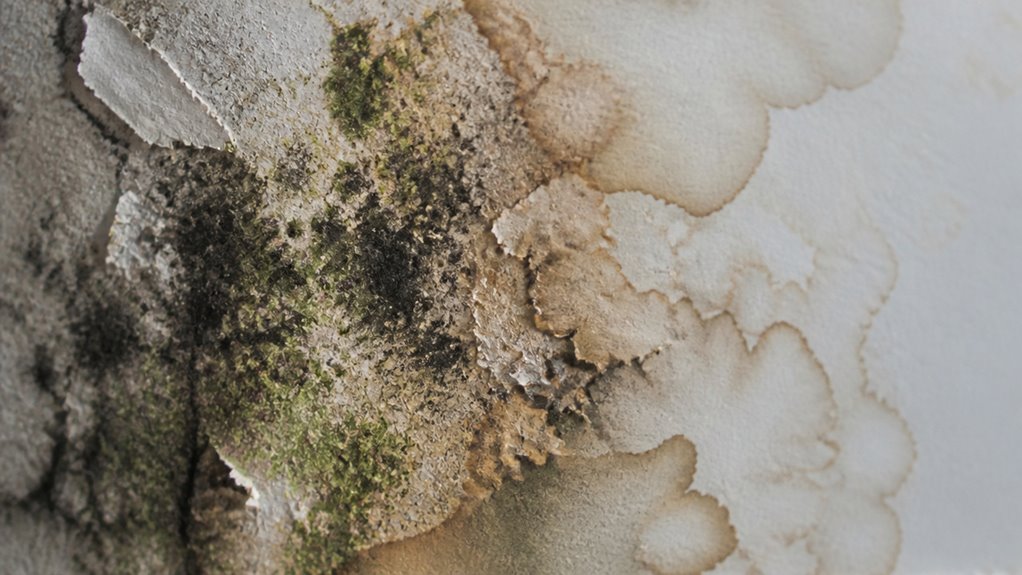
You can tell mold from water stains by texture, color, and smell. Mold is a living fungal growth, often fuzzy, raised, and smears when wiped. It appears in black, green, or gray hues and smells musty.
Water stains are flat, dry discolorations in yellow, tan, or brown, without texture or odor. Mold needs persistent moisture to grow, while stains result from past water intrusion.
Identifying these differences helps you address health risks and structural damage properly. Explore further to learn about detection and prevention.
Key Takeaways
- Mold is living fungal growth with fuzzy or textured appearance, while water stains are flat, nonliving discolorations without texture.
- Mold often appears black, green, or gray with a musty odor; water stains tend to be yellow, tan, or brown and odorless.
- Mold growth requires sustained moisture and organic material; water stains result from transient wetting with no ongoing biological activity.
- Mold smears or leaves residue when wiped; water stains usually do not transfer or smear on contact.
- Mold poses health and structural risks and needs remediation; water stains indicate leaks but do not inherently cause biological damage.
Mold vs Water Stain: Key Differences in Appearance, Causes, and Risks
| Comparison Factors | Mold | Water Stain |
|---|---|---|
| Definition | Living fungal growth developing on damp materials | Nonliving discoloration caused by water exposure |
| Typical Appearance | Irregular, patchy, or clustered growth | Flat, ring-shaped, streaked, or diffuse marks |
| Common Colors | Black, green, gray, white, or brown | Yellow, tan, brown, or orange |
| Surface Texture | May appear fuzzy, raised, powdery, or slimy | Usually flat and smooth |
| Odor | Often produces a musty or earthy smell | Usually odorless when dry |
| Primary Cause | Moisture supporting fungal growth | Water intrusion, condensation, or mineral residue |
| Moisture Requirements | Needs sufficient moisture to develop and spread | May remain visible after the surface dries |
| Growth Behavior | Can spread across damp surfaces | Does not grow biologically, but may expand with additional moisture |
| Common Locations | Bathrooms, basements, drywall, wood, and hidden wall cavities | Ceilings, walls, window areas, and surfaces near plumbing |
| Surface Residue | May leave powdery or smeared residue when disturbed | Usually does not transfer like fungal growth |
| Health Concerns | May trigger allergic reactions and respiratory irritation | Staining itself is not fungal, but hidden moisture or mold may be present |
| Property Damage | May contribute to material deterioration | May indicate leaks, weakened materials, or structural moisture damage |
| Recommended Action | Address moisture and arrange appropriate mold cleanup | Locate the moisture source, dry the area, and repair damage |
| Professional Inspection | Important for large, recurring, or concealed mold problems | Recommended for persistent leaks or suspected hidden damage |
What Mold and Water Stains Really Are?

Understanding the nature of mold and water stains is essential for accurate identification and remediation.
Mold is a living fungal growth thriving on organic materials like drywall, wood, or fabric, where moisture persists. It usually appears within 24 to 48 hours under suitable conditions.
In contrast, water stains are nonliving discolorations left behind after water intrusion dries. They show as flat, smooth marks rather than textured growth.
Mold commonly presents raised, fuzzy, or powdery textures with varied colors. Water stains tend to be uniform yellow, tan, or brown patches, often ring-shaped.
Mold often signals ongoing moisture problems, whereas water stains may persist after leaks stop.
You’ll find mold on porous materials and in damp locations, with odor and texture providing key clues for differentiation.
Efflorescence, a common issue on masonry surfaces, is a nonliving mineral salt deposit that differs visually and tactically from mold.
Why Moisture Causes Mold but Not All Stains?
Although moisture plays a critical role in both mold growth and water staining, it triggers fundamentally different processes.
Mold requires sustained dampness to support living fungal colonies, while water stains result from water drying and leaving behind minerals or organic residues.
When moisture remains long enough on porous, organic surfaces like drywall or wood, mold spores germinate and proliferate, metabolizing organic material.
Conversely, water stains appear when liquid evaporates, depositing nonliving discoloration without biological activity.
You should understand that mold growth depends on continuous moisture presence, temperature, and nutrient availability.
Stains merely indicate past or intermittent water exposure.
Consequently, moisture initiates mold only under persistent conditions, while stains form from transient wetting events.
Recognizing this distinction helps you assess moisture problems accurately and prioritize remediation efforts effectively.
Proper ventilation and humidity control are essential to prevent mold growth and recurrence in moisture-prone areas.
How to Spot Mold by Texture, Color, and Smell?
When you examine a suspected mold spot, focus on texture, color, and smell to distinguish it from a water stain.
Mold often appears raised, fuzzy, powdery, or slimy, whereas water stains remain flat and smooth.
With respect to color, mold can be black, green, gray, white, or brown, varying by species and substrate.
Water stains typically show yellow, tan, brown, or orange hues.
Smell provides a critical clue: a musty, earthy odor usually indicates mold presence, unlike the neutral scent of dry water stains.
Additionally, mold may smear or leave residue when wiped, while water stains generally do not.
Since mold thrives above 60% humidity, monitoring and controlling basement humidity levels is essential to prevent growth.
How to Identify Water Stains by Shape and Pattern?
By examining the shape and pattern of discoloration, you can distinguish water stains from other surface marks. Water stains typically form irregular, ring-like, or diffuse shapes, often reflecting the path water took during intrusion. They remain flat and lack texture, with edges that may fade gradually. Recognizing these patterns helps you differentiate water stains from biological growths like mold. Proper humidity control and moisture management are essential to prevent water stains from leading to mold growth on hardwood floors.
| Pattern Type | Shape Characteristic | Common Appearance |
|---|---|---|
| Ring-shaped | Circular or oval rings | Yellow, tan, or brown hues |
| Diffuse | Irregular, spreading | Faded edges, no sharp borders |
| Linear or streaked | Following water flow | Tracks along seams or joints |
Identifying these patterns accurately aids in evaluating moisture damage without confusing it with mold growth.
Where Mold and Water Stains Usually Show Up?
You’ll often find mold growing on porous materials in damp areas like bathrooms, basements, and ceilings beneath leaks. It’s pretty common for these places to be a breeding ground for mold, right?
Now, when it comes to water stains, they usually pop up on surfaces where water has intruded—think walls, ceilings, and around plumbing fixtures. It’s like a telltale sign that something’s not quite right.
But here’s the kicker: both mold and water stains can hide behind wallpaper, baseboards, or even inside walls. This makes detection a bit tricky, so you’ll want to do a thorough inspection. Better safe than sorry!
Mold can develop on wet carpet within 24–48 hours if moisture persists, making prompt detection and drying crucial.
Common Mold Locations
Mold and water stains frequently appear in areas prone to moisture accumulation, such as bathrooms, basements, and ceilings beneath roofs or plumbing lines.
Mold growth typically occurs on porous materials like drywall, wood framing, and fabric surfaces where moisture persists for 24 to 48 hours or more.
You’ll often find mold behind wallpaper, under baseboards, inside wall cavities, and near HVAC systems where humidity is elevated.
Mold colonies form irregular patches with varying colors and textures, indicating active fungal growth.
Since mold requires organic substrates and sustained dampness, areas with condensation, leaks, or poor ventilation are especially vulnerable.
You should inspect hidden spaces adjacent to visible stains, as mold can develop out of sight.
Identifying mold accurately involves evaluating texture, odor, and moisture conditions, not just surface discoloration.
Maintaining humidity below 50% and ensuring proper ventilation are crucial steps in preventing mold growth.
Typical Water Stain Areas
Water stains typically appear in locations where moisture accumulates or leaks occur, signaling potential water intrusion or past dampness. You’ll often find these stains where water pools, evaporates, or seeps through structural elements. Common areas include ceilings beneath roofs, walls adjacent to plumbing, and floors near water sources. These stains are usually flat, uniform in color, and follow the path of water movement.
| Location | Typical Cause | Visual Characteristics |
|---|---|---|
| Ceiling | Roof leaks | Yellow to brown, ring-shaped |
| Wall near pipes | Plumbing leaks | Tan or orange, linear patterns |
| Basement floor | Groundwater seepage | Diffuse, irregular discoloration |
| Window sills | Condensation buildup | Light brown, localized patches |
Identifying these areas helps pinpoint moisture sources before mold develops. Proper room ventilation and protective measures, such as wearing respirators and gloves, are essential when addressing moisture-related damage to avoid health risks.
Hidden Problem Spots
Although some moisture issues are visible, many problem spots remain hidden behind surfaces or in hard-to-reach areas. This allows mold and water stains to develop unnoticed.
Common hidden locations include behind wallpaper, inside wall cavities, beneath baseboards, and under flooring materials where moisture can accumulate without detection.
You’ll also want to check ceiling spaces below roofs or plumbing lines, as leaks often manifest in these confined areas. Mold thrives on porous materials like drywall and wood in these spots, especially if moisture persists.
Water stains may appear here as discoloration without texture change, but mold growth often shows raised or fuzzy patterns. Inspecting these concealed zones requires careful removal of coverings or professional tools to assess moisture presence and microbial activity accurately.
Consistent humidity control and monitoring are essential to prevent moisture buildup in these hidden areas.
How to Confirm If a Stain Is Mold or Just Residue?
Distinguishing between fungal growth and residual staining requires careful observation and testing.
Careful observation and testing are essential to differentiate between fungal growth and residual staining.
You should examine texture closely: mold often appears raised, fuzzy, or powdery, while residue stays flat and smooth.
Check the pattern; mold spreads irregularly and patchily, whereas water stains tend to be uniform or ring-shaped.
Assess color variations; mold may be black, green, or gray, contrasting with typical yellow, tan, or brown water stains.
Smell the area; musty odors typically indicate mold presence.
Monitor moisture conditions, as ongoing dampness promotes mold growth.
Perform a wipe test carefully: mold may smear or leave residue on your cloth, while water stains generally won’t transfer.
Remember, thorough inspection includes hidden areas and moisture history, as surface appearance alone can be misleading.
When uncertain, seek professional evaluation to confirm the diagnosis.
Regularly inspecting your bathroom every three months helps catch early mold growth and prevents extensive damage, as described in inspection frequency guidelines.
Simple Tests to Identify Mold vs Water Stains at Home
To figure out whether a discoloration is mold or just a water stain, you can run several simple tests at home that focus on texture, smell, and transferability.
First, gently touch the spot: mold often feels raised, fuzzy, or slimy, while water stains are flat and smooth.
Next, perform a wipe test using a damp cloth; mold may smear or leave residue, but water stains usually don’t transfer.
Finally, use your nose—mold typically emits a musty, earthy odor, whereas water stains lack scent.
Combine these observations with visual clues, like irregular versus uniform patterns.
These straightforward tests help differentiate mold’s biological growth from inert water residue, guiding you on whether further professional evaluation is necessary.
For persistent or widespread discoloration, it is important to consider prompt water mitigation to prevent further mold growth and structural damage.
Risks of Ignoring Water Stains and Hidden Mold
Ignoring hidden mold can lead to some serious health concerns. You see, those spores can really mess with your respiratory system and even cause allergic reactions.
Plus, if you let it slide, mold can weaken materials like drywall and wood, leading to structural damage over time.
So, it’s really important to tackle those water stains as soon as you spot them. Taking action quickly helps prevent these potential hazards from sneaking up on you.
After all, addressing the issue early can save you a lot of trouble down the road!
Health Hazards
Although water stains might seem harmless at first glance, ignoring them can expose you to significant health risks due to hidden mold growth. Mold spores released into the air can trigger allergic reactions, respiratory issues, and aggravate asthma. You may not see mold immediately, but its presence often correlates with prolonged moisture exposure, increasing the risk of airborne contaminants.
Ignoring water stains and potential mold can result in persistent respiratory problems caused by inhaling mold spores and mycotoxins. It can also increase susceptibility to infections for immunocompromised individuals. Chronic irritation of eyes, skin, and mucous membranes may occur from prolonged exposure.
Addressing water stains promptly helps prevent mold proliferation and minimizes health hazards associated with indoor air quality degradation.
Structural Damage
Health risks linked to mold exposure often coincide with structural issues caused by prolonged moisture intrusion.
When you ignore water stains or hidden mold, you risk compromising the integrity of building materials like drywall, wood framing, and insulation.
Persistent moisture softens wood, promoting rot and weakening load-bearing components. Mold growth accelerates material degradation by breaking down organic substrates, which can lead to costly repairs or structural failure.
Additionally, water stains often indicate ongoing leaks that may damage electrical wiring, causing safety hazards.
You should address water stains promptly, as they signal moisture problems that foster hidden mold growth and structural deterioration.
Ignoring these signs risks escalating damage, increasing remediation complexity, and ultimately undermining your property’s safety and value.
Professional inspection helps identify hidden issues before they worsen.
When to Call a Professional for Mold or Water Damage?
When moisture damage covers a large area or recurs despite your efforts to control it, calling a professional becomes essential.
Professionals can accurately assess the extent of mold growth or water damage, especially when contamination is hidden behind walls or under floors.
You should contact an expert if you encounter:
- Mold covering more than 10 square feet, indicating extensive infestation.
- Persistent moisture problems causing recurring stains or musty odors despite repairs.
- Structural weakening or visible deterioration around affected areas, raising safety concerns.
A professional uses specialized tools like moisture meters and infrared cameras to detect hidden damage. They employ industry-standard remediation techniques.
Timely intervention prevents further material degradation and reduces health risks associated with prolonged mold exposure.
Don’t delay professional evaluation when damage is widespread, recurrent, or structurally significant.
Preventing Mold and Water Stains: What You Can Do
Control indoor humidity and promptly address leaks to prevent mold growth and water stains.
Maintain relative humidity below 60% using dehumidifiers or ventilation systems, especially in basements and bathrooms.
Inspect plumbing regularly for leaks and repair them immediately to eliminate persistent moisture sources.
Use waterproofing sealants on vulnerable surfaces and ensure proper drainage around your property.
Clean and dry wet materials within 24 to 48 hours to avoid mold colonization.
Monitor air circulation to reduce condensation on walls and ceilings.
When remodeling or repairing, select mold-resistant materials such as treated drywall or paint.
Regularly check hidden spaces behind baseboards and wallpaper for early moisture signs.
Consistent maintenance and moisture control are vital to mitigating mold proliferation and preventing water stain recurrence in your indoor environment.
Frequently Asked Questions
Can Mold Cause Health Problems Even if Not Visible?
Yes, mold can cause health problems even if you can’t see it.
Hidden mold often grows behind walls, under flooring, or inside insulation, releasing spores into the air you breathe.
These spores may trigger allergic reactions, respiratory issues, or worsen asthma symptoms.
Since mold can grow within 24 to 48 hours under moisture, it’s important to address any dampness promptly, even when no visible fungal growth is apparent.
How Long Does It Take for Mold to Grow After Water Damage?
Mold can begin growing within 24 to 48 hours after water damage if moisture levels remain high and conditions are suitable.
You’ll find mold developing faster on porous materials like drywall, wood, or fabric where water has soaked in.
To prevent rapid growth, you need to dry affected areas thoroughly and control humidity quickly.
Ignoring moisture can allow mold colonies to establish, increasing health risks and structural damage over time.
Are Certain Paints or Coatings Effective Against Mold Growth?
Yes, certain paints or coatings contain antimicrobial agents that inhibit mold growth on surfaces.
You should look for mold-resistant or mildew-resistant paints, often formulated with biocides to prevent fungal spores from thriving.
These coatings help protect porous materials like drywall and wood, especially in high-moisture areas.
However, they don’t eliminate underlying moisture problems, so you must address leaks or dampness first to guarantee long-term mold control.
Can Mold Return After Professional Removal?
Yes, mold can return after professional removal if the moisture problem isn’t fully resolved.
You should make certain all water sources, leaks, or humidity issues are addressed; otherwise, mold spores can recolonize the area.
Professionals focus on cleaning and removing contaminated materials, but ongoing dampness encourages regrowth.
Monitoring humidity levels below 60% and maintaining proper ventilation help prevent recurrence.
Regular inspections also catch early signs before mold reestablishes itself.
Does Humidity Alone Cause Mold Without Water Leaks?
Yes, humidity alone can cause mold without water leaks if it stays consistently above 60% and the temperature supports fungal growth.
You’ll find mold developing on organic materials as moisture condenses from humid air, especially in poorly ventilated spaces.
Without visible leaks, mold can still form due to prolonged dampness.
Controlling humidity and improving airflow are essential to prevent mold growth even when water intrusion isn’t evident.
Mold vs Water Stain: Know the Signs and Take Action
You might spot a water stain after a roof leak, but if you notice fuzzy black spots and a musty odor nearby, that’s mold requiring immediate action.
Ignoring these signs can lead to structural damage and health risks.
By understanding texture, color, and smell differences, you’ll accurately identify the problem.
For example, a homeowner mistook mold for a stain, delaying treatment and facing costly repairs.
Always act promptly and consider professional help.