Machine Screw vs Wood Screw: Which Should You Use?
When choosing between machine screws and wood screws, focus on thread design and tip shape.
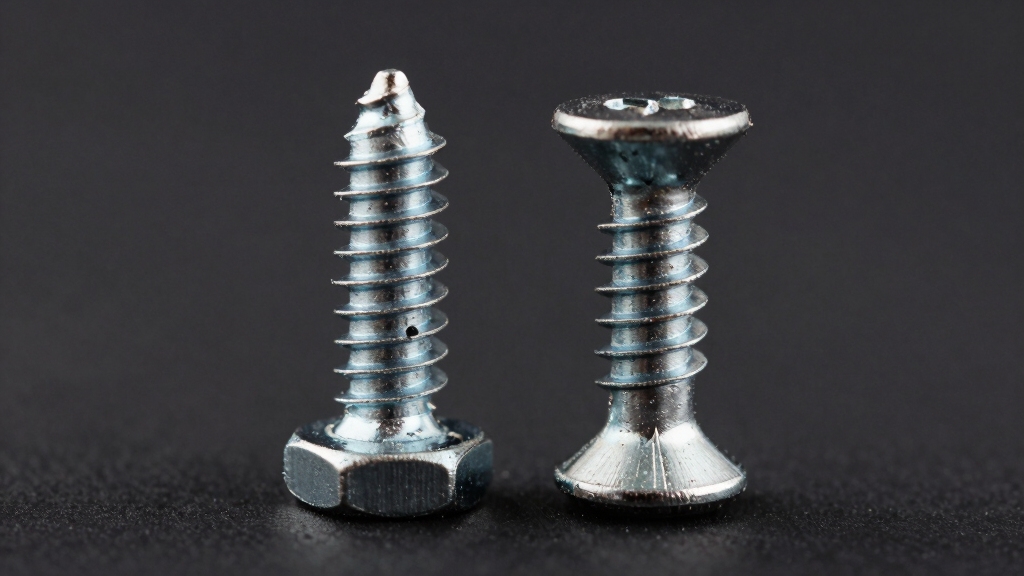
Wood screws have coarse, tapered threads and sharp points to grip wood fibers. They often feature a partially unthreaded shank to prevent splitting.
Machine screws have fine, uniform threads and blunt tips, requiring predrilled, tapped holes or nuts for metal or plastic.
Material compatibility and installation methods differ markedly.
Understanding these distinctions guarantees secure fastening and joint integrity.
Explore further to optimize your screw selection and usage.

- Premium Material: Our mixed round head cross head screws and nuts and flat washers are made of…
- Easy to Use: These assorted nuts and bolts and washers sets are easy to use. Our screw thread is…
- Easy to Store: All M3 M4 M5 M6 cross pan head machine screws and bolts and nuts and washers are…
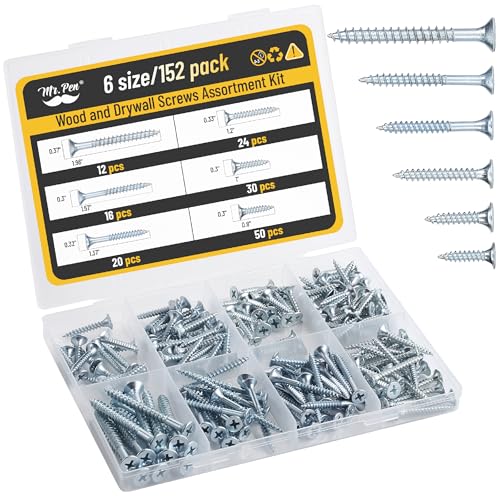
- Total package quantity of 152 pcs consist 50 pcs x 20mm, 30 pcs x 25mm, 24 pcs x 30mm, 20 pcs x…
- Made of galvanized iron, corrosion-resistant, durable and steady.
- Ideal for outdoor and indoor woodworking such as build benches and tables, maintain shelves, fence…
Key Takeaways
- Wood screws have coarse, tapered threads and sharp points for gripping wood fibers, while machine screws have fine, uniform threads and blunt tips for metal or plastic.
- Wood screws often feature partially unthreaded, tapered shanks to prevent wood splitting; machine screws are fully threaded with straight shanks for precise alignment.
- Machine screws require predrilled, tapped holes or nuts and usually use washers for load distribution, unlike wood screws which can self-tap in softwood.
- Wood screw heads are designed for flush or decorative finishes, whereas machine screw heads prioritize mechanical strength and load spreading with washers.
- Using the wrong screw type compromises joint strength: wood screws fail in metal, and machine screws lack grip in wood.
Machine Screw vs Wood Screw Comparison Table
| Feature | Machine Screw | Wood Screw |
|---|---|---|
| Thread Design | Has fine, uniform threads designed for tapped holes, nuts, or threaded inserts. | Has coarse, tapered threads that bite into wood fibers for strong grip. |
| Tip Shape | Usually has a blunt tip, so it needs a predrilled or tapped hole. | Usually has a sharp pointed tip that can enter wood more easily. |
| Shank Style | Often fully threaded with a straight shank for precise mechanical fastening. | Often has a partially unthreaded shank to help pull wood pieces together. |
| Best Material Use | Best for metal, plastic, machinery, equipment, and threaded assemblies. | Best for wood, plywood, furniture, cabinets, framing, and decks. |
| Installation Method | Requires a nut, washer, threaded insert, or tapped hole for proper holding power. | Can often be driven into softwood, but pilot holes help prevent splitting in hardwood. |
| Holding Strength | Provides strong clamping force when used with matching threads or nuts. | Provides strong grip by locking into wood grain and fibers. |
| Head Style | Common heads include hex, socket, pan, flat, and round for torque and strength. | Common heads include flat, bugle, oval, and countersunk for cleaner wood finishes. |
| Common Mistake | Using it directly in wood may create a weak hold without proper threading support. | Using it in metal may cause poor grip, stripping, or joint failure. |
| Best Choice | Choose it for metal-to-metal or mechanical assemblies. | Choose it for wood-to-wood fastening and woodworking projects. |
How to Identify Machine Screws vs Wood Screws?

When you want to tell machine screws apart from wood screws, focus on their thread design and tip shape.
Identify machine and wood screws by examining their thread patterns and tip shapes closely.
Wood screws have coarse, widely spaced threads that taper along the shank, enabling them to cut into wood fibers without splitting. Their sharp, pointed tips allow direct penetration into wood, often eliminating the need for predrilling in softwoods.
In contrast, machine screws feature fine, uniformly spaced threads running the full shank length, designed to fit into tapped holes or secure with nuts. Their blunt tips require predrilled holes for proper installation.
Additionally, wood screws often have a partially unthreaded shank to prevent wood damage, whereas machine screws maintain threading for precise mechanical alignment.
These distinctions in thread geometry and tip design are critical for accurate identification and appropriate application.
For fastening tasks, choosing the correct screw type is essential to balance holding power and avoid material damage.
Key Thread, Point, and Shank Differences in Machine and Wood Screws
Although both machine and wood screws serve fastening purposes, their threads, points, and shanks differ fundamentally to suit distinct materials and applications.
You’ll notice wood screws have coarse, widely spaced threads tapering down the shank to prevent splitting. They are paired with a sharp point for direct wood penetration.
Machine screws feature fine, uniform threads along a fully threaded, straight shank. They require pre-drilled holes and nuts for metal fastening.
Because wood screws often interact with varying wood grain and density, understanding the material properties of your wood can improve fastening strength.
| Feature | Wood Screw | Machine Screw |
|---|---|---|
| Thread | Coarse, tapered | Fine, uniform |
| Point | Sharp, self-tapping | Blunt, needs pre-drilled hole |
| Shank | Partially threaded, tapered | Fully threaded, straight |
Understanding these differences lets you choose the right screw for efficient, secure fastening.
What Materials Are Best for Machine Screws and Wood Screws?
Selecting the right material for screws guarantees peak performance and longevity in your fastening projects. For wood screws, you’ll find steel, brass, stainless steel, aluminum, and high-carbon steel most effective.
Choosing the proper screw material ensures durability and optimal performance in your woodworking projects.
Steel variants often receive coatings to enhance corrosion resistance, especially for outdoor applications. Stainless steel is ideal when moisture exposure is a concern, assuring durability without rust.
Machine screws typically use steel or brass, chosen for their strength under extreme mechanical stress. Stainless steel machine screws provide excellent corrosion resistance, vital in vibration-heavy or industrial environments.
Aluminum is less common due to lower tensile strength. When selecting materials, consider environmental exposure, mechanical load, and compatibility with fastening surfaces to secure optimal screw performance and structural integrity in your specific application.
Additionally, coatings like zinc or stainless steel significantly enhance corrosion resistance, extending the lifespan of screws in humid or outdoor conditions.
Installation Tips: Using Machine Screws vs Wood Screws Correctly
Understanding the material composition of screws sets the foundation for their proper installation.
When using wood screws, you can often drive them directly into softwood due to their sharp points and coarse threads, which allow self-tapping.
For hardwood, predrilling pilot holes is essential to prevent splitting, especially since the unthreaded shank reduces wood stress.
Machine screws, however, require a pre-drilled, precisely tapped hole or a matching nut for secure fastening.
You must ensure accurate alignment to maintain uniform thread engagement along the fully threaded shank.
Applying washers with machine screws helps distribute load and counter vibration.
Avoid forcing machine screws into untapped holes; doing so compromises grip strength and component integrity.
In woodworking, it is also vital to predrill pilot holes in dense woods to prevent splitting and avoid screw bending, following proper installation practices.
Choosing the Right Screw Head for Machine and Wood Screws
When you’re picking out screw heads, it’s important to match the head type to what you need for your project—both mechanically and aesthetically.
For wood screws, you’ll usually see countersunk or bugle heads. These are great because they sit flush with the surface, giving you a clean finish.
On the other hand, machine screws come with hex or socket heads. These are built for high torque and secure fastening, making them perfect for tougher applications.
Understanding the different head designs is key; it ensures you get proper load distribution and makes installation a breeze.
For projects involving precise finish work, using tools with tool-free depth adjustment can greatly improve accuracy and ease.
Common Screw Head Types
Choosing the right screw head type can make a significant difference in both the functionality and appearance of your fastening project.
Wood screws commonly feature countersunk flat, pan, oval, round, and bugle heads, designed to provide a flush or decorative finish suited for woodworking aesthetics.
Machine screws offer a broader range including hex, socket, round, flat, pan, oval, and domed heads, prioritizing mechanical strength and compatibility with washers for load distribution.
Both screw types support Phillips, slotted, and Torx drive styles, allowing you to select based on torque requirements and tool availability.
When selecting, consider whether you need a flush surface or increased grip and strength, as well as the material and application demands to guarantee peak performance and durability.
For woodworking projects requiring precision and reduced material waste, tools and fasteners should be chosen with attention to thin kerf designs that facilitate cleaner and more efficient work.
Head Design Functions
Screw head designs directly influence how forces distribute during fastening and how the screw interacts with materials and tools. When choosing screw heads, consider the material type and the mechanical demands.
Wood screw heads favor aesthetic and flush finishes, while machine screw heads prioritize strength and washer compatibility for load distribution. Matching head types with drive styles also affects torque application and tool grip.
| Screw Type | Head Design Function |
|---|---|
| Wood Screw | Flush finish, countersinking |
| Wood Screw | Aesthetic integration with wood |
| Machine Screw | High torque tolerance |
| Machine Screw | Washer compatibility for load spread |
| Machine Screw | Mechanical strength and alignment |
Selecting the right head guarantees peak fastening performance and material protection. Additionally, choosing screws with appropriate thread types and coatings enhances durability and prevents material damage in specific applications, such as wood or metal fastening, as seen in the differences between coarse and fine drywall screws.
Common Applications for Machine Screws and Wood Screws
In various construction and manufacturing scenarios, understanding the distinct roles of machine screws and wood screws guarantees peak fastening performance.
You’ll use wood screws primarily for woodworking tasks, such as furniture, cabinets, decks, and fencing. Their coarse threads and sharp points provide a secure grip in softwood and hardwood.
Tapered shanks prevent splitting, allowing for direct or pilot hole installation depending on wood density.
On the other hand, machine screws suit metal and plastic assembly, including machinery, automotive parts, and precision equipment.
Their fine, uniform threads engage tapped holes or nuts, ensuring consistent clamping force and vibration resistance.
Using the wrong screw compromises joint integrity. Wood screws can split metal, and machine screws fail to hold wood firmly.
Selecting the appropriate screw based on material and load requirements optimizes fastening reliability and durability.
For woodworking, choosing the right nail length and gauge is equally crucial to prevent splitting and ensure a secure hold.
Frequently Asked Questions
Can Machine Screws Be Used in Wood Without Pre-Drilling?
No, you can’t use machine screws in wood without pre-drilling.
Machine screws have blunt ends and fine, uniform threads designed for tapped holes or nuts, so they won’t self-tap into wood.
If you try, you risk splitting the wood or weak fastening.
To guarantee a secure hold, you must drill a pilot hole and create threads or use a nut, matching the screw’s specifications for proper alignment and grip.
Are Wood Screws Reusable After Removal?
You can reuse wood screws after removal, but their effectiveness may decrease.
The coarse threads and tapered shank are designed to grip wood fibers tightly, so removing the screw can damage the threads or enlarge the hole, reducing holding strength.
If the screw or hole is compromised, you might need to use a larger screw or fill and redrill the hole to ensure secure fastening.
Inspect screws carefully before reuse.
How Do Environmental Conditions Affect Screw Longevity?
Environmental conditions directly impact screw longevity through corrosion and material degradation.
You’ll find that moisture, temperature fluctuations, and exposure to chemicals accelerate rust and weaken metal integrity.
Using screws with corrosion-resistant coatings or stainless steel helps you combat these effects.
Additionally, UV radiation and salt can deteriorate coatings.
Selecting the right material and protective finish based on your environment guarantees long-term durability and maintains structural integrity.
What Tools Are Best for Removing Stripped Machine Screws?
When a stripped machine screw laughs in your face, don’t despair. Grab an extraction kit with screw extractors designed for this exact nightmare.
You’ll need a precision screwdriver with a tight fit to avoid further damage. Sometimes, a rubber band placed over the screw head boosts grip.
For stubborn screws, a rotary tool or drill with a left-handed bit can reverse the screw out. These tools give you control, minimizing risk and maximizing success.
Can Wood Screws Handle Heavy-Duty Metal Fastening?
No, wood screws aren’t designed for heavy-duty metal fastening. Their coarse threads and tapered shank optimize gripping wood fibers, not metal.
You’d risk weak holding power and possible thread stripping in metal. For metal fastening, you need machine screws with fine, uniform threads that fit tapped holes or nuts.
This ensures precise alignment and strong vibration resistance. Using wood screws in metal compromises joint strength and durability.
Avoid Fastening Mistakes That Weaken Projects
Choosing between machine screws and wood screws is like selecting the right key for a lock. Each has a precise fit and function.
Imagine trying to start a car with a house key; it just won’t work.
Machine screws, with their uniform threads, excel in metal fittings. Wood screws grip softer fibers tightly.
Knowing these distinctions guarantees your project stays secure and efficient. This prevents costly mistakes and ensures peak performance every time.
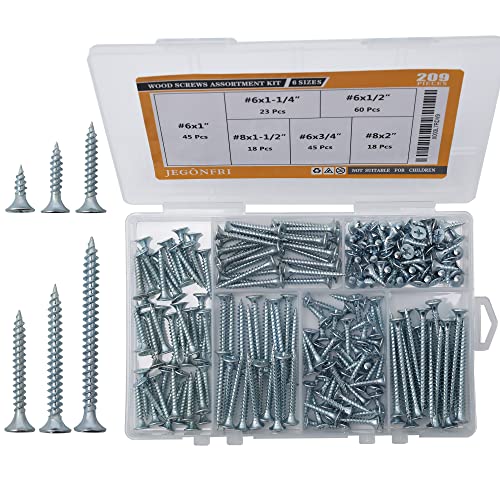
- Various Size: A portative kit includes 6 sizes(#8 x 2 in, #8 x 1-1/2 in, #6 x 1-1/4 in, #6 x 1 in…
- High-quality Screws: Made of high hardness 1022A carbon steel with a sharp point that helps heat…
- Convenient Package: Packed in different grids according to the size, it is efficient to find the…

- 【304 Stainless Steel Machine Screws】Our 358pcs screw and nut set are made of high-quality…
- 【Phillips Pan Head & Variety Sizes】The machine screws assortment kit come with 8 commonly used…
- 【Easy to use】 Using our machine nuts and bolts assortment kit is a breeze. Just align it with…
Last update on 2026-10-13 / Affiliate links / Images from Amazon Product Advertising API