How Long Does It Take for Shellac to Dry: Shellac Drying Made Simple
You can expect shellac to become touch dry within 15 to 45 minutes, depending on how thick your application is, the temperature, and humidity levels.
Fresh shellac dries faster because it contains well-dissolved flakes in alcohol that evaporate uniformly, while old or gummy shellac stays sticky longer.
Applying thin, even coats and working in a warm, ventilated space helps speed drying without sacrificing quality.
Keep exploring to learn how to test readiness and optimize your finish.
Key Takeaways
- Shellac typically becomes touch dry between 15 and 45 minutes depending on coat thickness and environmental conditions.
- The first coat of properly thinned shellac usually dries to touch in about 15 minutes.
- Subsequent coats generally take longer, with the second coat drying around 30 minutes and the third close to an hour.
- Higher temperatures (around 80°F) and lower humidity accelerate drying, sometimes to under a minute for thin coats.
- Old or gummy shellac dries poorly and remains sticky, so always use fresh shellac for reliable drying times.
How Long Does Shellac Take to Become Touch Dry?
Typically, shellac becomes touch dry within 15 to 45 minutes depending on the coat number and environmental conditions.
For your first coat, if you apply an over-thinned shellac, expect it to be workable in about 15 minutes. The second coat usually requires around 30 minutes, while the third coat takes close to an hour to reach touch dryness.
Temperature and humidity play vital roles; at 80°F with moderate humidity, touch dry can occur in as little as 45 seconds with a 4 lb cut. However, on damp days, drying slows slightly.
When applying, you’ll notice that thicker or poorly thinned shellac extends drying times. To guarantee best results, maintain comfortable room temperature and avoid overly thick coats, which may delay the touch dry phase considerably.
Applying multiple thin coats with light sanding between each can improve finish adhesion and durability.
Why Does Fresh Shellac Dry Differently Than Old or Gummy Shellac?
Although shellac dries through alcohol evaporation rather than curing, fresh shellac hardens completely once the alcohol has fully evaporated.
Old or gummy shellac remains sticky and fails to harden properly. This difference arises because fresh shellac contains properly dissolved flakes in denatured alcohol, allowing uniform evaporation and film formation.
In contrast, old shellac partially polymerizes or thickens, disrupting solvent evaporation and leaving a tacky finish. When you use fresh shellac, expect:
- Smooth, consistent drying as alcohol evaporates evenly
- Rapid shift from tacky to fully hardened surface
- Reliable sanding and recoating within recommended times
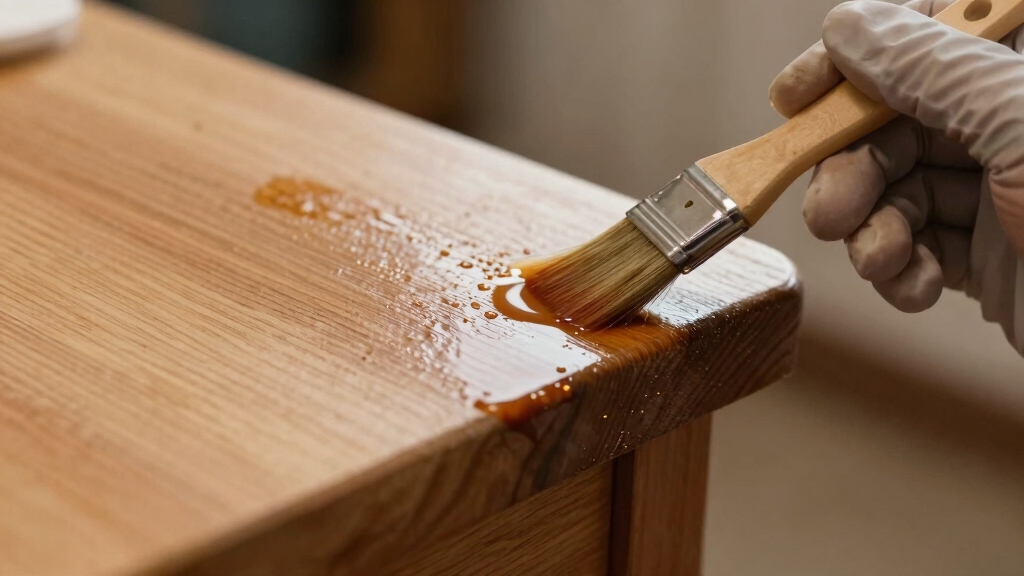
Understanding this helps you achieve ideal results, avoiding the gummy texture that compromises the finish’s durability and appearance. Using the right brush can further enhance the application and drying quality of shellac finishes.
What Factors Affect Shellac Drying and Hardening Times?
When you apply shellac, several factors influence how quickly it dries and hardens. These range from environmental conditions like temperature and humidity to the shellac’s formulation and application method.
For example, higher temperatures accelerate evaporation, while humidity can slow or sometimes speed drying. The cut weight and freshness of shellac also play critical roles; fresh shellac dries faster than old, gummy mixtures.
Application thickness and method affect drying times too. Thin coats dry quicker but may require more layers.
| Factor | Impact on Drying Time | Notes |
|---|---|---|
| Temperature | Higher speeds evaporation | 80°F dries touch in ~45 seconds |
| Humidity | Generally slows drying | Can cause condensation or bleaching |
| Shellac Cut | Heavier cuts dry slower | 2 lb cut slower than 4 lb cut |
How Can You Speed Up Shellac Drying Without Sacrificing Quality?
Speeding up shellac drying requires careful control over application and environmental factors to maintain finish quality.
You can accelerate drying by adjusting your shellac mix and workspace conditions without compromising the finish. First, use a higher cut ratio, like a 4 lb cut, which dries quicker but demands swift, smooth brushing to avoid stickiness.
Second, maintain a warm, well-ventilated environment around 80°F to promote faster alcohol evaporation.
Finally, thin your shellac appropriately. Over-thinning lets you recoat sooner in cycles of 15 to 30 minutes, but avoid excessive thinning that causes poor coverage or gummy layers.
Apply thin, even coats with a brush or pad for consistent drying. Keep humidity moderate to prevent condensation and whitening.
Use fresh shellac mixed in denatured alcohol to guarantee peak drying speed and hardness. Applying one or two thin coats followed by light sanding improves uniformity and adhesion of subsequent finishes, acting as an effective sanding sealer.
How to Test If Shellac Is Fully Dry and Ready for Sanding?
After optimizing your shellac application and environment for faster drying, confirming the finish is fully dry before sanding guarantees the best results.
To test dryness, press gently with your fingernail on an inconspicuous area; no dent means the shellac has hardened sufficiently.
You can also lightly sand a small section with a 220-grit sanding sponge. If nibs are removed cleanly without smearing, it’s ready.
Avoid using water as a lubricant; instead, use mineral spirits or thinned oil to prevent swelling.
Remember, fresh shellac dries faster, but gummy or soft spots indicate incomplete alcohol evaporation.
If unsure, wait longer; overnight drying is a conservative but effective approach.
Proper testing prevents premature sanding that can damage the finish and guarantees a smooth, professional surface.
Keep in mind that maintaining proper environmental conditions such as humidity and temperature can significantly influence the drying time and quality of your shellac finish.
Frequently Asked Questions
Can Shellac Be Applied Over Oil-Based Finishes?
Yes, you can apply shellac over oil-based finishes, but you need to make sure the oil finish is fully cured and clean.
Shellac adheres well to properly prepared oil finishes, offering a great sealing coat. Lightly scuff-sanding the surface before application improves adhesion.
Avoid wet or tacky oil finishes, as shellac won’t bond properly. This method helps you achieve a smooth, durable finish with good sealing properties over oil-based coatings.
Is Shellac Food Safe Once Fully Dried?
Once fully dried, shellac stands as a guardian of food safety, sealing surfaces like a translucent shield.
You can confidently use it on items that come into contact with food because it’s FDA-approved as a food-safe finish.
Just make sure your shellac is fresh and properly cured; old or gummy shellac might harbor residues.
When applied correctly, it offers a natural, non-toxic barrier that protects without compromising your health or taste buds.
How Long Does Shellac Last Before It Starts to Degrade?
Shellac generally lasts several years before it begins to degrade, but its lifespan depends on environmental conditions like humidity, temperature, and exposure to sunlight.
You’ll find that properly applied shellac indoors can maintain its protective qualities for 5 to 10 years. However, it’s sensitive to heat, moisture, and solvents, which can cause it to soften or break down sooner.
Regular maintenance and avoiding harsh chemicals help extend its durability.
Can Shellac Be Used Outdoors or on Exterior Surfaces?
Think of shellac as a delicate butterfly—beautiful but not suited for stormy weather.
You shouldn’t use shellac outdoors or on exterior surfaces because it lacks moisture and UV resistance, causing it to degrade quickly when exposed to sunlight and rain.
Instead, opt for finishes like spar varnish or exterior polyurethane, which are designed to withstand harsh environmental conditions and protect your surfaces longer without peeling or fading.
What Is the Best Way to Store Leftover Shellac?
To store leftover shellac, keep it in an airtight container to prevent alcohol evaporation and contamination.
Use glass jars with tight-fitting lids, and store them in a cool, dark place away from heat and sunlight.
Label the container with the date and cut ratio. Avoid metal lids that can corrode.
If you want to extend shelf life, add a small amount of denatured alcohol to maintain fluidity and prevent the shellac from becoming gummy.
Finish Strong with Proper Shellac Drying
Think of shellac drying like waiting for bread to rise. Impatiently checking won’t speed it up, but understanding the process helps. Fresh shellac typically becomes touch dry within 15–30 minutes, though factors like humidity and temperature matter.
By controlling these and knowing how to test dryness properly, you’ll avoid gummy finishes and achieve a smooth, durable coat. With patience and the right conditions, your shellac project will turn out just right every time.