French Drain vs Swale: Compare Costs & Effectiveness
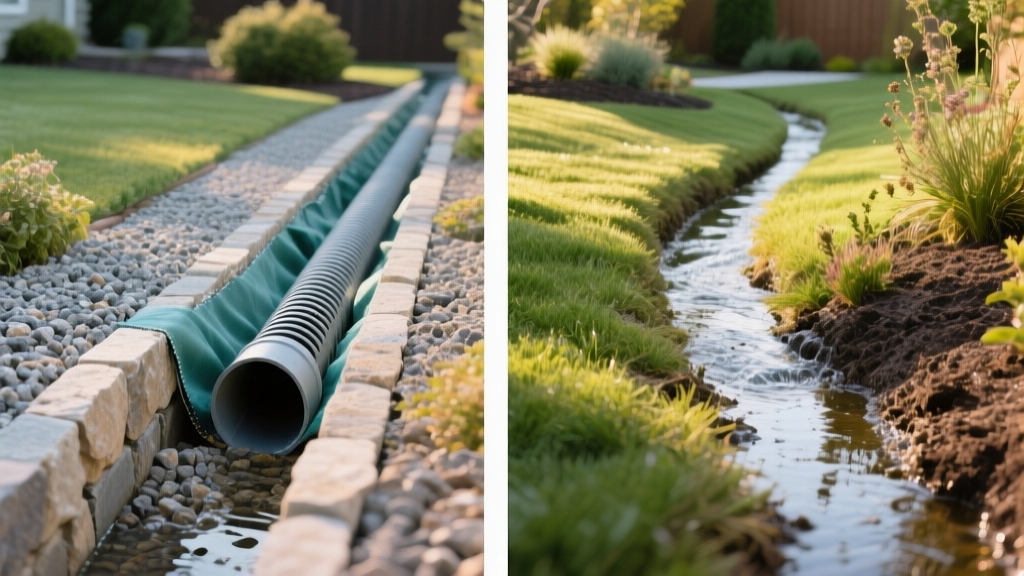
You’ll choose a French drain for precise underground water control in confined or clay-rich areas, using perforated pipes and gravel in narrow trenches.
A swale suits broader surface runoff management on gentle slopes, shaping shallow channels with vegetation to slow flow and promote infiltration.
French drains demand more materials and skilled labor, while swales offer cost-effective, land-friendly solutions. Understanding how each system functions and installs helps you optimize your drainage.
Exploring their integration reveals even greater water management benefits.
Key Takeaways
- French drains are narrow, subsurface systems using perforated pipes and gravel to redirect water away from foundations and saturated soils.
- Swales are broad, shallow surface channels that slow runoff, promote infiltration, and filter pollutants through vegetation.
- French drains require skilled installation, geotextile fabric, and cost more ($20–$65/ft) compared to swales ($5–$15/ft) which mainly use earth and plants.
- Swales are ideal for managing surface water on gently sloped terrain, while French drains suit confined spaces and poorly draining soils.
- Combining French drains with swales enhances drainage by directing subsurface water into vegetated channels for improved infiltration and erosion control.
French Drain vs Swale: Quick Comparison Guide
| Feature | French Drain | Swale |
|---|---|---|
| Design | Narrow trench with perforated pipe & gravel | Broad, shallow vegetated channel |
| Water Type | Subsurface & high-volume underground flow | Surface runoff on gentle slopes |
| Installation Cost | $20–65 per linear foot (materials intensive) | $5–15 per linear foot (earth & plants) |
| Maintenance | Annual cleaning, sediment/root removal | Vegetation control, debris clearance |
| Lifespan | 20–30 years with upkeep | 20+ years, erosion-dependent |
| Best For | Foundations, clay soils, tight spaces | Open yards, infiltration, eco-filtration |
Understanding the Design and Structure
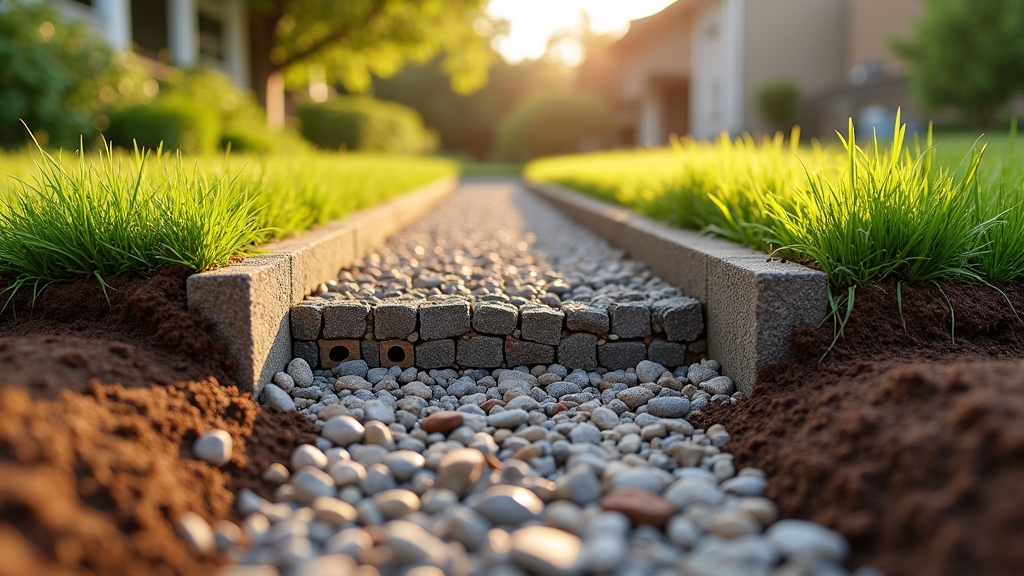
When designing effective drainage solutions, understanding the distinct structures of French drains and swales is essential.
A French drain consists of a narrow trench, typically 6 to 12 inches wide and variable in depth, excavated along areas prone to water accumulation. You’ll guarantee a minimum slope of 1% for gravity-driven flow.
At its core, a perforated pipe lies at the trench base, surrounded by gravel and wrapped in geotextile fabric to prevent soil intrusion. It is important to assess the site carefully to identify where water pools or flows toward the property before installation. Regular maintenance, such as removing debris from the gravel, ensures optimal drainage performance.
Conversely, a swale is a shallow, broad channel, 1 to 3 feet deep and several feet wide, graded with a gentle 0.5–2% slope. It relies on open flow with no pipe, stabilized by vegetation, and may incorporate gravel in high-flow zones. Proper vegetation management is crucial to maintain the swale’s effectiveness and prevent erosion.
Comparing Primary Drainage Functions
How do French drains and swales differ in managing water flow?
Swales funnel surface runoff slowly downhill via broad, shallow channels, using natural slopes to reduce velocity and promote infiltration. They excel in mild to moderate flows across open terrain, recharging groundwater while filtering contaminants through vegetation and soil.
These channels are often lined with grass or plants to enhance water absorption and pollutant filtration. Proper maintenance, including routine inspections, ensures swales remain effective and prevents clogging that could reduce infiltration.
Swales guide runoff gently downhill, slowing water flow to enhance infiltration and natural filtration.
In contrast, French drains target both surface and subsurface water by channeling it through perforated pipes embedded in gravel trenches. They efficiently redirect high water volumes away from problem areas, especially in flat or poorly draining sites, preventing saturation and hydrostatic pressure near foundations.
French drains require regular upkeep to maintain pipe permeability and avoid blockages that can compromise drainage performance. While swales manage surface runoff passively, French drains actively force water underground toward designated drainage points.
Your choice hinges on site conditions and drainage demands, as swales support natural infiltration, whereas French drains focus on rapid water removal to protect structures.
Overview of Installation Procedures
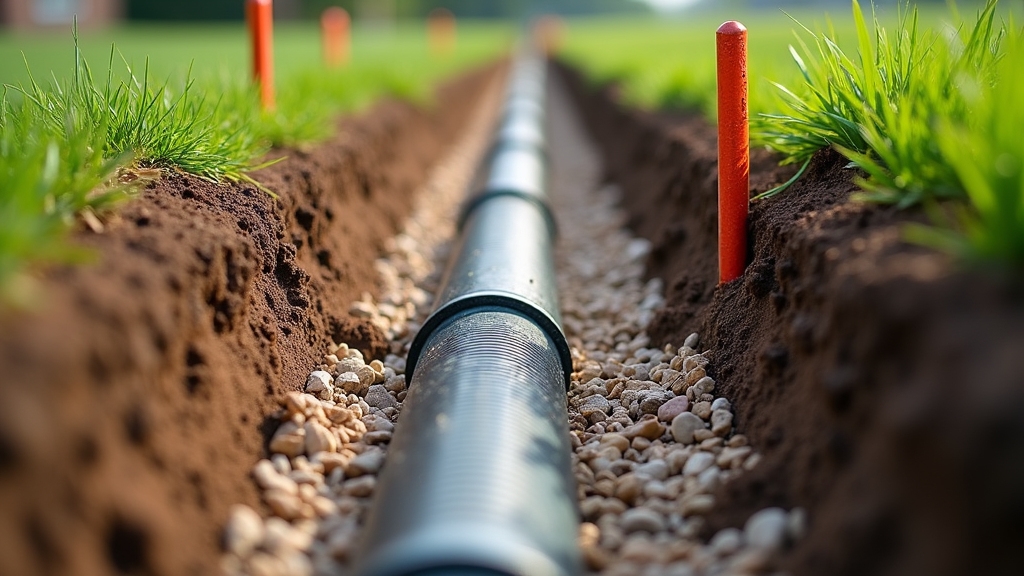
Although site conditions vary, successful installation of French drains and swales starts with thorough site assessment and careful planning.
First, identify water accumulation points and mark the drainage path. Ensure a consistent slope and locate suitable outlets. It is important to check local zoning and call 8-1-1 to mark underground utilities before digging.
Next, precise trench excavation follows: narrow and deep for French drains, broad and shallow for swales. Then, prepare the drainage system by lining trenches with geotextile fabric and adding gravel. Place perforated pipes for French drains or shape earth for swales.
Backfilling restores the surface, replacing sod or stabilizing swales with vegetation. Finally, confirm grading directs water efficiently to prevent pooling.
- Identify low water accumulation spots
- Maintain consistent trench slope (1 inch per 8-10 feet)
- Line trench with geotextile fabric for French drains
- Use perforated pipe facing downward in gravel bed
- Backfill carefully and restore surface grading
Analysis of Costs and Required Materials
When you’re looking at costs, note that French drains can be a bit on the expensive side. They require materials like perforated pipes and gravel, which can add up. Plus, the labor involved in excavation and installation is quite intensive, so that’s another factor to consider.
For example, the national average price for installing a French drain in 2025 is approximately $5,000, with costs varying widely based on location and soil type. Proper installation and maintenance are crucial to ensure the system effectively manages water without causing damage.
On the flip side, swales are a more budget-friendly option. They primarily use earth-moving and vegetation, which means lower material and labor costs. This makes them a great alternative if you’re looking to save some money and prefer gentle cleaning methods that are less invasive and more natural.
Material Components Comparison
Because effective drainage depends on material selection, comparing the components used in French drains versus swales is essential for cost analysis and design accuracy.
French drains rely heavily on engineered materials like perforated PVC or corrugated pipes, wrapped in geotextile fabric and surrounded by carefully sized gravel. This contrasts with swales, which primarily use natural soil and vegetation, reducing material costs but demanding precise grading.
French drains require maintaining a minimum slope of 1% to ensure proper water flow through the pipe and gravel system. The use of durable materials ensures long-lasting performance and minimal maintenance over time.
Perforated rigid PVC pipes (4”–8”) offer durability and code compliance in French drains. Gravel (¾”–1½”) surrounds pipes to maintain porosity and enable flow. Non-woven geotextile fabric prevents soil intrusion and maintains system longevity. Solid PVC transition pipes ensure effective water discharge.
Swales use minimal synthetic materials, focusing on soil and vegetation for infiltration and flow control, which also promotes natural infiltration and environmental benefits.
Installation and Labor Expenses
Since installation methods directly impact both labor expenses and project timelines, understanding the distinct processes for French drains and swales is essential for accurate budgeting.
French drains require trenching, pipe laying, gravel placement, and precise slope control. This often demands skilled contractors and heavy equipment like trenchers and pipe cutters. The average total cost for a French drain installation typically falls around $5,000, depending on material and site specifics. Proper installation is critical to prevent water accumulation that can lead to water damage over time.
Labor rates range from $35 to $75 per hour, with installation spanning 2 to 5 days for a 100-foot run. This results in costs of $20 to $65 per linear foot.
Swale installation involves shallow grading and vegetation planting, using manual tools or light machinery. Labor costs range between $20 and $40 per hour. Swales also require ongoing maintenance to prevent erosion and ensure proper drainage function.
Swales typically complete faster, taking 1 to 3 days, and cost $5 to $15 per linear foot. Both may need permits and safety equipment, but French drains require more technical precision and labor investment.
Maintenance Needs and Longevity
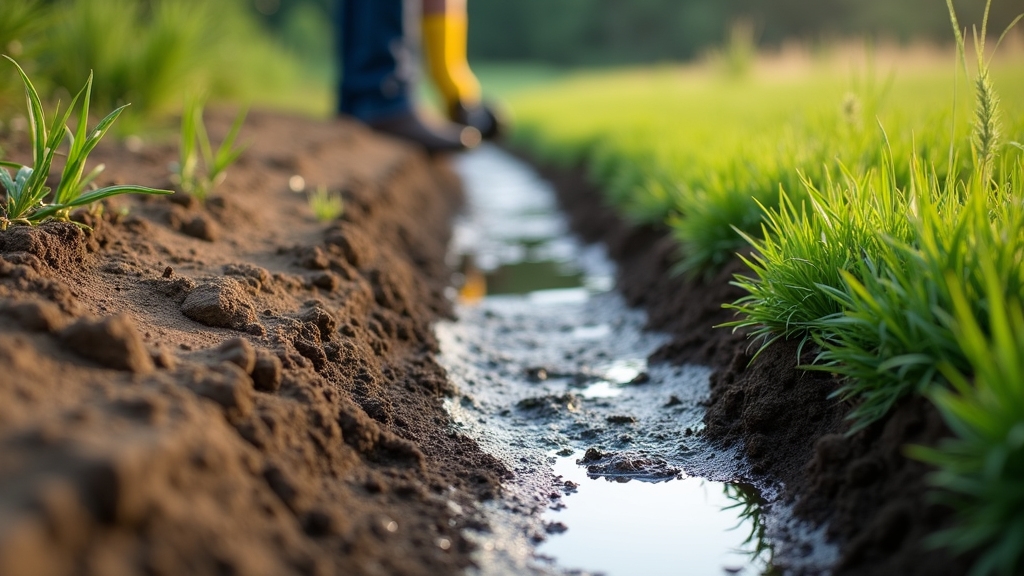
To keep everything running smoothly, it’s a good idea to set up regular inspections and cleanings for both systems. This way, you can prevent any clogging and ensure flow efficiency.
For French drains, you’ll want to schedule periodic camera checks and clear out any debris that might build up. Using micro cameras allows comprehensive diagnosis of the drainage system, making it easier to identify issues early through detailed inspection.
Additionally, choosing materials with appropriate fire retardant treatment can enhance safety if wood components are used nearby. On the other hand, swales need some attention too—make sure to manage the vegetation and remove any sediment that accumulates.
And hey, understand how durable the materials are and what their expected lifespan is. This knowledge can really help you optimize those maintenance intervals, ultimately extending the performance of your systems.
Inspection and Cleaning
Though both French drains and swales serve to manage water flow, their inspection and cleaning requirements differ considerably. You’ll need to inspect French drains at least once a year, focusing on access points, flow testing, and sediment buildup.
It is also important to install access points at both ends of the drain to facilitate easier maintenance activities. Regular maintenance is essential to prevent moisture-related damage that can affect drainage performance.
Swales demand frequent post-storm checks to address erosion and sediment accumulation. Cleaning French drains involves pressure washing, snaking, or hydro-jetting, while swales require sediment removal and vegetation management without specialized tools.
Key inspection and cleaning tasks include:
- Checking French drain access points and discharge locations for blockages
- Using water hose or camera inspections in French drains
- Removing debris and managing vegetation in swales
- Repairing swale erosion and maintaining proper grading
- Mowing swale vegetation and clearing surface debris around drains
Durability and Lifespan
When evaluating the durability and lifespan of French drains and swales, you must consider their maintenance requirements and environmental factors.
French drains typically last 20–30 years but need frequent cleaning to prevent sediment and root blockages. Proper installation by professionals reduces risks of blockages and leaks, which is essential for ensuring the system effectiveness.
Swales often exceed 20 years with minimal intervention but require vegetation management and occasional regrading. Additionally, inspecting the system regularly helps catch early signs of erosion or degradation.
Both systems’ longevity depends on soil type, installation quality, and climate.
| Factor | French Drain | Swale |
|---|---|---|
| Typical Lifespan | 20–30 years (up to 100+ with premium) | 20+ years (30+ in stable soils) |
| Maintenance | Periodic cleaning, fabric replacement | Debris removal, vegetation control |
| Vulnerabilities | Sediment clogging, root intrusion | Erosion, slope degradation |
| Longevity Drivers | Corrosion-resistant materials, grading | Proper slope, vegetation management |
| Environmental Impact | Sensitive to soil type, roots | Sensitive to erosion, soil stability |
Ideal Scenarios for Each Drainage Solution
Because site conditions and water flow patterns vary widely, selecting between a French drain and a swale depends on the specific drainage challenges you face. Proper installation and maintenance are key to ensuring long-term effectiveness of any drainage system.
You’ll want a French drain when controlling subsurface water or directing it to a precise outlet, especially in tight spaces or clay-heavy soils. It is important to maintain proper slope of about 1 inch every 8 feet for effective drainage when installing a French drain.
Conversely, swales excel on larger, gently sloped properties where surface runoff needs slowing and infiltration. Regular maintenance and monitoring can prevent clogging and preserve the swale’s natural dispersion capabilities.
Consider these scenarios:
- Use a French drain to protect foundations or basements from water intrusion.
- Opt for a swale to reduce erosion and promote groundwater recharge.
- Choose French drains for poorly draining soils.
- Deploy swales in permeable soils with space for natural dispersion.
- Favor swales for sustainable, low-maintenance surface drainage.
This targeted approach ensures effective, site-specific water management.
Combining French Drains and Swales Effectively
Integrating French drains and swales creates a thorough drainage system that manages both subsurface and surface water efficiently.
You begin by installing a shallow French drain trench, about 10 inches deep, then gradually deepen it with a slope for temporary water retention and smooth flow into an adjacent swale. The trench depth is kept shallow, barely enough to bury a 4-inch pipe, ensuring proper installation and function of the drainage system.
Proper maintenance is essential to prevent blockages and maintain optimal drainage performance. Connect secondary branch drains with proper downward slope to optimize subsurface water redirection.
Position the swale as a gentle, wide landscape feature to slow runoff, maximize infiltration, and maintain aesthetics. The swale is softly cut sod, designed as a mowable, unobtrusive low point that effectively redirects water away from structures.
Direct French drain discharge into the swale, combining underground capture with surface filtration. This hybrid design protects foundations from moisture, reduces erosion, and enhances groundwater recharge.
Careful grading, proper pipe perforation, and regular maintenance ensure seamless coordination, preventing system overload and sustaining long-term drainage performance.
Frequently Asked Questions
Can French Drains Freeze in Cold Climates?
Yes, French drains can freeze in cold climates if not designed and installed correctly.
You should place the drain pipe below the frost line and maintain a consistent slope to prevent water stagnation.
Using durable materials and insulating exposed sections minimizes freeze risk.
Regularly clearing snow and debris helps maintain flow.
Consider adding heat tracing or dry wells in critical areas.
Addressing freeze-thaw impacts guarantees your system remains efficient and damage-free.
Are Swales Effective for Pollutant Filtration?
Absolutely, swales are effective for pollutant filtration. Think of them as the medieval knights of stormwater management. They remove up to 86% of total suspended solids through sedimentation, the dominant mechanism.
Enhanced filter media can treat dissolved heavy metals and phosphorus efficiently. Just remember, proper design with dense turf and regular maintenance keeps their filtration performance robust, especially beyond two years.
You’ll want multiple infiltration measurements to guarantee consistent results across the swale.
How Do Local Regulations Affect Drainage Installations?
Local regulations require you to obtain permits before starting drainage installations, ensuring compliance with grading and stormwater standards.
You must follow precise code requirements for pipe alignment, slope, and materials like ABS or PVC with proper bedding.
Drainage systems must meet state and local stormwater management criteria. Any construction after 1969 needs recording.
Additionally, you’ll need to coordinate with drainage districts, which can impose easements and assessments to maintain system integrity.
Can Swales Support Native Wildlife Habitats?
Swales support native wildlife habitats like a woven tapestry supports intricate patterns. You’ll find they provide shelter, food, and breeding grounds for insects, birds, and small mammals.
By planting deep-rooted native species, you stabilize soil and create corridors for wildlife movement. Their diverse vegetation attracts pollinators and beneficial insects, enhancing biodiversity and ecosystem health.
Proper design guarantees swales function as thriving, multifunctional habitats within urban and suburban landscapes.
What Plants Are Best for Swale Vegetation?
For swale vegetation, you should select deep-rooted grasses like switchgrass and big bluestem to stabilize soil and prevent erosion.
Incorporate drought-tolerant species such as alkali sacaton and side-oats grama for resilience.
Add native wildflowers like black-eyed Susan and coneflowers to enhance pollinator support.
Use moisture-tolerant shrubs like willow and buttonbush to manage hydrology.
Ground covers such as white clover can help reduce erosion and maintain soil integrity effectively.
Unlock Better Drainage: French Drain or Swale Insights
When managing water runoff, choosing between a French drain and a swale is like picking the right tool from a toolbox. Each serves a distinct purpose with precision. You’ll want to evaluate your site’s slope, soil type, and drainage needs carefully.
By understanding their design, installation, and maintenance, you can craft a solution that’s both efficient and durable. Sometimes, combining both options creates the perfect hydraulic harmony for your landscape’s health.