What Is Bc Plywood: Strength, Quality & Common Applications
BC plywood combines a smooth, sanded B-grade face with a rougher C-grade back, offering a practical balance of appearance and cost.
You’ll typically use it where one side is visible, like cabinetry, shelving, or furniture, while the back stays concealed. Its cross-laminated veneer construction guarantees stability.
However, standard BC plywood uses interior glue, so it’s best for indoor use without heavy moisture exposure. Keep the B face ready for finishing and explore further to understand moisture resistance and ideal applications.
Key Takeaways
- BC plywood features a smooth, sanded B-grade face and a rougher C-grade back with more visible imperfections.
- It provides a cost-effective balance by exposing only the higher-quality B face while concealing the C back.
- Commonly used for cabinetry, shelving, furniture parts, and interior wall paneling with one visible side.
- The B face is paintable and suitable for visible applications, while the C back is intended for concealed or structural use.
- Standard BC plywood uses interior-grade adhesives, limiting moisture resistance compared to exterior-rated BCX variants.
Understanding BC Plywood Grading and Quality

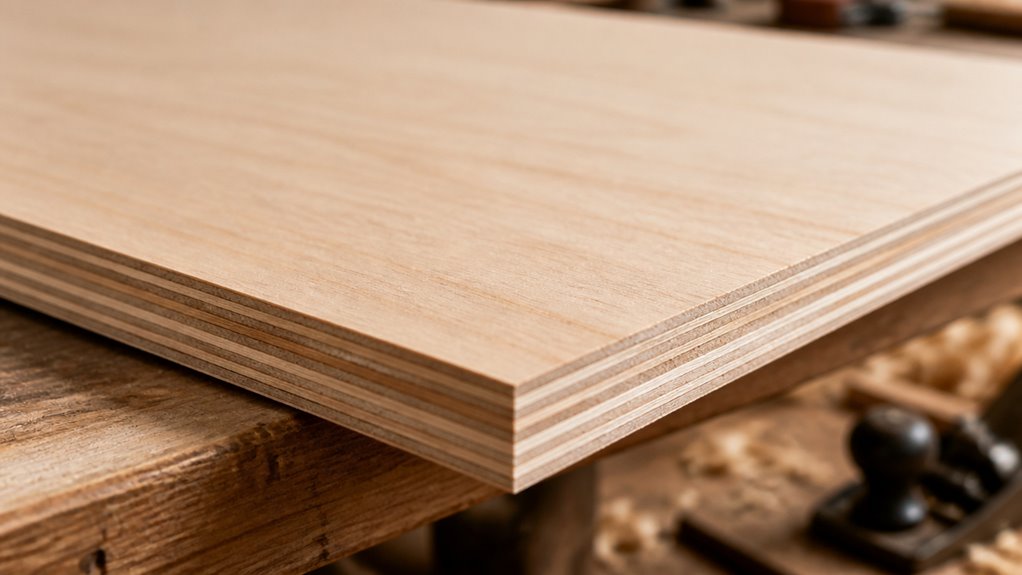
Although BC plywood combines two different surface grades, it offers a practical balance of appearance and cost. It features a smooth B-grade face and a rougher C-grade back.
BC plywood blends a smooth B-grade face with a rougher C-grade back for cost-effective appeal.
You’ll find the B face sanded, relatively defect-free, and ready for finishing or paint. It may include minor repaired knots or patches.
On the other hand, the C-grade back accepts more imperfections like larger knots, splits, and visible repairs. This makes it suited for concealed installation.
This grading system focuses on surface quality rather than structural core, so you get a reliable plywood sheet with one attractive side.
When you specify BC plywood, you prioritize a presentable front while controlling expense. You can trust that the back will be less refined but functionally sound for your project’s needs.
Additionally, the bonding of veneer layers using adhesives such as PVA for interior use ensures durability and stability in BC plywood panels.
How BC Plywood Is Made and What Materials Are Used?
When you choose BC plywood, you’re working with panels constructed from multiple thin wood veneers glued in layers.
Each veneer’s grain runs perpendicular to adjacent layers to enhance stability and strength.
These veneers can be softwood or hardwood species, selected based on the intended application and structural requirements.
The cross-laminated assembly reduces warping and increases load resistance.
Adhesives play a vital role; standard BC plywood uses interior-grade glue, while BCX variants employ exterior-rated adhesives for moisture resistance.
The manufacturing process involves drying veneers to precise moisture content, applying adhesive uniformly, and pressing the layers under heat and pressure to bond them solidly.
This method results in a durable, dimensionally stable panel suitable for various construction and furniture uses.
The use of properly kiln-dried veneers helps ensure dimensional stability and prevents warping during both manufacturing and end use.
BC Plywood Surface Grades: B Face vs. C Back
Because BC plywood combines two different surface grades on each side, understanding the distinction between the B face and the C back is essential for selecting the right panel for your project.
The B face is sanded smooth, featuring minimal defects and small, repaired knots, making it suitable for visible applications or painting.
In contrast, the C back is rougher, allowing larger knots, splits, and visible repairs, so it’s intended for concealed use where surface imperfections won’t matter.
This dual grading offers a practical balance: you get a presentable side for appearance and a more economical, less refined back side.
When choosing BC plywood, prioritize the B face for exposure and use the C back where aesthetics aren’t critical. This ensures your project meets both functional and visual requirements efficiently.
For projects exposed to moisture, selecting plywood with phenolic resin adhesives can significantly enhance durability and resistance to swelling.
Common Uses for BC Plywood
BC plywood serves a wide range of practical applications due to its balanced combination of appearance and cost-effectiveness. You’ll find it ideal for cabinetry, shelving, and furniture parts where one smooth face is needed.
Its strength and stability also make it suitable for construction tasks like wall sheathing and subflooring. The B face offers a paintable surface, while the C back can remain concealed.
| Application Area | Typical Use | Key Feature |
|---|---|---|
| Cabinetry & Furniture | Doors, panels | Smooth, paintable B face |
| Construction | Wall sheathing, subfloors | Structural integrity |
| Interior Fixtures | Shelving, shop fixtures | Cost-effective surface |
Choosing BC plywood gives you a reliable balance of function and finish for varied projects. Its denser veneers provide improved dimensional stability, reducing warping and enhancing durability.
Comparing BC Plywood to Other Grades
Plywood grades differ primarily in surface quality and intended application, so understanding these distinctions helps you select the right panel for your project.
BC plywood features a smooth B-grade face and a rougher C-grade back, balancing appearance and cost. Compared to AC plywood, BC offers a less refined face, making AC preferable when a high-quality front surface is critical.
CDX plywood, with its rougher C and D faces and exterior glue, suits structural or exterior uses where surface finish is secondary. If you need moisture resistance, BCX adds exterior-rated adhesive to BC’s standard grade.
Ultimately, BC plywood fits projects requiring one presentable side and concealed backing. It provides durable, sanded surfaces without the premium cost of higher-grade panels.
Unlike plywood, materials like HDF’s uniform composition offer greater moisture resistance and stability, which can be important in certain applications.
Choosing BC Plywood for Your Project
When you choose BC plywood for your project, you’re really getting the best of both worlds. It strikes a great balance between a smooth surface quality and cost-efficiency, making it perfect for projects that need at least one side to look good.
On the B-grade side, you’ll find it takes paint and finishes beautifully. So, if you want something that looks nice, this side has you covered. Meanwhile, the C-grade back is perfect for those hidden or structural applications.
Think about using BC plywood for cabinetry, shelving, or wall sheathing where both durability and appearance are important, but not necessarily uniform. It really fits the bill for selective uses!
For any project involving wood removal or installation, taking proper precautions and safety measures ensures a smooth and damage-free process.
Benefits of BC Plywood
Consider selecting a panel that balances surface quality with cost-effectiveness when your project requires one presentable face.
BC plywood offers that balance by providing a smooth, sanded B-grade face for visible surfaces and a more economical C-grade back for concealed areas.
This makes it a practical choice without sacrificing appearance where it counts.
When you choose BC plywood, you gain:
- A reliable structural core with cross-laminated veneers for strength and stability.
- A smooth, paintable B-face suitable for finishing.
- Cost savings by using a less refined back side.
- Versatility for interior applications requiring one finished face.
- Compatibility with exterior-rated adhesives in BCX variants for moisture resistance.
These benefits guarantee you get durability and aesthetics tailored to your project’s visible and hidden surfaces. It is also important to ensure subfloor preparation is properly done to maintain structural integrity and prevent future issues.
Ideal Project Applications
Frequently chosen for projects requiring a balance of appearance and function, BC plywood excels when one face will remain visible while the other is concealed.
You’ll find it ideal for cabinetry, shelving, and furniture parts where the smooth B-grade face is exposed and ready for paint or finish.
The rougher C-grade back suits concealed areas, optimizing cost without compromising structural integrity.
It performs well in interior wall paneling, soffits, and shop fixtures, offering durability and a presentable surface on one side.
When moisture exposure is a concern, opting for BCX plywood guarantees exterior-rated adhesives.
Avoid BC plywood in applications demanding both faces to be visually flawless.
For projects involving flooring or surfaces that require removal or renovation, understanding adhesive removal techniques can help maintain the underlying material’s integrity.
How BC and BCX Plywood Resist Moisture
Although BC plywood offers moderate moisture resistance due to its layered veneer construction, its performance heavily depends on the type of adhesive used.
Standard BC plywood uses interior-grade glue, which limits its exposure to humidity or water. In contrast, BCX plywood incorporates exterior-rated adhesives, enhancing its moisture durability for outdoor or damp environments.
When selecting BC or BCX plywood, consider these factors:
Cross-laminated veneers reduce water penetration by limiting swelling.
Exterior-grade adhesives in BCX resist delamination under wet conditions.
Surface grading affects susceptibility to moisture-related surface degradation.
Proper sealing of edges and surfaces is essential for peak moisture resistance.
Species choice influences natural wood permeability and dimensional stability.
Understanding these elements helps you choose the right plywood for moisture-prone applications effectively. Additionally, selecting products with low formaldehyde emissions can improve indoor air quality and health safety when using plywood indoors.
Finishing and Maintaining BC Plywood Surfaces
Achieving a durable, attractive finish on BC plywood starts with proper surface preparation and selecting compatible coatings.
Begin by sanding the B-grade face with fine-grit sandpaper to remove imperfections and create a smooth surface. Clean dust thoroughly before applying primer or sealer designed for wood.
Use water-based or oil-based paints and varnishes compatible with plywood to enhance durability and appearance. Avoid heavy fillers, as BC plywood may have minor repaired knots that don’t require extensive patching.
For maintenance, clean surfaces gently with a damp cloth and mild detergent. Inspect for scratches or wear periodically and reapply protective coatings as needed to prevent moisture infiltration and surface degradation.
Proper finishing and upkeep extend the lifespan and maintain the visual quality of your BC plywood projects effectively. Choosing paints with moisture resistance is essential to protect plywood surfaces in humid environments like bathrooms.
Frequently Asked Questions
Can BC Plywood Be Safely Used Outdoors Without Additional Treatment?
You shouldn’t use BC plywood outdoors without extra treatment. Its standard adhesive and veneers aren’t designed to resist moisture long-term, so it’ll likely degrade when exposed to weather.
For outdoor use, choose BCX plywood, which has exterior-rated glue, or apply waterproof sealants and protective coatings to standard BC. Proper treatment guarantees durability, prevents delamination, and maintains structural integrity when exposed to rain, humidity, or temperature changes.
What Tools Are Best for Cutting BC Plywood Cleanly?
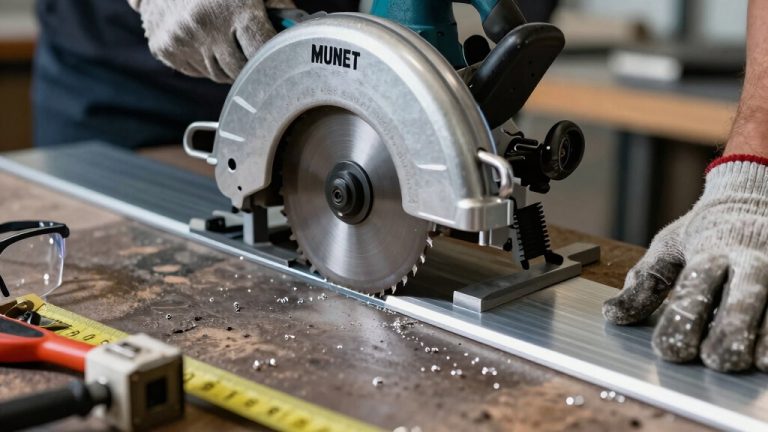
Imagine wielding a Viking axe, but today, your best tools for cutting BC plywood are a circular saw with a fine-tooth carbide blade or a table saw for precision.
You’ll want a blade with 60-80 teeth to minimize splintering on the smooth B-face. Use painter’s tape along the cut line to reduce tear-out, and cut slowly with steady pressure.
A sharp jigsaw with a fine blade works well for curves or detailed cuts.
How Does BC Plywood Impact Indoor Air Quality?
BC plywood can impact indoor air quality primarily through formaldehyde emissions from adhesives used in its manufacture.
If you choose panels with low-emission or no-added-formaldehyde glues, you’ll reduce indoor pollutants.
Proper ventilation during and after installation also helps minimize VOC buildup.
Selecting BCX plywood with exterior-rated, low-VOC adhesives can further improve air quality.
Always check product certifications to make certain your BC plywood meets indoor air safety standards.
Are There Eco-Friendly or Sustainable Options for BC Plywood?
Think of eco-friendly BC plywood as a gust of clean forest air you can build with. You can choose options certified by FSC or SFI, ensuring wood comes from responsibly managed forests.
Look for low-VOC adhesives and formaldehyde-free glues to reduce indoor pollutants. Some manufacturers offer BC plywood made from sustainably harvested species or reclaimed wood veneers.
This blends durability with environmental care without compromising your project’s integrity.
What Is the Typical Lifespan of BC Plywood in Residential Use?
You can expect BC plywood to last 20 to 30 years in typical residential use, assuming proper installation and maintenance.
Its lifespan depends on exposure to moisture, UV, and mechanical wear. If you use exterior-rated BCX with moisture-resistant glue outdoors or in damp areas, durability improves.
Indoors, keeping it dry and sealed extends longevity. Regular inspections and protective finishes help prevent degradation, ensuring you get reliable structural and aesthetic performance.
What Makes BC Plywood a Practical Building Material?
Now that you know BC plywood combines a smooth B-grade face with a more rustic C-grade back, you might wonder if it’s just a budget choice.
The truth is, BC plywood offers reliable strength and decent appearance, making it a practical option for many projects.
Whether you need durability or a good finish, BC plywood balances cost and quality effectively.
So, don’t underestimate its value; it’s engineered to perform.