End Grain vs Edge Grain Cutting Board for Your Kitchen
If you want a cutting board that protects your knives and lasts long, end grain is your best bet. Its fibers absorb cuts, reducing blade dulling and visible marks.
However, end grain boards are heavier, pricier, and need more upkeep. Edge grain boards are lighter, more affordable, and handle everyday tasks well.
But they wear faster and dull knives sooner. Your choice depends on how much weight, cost, and maintenance suit your kitchen style, with deeper insights available ahead.
Key Takeaways
- End grain boards are thicker, heavier, and more durable, preserving knives by cutting between wood fibers with a self-healing surface.
- Edge grain boards are lighter, more affordable, and easier to handle but cause faster blade dulling by cutting across wood fibers.
- End grain boards generally last 10-15 years, while edge grain boards last 5-8 years due to differences in wear resistance and construction.
- End grain requires more frequent oiling and maintenance, whereas edge grain demands less upkeep and suits casual kitchen use.
- Choose end grain for heavy chopping and knife protection; edge grain fits lighter prep, budget, and portability needs.
End Grain vs Edge Grain Cutting Board Comparison
| Feature | End Grain Cutting Board | Edge Grain Cutting Board |
|---|---|---|
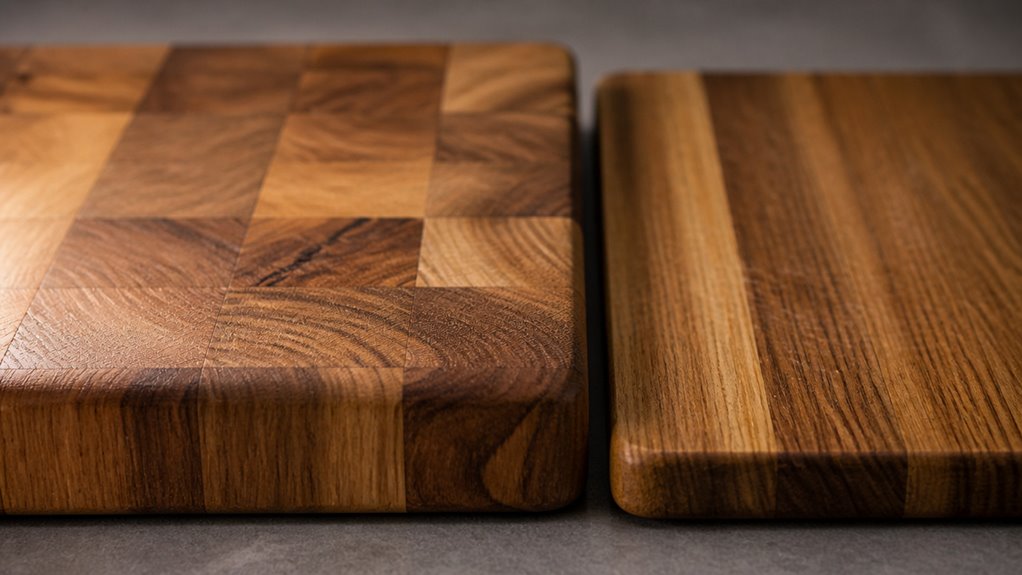
| Wood Orientation | Fibers face upward, allowing knives to cut between the fibers | Fibers run lengthwise, so knives cut more across the grain |
| Knife Protection | Gentler on knife edges and helps reduce blade wear | Can cause faster blade dulling with frequent use |
| Durability | Highly durable and suited to heavy chopping | Moderately durable for everyday food preparation |
| Knife Marks | Marks tend to be less noticeable because fibers can close after cutting | Knife marks are generally more visible over time |
| Weight | Usually thicker and heavier, adding stability | Typically lighter and easier to move |
| Maintenance | Requires more frequent oiling and care | Generally requires less upkeep |
| Cost | Usually more expensive because of complex construction | Typically more affordable and simpler to manufacture |
| Best Use | Ideal for heavy chopping and knife protection | Ideal for daily prep, portability, and convenience |
End Grain vs Edge Grain Cutting Boards: Which Is Right for You?

When choosing between end grain and edge grain cutting boards, consider how you plan to use the board and what matters most to you—whether it’s knife protection, cost, weight, or maintenance.
If you prioritize preserving your knives and need a board suited for heavy chopping, an end grain board is your best choice. It’s thicker, heavier, and tends to be pricier due to its block construction, but it offers superior durability.
On the other hand, if you want a lighter, more affordable board for everyday prep and easier handling, an edge grain board suits you well. It’s simpler to maintain and generally costs less, though it shows knife marks more readily.
Your decision hinges on balancing these factors against your cooking habits. Black walnut, with its medium hardness and tight grain, offers excellent performance in both end grain and edge grain cutting boards.
How Wood Grain Orientation Affects Knife Sharpness and Durability?
Because wood grain orientation directly influences how your knife interacts with the cutting surface, it plays a crucial role in maintaining blade sharpness and overall durability.
When you use an end grain board, your knife cuts between the wood fibers rather than across them. This reduces edge dulling and extends sharpness. The fibers’ self-healing nature also minimizes visible knife marks, preserving both your blade and the board’s surface.
Using end grain boards cuts between fibers, reducing dulling and preserving both blade sharpness and board appearance.
In contrast, edge grain boards force your knife to sever fibers horizontally, causing faster blade wear and more noticeable surface damage. Understanding this interaction helps you choose a board that protects your knife’s edge effectively.
This ensures longevity and consistent performance during food preparation. Proper maintenance complements this by preserving the board’s grain integrity and your knife’s condition. Regular application of food-safe mineral oil is essential to maintain the wood’s moisture balance and durability.
Which Cutting Board Lasts Longer: End Grain Or Edge Grain?
Although both end grain and edge grain cutting boards require regular care, end grain boards generally outlast edge grain boards due to their unique construction and durability.
End grain boards use wood blocks oriented to absorb knife impact, reducing wear and warping over time. Edge grain boards, with fibers running horizontally, show more visible cuts and tend to wear faster under heavy use.
| Feature | End Grain | Edge Grain |
|---|---|---|
| Lifespan | 10–15 years | 5–8 years |
| Durability | Highly resistant to wear | Moderate durability |
| Warp Resistance | Excellent | Good |
| Knife Impact | Fibers self-heal | Fibers severed directly |
| Maintenance | Regular oiling required | Lower maintenance |
Choosing end grain maximizes longevity if you prioritize durability. Proper maintenance and environmental control, such as monitoring humidity and temperature fluctuations, are essential to preserve wood’s integrity and prevent warping or cracking over time, according to moisture control best practices.
How Weight, Cost, and Handling Differ Between Board Types?
You’ll notice that weight, cost, and handling vary markedly between end grain and edge grain cutting boards due to their distinct construction methods.
Weight, cost, and handling differ significantly between end grain and edge grain cutting boards.
End grain boards, built from wood blocks, are thicker and noticeably heavier, demanding more effort to move and position.
This heft contributes to their stability during heavy chopping but can challenge everyday handling.
They also come with a higher price tag, reflecting the labor-intensive assembly and material waste involved.
In contrast, edge grain boards use long wood strips, making them lighter and easier to maneuver.
Their construction reduces production complexity and cost, offering a more affordable option without sacrificing reasonable durability.
For most home cooks, edge grain boards strike a practical balance, while end grain boards serve those prioritizing premium quality and knife protection despite the added weight and expense.
Proper care with natural oils can help maintain and enhance the longevity of both types of cutting boards.
Maintaining Your Cutting Board: Care Tips and Lifespan Expectations
To keep your cutting board in top shape, it’s really important to oil it regularly. This helps maintain the surface and prevents it from drying out or cracking, especially if you have an end grain board.
After using your board, make sure to clean it right away and dry it thoroughly. This will help avoid issues like warping or bacterial growth. With a bit of proper care, you can expect an end grain board to last about 10 to 15 years. On the other hand, edge grain boards usually have a lifespan of around 5 to 8 years. So, a little maintenance goes a long way!
Additionally, using FDA-approved adhesives for any repairs ensures the board remains safe and durable for food preparation.
Regular Oiling Routine
Regularly oiling your cutting board preserves its integrity and extends its lifespan by preventing the wood from drying out and cracking.
Whether you use an end grain or edge grain board, applying food-safe mineral oil consistently keeps the wood fibers hydrated and resilient.
For end grain boards, which are more porous and prone to drying, oiling every few weeks under regular use is essential.
Edge grain boards require less frequent oiling but still benefit from it every month or so.
Always apply oil evenly with a clean cloth, allowing it to soak in overnight before wiping off excess.
Skipping this routine risks warping, splitting, and dulling the board’s surface.
Using food-safe oils like mineral oil or beeswax regularly ensures durability and protection.
Cleaning and Drying
Although proper cleaning is often overlooked, it plays a crucial role in maintaining your cutting board’s hygiene and longevity. After each use, wash your board promptly with warm, soapy water to remove food particles and bacteria.
Avoid soaking it, as excessive moisture can cause warping or cracking, especially in end grain boards. Dry your board thoroughly by standing it upright or placing it on a drying rack to guarantee airflow on all sides.
Key cleaning and drying tips:
Use a soft sponge or cloth; avoid harsh scrubbing that damages the wood fibers.
Disinfect occasionally with a vinegar solution or diluted bleach for deep cleaning.
Never put your wooden board in the dishwasher, as intense heat and water ruin the wood’s integrity.
Consistent cleaning and drying preserve both end and edge grain boards effectively. Regularly removing dirt buildup and maintaining cleanliness prevents damage and extends the board’s lifespan, similar to cleaning hardwood grooves.
Board Lifespan Estimates
When cared for properly, wooden cutting boards can provide many years of reliable service, but their lifespan varies markedly between end grain and edge grain types.
End grain boards typically last 10 to 15 years due to their durable block construction and self-healing fibers that resist knife marks and warping.
You’ll need to oil them regularly to maintain this performance.
Edge grain boards generally last 5 to 8 years, as their horizontal fibers show wear faster and are less forgiving under heavy use.
Though they require less maintenance, prompt cleaning and drying remain essential to prevent moisture damage.
Ultimately, your cutting board’s longevity depends on consistent care.
Routine oiling, thorough drying, and mindful use will extend its functional life regardless of grain type.
Using finishes with water resistance properties can help protect wooden boards from moisture damage and prolong their lifespan.
Which Cutting Board Protects Your Knives Best?
Choosing the right cutting board can markedly extend the sharpness and lifespan of your knives. End grain boards protect your knives best by allowing the blade to slip between wood fibers rather than cutting across them. This self-healing feature reduces blade dulling and visible knife marks, preserving edge integrity longer.
Selecting an end grain cutting board helps maintain knife sharpness by reducing blade wear and visible marks.
Here’s why end grain excels in knife protection:
The fibers separate and close after each cut, minimizing wear on your blades.
End grain’s softer cutting surface reduces blade resistance, preventing premature dulling.
Knife marks are less visible, indicating gentler impact on your knives.
In contrast, edge grain boards cut across fibers, causing blades to dull faster. For peak knife care, end grain cutting boards are the superior choice. Additionally, materials with high density and uniform composition offer enhanced durability and resistance, which can further protect both knives and cutting boards over time.
Why Edge Grain Boards Are Perfect for Everyday Kitchen Use?
While end grain boards offer superior knife protection, edge grain boards provide practical advantages that make them ideal for everyday kitchen use.
They’re lighter, more affordable, and easier to maintain, making your daily prep efficient and hassle-free. You’ll appreciate their stable, plank-like surface that handles typical kitchen tasks well without the bulk of end grain boards.
Here’s a quick comparison to highlight why edge grain boards fit your everyday needs:
| Feature | Edge Grain Board |
|---|---|
| Weight | Light and easy to move |
| Cost | More affordable |
| Maintenance | Lower upkeep |
| Durability | Suitable for light prep |
Choosing edge grain means balancing convenience, cost, and durability for your routine kitchen tasks. Regular conditioning with food-safe mineral oil helps maintain the board’s appearance and prevents drying or cracking over time.
How to Choose the Best Cutting Board for Your Cooking Style?
Because your cooking style directly impacts how you use your cutting board, selecting the right one means matching its features to your specific needs. If you frequently chop tough ingredients or prioritize knife longevity, an end grain board offers durability and gentler blade contact. For lighter prep work or serving, an edge grain board provides a practical, affordable option with easier handling.
Choosing the right cutting board depends on your cooking style and the type of prep work you do.
Consider these factors:
Intensity of Use: Heavy chopping favors end grain. Casual slicing suits edge grain.
Maintenance Commitment: End grain requires regular oiling. Edge grain demands less upkeep.
Budget and Weight: Edge grain is lighter and more budget-friendly. End grain costs more but offers a longer lifespan.
Evaluate your habits and priorities to pick a board that complements your kitchen workflow perfectly.
Frequently Asked Questions
Can End Grain Boards Be Used for Serving as Well as Chopping?
Yes, you can definitely use end grain boards for serving as well as chopping. They offer a beautiful, checkerboard appearance that adds a premium look to your presentation.
While they’re thicker and heavier, their durability and self-healing surface make them excellent for heavy chopping.
Just keep in mind they require regular oiling and care to maintain their appearance and performance over time, especially if you switch between prep and serving often.
Do Either Board Types Harbor Bacteria Differently?
Neither end grain nor edge grain boards inherently harbor more bacteria if you clean and maintain them properly.
End grain’s self-healing fibers can hide knife cuts, potentially trapping bacteria if not sanitized well.
Edge grain shows cuts more visibly, helping you spot wear.
You should always wash boards promptly, dry them thoroughly, and oil them regularly to prevent bacteria buildup, regardless of grain type.
Proper care keeps both safe for food prep.
Are There Specific Wood Types Better Suited for End or Edge Grain Boards?
Coincidentally, woods like maple and walnut excel for both end and edge grain boards due to their hardness and closed grain, preventing deep cuts and bacteria buildup.
End grain boards often use harder, denser woods to withstand heavy chopping, while edge grain boards can incorporate slightly softer woods since they handle lighter prep.
Choosing hardwoods tailored to your board type guarantees durability and knife protection without sacrificing hygiene.
How Do Cutting Boards Affect the Taste or Smell of Food?
Cutting boards can influence your food’s taste and smell if they retain odors or stains from previous use.
Wood naturally absorbs moisture and aromas, so if you don’t clean and dry your board promptly, flavors can transfer. Proper maintenance, including regular oiling and thorough cleaning, helps prevent this.
Avoid strong-smelling foods contaminating milder ones, and replace boards with deep grooves to keep your dishes tasting fresh and uncontaminated.
Can End Grain Boards Be Sanded and Refinished at Home?
Yes, you can sand and refinish end grain boards at home.
Start with coarse sandpaper to remove deep cuts, then progress to finer grits for a smooth finish.
After sanding, clean the surface thoroughly and apply a food-safe mineral oil or cutting board conditioner to restore moisture and protect the wood.
Regular refinishing keeps your board looking fresh and prolongs its lifespan, especially after heavy use or visible wear.
Which Cutting Board Should You Choose for Your Kitchen?
Choosing between end grain and edge grain cutting boards comes down to your cooking style and priorities.
Did you know end grain boards can last up to three times longer than edge grain ones due to their self-healing surface?
If durability and knife protection top your list, end grain’s worth the investment.
But for everyday ease and lighter weight, edge grain boards excel.
Understanding these differences helps you pick the perfect board to elevate your kitchen experience.