What Does Painted Over Mold Look Like on Walls?
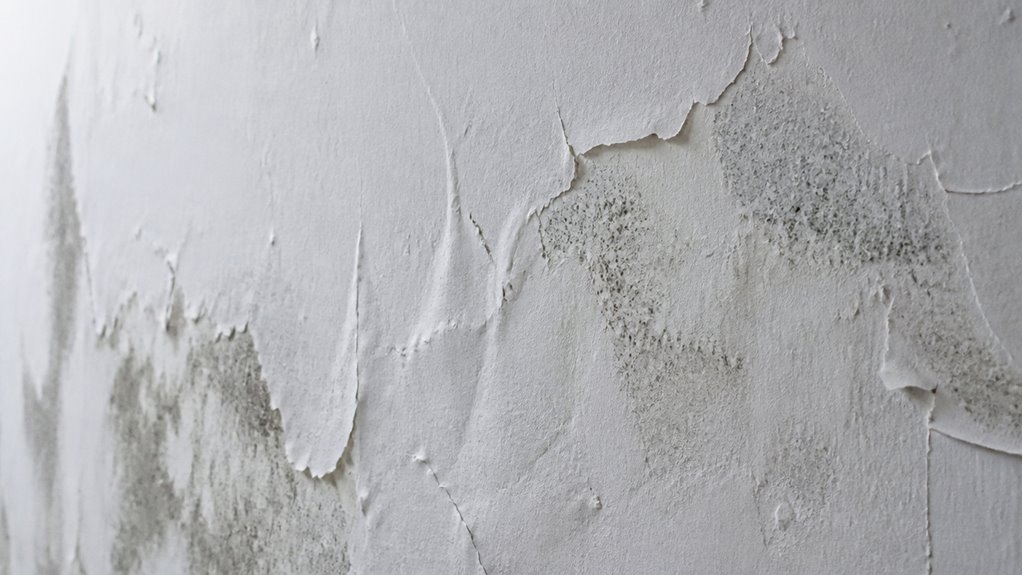
If you’ve painted over mold, you’ll likely see uneven, bubbled, or peeling paint with patchy discoloration like yellow, brown, or dark stains seeping through.
The surface may feel warped, grainy, or bumpy, and the paint might chip or flake unexpectedly.
You might also notice a persistent musty odor, signaling trapped moisture beneath the paint.
These signs usually point to hidden mold growth, so understanding the clues behind the damage can help you address the root problem.
Key Takeaways
- Painted over mold often shows patchy peeling, bubbling, or blistering paint due to trapped moisture beneath the surface.
- Discoloration like yellow, brown, green, or black stains may seep through paint layers or cause a yellow hue on white paint.
- The surface may feel uneven, bumpy, warped, or grainy, with localized paint defects indicating hidden mold growth.
- Persistent musty or earthy odors despite fresh paint suggest mold remains underneath the paint layer.
- Thick, uneven paint or repeated repainting attempts often indicate efforts to cover up recurring mold problems.
Spotting Mold by Surface Texture and Paint Damage

You’ll often notice painted-over mold by examining the surface texture and paint condition closely.
Look for bubbling, blistering, or peeling paint, which typically occurs when moisture traps beneath the surface.
Watch for bubbling or peeling paint, often signaling trapped moisture beneath the surface.
Peeling usually appears patchy rather than uniform. Chipping or flaking paint can accompany hidden mold or water damage.
Pay attention to uneven, bumpy, or warped textures. Painted walls may feel grainy or appear bowed, indicating moisture issues below.
These paint failures frequently occur in damp areas like bathrooms and kitchens. Even freshly painted surfaces can fail quickly if mold remains underneath.
To prevent this, it is essential to identify and fix moisture sources such as leaks or poor ventilation before repainting.
Recognizing Discoloration Signs of Painted Over Mold
Alongside texture and paint damage, discoloration often reveals painted-over mold. You might notice yellowish stains showing through light-colored paint or brown, green, or black patches beneath the surface.
Sometimes, faint shadowy spots only appear under strong light. White paint may develop a yellow hue where moisture or mold exists. If discoloration recurs after cleaning or repainting, it signals unresolved mold lurking underneath.
This uneven staining differs from typical dirt or aging paint by its irregular pattern and persistence. Paying attention to these color changes helps you identify hidden mold problems early, especially in damp areas like bathrooms or kitchens.
Recognizing these discoloration signs is essential for addressing mold properly rather than merely covering it up with new paint. Maintaining indoor humidity levels between 30% and 50% can help prevent mold growth from recurring beneath painted surfaces.
Detecting Musty Odors Behind Fresh Paint
Frequently, a musty or earthy odor persists even after fresh paint has been applied. This signals hidden mold beneath the surface.
This smell indicates mold growth trapped under the paint layer, which fresh paint cannot mask or eliminate. You should pay attention to these odors, especially in damp areas like bathrooms or basements.
They often accompany mold-related damage.
Proper ventilation and moisture control are essential to prevent mold growth recurrence behind painted surfaces.
| Odor Characteristic | Possible Cause |
|---|---|
| Persistent musty | Mold growth behind paint |
| Earthy scent | Moisture promoting mold |
| Odor despite paint | Mold not removed before painting |
| Damp or stale smell | Hidden water damage |
Detecting these odors early helps you address mold issues before they worsen or cause health problems.
What Moisture Clues Tell You About Hidden Mold?
Noticing moisture-related clues around painted surfaces can reveal hidden mold problems that paint alone tries to conceal.
Spotting moisture signs on painted walls can uncover mold issues lurking beneath the surface.
You should watch for water stains, peeling paint, and bubbling, especially in kitchens, bathrooms, or ceilings where humidity is high.
Cracks and blisters often indicate trapped moisture weakening paint adhesion, creating an environment mold thrives in.
Repeated dampness or water damage in these areas can keep mold growing beneath paint layers, even if you can’t see it.
If you observe soft or warped wall sections, that’s another warning sign of concealed mold fueled by moisture.
Addressing the moisture source is essential because paint only masks the issue temporarily.
Detecting these moisture clues early helps you avoid costly repairs and health risks associated with hidden mold.
Proper cleaning methods, including using gentle techniques and protective gear, are crucial when dealing with surfaces affected by moisture and soot to prevent further damage and health hazards related to respiratory exposure.
Paint Patterns That Reveal Concealed Mold
Moisture-related signs often go hand in hand with distinctive paint patterns that signal concealed mold.
You’ll notice bubbling, blistering, or peeling paint, especially in damp areas like bathrooms or kitchens. These paint failures usually appear in uneven patches rather than smooth peeling.
Discoloration is another clue. Yellow, brown, green, or dark stains can seep through paint layers, sometimes visible only in direct light.
The surface may feel uneven or bumpy, with warping or bowing indicating moisture damage beneath. Thick or uneven paint layers could suggest repeated attempts to cover mold.
If you see these localized paint defects—bubbles, discoloration, texture changes—or detect a persistent musty odor, it’s likely mold remains hidden beneath the paint.
Proper remediation is necessary rather than just repainting. Prompt cleaning and regular inspection prevent costly damage and ensure mold does not degrade underlying materials.
Frequently Asked Questions
How Can I Safely Remove Mold Before Repainting?
You should start by wearing protective gear like gloves, goggles, and a mask.
Then, scrub the moldy area with a mixture of water and detergent or a commercial mold cleaner.
Rinse thoroughly and let it dry completely.
If the mold is stubborn, use a diluted bleach solution (1 cup bleach to 1 gallon water), but never mix bleach with ammonia.
Make certain proper ventilation throughout and fix any moisture issues before repainting to prevent mold’s return.
What Types of Paint Resist Mold Growth Best?
You should choose paint specifically formulated to resist mold growth, like mold-resistant or antimicrobial paints.
These contain additives that inhibit mold spores. Look for paints labeled for bathrooms or kitchens, as they handle humidity better.
Semi-gloss or satin finishes also repel moisture more effectively than flat paint.
Using a primer with mold inhibitors before painting further protects your surfaces.
This combination helps prevent mold from returning in damp areas.
Can Painted-Over Mold Affect Indoor Air Quality?
Yes, painted-over mold can affect indoor air quality.
When mold remains hidden beneath paint, it continues to release spores and mycotoxins into the air, even if you don’t see it.
This can cause musty odors and trigger allergies or respiratory problems.
To protect your health, you should address the underlying mold and moisture issues before repainting, rather than just covering it up.
How Long After Painting Can Mold Reappear?
Mold can reappear as soon as a few days to weeks after painting if the underlying moisture issue isn’t fixed.
You’ll notice bubbling, peeling, or discoloration quickly because paint traps moisture, creating a perfect environment for mold growth.
To prevent this, you must address leaks, humidity, or water damage first.
Painting over mold only masks the problem temporarily but doesn’t stop it from returning, sometimes even faster than before.
Should I Use a Mold Primer Before Repainting?
Imagine you repainted a bathroom wall but saw mold reappear within weeks. Yes, you should use a mold primer before repainting.
Mold primers contain antimicrobial agents that inhibit mold growth and seal moisture. This step prevents mold from resurfacing and protects your paint job.
Skipping it risks recurring mold and paint damage. Always clean the surface thoroughly, fix moisture issues, then apply a mold primer for lasting results.
Final Answer: What Does Painted Over Mold Look Like?
You might think a fresh coat of paint means a clean, healthy surface, but painted over mold tells a different story.
While the surface appears smooth and vibrant, subtle texture changes and discoloration hint at hidden issues.
The absence of visible damage contrasts sharply with the persistent musty odor and moisture clues lurking beneath.
Being aware of these signs helps you address mold problems early, preventing long-term damage and health risks.