Can Fleas Live on Wood or Hide in Cracks?
You won’t find fleas living or feeding directly on wood, since adult fleas need blood meals from animal hosts to survive and reproduce.
Wood itself lacks nutrients, so fleas only use smooth surfaces as temporary resting spots.
However, cracks and crevices in wood can harbor flea eggs and larvae, protected by dust and stable microclimates that support their development.
Understanding these hidden habitats helps you manage and prevent infestations more effectively.
Key Takeaways
- Fleas do not live or feed on wood itself, as it lacks nutrients and blood meals essential for their survival.
- Adult fleas use wood surfaces only as temporary resting spots while waiting to jump onto hosts.
- Flea eggs and larvae can survive in dust-filled cracks and crevices within wood flooring, feeding on organic debris.
- Cracks and gaps in wood create protected microhabitats with stable humidity that support flea immature stages.
- Smooth, clean wood discourages flea presence, but accumulated dust and debris in wood gaps promote flea development.
Can Fleas Live on Wood?

Can fleas actually live on wood surfaces? Fleas don’t inhabit wood itself because it lacks the nutrients and environment necessary for their survival.
You won’t find fleas boring into or feeding on wood, as they require organic material and blood meals from hosts. When you spot fleas on wooden surfaces, they’ve most likely arrived from a nearby infested host or environment.
Smooth, clean wood surfaces offer no suitable habitat, so fleas on wood are typically temporary visitors rather than permanent residents.
While wood may occasionally harbor fleas in cracks or crevices, the solid wood surface itself can’t support flea life cycles, making it an unsuitable habitat for sustaining flea populations independently.
Proper prevention measures are essential to manage flea infestations effectively and avoid their spread to household surfaces.
Why Adult Fleas Need Hosts, Not Wood?
If you’ve ever wondered why adult fleas rarely stay on wood surfaces, it’s because they depend entirely on animal hosts for survival.
Adult fleas require blood meals to sustain their metabolism, reproduce, and complete their life cycle.
Wood lacks the nutritional resources fleas need, so they can’t feed or thrive on it.
Without a host, adult fleas typically survive only a few days to a few weeks, depending on environmental factors like temperature and humidity.
They remain inactive or hidden, conserving energy, until an appropriate host, such as a pet or wildlife, passes nearby.
Fleas can detect heat, carbon dioxide, and vibrations from hosts, enabling them to jump onto animals quickly.
Consequently, wood surfaces serve merely as transient resting spots rather than permanent habitats for adult fleas.
Similar to how surface contamination can prevent proper bonding in materials, fleas avoid wood as it does not provide the necessary nutritional resources for their survival.
Why Fleas Hide in Wood Cracks and Crevices?
You know, fleas really like to hide in those little cracks and crevices in wood. Why do they do that? Well, it turns out these gaps provide a great shelter from things like light, heat, and dryness.
In those protected spaces, flea eggs and larvae can develop without being disturbed. It’s like a cozy little home for them!
Understanding this behavior is super important if you want to tackle hidden flea populations effectively. So, keeping an eye on those nooks and crannies can definitely help in your flea control efforts!
Shelter in Wood Gaps
Although fleas don’t live directly on wood surfaces, they frequently seek refuge in cracks and crevices within wooden floors and furniture.
These narrow gaps provide fleas with essential shelter, protecting eggs and larvae from disturbance and predation.
You’ll find flea eggs often deposited in floorboard gaps, where dust and debris accumulate, creating a microhabitat conducive to larval development.
The irregular surfaces in these spaces mimic the protective environment fleas require, allowing immature stages to thrive until a host returns.
Adult fleas use these wood gaps to hide temporarily, waiting to jump onto passing animals.
Understanding this behavior helps you focus control efforts on treating cracks, seams, and joints in wood, rather than smooth surfaces alone.
This approach improves the efficacy of flea management in homes with wooden elements.
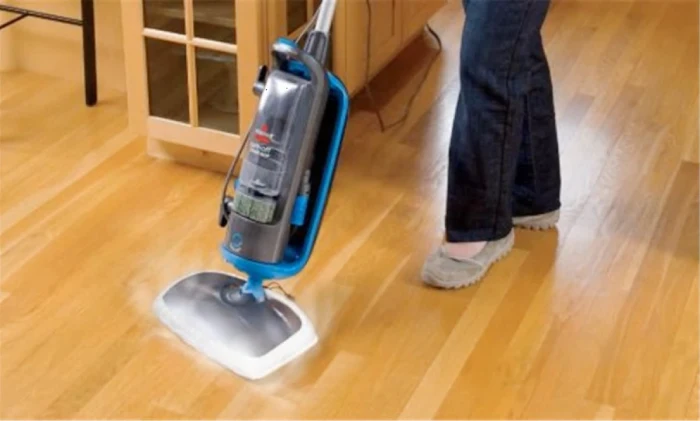
Regular cleaning of these grooves using vacuuming the floor and other methods reduces flea habitat and helps control infestations.
Protection From Environment
Because fleas are highly sensitive to environmental conditions, they seek refuge in wood cracks and crevices that offer protection from temperature extremes, humidity fluctuations, and predation.
These narrow, shaded gaps maintain stable microclimates with higher humidity and moderated temperatures, vital for flea eggs and larvae survival.
The physical barriers also shield them from predators and environmental hazards, increasing their chances of developing until a host appears.
You’ll find these hiding spots especially in older, cracked wood where dust and organic debris accumulate, providing nourishment for larvae.
Although fleas don’t live inside the wood itself, these protected spaces mimic the shelter they need, helping them persist in your home environment.
Properly addressing these areas is essential to disrupt flea survival effectively.
Controlling indoor humidity levels in these environments can reduce flea proliferation and limit their survival opportunities.
Hidden Flea Development
The protected microclimates found in wood cracks and crevices create ideal conditions for flea eggs and larvae to develop away from predators and environmental stressors.
These narrow gaps maintain warmth, humidity, and darkness, which are essential for flea immature stages to survive and mature.
Flea eggs fall into these spaces, where debris and dust accumulate, providing a nutrient-rich environment for larvae.
Unlike adult fleas, which require a host for blood meals, larvae thrive in these concealed areas, protected from cleaning efforts and environmental fluctuations.
You’ll find that older wooden floors with wider cracks or baseboard gaps harbor more flea developmental stages.
To effectively control infestations, you must target these hidden microhabitats, as simply treating visible surfaces won’t eliminate eggs and larvae concealed within wood crevices.
Maintaining proper humidity control is crucial to disrupting these ideal conditions and preventing flea development in such environments.
How Flea Eggs and Larvae Survive in Wood Flooring?
When flea eggs and larvae find shelter in the cracks and crevices of wood flooring, they exploit these hidden, dust-filled spaces to develop safely away from light and disturbances.
These microhabitats provide the warmth, humidity, and organic debris necessary for larvae to thrive. The larvae feed on dead skin cells, flea feces, and other microscopic particles accumulated in these gaps.
Unlike adult fleas, eggs and larvae don’t require a host but depend on concealed environments for survival. The irregular surfaces of aged or damaged wood trap moisture and dust, creating conducive conditions.
Because wood itself lacks nutrients, it’s the debris within these fissures that sustains development. You must target these hidden stages in control efforts, as eggs and larvae can persist longer than adults in such protected niches.
Regular and thorough cleaning methods such as sweeping and vacuuming can reduce the dust and organic debris that support flea larvae in wood flooring.
Why Wood Gaps Provide Ideal Shelter for Fleas?
Wood gaps offer fleas a uniquely protective microenvironment that supports their survival and development.
These narrow spaces shelter flea eggs and larvae from environmental stressors like desiccation, temperature fluctuations, and predators.
Dust and organic debris accumulate in these crevices, providing necessary nutrients for larvae.
Additionally, gaps maintain higher humidity, essential for flea development.
Maintaining consistent ventilation and humidity control in these environments is crucial to mitigate flea proliferation and related pest issues.
| Feature | Benefit to Fleas | Explanation |
|---|---|---|
| Narrow gaps | Protection | Limits exposure to predators and elements |
| Dust accumulation | Nutrient source | Supports larval feeding and growth |
| Humidity retention | Developmental support | Prevents desiccation of eggs and larvae |
| Concealment | Avoids detection | Hinders removal during cleaning |
Wood Conditions That Attract Fleas
Narrow gaps and accumulated debris create inviting microhabitats. Specific conditions further influence flea presence in wooden environments.
You’ll find fleas attracted to wood when warmth, humidity, and darkness combine to support their life cycle stages. Moisture trapped between floorboards or inside baseboard cracks enhances egg and larva survival, making these spots more vulnerable.
Fleas thrive in warm, dark, humid wood areas where moisture supports their eggs and larvae survival.
Damaged or loose boards increase hiding spaces. Dust accumulation supplies organic matter larvae need. Smooth, dry, and clean wood discourages flea activity.
Key wood conditions attracting fleas include:
- Warm, dark, and humid microclimates in cracks and seams
- Moisture retention between floorboards or furniture joints
- Dust and organic debris buildup in grooves and gaps
- Swollen or loose wooden boards creating protected niches
- Baseboard gaps and corners accumulating flea eggs and larvae
Controlling moisture levels in wooden structures is essential to reduce flea infestations and prevent mold growth that can further compromise wood integrity.
How to Detect Fleas in Wooden Floors and Furniture?
You’ll probably first notice fleas by spotting small, dark moving specks or flea dirt near the edges of your wooden floors and in the seams of your furniture.
It’s a good idea to take a close look at the cracks, crevices, and gaps in the floorboards or baseboards. These areas can be perfect hiding spots for flea eggs, larvae, and debris.
Make sure to pay extra attention to any dust-filled or damaged sections. Those are the spots where fleas are more likely to hide and develop.
Just take your time and really inspect those tricky areas!
Keep in mind that gaps caused by wood shrinkage can create additional hiding places for fleas in wooden floors.
Signs Of Flea Presence
Frequently, detecting fleas in wooden floors and furniture requires close inspection of cracks, seams, and crevices where eggs, larvae, and debris accumulate.
You should look for subtle signs indicating flea presence, as adult fleas rarely stay long on wood surfaces. Key indicators include:
- Tiny, white flea eggs scattered in gaps or joints
- Small, worm-like larvae thriving in dust-filled cracks
- Flea dirt (dark, granular feces) near baseboards or floor edges
- Flea bites on pets or humans indicating nearby infestation
- Sudden flea activity, like jumping adults on or near wooden furniture
These signs help you pinpoint hidden flea stages, which survive longer in protected wood spaces than adults. Detecting them early is vital for effective control and prevents spreading to hosts. Additionally, moisture accumulation in wood crevices can create favorable conditions for flea larvae development and increase infestation risk.
Inspecting Cracks And Crevices
Identifying flea presence on wooden surfaces requires careful examination beyond visible areas, focusing on cracks, crevices, and seams where eggs and larvae accumulate.
You should inspect gaps between floorboards, especially if they’re loose or swollen, as these can trap dust and debris that support flea development.
Pay close attention to baseboards and corners in wooden furniture, where flea eggs often fall and larvae find shelter.
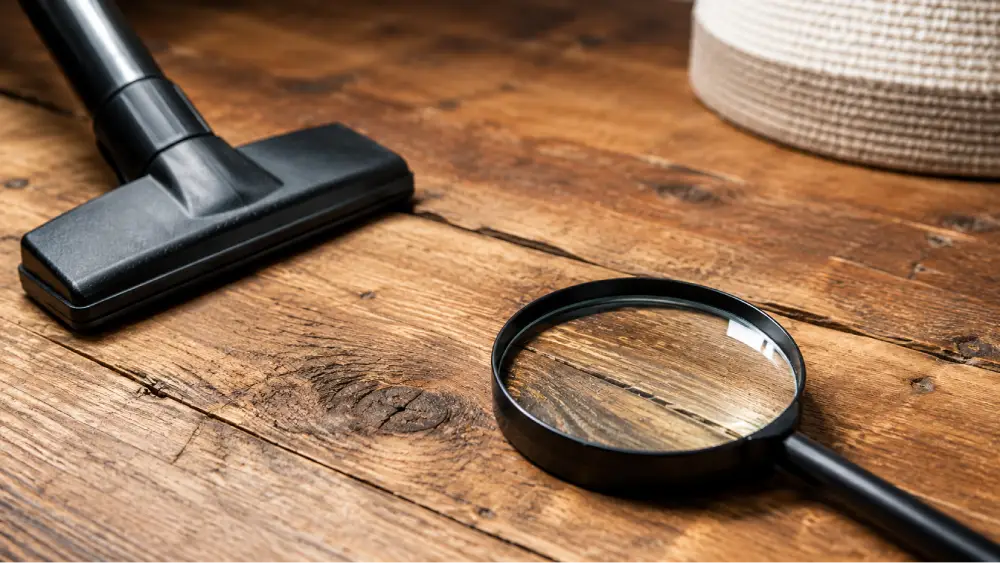
Use a flashlight and magnifying glass to detect tiny eggs or larvae hidden in grooves or joints.
Smooth, clean wood is less likely to harbor fleas, so focus on older or damaged areas.
Regularly vacuum these hidden spaces to disrupt flea life cycles, since eggs and larvae persist longer than adults and require targeted removal for effective control.
How to Control Fleas in Wooden Areas?
Although fleas don’t live directly in wood, controlling them in wooden areas requires targeting the hidden eggs and larvae that accumulate in cracks, crevices, and seams.
You need to focus on these protected microhabitats where flea development occurs, rather than the wood surfaces themselves. Effective control involves disrupting the flea life cycle by removing eggs and larvae from these sheltered spots.
To control fleas in wooden areas, you should:
- Vacuum cracks, baseboards, and floor edges thoroughly.
- Use insect growth regulators (IGRs) targeting flea larvae and eggs.
- Seal gaps and cracks in wooden flooring and furniture seams.
- Maintain low humidity and keep wooden surfaces clean and dry.
- Treat infested pets and nearby wildlife to prevent reinfestation.
These steps reduce flea survival and prevent population resurgence in wooden environments.
Frequently Asked Questions
Can Fleas Survive on Treated or Sealed Wood Surfaces?
You won’t find fleas surviving long on treated or sealed wood surfaces because these surfaces lack the moisture, organic debris, and cracks fleas need for shelter and development.
Sealing wood eliminates gaps and crevices where eggs and larvae hide, drastically reducing flea survival.
While adult fleas might temporarily jump onto sealed wood, they can’t establish or reproduce there.
Maintaining clean, sealed wood effectively limits flea habitation and infestation risks.
Do Fleas Prefer Wood Over Other Floor Types?
You might think fleas prefer wood floors, but they actually favor carpet or fabric where they find warmth and debris for eggs and larvae.
Wood, especially smooth, sealed types, lacks these conditions. However, fleas can hide in cracks or gaps in wood, which mimic carpet fibers’ shelter.
How Long Can Flea Eggs Remain Dormant in Wood Gaps?
Flea eggs can remain dormant in wood gaps for up to two weeks under favorable conditions.
Some sources report eggs surviving several months if protected.
Warmth, humidity, and debris in cracks prolong egg viability.
Since eggs are tiny and stick to dust, they often hide in floorboard seams.
This makes thorough cleaning essential.
Targeting these hidden eggs helps prevent larvae emergence and infestation growth in your home.
Are Certain Wood Types More Resistant to Flea Infestations?
You might say some woods play hard to get with fleas.
Denser, smoother woods like hardwoods resist flea infestations better because they lack cracks and moisture that fleas need.
Softwoods or older, damaged wood with gaps and humidity create inviting microhabitats for flea eggs and larvae.
Choosing high-quality, well-maintained wood reduces hidden flea shelters, making your home less hospitable to these pests and simplifying control efforts.
Can Flea Infestations Spread Through Wooden Furniture Transport?
Yes, flea infestations can spread through wooden furniture transport.
Flea eggs and larvae often hide in cracks, seams, and crevices of wooden furniture, especially in dust or debris-filled areas.
When you move infested furniture, you risk transferring these hidden stages to a new location.
To prevent spread, thoroughly clean, vacuum, and treat furniture before transport.
Focus on joints and undersides where fleas and their immature stages often reside.
Check Wood Cracks Where Fleas May Hide
Now that you know fleas can’t live on wood itself but thrive in its cracks and gaps, isn’t it clear why controlling their environment is vital?
Adult fleas need hosts, yet their eggs and larvae find refuge in wooden flooring’s crevices.
By understanding how wood conditions attract fleas and where they hide, you can effectively detect and eliminate them.
Taking precise action on these vulnerable spots is key to breaking the flea life cycle in your home.