Drill Press vs Milling Machine: Accuracy Compared
You use a drill press for straightforward vertical holes requiring axial downward force.
It benefits from its simplicity, efficiency, and budget-friendly design.
Milling machines handle complex, multi-axis cutting with higher precision.
They accommodate lateral and angled forces for intricate shapes and tougher materials.
These machines feature robust frames, precise X-Y movement, and powerful motors.
They also have larger pulleys and wider belts.
Understanding these distinctions helps optimize your tool selection.
This knowledge can help you avoid performance or accuracy issues as you explore their full capabilities.
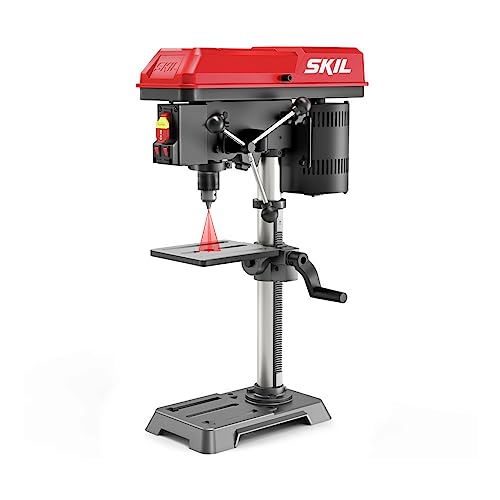
- POWERFUL 6.2 AMP INDUCTION MOTOR—Power through wood, metal, and other materials
- 5-SPEED SYSTEM—Take advantage of 5 speeds from 610 to 2800 RPM for different material types
- LASER ALIGNMENT SYSTEM—Precisely execute drilling maneuvers

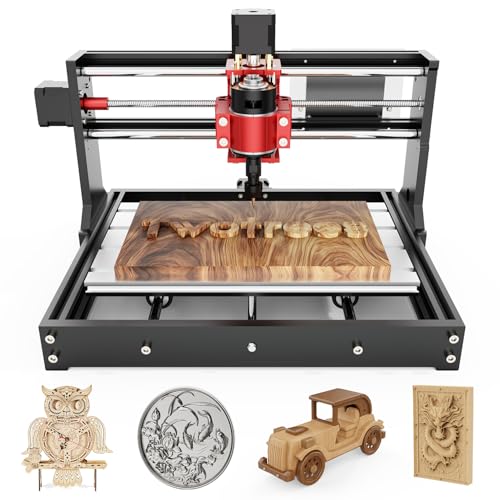
- All-Metal Z-Axis & 0.1mm High Precision – Upgraded metal Z-axis with T8 backlash-eliminating lead…
- 15Lbs Lightweight & Small Space Friendly – Only 15 Pounds and 420x355x280mm compact size, fits any…
- GRBL CONTROL BOARD, USB WIRED CONNECTION – 32 GRBL control board with USB data port for direct wired…
Key Takeaways
- Drill presses specialize in vertical drilling using axial downward forces for simple, repetitive holes with budget-friendly efficiency.
- Milling machines support multi-axis cutting with high precision, handling complex shapes and lateral forces for intricate machining.
- Milling machines feature robust frames, larger pulleys, wider belts, and powerful motors for sustained radial and axial cutting loads.
- Drill presses have limited table movement and precision, mainly controlling hole depth and diameter along the Z-axis.
- Milling machines offer precise X, Y, Z table movement and T-slots for versatile workholding and tight tolerance machining.
Drill Press vs Milling Machine Comparison Table
| Feature | Drill Press | Milling Machine |
|---|---|---|
| Main Purpose | Best for straight vertical drilling and repeated hole-making | Best for cutting, shaping, slotting, facing, and precision machining |
| Axis Movement | Mostly limited to the Z-axis | Moves across X, Y, and Z axes for controlled positioning |
| Precision Level | Good for basic hole depth and diameter control | Offers higher accuracy and tighter tolerances |
| Cutting Force | Designed for downward axial force | Handles axial and lateral cutting forces |
| Best Materials | Works well for wood, plastic, and light metal drilling | Better for metalworking, complex parts, and tougher materials |
| Tooling | Uses drill bits for boring holes | Uses end mills, cutters, and drill bits for multiple operations |
| Table Design | Usually fixed or lightly adjustable | Stronger table with T-slots and precise movement |
| Project Complexity | Ideal for simple, repetitive projects | Ideal for complex shapes and detailed machining |
| Cost Range | Usually more affordable and beginner-friendly | Usually more expensive but more capable |
| Best Choice For | DIY users, woodworkers, and basic shop drilling | Machinists, metal fabricators, and precision-focused users |
How Drill Presses and Milling Machines Work?

Understanding how drill presses and milling machines operate is essential for selecting the right tool for your project.
Grasping the functions of drill presses and milling machines is key to choosing the ideal tool.
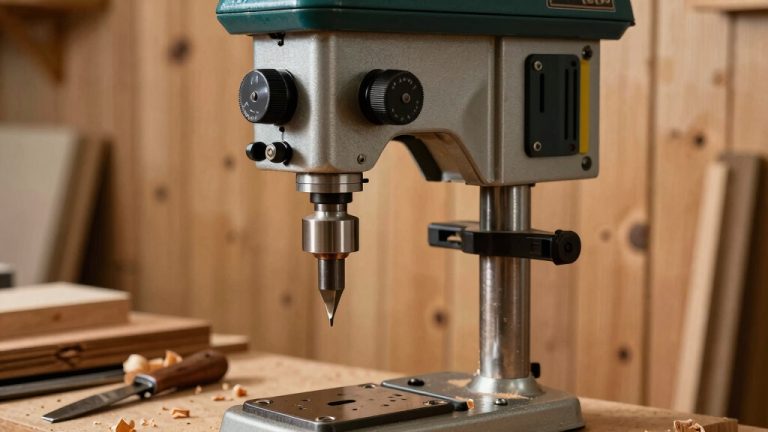
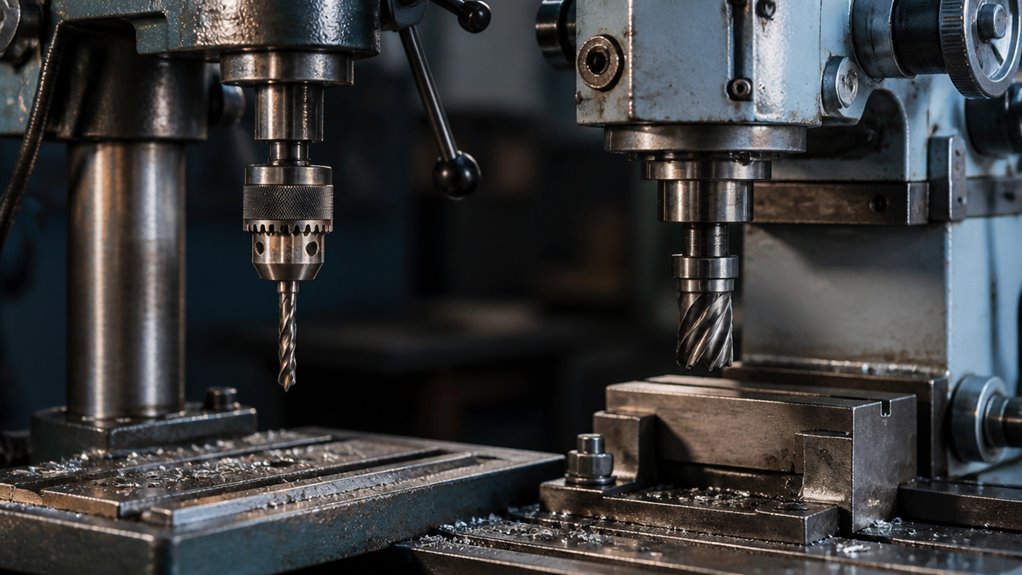
A drill press primarily facilitates vertical drilling along the Z-axis, using interchangeable bits to create holes of varying diameters. It spins the tool at variable speeds, focusing on axial downward forces.
In contrast, a milling machine provides multi-axis cutting capabilities—X, Y, and Z—using end mills for drilling, facing, and slotting. This versatility comes from its ability to move the workpiece precisely in multiple directions.
Both machines remove material by spinning tools at controlled speeds. The milling machine’s complex movements allow for intricate shapes and higher precision, while the drill press suits repetitive, straightforward hole drilling tasks.
For metalworking, drill presses typically feature variable speed controls and sturdy cast-iron tables to ensure precision and durability.
Key Design Differences Between Drill Press and Mill
Although both drill presses and milling machines perform material removal by rotating tools, their structural designs reflect fundamentally different operational demands.
You’ll notice the drill press head is engineered primarily for downward axial forces, limiting movement to the Z-axis. Its table remains fixed or offers minimal adjustment, lacking multi-axis motion.
In contrast, milling machines feature robust heads designed to withstand lateral and angled forces, accommodating complex cutting actions. Their tables are thicker, equipped with T-slots, and move precisely along X and Y axes, enabling versatile positioning.
This multi-axis capability supports diverse machining tasks beyond drilling, like slotting and facing. Additionally, milling machines have larger pulleys, wider belts, and motors built to handle radial as well as axial loads, reflecting their heavier-duty construction compared to drill presses.
Models such as those with a brushless motor illustrate advancements in power and efficiency, highlighting the evolving technology that supports precision and durability in heavy-duty machining tools.
Precision and Accuracy: Drill Press vs Milling Machine
When you require high positional accuracy and repeatability, a milling machine outperforms a drill press by utilizing its movable table to precisely control workpiece positioning along multiple axes.
The milling table’s ability to move in X, Y, and Z directions allows you to maintain tight tolerances and perform complex machining with consistent results.
In contrast, a drill press confines you to vertical drilling along the Z-axis, limiting precision mainly to hole depth and diameter.
While a drill press offers stability over handheld drills for repetitive vertical holes, it lacks the multi-axis control needed for advanced precision tasks.
Milling machines also withstand lateral cutting forces, ensuring dimensional accuracy during facing and slotting operations, which a drill press’s rigid downward force design can’t replicate.
For workshops balancing precision and budget, understanding the trade-offs between capacity and motor strength can guide equipment investment decisions.
What Each Tool Is Best For: Applications Compared
Choose a drill press if your work primarily involves quick, consistent vertical hole drilling with moderate precision. Its straightforward design excels at repetitive tasks like woodworking or basic metal fastening.
You’ll benefit from its stability over handheld drills when producing uniform holes along the Z-axis.
Conversely, opt for a milling machine when your projects demand multi-axis cutting, precise shaping, or surface finishing. The milling machine’s movable table and robust head handle complex operations such as slotting, facing, and metal shaping with high tolerances.
It’s indispensable for machining intricate geometries or repeated precision work. While the drill press suits straightforward hole drilling, the milling machine’s versatility and accuracy make it ideal for fabrication, manufacturing, and applications where dimensional control and varied tool paths are critical.
Choose based on your complexity and precision requirements. For woodworking enthusiasts, a drill press with variable speed control can offer enhanced versatility and precision across different materials and project sizes.
Power and Construction Differences Affecting Performance
You might’ve noticed that milling machines tend to use larger pulleys and wider belts. This design helps them deliver more power compared to drill presses, which rely on smaller, narrower components specifically optimized for vertical drilling. It’s interesting to see how these differences play out in their performance.
Now, let’s talk about their motors. Milling machines are built to handle both radial and axial forces, making them quite versatile. On the other hand, drill presses are mainly focused on axial loads. This distinction is pretty crucial and really highlights the different capabilities of each machine.
When you combine these factors with the more robust construction of milling machines, it becomes clear why they excel in cutting performance and durability, especially during heavy-duty tasks. It’s all about how these machines are designed to meet specific demands! Additionally, features like tool-free depth adjustment found in precision tools improve ease of use and accuracy in related machining applications.
Pulley And Belt Sizes
Understanding the differences in pulley and belt sizes between drill presses and milling machines is essential for evaluating their power transmission and overall performance.
Milling machines utilize larger pulleys paired with wider belts, enabling them to handle higher torque and sustain radial and axial cutting forces without slippage. This design supports heavier workloads and prolonged operation.
In contrast, drill presses employ smaller pulleys with narrower belts optimized for axial downward drilling forces, reflecting their focus on vertical hole-making rather than complex machining.
The belt width and pulley diameter in milling machines directly contribute to improved power delivery, reducing belt wear and enhancing stability during multi-axis cutting.
When selecting between these tools, consider how their pulley and belt configurations influence durability, torque capacity, and precision under varying operational stresses.
Additionally, the use of brushless motors in modern machines enhances efficiency and tool life, providing consistent power output for demanding tasks, as seen in reciprocating saws with brushless motor technology.
Motor Design Variations
Motors in milling machines are engineered to deliver robust power suitable for both radial and axial cutting forces. This ensures consistent performance during complex machining tasks.
When you compare these motors to those in drill presses, you’ll notice key differences in power and construction that impact their efficiency.
- Milling machine motors feature larger pulleys and wider belts, enabling greater torque and continuous operation under heavy loads.
- Drill press motors utilize smaller pulleys and narrower belts, optimized primarily for axial downward force during vertical drilling.
- Milling motors are constructed to handle multidirectional stresses, supporting cutting forces from various angles without loss of precision.
- Drill press motors focus on vertical force application, limiting their versatility and structural demands.
Understanding these distinctions helps you select the right tool based on the machining complexity and force requirements.
Additionally, power tools with features like brushless motors offer enhanced efficiency and durability, which can be a critical factor in demanding machining environments.
Structural Robustness Impact
Although both drill presses and milling machines serve material removal functions, their structural robustness directly influences performance under varying loads.
You’ll notice the drill press head is engineered primarily for axial, downward forces. This limits its ability to handle side loads or complex cutting stresses.
In contrast, milling machines feature a sturdier construction with a head designed to withstand radial and axial forces. This enables multi-directional cutting.
Their tables are thicker, equipped with T-slots, and provide precise X-Y axis movement, enhancing rigidity during machining.
Additionally, milling machines utilize larger pulleys and wider belts, delivering higher power and torque for demanding operations.
When you require stability under aggressive cuts and versatile machining, the milling machine’s robust frame and powertrain guarantee consistent accuracy and durability far beyond what a drill press can offer.
Proper tool selection, including blades with heat-resistant coatings, can further improve cutting performance and tool longevity in machining tasks.
Cost Comparison: Drill Press vs Milling Machine
When comparing costs, you’ll find that drill presses generally come with a much lower price tag than milling machines. This difference arises from design complexity, power, and versatility. Here’s a breakdown:
Drill presses are more affordable than milling machines due to simpler design, less power, and limited versatility.
- Drill presses typically cost a few hundred dollars, suitable for basic axial drilling tasks.
- Milling machines start at several thousand dollars, reflecting their multi-axis capabilities and robust construction.
- Milling machines demand higher ongoing tooling expenses, such as specialized end mills, unlike interchangeable drill bits for presses.
- Mill drills, combining features, are pricier than similar-sized drill presses due to added functionality.
Understanding these cost factors helps you assess initial investment and operating expenses without sacrificing precision or capability where needed. Additionally, the choice of cutterhead technology can significantly affect tool performance and maintenance costs in machining operations.
Choosing the Right Tool for Your Project
Before you pick a tool for your project, it’s really important to think about how complex it’s and what kind of precision you need. If you’re working on something that requires multi-axis cutting and super tight tolerances, then a milling machine is definitely the way to go.
It really offers the capabilities you need for those kinds of tasks.
On the other hand, if your project is more straightforward—like just drilling vertical holes or doing some repetitive drilling—then a drill press is a much more efficient and budget-friendly choice.
It gets the job done without all the bells and whistles! Additionally, selecting tools with features like high tooth counts can greatly improve the precision of your cuts when working with molding and trim.
Project Requirements Overview
In selecting the appropriate machine for your project, carefully evaluating the specific machining requirements guarantees peak efficiency and accuracy. You need to analyze the nature of the task to decide between a drill press and a milling machine.
Consider these factors:
- Machining Complexity – Simple vertical holes favor a drill press. Complex cuts in multiple axes require a milling machine.
- Precision Needs – High positional accuracy and repeatability point to a milling machine.
- Material and Forces – Milling machines handle lateral and axial forces better. They’re suitable for tougher materials and intricate shapes.
- Project Volume and Speed – For quick, consistent drilling, a drill press excels. For versatile fabrication, invest in a milling machine.
This assessment guarantees you select the tool that aligns perfectly with your project’s technical demands.
Tool Capability Comparison
Compare the capabilities of a drill press and a milling machine by examining their tool functions, design tolerances, and operational versatility.
You’ll find the drill press excels in vertical drilling with interchangeable bits, suited for consistent, less precise holes. In contrast, the milling machine offers multi-axis cutting using end mills, enabling complex shapes and high-precision work.
| Feature | Drill Press |
|---|---|
| Axis Movement | Z-axis only |
| Precision | Moderate, repetitive holes |
| Versatility | Limited to drilling |
| Feature | Milling Machine |
| Axis Movement | X, Y, Z axes |
| Precision | High, complex geometries |
| Versatility | Cutting, facing, slotting |
Choose based on your project’s complexity and accuracy needs.
Avoiding Common Mistakes With Drill Presses and Mills
Although both drill presses and milling machines share some operational similarities, they demand distinct handling techniques to avoid common errors that compromise precision and tool longevity. You must recognize the unique mechanics and apply proper operational discipline.
- Never force a drill press beyond its axial capacity; it’s built for vertical drilling only.
- Avoid neglecting table clamping on a milling machine; T-slots guarantee stability under lateral forces.
- Don’t overlook speed adjustments. Use slower speeds for harder materials on both machines to prevent tool wear.
- Avoid ignoring positional accuracy on mills by failing to properly calibrate the movable table before machining complex geometries.
Frequently Asked Questions
Can a Drill Press Be Converted Into a Milling Machine?
You can’t effectively convert a drill press into a milling machine because their core designs differ fundamentally.
A drill press handles only vertical drilling forces with limited table movement.
In contrast, a milling machine supports multi-axis cutting with a movable table and robust head for sideways forces.
Attempting conversion risks precision loss and structural inadequacy.
Investing in a dedicated milling machine guarantees accuracy, versatility, and durability that a modified drill press can’t match.
What Safety Gear Is Essential When Using These Machines?
You need safety glasses to protect your eyes from flying debris and metal chips.
Wear hearing protection since both machines generate significant noise.
Use gloves cautiously to avoid entanglement; only wear them when handling raw materials, not near rotating parts.
Secure long hair and avoid loose clothing to prevent accidents.
Always use machine guards and ensure proper footwear to guard against dropped tools or materials.
These precautions minimize injury risks effectively.
How Often Should Drill Press and Milling Machine Belts Be Replaced?
How can you guarantee peak machine performance if you don’t regularly replace worn belts?
You should inspect the belts on both your drill press and milling machine every 3 to 6 months, depending on usage intensity.
Replace belts showing cracks, fraying, or glazing immediately.
For heavy use, consider quarterly replacement.
Proper belt tension and alignment are vital; neglecting this can reduce power transmission efficiency and cause premature wear, impacting precision and safety.
Are There Specific Maintenance Routines for Each Machine?
Yes, you’ll need specific maintenance routines. For drill presses, focus on cleaning the spindle and lubricating vertical components regularly.
Check belt tension often to prevent slipping.
Milling machines demand more attention: clean and lubricate all movable axes, inspect T-slots and clamps, and monitor belt wear closely.
You should also calibrate table alignment to maintain precision.
Both require regular motor checks, but milling machines need more detailed upkeep to preserve accuracy and durability.
Can Woodworking Projects Benefit From a Milling Machine?
Oh, sure, you absolutely need a milling machine to make a simple birdhouse!
But seriously, if you want precision cuts, complex geometries, or perfectly flat surfaces on your woodworking projects, a milling machine excels.
It handles multi-axis movements with high accuracy, letting you create detailed joints and shapes impossible with basic tools.
Just remember, it’s heavier, pricier, and demands more maintenance.
Avoid Costly Mistakes Before You Start Machining
When deciding between a drill press and a milling machine, remember that precision hinges on your project’s demands.
While drill presses excel in straightforward drilling tasks, milling machines offer superior accuracy and versatility for complex cuts.
Contrary to the theory that one tool fits all, your choice should reflect the specific tolerances and materials involved.
By analyzing design, power, and cost, you’ll optimize performance and avoid common pitfalls. This ensures you select the right tool every time.

- CHANGE SPEED WITHOUT TOUCHING A BELT — Move the speed lever while the motor runs to set any…
- CAST IRON BASE AND TILTING TABLE, LASER CROSSHAIR, LED LIGHT — A 10″ x 16-1/8″ cast iron base and…
- BUILT FOR THE WOODWORKING BENCH — 12″ swing, 3-1/8″ spindle travel and 5/8″ chuck capacity suit…
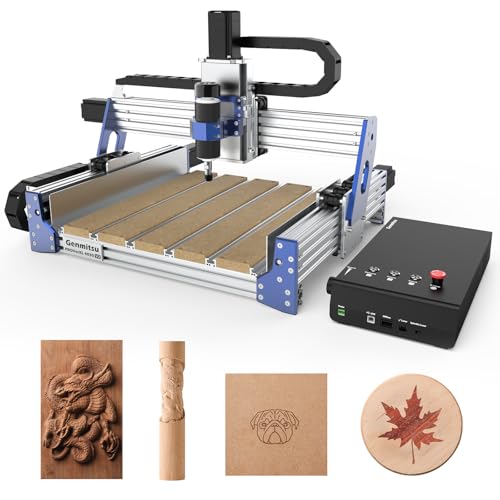
- Faster than before: Say goodbye to step loss and enjoy lower noise levels with the new closed-loop…
- Upgraded Motion System: Enjoy increased precision and accuracy with the 1204 ball screws. The…
- Easy to use: The GRBL-based control board makes it easy to operate the machine via the USB interface…
Last update on 2026-10-13 / Affiliate links / Images from Amazon Product Advertising API