
Is Redwood Good for Outdoor Use: Timeless Choice
You’ll find redwood excellent for outdoor use thanks to its high tannin and natural oil content, which provide strong resistance to decay, insects, and moisture damage.
Its superior shear strength offers structural durability that outperforms many synthetic alternatives. While redwood’s straight grain aids clean cutting and sanding, it does require regular sealing to maintain its weather resistance and appearance.
Understanding its maintenance, sustainability, and project suitability will help you maximize redwood’s outdoor longevity and value.
Key Takeaways
- Redwood’s natural tannins and oils provide excellent decay resistance and insect repellency, making it durable for outdoor use.
- It offers strong structural integrity with shear strength up to five times that of many plastic decking products.
- Redwood resists moisture absorption, minimizing warping, splitting, and swelling for stable outdoor performance.
- Weather exposure causes redwood to age to a silver-gray patina without compromising its strength or durability.
- Regular sealing and maintenance, including UV-protective coatings, extend redwood’s outdoor lifespan and appearance.
Why Redwood Is Naturally Durable?

When you choose redwood for outdoor projects, you tap into its inherent durability, driven by natural preservatives embedded within the wood.
Redwood’s heartwood contains high concentrations of tannins and natural oils, which deter decay fungi and termites, making it uniquely resistant to biological degradation.
You’ll notice that this decay resistance is uneven since the sapwood contains significantly fewer tannins, so selecting heartwood is essential for maximum longevity.
Additionally, redwood’s shear strength surpasses that of many plastic decking products by up to five times, providing exceptional structural integrity.
This combination of chemical defenses and mechanical strength ensures that redwood withstands biological threats and mechanical stresses better than many alternatives, making it a superior choice for long-lasting outdoor construction where durability is paramount.
For optimal outdoor performance, it is important to apply protective coatings regularly to maintain redwood’s resistance to moisture and UV damage.
Redwood’s Weather Resistance and Performance
Beyond its natural durability against decay and insects, redwood excels in resisting the challenges posed by weather and environmental conditions.
Redwood naturally withstands decay, insects, and harsh weather with exceptional resilience.
Its high concentration of natural oils and tannins creates a moisture barrier, minimizing water absorption and reducing the risk of warping, splitting, or swelling.
This guarantees redwood maintains dimensional stability even under intense sun and heavy rainfall.
Over time, it weathers to a distinctive silver-gray patina without compromising structural integrity.
Redwood meets ASTM E-84 Class B flame spread standards and is approved for California’s Wildland Urban Interface zones, demonstrating notable fire resistance.
You’ll find that redwood’s combination of moisture repellency, insect deterrence, and weathering resilience makes it especially reliable for long-term outdoor applications where consistent performance is critical.
For enhanced longevity, applying a penetrating, oil-based sealer designed for outdoor wood can protect redwood from UV damage and moisture infiltration.
Strengths and Challenges of Working With Redwood
You’ll really appreciate redwood’s straight grain and lightweight composition. It makes cutting and shaping a breeze with standard woodworking tools. Plus, the natural oils and tannins give it great durability.
But here’s the catch: the softer heartwood needs some routine maintenance. Otherwise, it can get dents and may not hold up as well against decay. Additionally, redwood’s natural oils provide pest resistance that can reduce the need for chemical treatments.
Workability and Grain
Working with redwood offers distinct advantages due to its straight grain and lighter weight. These features enhance both handling and machining.
You’ll find it cuts and sands cleanly with standard woodworking tools, allowing for precise joinery and smooth finishes. Its grain structure minimizes warping and splitting during fabrication, which is essential for outdoor applications.
However, redwood’s softer composition means you need to be cautious of dents and scratches, especially in high-traffic areas. You should also anticipate some variability in grain tightness, which can affect surface smoothness and finishing. Redwood’s natural rot resistance contributes to its suitability for outdoor projects by protecting it against decay and insect damage.
Durability and Maintenance
While redwood’s workability supports intricate craftsmanship, its durability and maintenance demands also play a significant role in long-term performance.
Redwood’s heartwood contains natural oils and tannins that resist decay, insects, and moisture, ensuring resilience in harsh outdoor conditions. However, sapwood’s lower tannin content means decay resistance varies within a single board.
You’ll appreciate redwood’s resistance to warping and splitting, along with its compliance with ASTM E-84 Class B flame standards, making it suitable even in fire-prone zones.
Maintenance involves annual sealing or staining to preserve appearance and extend lifespan. Though lighter and softer than tropical hardwoods, it’s prone to dents in high-traffic areas.
With proper care, redwood can provide decades of reliable, attractive outdoor service, balancing natural durability with necessary upkeep. Applying protective coatings can further enhance redwood’s moisture resistance and longevity in outdoor environments.
Best Outdoor Projects for Redwood
When selecting materials for outdoor projects, redwood stands out for its unique combination of strength, decay resistance, and aesthetic appeal. You can confidently use it for decks, fences, and outdoor furniture, benefiting from its natural oils and tannins that resist moisture and insects.
Its workability allows detailed craftsmanship, ideal for pergolas and decorative elements. Below is a guide to match redwood’s properties with your project needs:
| Project Type | Key Benefits | Recommended Use Case |
|---|---|---|
| Decks | High shear strength, durability | Residential or commercial |
| Fences | Decay resistance, insect repellent | Privacy & boundary fencing |
| Outdoor Furniture | Workability, aesthetic appeal | Chairs, tables, benches |
| Pergolas | Weather resistance, light weight | Garden structures |
| Decorative Items | Fine grain, ease of sanding | Arbors, trim, small details |
To further enhance the longevity and appearance of redwood in outdoor applications, applying the right exterior finish tailored for natural wood like cedar is highly recommended.
How to Maintain Redwood for Lasting Beauty?
Although redwood naturally resists decay and insects, maintaining its lasting beauty requires consistent care and attention.
To preserve its structural integrity and vibrant appearance, you should focus on proper sealing, cleaning, and timely repairs. Seal all sides before installation to prevent moisture infiltration, especially in sapwood areas with lower tannin content.
Proper sealing, cleaning, and timely repairs are essential to maintain redwood’s strength and vibrant look.
Clean annually with a mild detergent to remove dirt and prevent mildew buildup. Inspect regularly for dents or scratches due to redwood’s softer composition. Sand or refinish damaged spots promptly.
Protect your investment by applying high-quality, UV-resistant sealants to enhance color retention.
Prevent warping and splitting by ensuring proper drainage and ventilation around redwood structures.
Restore surface smoothness and luster through periodic sanding and polishing.
Using a penetrating oil-based sealer can deeply protect redwood while enhancing its natural grain and providing durable water-repellent and UV resistance.
This proactive maintenance guarantees your redwood lasts decades, combining natural durability with expert care.
Redwood’s Sustainability and Cost Considerations
When you’re choosing redwood, it’s a good idea to focus on sustainably harvested options that are certified by the Forest Stewardship Council (FSC). This not only supports forest regeneration but also helps with carbon sequestration.
Now, just a heads-up: redwood prices have shot up recently. They often exceed the cost of composite decking. Why? Well, there’s a limited supply of old-growth redwood and a growing demand for it.
Additionally, selecting materials with environmentally responsible manufacturing ensures a reduced impact on indoor air quality and sustainability.
Sustainable Redwood Harvesting
Because nearly all commercially harvested redwood comes from young trees grown on previously logged lands, sustainable harvesting practices play a critical role in ensuring the long-term availability and environmental benefits of this resource.
You rely on these practices to maintain forest health, promote biodiversity, and support carbon sequestration. Sustainable harvesting involves selective cutting, replanting, and certification by organizations like the FSC to guarantee responsible forest management.
When choosing redwood, consider that:
- It comes from managed forests preventing old-growth depletion.
- Harvesting young trees reduces pressure on natural ecosystems.
- Certified suppliers follow strict environmental and social standards.
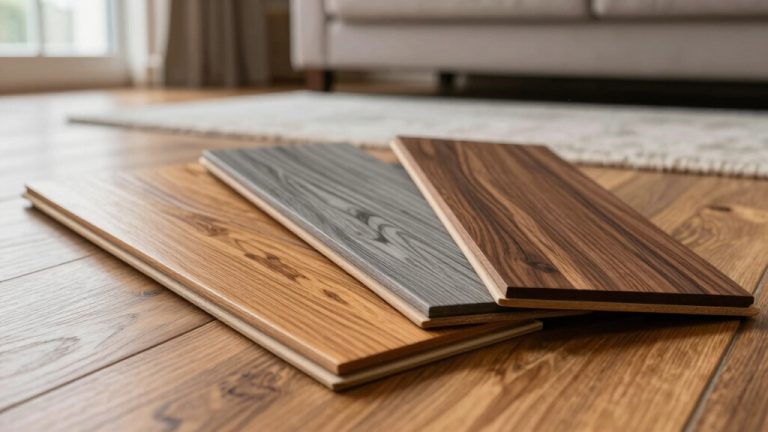
Prefinished hardwood flooring sourced responsibly from FSC-certified forests reflects similar sustainability principles by supporting renewable resources and responsible forestry.
Cost Trends and Factors
Since redwood’s price has risen markedly in recent years, you’ll find it now surpasses the cost of most composite decking materials.
This increase reflects limited availability, as only about 5% of original old-growth redwood remains. Current supply mainly derives from sustainably managed, younger forests.
You should consider that harvesting young redwood from previously logged lands helps prevent forest conversion and supports carbon sequestration. This adds environmental value to your investment.
Additionally, sustainably certified options, like FSC-certified redwood, ensure responsible forest management.
When evaluating cost, factor in redwood’s superior natural durability, decay resistance, and structural strength. These qualities often reduce maintenance and replacement expenses over time.
While the upfront expense is higher, its long-term performance and ecological benefits justify the premium for many outdoor applications.
Moreover, choosing materials with FSC certification further promotes sustainable forestry practices and environmental responsibility.
Frequently Asked Questions
How Does Redwood Compare to Other Softwoods in Outdoor Use?
You’ll find redwood outperforms many softwoods outdoors due to its natural decay resistance and higher tannin content, especially in heartwood.
It resists warping and insect damage better than pine or fir. Redwood’s straight grain also makes it easier to work with, though it’s softer and dents more easily.
While it requires regular maintenance, its durability and weather resistance often surpass typical softwoods. This makes it a superior choice for outdoor projects.
Can Redwood Be Painted Instead of Stained for Outdoor Projects?
You can paint redwood for outdoor projects, but there’s a catch: its natural oils and tannins may interfere with paint adhesion.
To guarantee a durable finish, you’ll need to clean, sand, and use a high-quality, oil-based primer designed for oily woods.
Without proper preparation, paint may peel or blister over time.
Staining often enhances redwood’s natural beauty better, but if you prefer paint, meticulous surface prep is essential for lasting results.
What Is the Average Lifespan of Untreated Redwood Outdoors?
Untreated redwood outdoors typically lasts around 5 to 10 years before significant decay or damage appears. Its natural oils and tannins offer some protection, but without sealing or maintenance, sapwood areas degrade faster.
Heartwood resists decay longer, extending lifespan somewhat. To maximize durability, you should pre-stain or seal all sides and perform yearly maintenance.
Otherwise, exposure to moisture, insects, and UV accelerates deterioration, shortening redwood’s effective outdoor lifespan.
Does Redwood Attract Mold or Mildew in Humid Climates?
Redwood can attract mold or mildew in humid climates, but its natural oils and tannins markedly resist fungal growth.
You’ll still need to maintain it properly, including regular cleaning and sealing, to minimize moisture retention that promotes mold.
The heartwood’s higher tannin content offers stronger protection, so using heartwood over sapwood reduces risk.
Proper ventilation and avoiding prolonged wetness help you keep mold and mildew at bay effectively.
Are There Any Health Concerns When Cutting or Sanding Redwood?
When you cut or sand redwood, dust can cloud the air like a desert sandstorm, so you need protection.
Redwood dust contains natural oils and tannins that may irritate your skin, eyes, and respiratory system.
Always wear a dust mask, safety goggles, and gloves to avoid allergic reactions or respiratory issues.
Proper ventilation and dust collection systems further reduce health risks, ensuring your work stays safe and efficient.
Invest in Redwood for Strength That Stands the Test of Time
Think of redwood as a seasoned sailor, built to brave storms and rough seas with natural resilience and strength. When you choose redwood for your outdoor projects, you’re selecting wood that withstands weather’s relentless forces while offering lasting beauty.
Like a skilled mariner, it requires care and respect to maintain its integrity. By understanding its qualities and upkeep, you make certain your investment performs reliably and sustainably.
Redwood stands the test of time with unwavering durability.
![How to Clean Syrup off Hardwood Floors: 6 Steps [DIY]](https://anyshelter.com/wp-content/uploads/2023/06/How-to-Clean-Syrup-off-Hardwood-Floors.webp)