How Do You Clean Cork Flooring: Smart Maintenance Tip
To clean cork flooring, use a soft-bristle broom or vacuum with a hard floor setting, no metal beater bars, to gently remove dirt weekly.
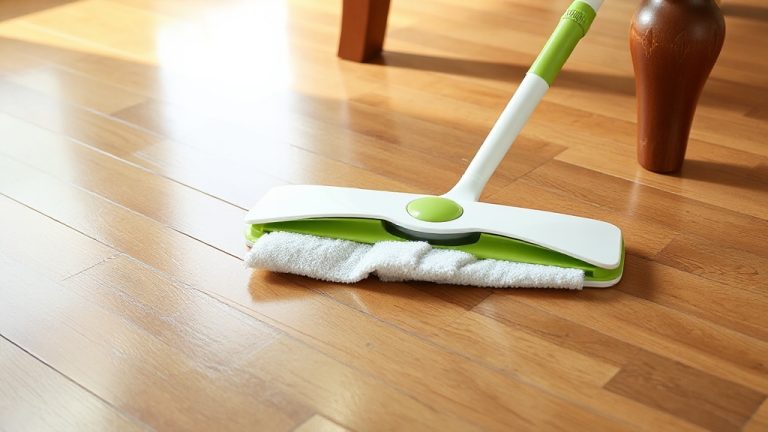
Mop damp with a well-wrung microfiber mop and a pH-neutral cleaner. Avoid excess water to protect the sealant and prevent warping.
Blot spills immediately and place protective mats at entrances and wet areas. Avoid harsh chemicals and abrasive tools to maintain durability.
Keep following for expert tips on preserving your cork floor’s longevity and appearance.
Key Takeaways
- Sweep or vacuum weekly using soft-bristle tools and hard floor vacuum settings without metal beater bars to remove dirt and prevent scratches.
- Damp mop with a well-wrung microfiber mop and pH-neutral cleaner, avoiding excess water to prevent swelling and sealant damage.
- Use cleaners specifically formulated for cork, avoiding ammonia, acidic, or abrasive products that degrade the surface and sealant.
- Blot spills immediately with a soft cloth without rubbing to prevent staining and water damage.
- Place breathable, non-rubber-backed mats at entrances and under furniture to trap dirt and protect against moisture and scratches.
How to Sweep and Vacuum Cork Floors Safely?
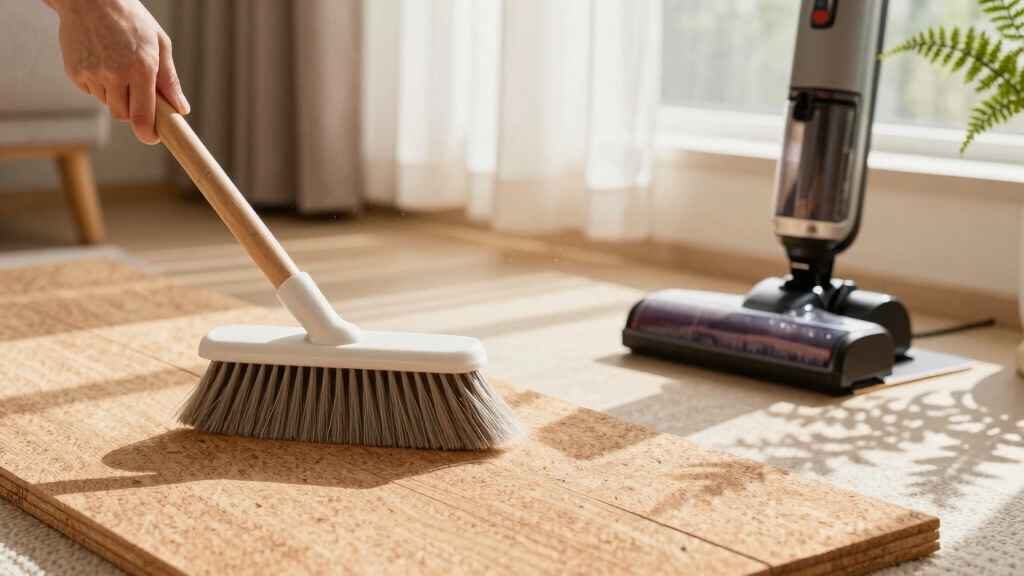
Regularly sweeping and vacuuming your cork floors is essential to maintain their durability and appearance.
Start by removing loose dirt and debris with a soft-bristle broom or microfiber dust mop.
Begin by gently sweeping away loose dirt using a soft-bristle broom or microfiber dust mop.
Focus on areas beneath furniture legs to prevent scratches.
When vacuuming, use a hard floor setting and ensure the vacuum has no metal beater bars, which can damage the surface.
Perform vacuuming weekly to eliminate grit that can wear down the finish.
Dust between vacuum sessions to prevent fine particles from accumulating.
Always inspect your cleaning tools for wear, as worn brushes or vacuum heads may cause unintended abrasions.
Using a microfiber dust mop can effectively trap dust and debris without scratching your cork floors.
How to Use a Damp Mop on Cork Floors?
When you’re ready to clean your cork floors with a damp mop, the first thing to remember is to wring out the mop really well. You want to avoid any excess moisture; too much water can actually damage the surface of the cork.
Next up, grab a pH-neutral cleaner and dilute it in some water. Instead of spraying the solution directly onto the floor, apply it right to the mop head. This way, you’re keeping the cork’s integrity intact while still getting rid of dirt and grime effectively. Happy cleaning!
For the best results, choose a cleaner with plant-based, biodegradable ingredients to ensure safety for both your floors and the environment.
Proper Mop Dampness
You should always wring out your mop thoroughly to make certain it is only damp, never wet, before cleaning cork floors. Excess water can seep into the cork, causing swelling, warping, or damage to the sealant.
Use a microfiber mop head for optimal absorption and control. After wringing, test the mop by pressing it onto a dry cloth; it should leave only a slight dampness. Mop in manageable sections with gentle pressure to avoid saturation.
Proper moisture control is essential to prevent moisture and water damage, which can lead to black patches and floor deformation.
| Mop Dampness Level | Effect on Cork Flooring |
|---|---|
| Too Wet | Water damage, warping |
| Slightly Damp | Safe, effective cleaning |
| Dry | Ineffective dirt removal |
| Even Moisture | Maintains floor integrity |
| Excess Moisture | Risk of sealant breakdown |
Using pH-Neutral Cleaner
Always dilute a pH-neutral cleaner in water before applying it to your cork floor to preserve the material’s integrity.
Use a thoroughly wrung-out mop to avoid excess moisture, which can damage cork.
Spray the diluted cleaner directly onto the mop head, not the floor, guaranteeing even application without oversaturation.
Mop gently following the grain of the cork, removing dirt without abrasive scrubbing.
After mopping, air dry the floor or use a dry cloth to absorb any residual moisture.
Opt for cleaners specifically formulated for cork, such as Bona or HARO clean & green, to maintain the sealant and prevent discoloration.
Avoid ammonia-based, acidic, or abrasive products that degrade the surface.
This method guarantees effective cleaning while safeguarding cork’s durability and appearance.
For best results, use microfiber or chenille pads to help preserve the finish and avoid streaks during cleaning.
How to Choose the Best Cleaners for Your Cork Floor?
Select cleaners specifically formulated for cork flooring to maintain its integrity and appearance.
Choose cleaners designed for cork flooring to preserve its durability and natural beauty.
Opt for pH-neutral products like Bona Hardwood Floor Cleaner or HARO clean & green, which protect cork’s natural finish without causing damage.
Avoid ammonia-based, acidic, or abrasive chemicals as they degrade the sealant and surface.
When choosing, prioritize eco-certified options to reduce chemical residues and maintain indoor air quality.
Also, select cleaners that can be diluted with water and applied via a damp mop, never sprayed directly onto the floor.
This prevents excess moisture penetration that could warp cork.
Finally, verify the product’s compatibility with polyurethane sealants if your cork floor is sealed.
Proper cleaner selection extends your floor’s lifespan and preserves its unique texture and color.
Many eco-friendly cleaners use biodegradable, plant-based ingredients to ensure safety for indoor environments and pets.
Quick Spill Management to Protect Cork Floors
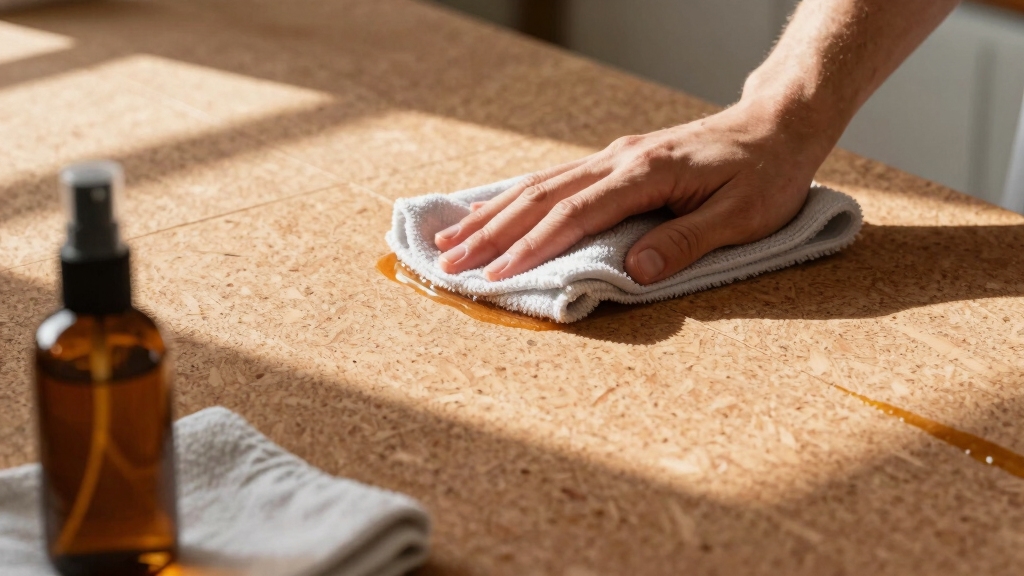
Spills can quickly seep into cork floors if not addressed promptly, risking damage to the sealant and underlying material. To protect your floor, immediately blot liquids with a soft, absorbent cloth. Never rub to avoid spreading. For sticky or non-water residues, use a spray cleaner applied to the cloth, not directly on the floor.
Faster action is critical on unsealed or floating cork floors. Position breathable mats near sinks and wet areas to reduce spill incidents. Using mats with waterproof surfaces can further protect cork flooring from moisture damage.
| Spill Type | Immediate Action | Recommended Tool |
|---|---|---|
| Water | Blot with soft cloth | Absorbent microfiber |
| Sticky substances | Spray cleaner on cloth | Damp cloth |
| Oil-based spills | Blot, then clean residue | Soft cloth + cleaner |
| Acidic liquids | Quick blot, neutralize | pH-neutral cleaner |
| Large spills | Contain, blot, clean | Multiple cloths |
Cleaning Tools and Products to Avoid on Cork Floors
When it comes to cleaning cork floors, it’s best to steer clear of harsh chemicals. You know, things like ammonia-based or acidic cleaners can really mess with the cork’s protective sealant.
Also, be cautious about the tools you use. Vacuums with metal beater bars or overly wet mops can scratch the surface or even saturate the cork, which you definitely want to avoid.
And remember, when you’re applying cleaning products, it’s important to do it the right way. Instead of spraying directly on the cork, try applying the cleaner to a cloth first. And please, don’t soak the surface—keeping it dry helps maintain the floor’s integrity!
Using pH-balanced, water-based products is recommended to preserve the finish and longevity of cork flooring.
Harsh Chemicals To Avoid
Although cork flooring is durable, it remains sensitive to harsh chemicals that can damage its surface and protective sealant. To maintain its integrity, avoid using any cleaners that contain ammonia, acidic agents, or abrasive substances.
These chemicals can break down the sealant, causing discoloration and weakening the cork’s structure over time. Instead, opt for pH-neutral cleaners specifically formulated for cork.
Steer clear of these harsh chemicals:
- Ammonia-based cleaners, which cause sealant erosion and surface dullness.
- Acidic substances like vinegar or lemon juice that degrade cork fibers.
- Abrasive powders or scouring agents that scratch and wear the finish.
Using appropriate products preserves both appearance and longevity. This ensures your cork floor remains resilient and visually appealing. It is also important to use cleaning solutions cautiously and avoid excessive application to prevent potential surface dullness and damage.
Unsuitable Cleaning Tools
Choose cleaning tools carefully to protect your cork flooring from damage. Avoid abrasive scrubbers, steel wool, or stiff-bristled brushes, as they can scratch and degrade the protective sealant.
Never use vacuum cleaners with metal beater bars; these can gouge the surface and compromise the finish. Instead, opt for vacuum models equipped with a hard floor setting and soft bristle attachments.
Avoid mops that retain excessive water or have rough surfaces, since moisture intrusion and mechanical abrasion accelerate wear.
Steer clear of sponges with harsh textures or non-microfiber cloths that may trap grit, leading to micro-scratches.
Using inappropriate tools not only diminishes the floor’s aesthetic appeal but also shortens its lifespan. Always prioritize gentle, non-abrasive cleaning implements designed specifically for delicate cork surfaces. For best results, use soft-bristled vacuum attachments to minimize the risk of damage during cleaning.
Incorrect Application Methods
When cleaning cork floors, applying products or tools improperly can quickly damage the surface and degrade the protective sealant.
You must avoid excess moisture, harsh chemicals, and abrasive tools, as these accelerate wear and cause discoloration or warping.
Using incorrect methods compromises the cork’s durability and finish.
Steer clear of:
- Flooding the floor or using a mop that’s too wet, which weakens the sealant and allows water infiltration.
- Ammonia-based, acidic, or abrasive cleaners that break down the polyurethane layer and harm the cork fibers.
- Vacuum cleaners with metal beater bars or worn-out brushes that scratch the surface and embed dirt.
Always use pH-neutral cleaners applied to a well-wrung mop and clean with non-abrasive tools to maintain your cork flooring’s integrity.
Periodic resealing helps maintain water resistance and appearance, extending the life of your cork floor’s protective layer and overall durability, as outlined in Maintenance & Durability Tips.
Tips to Prevent Scratches and Surface Damage on Cork Floors
To keep your cork flooring looking pristine, you’ll want to focus on minimizing surface abrasions caused by everyday activities.
Start by regularly removing dirt and grit from chair and table legs, as these particles cause micro-scratches when furniture moves.
Use felt pads under furniture legs to distribute weight and prevent indentations.
Avoid dragging heavy objects; instead, lift them to protect the cork’s surface sealant.
Maintain proper sealing with polyurethane coatings to enhance surface resilience against scratches.
Also, vacuum with a hard floor setting, steering clear of metal beater bars that can damage the floor.
Regular dusting between vacuuming sessions removes fine abrasive particles.
These preventive steps guarantee your cork floor retains its integrity and aesthetic appeal, reducing the need for costly repairs or refinishing.
Using Mats and Barriers to Protect Cork Floors
Setting up appropriate mats and barriers noticeably reduces wear and moisture damage on your cork floors. You should place walk-off mats at all entrances to trap dirt and grit, preventing abrasive particles from scratching the surface.
Make sure mats have breathable backings to allow moisture evaporation and prevent mold or discoloration. Additionally, install barriers or rugs in high-traffic areas to distribute impact evenly and minimize localized wear.
Consider these key points when selecting mats and barriers:
Use breathable, non-rubber-backed mats near sinks and entryways to capture moisture without trapping it. Choose mats with a smooth backing to avoid scratches from abrasive materials. Position furniture pads or barriers beneath legs to prevent indentations and gouging.
These measures protect your cork floors by controlling moisture and mechanical damage effectively.
Sealing and Resealing Cork Floors for Lasting Protection
Protect your cork floors by applying a high-quality sealant immediately after installation to create a durable barrier against moisture, dirt, and wear.
Use a polyurethane-based product like Loba 2K Supra AT to guarantee long-lasting protection. Over time, reseal your floors every 3–5 years or when you notice wear to maintain their resilience and appearance.
Proper sealing prevents penetration that can cause swelling or damage.
| Step | Details |
|---|---|
| Initial Seal | Apply polyurethane sealant post-install |
| Drying Time | Allow 24–48 hours for full curing |
| Inspection | Check for scratches or dull spots |
| Resealing Frequency | Every 3–5 years or as wear appears |
| Application Tips | Use a fine roller, avoid puddles |
Consistent sealing preserves your cork’s integrity and aesthetic appeal.
Handling High-Moisture Areas With Cork Flooring
Although cork flooring offers natural resilience and comfort, handling high-moisture areas like kitchens and bathrooms requires careful attention to prevent damage.
You must guarantee proper sealing with a high-quality polyurethane, especially in zones prone to splashes or spills, to prevent moisture penetration and swelling.
Always test subfloor moisture before installation to avoid future issues.
To maintain cork floors in wet environments, follow these key practices:
- Use breathable mats near sinks to catch water without trapping moisture.
- Clean spills immediately with a soft cloth to prevent sealant breakdown.
- Avoid excessive water during cleaning; use a damp mop thoroughly wrung out with pH-neutral cleaners.
Implementing these measures will extend your cork floor’s durability and preserve its aesthetic integrity in high-moisture settings.
Frequently Asked Questions
Can Cork Flooring Be Refinished if Deeply Scratched?
Yes, you can refinish cork flooring if it’s deeply scratched, but it requires care.
You’ll need to lightly sand the affected area with fine-grit sandpaper to avoid damaging the cork.
After sanding, clean the dust thoroughly and apply a compatible polyurethane sealer like Loba 2K Supra AT to restore protection and gloss.
Avoid aggressive sanding, as cork is softer than wood and can be easily damaged during refinishing.
How Long Does Cork Flooring Typically Last With Proper Care?
You can expect cork flooring to last between 25 to 40 years with proper care.
Its durability hinges on regular maintenance, like gentle sweeping and avoiding excess moisture.
Keeping the sealant intact and promptly addressing spills preserves its lifespan.
Using pH-neutral cleaners and preventing scratches further extends durability.
Is Cork Flooring Suitable for Radiant Heating Systems?
Yes, cork flooring is suitable for radiant heating systems. You need to make sure the heating system maintains moderate temperatures, typically below 85°F (29°C), to prevent damage.
Cork’s natural insulating properties complement radiant heat by retaining warmth efficiently. When installing, use a vapor barrier and follow manufacturer guidelines for subfloor moisture levels.
Proper installation and temperature control will let you enjoy comfortable, energy-efficient flooring without compromising cork’s durability or performance.
Can Pets Damage Cork Flooring More Easily Than Other Floors?
Yes, pets can damage cork flooring more easily due to its softer, porous nature compared to hardwood or tile.
Your pet’s claws may cause scratches, and accidents can lead to moisture penetration if the sealant is compromised.
To protect your cork floor, trim your pet’s nails regularly, clean spills immediately, and use protective mats in high-traffic areas.
Maintaining a strong sealant layer also helps minimize wear and moisture damage from pets.
What Is the Environmental Impact of Cork Flooring Production?
Imagine a vast cork oak forest, its bark carefully harvested without felling trees, preserving vibrant ecosystems.
When you choose cork flooring, you support a renewable process with low carbon emissions and minimal waste.
Cork production uses natural bark stripping, allowing trees to regenerate, which helps sequester carbon and protect biodiversity.
This sustainable cycle reduces environmental impact compared to synthetic flooring, making cork an eco-friendly, responsible choice for your space.
Keep Your Cork Floors Looking New for Year
Maintaining your cork flooring properly can extend its lifespan markedly. Studies show well-sealed cork floors can last over 25 years. By sweeping and vacuuming gently, using a damp mop, and avoiding harsh cleaners, you protect the delicate surface from damage.
Quick spill management and regular sealing are essential to preserve cork’s durability and appearance. Following these precise steps guarantees your cork floors remain both beautiful and resilient in high-traffic or moisture-prone areas.