Is Pine Good for Outdoor Use: Smart Choices Lasting Option
You can use pine outdoors, but untreated pine doesn’t hold up well due to moisture, insects, and temperature changes. It typically lasts 3–10 years depending on conditions. Protecting it with sealants or avoiding ground contact extends its life.
Thermal modification boosts pine’s decay and insect resistance, pushing durability beyond 15 years without chemicals. Compared to cedar, thermo pine offers solid performance but needs upkeep. Understanding climate effects and protection methods helps you get the most from pine outdoors.
Key Takeaways
- Untreated pine outdoors lasts 3–10 years but is prone to rot, insect damage, and warping without protection or treatment.
- Thermal modification extends pine’s outdoor lifespan to 15+ years by improving moisture resistance and dimensional stability.
- Elevating pine off soil and applying sealants significantly increase durability by reducing moisture exposure and decay risks.
- Pine is popular outdoors for affordability, ease of use, and versatility but requires maintenance or treatment for longevity.
- For outdoor projects, treated or thermo pine is recommended over untreated pine to withstand humidity, rain, and soil contact.
Why Pine Is Popular for Outdoor Use Despite Durability Limits?

Although untreated pine has durability limitations outdoors, it remains popular because it offers affordability, ease of workability, and versatility for various applications.
Untreated pine is favored for its affordability, ease of use, and versatile applications despite outdoor durability limits.
You’ll find it straightforward to cut, shape, and fasten, making it ideal for DIY projects and professional use.
Its light weight simplifies handling and installation, reducing labor costs.
Pine’s uniform grain enhances surface finishing, allowing you to apply stains, paints, or sealants effectively to extend its outdoor lifespan.
Despite its natural susceptibility to moisture and insects, you can use it in controlled environments where exposure is limited or where regular maintenance is feasible.
Its adaptability suits furniture, screens, and decorative elements, especially in dry climates.
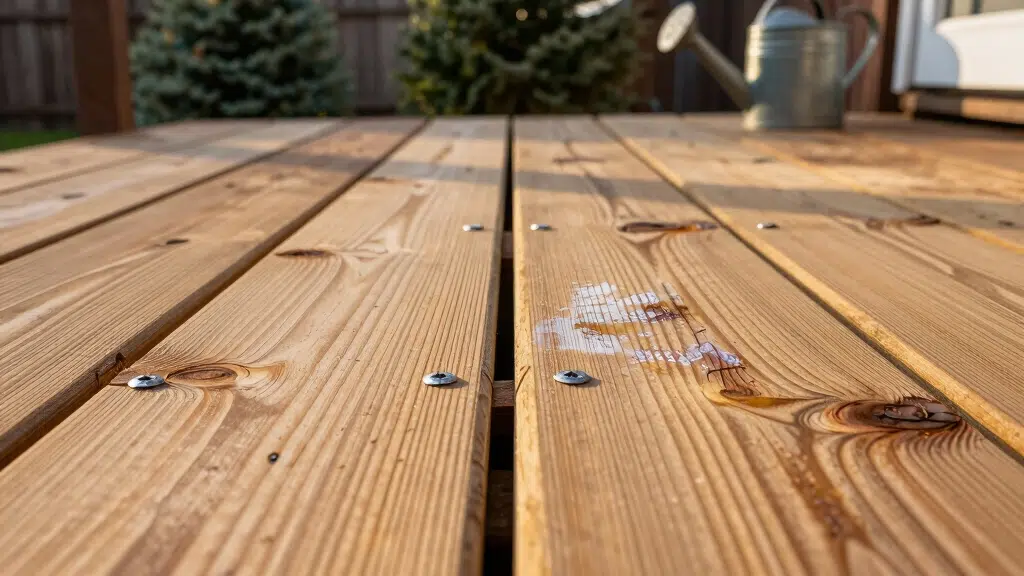
For repairing cracks or damage in outdoor pine, using water-resistant wood fillers can help maintain its appearance and structural integrity over time.
Why Untreated Pine Doesn’t Last Long Outside?
Because untreated pine lacks protective barriers against environmental factors, it deteriorates rapidly when exposed outdoors.
You’ll notice it’s highly susceptible to moisture infiltration, which leads to rot and decay, especially in humid or wet conditions.
Without treatment, insects easily infest the wood, accelerating structural breakdown.
Temperature fluctuations cause untreated pine to warp and crack as it swells and shrinks with changing moisture levels.
This dimensional instability compromises its integrity and appearance.
Typically, untreated pine lasts only 3 to 10 years outside, depending on the environment.
If you expose untreated pine to soil moisture or frequent rain, expect deterioration within just a few years.
To maintain outdoor durability, you must either apply protective treatments or choose modified pine options engineered to resist these vulnerabilities.
Additionally, applying sealants and coatings can significantly enhance the water resistance of pine used outdoors.
How Different Climates Affect Pine’s Outdoor Durability?
You might’ve noticed that high humidity really speeds up rot and insect damage in untreated pine. This can cut down its outdoor lifespan quite a bit. Plus, temperature swings can cause the wood to warp and crack, and when you mix that with moisture, it’s even worse.
Oh, and let’s not forget about soil moisture! That’s a big concern too. If the wood comes into contact with the ground, it can lead to rapid decay, often within just a few years.
So, keeping these factors in mind is super important when considering the durability of pine outdoors. Unlike pine, cedar naturally contains rot-resistant oils that help it withstand moisture and insect damage better.
Humidity’s Impact on Pine
When you expose untreated pine to high humidity and frequent rain, its outdoor durability declines rapidly due to accelerated rot and insect damage. Moisture infiltration causes swelling, warping, and promotes fungal growth, markedly shortening lifespan.
In contrast, dry climates slow decay, extending untreated pine’s usability up to a decade. Thermally modified pine performs better across humidity levels, maintaining stability and resisting moisture-induced deterioration without chemicals.
It is important to consider that different wood types have varying natural resistance to pests and decay, with cedar mulch, for example, containing natural oils that improve pest resistance and durability.
| Climate Condition | Untreated Pine Lifespan | Thermo Pine Lifespan |
|---|---|---|
| High Humidity/Rain | 3-5 years | 15+ years |
| Moderate Humidity | 5-7 years | 15+ years |
| Dry Climate | 7-10 years | 15+ years |
| Soil Contact | 1-3 years | 10+ years |
| Frequent Moisture | 3-5 years | 15+ years |
Choose treatment or thermo modification to maximize outdoor pine durability.
Temperature Effects on Durability
Although temperature fluctuations alone don’t cause pine to decay, they markedly influence the wood’s dimensional stability and susceptibility to moisture-related damage.
When temperatures swing, untreated pine expands and contracts, leading to warping and cracking. These physical changes increase vulnerability to water infiltration, accelerating deterioration in humid or wet climates.
Conversely, dry, stable temperatures help maintain pine’s structural integrity longer.
Consider these temperature-related effects on pine durability:
Frequent hot-cold cycles increase stress and surface checking.
Thermal expansion causes micro-gaps for moisture entry.
Cooler climates slow decay but raise frost-related cracking risks.
Thermally modified pine resists dimensional changes better.
Understanding these impacts helps you select appropriate pine treatments and anticipate maintenance needs for your climate.
Proper moisture control and acclimation are essential to minimize warping and prolong pine’s outdoor lifespan.
Soil Moisture Risks
Temperature fluctuations influence pine’s stability. Soil moisture directly accelerates its decay, especially in outdoor settings.
When pine is exposed to damp soil, you’ll notice rapid rot, insect damage, and structural weakening within a few years if untreated.
Different climates affect this risk: dry, arid areas extend pine’s lifespan, while humid, rainy regions drastically shorten it.
You should avoid direct contact with soil or use treated pine to mitigate these risks.
Thermo-treated pine offers enhanced resistance, maintaining dimensional stability even in moist conditions.
Proper maintenance and regular inspections can help identify early signs of water damage and prevent further deterioration.
| Climate Type | Soil Moisture | Pine Durability (Years) |
|---|---|---|
| Dry | Low | 8 – 10 |
| Humid | High | 3 – 5 |
| Rainy | Very High | 2 – 4 |
| Temperate | Moderate | 5 – 7 |
| Thermo-treated | Variable | 15 |
How Thermal Modification Improves Pine’s Weather Resistance?
Since untreated pine struggles with moisture absorption and environmental stress, thermal modification markedly enhances its weather resistance by altering the wood’s cellular structure. This process reduces the wood’s hygroscopicity, making it less prone to swelling and shrinking.
Thermal modification transforms pine’s cellular structure, boosting weather resistance by reducing moisture absorption and swelling.
It also improves dimensional stability, vital for outdoor use. You’ll notice the wood resists decay and insect damage better, without relying on chemical treatments.
Thermal modification benefits include:
- Substantially lowered moisture content, reducing rot risk
- Enhanced UV and insect resistance, extending outdoor lifespan
- Improved dimensional stability, minimizing warping and cracking
- Chemical-free treatment, preserving wood integrity and environment
This chemical-free approach aligns with the benefits of FSC-certified hardwood, which acts as a natural carbon sink while offering durability for outdoor applications.
How Pine’s Durability Compares to Cedar and Other Woods?
Thermally modified pine offers significant improvements in durability that bring it closer to premium outdoor woods, but it still differs from species like cedar and teak.
Untreated pine typically lasts 3-10 years outdoors, depending on climate, while cedar can exceed 20 years without treatment due to its natural oils and resistance to rot and insects.
Thermal modification extends pine’s durability to 15+ years by enhancing moisture and insect resistance and improving dimensional stability.
Compared to tropical hardwoods like teak, thermally modified pine performs similarly in decay resistance but generally requires more maintenance.
It outlasts untreated spruce and avoids issues common with composites, like cracking and heat retention.
However, you should still avoid direct soil contact and consider climate factors when choosing pine for outdoor applications.
Regular maintenance and timely action help prevent moisture-related structural damage that can reduce wood lifespan.
Best Outdoor Projects for Using Pine Wood
Several outdoor projects benefit greatly from pine wood’s versatility and cost-effectiveness, provided you select the appropriate treatment and installation methods.
Pine’s workability and availability make it ideal for a range of functional and decorative outdoor structures.
When planning your project, consider pine’s susceptibility to moisture and insect damage. Ensure proper design to minimize direct ground contact.
You can confidently use pine for:
- Decking and fencing, with pressure or thermal treatment for durability
- Garden furniture such as tables and chairs, especially if regularly maintained
- Pergolas and patio covers, where dimensional stability is key
- Exterior cladding and facades, enhancing aesthetics while protecting structure
For projects requiring high resistance to wear and damage, choosing wood with a higher Janka hardness rating can improve durability and longevity.
Effective Methods to Protect Untreated Pine Outdoors
Protecting untreated pine outdoors requires proactive measures to extend its lifespan and maintain structural integrity.
First, apply a quality sealant or exterior-grade wood stain to create a moisture barrier and reduce water absorption. Reapply coatings every 1-2 years to maintain protection against UV damage and rain.
Apply a quality sealant or exterior-grade stain and reapply every 1-2 years for lasting protection.
Next, ensure proper ventilation around the wood to minimize trapped moisture and reduce the risk of rot and warping. Elevate the pine off direct ground contact using blocks or supports to prevent rapid decay.
Regularly inspect for signs of insect activity or fungal growth and address issues promptly.
Finally, consider covering untreated pine during heavy rain or snow to limit prolonged exposure to moisture, which accelerates degradation.
For best results, apply protective coatings only when the wood is completely dry and weather conditions are favorable, typically between 50°F and 85°F, to ensure proper adhesion and longevity of the finish drying and readiness.
Why Avoiding Soil Contact Extends Pine’s Lifespan?
You really want to avoid direct soil contact with pine. Why? Well, soil moisture can cause rot and decay to set in pretty quickly.
When you elevate pine off the ground, you’re helping to reduce that prolonged dampness it gets exposed to. This simple step can really extend its lifespan.
Plus, proper placement is key! By keeping pine elevated, you minimize moisture uptake, which is super important if you want to maintain its durability outdoors.
Soil Moisture Accelerates Rot
Avoid direct contact between pine wood and soil to markedly reduce the risk of accelerated rot caused by persistent moisture exposure. Soil moisture saturates pine fibers, creating ideal conditions for fungal growth and decay, which drastically shortens the wood’s lifespan.
When pine remains wet, it loses structural integrity much faster than in dry environments.
Keep in mind these critical factors:
Prolonged soil moisture triggers fungal enzymes that break down cellulose and lignin. Untreated pine in contact with damp soil can fail within 3 years.
Moist environments promote insect activity that exacerbates wood degradation. Fluctuating moisture levels cause pine to swell and crack, accelerating decay.
Preventing Direct Ground Contact
When pine wood stays clear of direct ground contact, it markedly reduces exposure to persistent moisture that accelerates rot and decay.
You’ll greatly extend pine’s lifespan by preventing soil moisture absorption, which causes rapid structural failure in as little as three years for untreated pine.
Elevating pine also limits insect attack and fungal growth, common in damp soil environments. Here’s a practical comparison:
| Condition | Untreated Pine Lifespan | Thermo Pine Lifespan |
|---|---|---|
| Direct Soil Contact | 3 years | 10+ years |
| Elevated Placement | 5-10 years | 15+ years |
| Moisture Exposure | High | Low |
| Rot and Decay Risk | Severe | Minimal |
Avoiding direct soil contact is essential for maximizing pine’s outdoor durability.
Benefits of Elevated Placement
By elevating pine wood above ground level, you markedly reduce its exposure to soil moisture, which is the primary cause of rapid rot and decay.
Avoiding direct soil contact appreciably extends the lifespan of untreated and treated pine outdoors. When you place pine on supports, you minimize water absorption from wet soil, preventing fungal growth.
You enhance air circulation around the wood, accelerating drying after rain. You also reduce insect infestation risk by limiting access to moist ground habitats.
Additionally, you prevent swelling and warping caused by prolonged moisture exposure. This practical approach allows pine to maintain structural integrity longer, especially in humid or rainy environments.
Elevated placement is essential for maximizing pine’s durability outdoors without relying solely on chemical treatments or coatings.
When to Choose Thermo Pine Over Regular Pine?
Although untreated pine can suffice for short-term outdoor projects in dry climates, you’ll want to choose thermo pine when durability and dimensional stability are critical.
Thermo pine resists moisture, UV, and insect damage much better, lasting upwards of 15 years compared to untreated pine’s 3 to 10 years.
If your project faces high humidity, frequent rain, or soil contact, thermo pine’s reduced swelling and shrinking will prevent warping and cracking.
Unlike pressure-treated wood, thermo pine avoids chemical leaching while maintaining full structural integrity.
Use thermo pine for decking, fencing, or facades exposed to harsh weather, or where long-term maintenance isn’t feasible.
Choose regular pine only for short-term, low-exposure applications in arid zones. Always avoid untreated pine in soil contact or wet environments.
Frequently Asked Questions
Can Pine Be Recycled or Reused After Outdoor Use?
Yes, you can recycle or reuse pine after outdoor use, but its condition matters.
Untreated pine often degrades quickly, limiting reuse to short-term projects like garden screens or firewood.
Thermally modified or pressure-treated pine holds up better, allowing you to repurpose it for furniture, cladding, or structural elements.
Always inspect for rot, insect damage, and warping before reuse.
Proper cleaning and sanding improve its lifespan in new applications.
What Maintenance Schedule Is Ideal for Untreated Pine Outdoors?
Think of untreated pine as a delicate dancer in a storm. You’ll need to keep it steady.
For outdoor use, inspect and reseal it every 6 months to fend off moisture and insects.
Clean it annually to remove dirt and mildew. In humid or rainy climates, increase maintenance frequency to every 3-4 months.
Regular sanding and applying protective finishes will extend its life and keep it looking sharp and structurally sound.
Does Pine Emit Any Odors When Used Outside?
Yes, pine can emit a mild resinous odor when used outdoors, especially when freshly cut or heated by the sun. This scent comes from natural pine oils and resins, which may intensify in warm weather but generally dissipate over time.
If the pine is thermally modified, emissions are minimal due to reduced resin content. Untreated pine’s odor can be noticeable initially but usually doesn’t cause long-term outdoor fragrance issues.
How Does Pine Perform in Coastal, Salty Air Environments?
In coastal, salty air environments, untreated pine struggles due to high moisture and salt exposure. This accelerates rot and decay within a few years. You’ll find it warps and cracks quickly.
However, thermally modified pine offers enhanced resistance to moisture, UV, and salt damage. It maintains dimensional stability longer, often over 15 years.
You should avoid direct soil contact and apply proper sealing or treatments to extend pine’s outdoor lifespan near the coast.
Are There Eco-Friendly Sealants Recommended for Pine Outdoor Protection?
You can use eco-friendly sealants like water-based polyurethane, natural oils (such as tung or linseed oil), and plant-based wood preservatives to protect pine outdoors.
These options minimize environmental impact while enhancing moisture resistance and UV protection.
Make sure you apply them regularly for peak durability, especially if your pine is untreated.
Avoid sealants with harsh chemicals that leach toxins.
These green sealants maintain pine’s integrity without compromising eco-conscious standards.
Final Thoughts: Making Pine Work for Outdoor Projects
When using pine outdoors, you’ll want to remember it’s not a one-size-fits-all solution. Untreated pine won’t stand up to the elements long, especially in harsh climates.
Thermal modification can give it a fighting chance, improving durability and weather resistance. Keep it off the ground and apply proper treatments to extend its life.
In the end, choosing thermo pine over regular pine can make all the difference. Don’t put all your eggs in one basket with untreated wood.