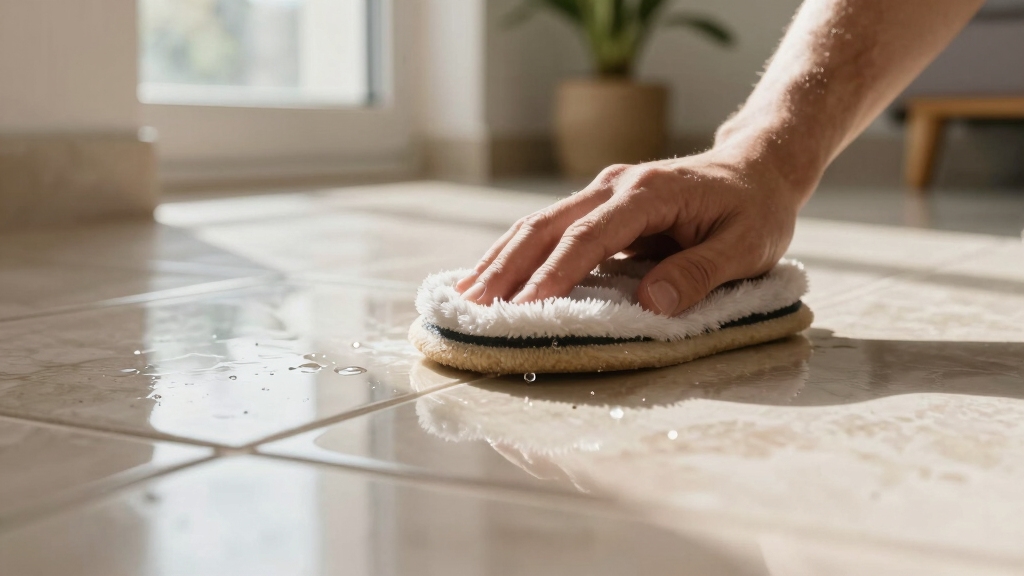
How to Make Floor Tile Shine: Quick and Easy Guide
To make your floor tile shine, start by sweeping or vacuuming regularly with a soft-bristled tool to remove dirt without scratching.
Mop using a pH-neutral cleaner diluted in warm water and rinse thoroughly to avoid residue. For deeper grime or dullness, use steam cleaning or a grout-safe cleaner. Avoid acidic or abrasive products that harm tile glaze and grout.
Dry tiles promptly with microfiber cloths to prevent water spots. Following these steps maintains tile luster effectively; further details cover polishing, sealing, and preventive care.
Key Takeaways
- Sweep or vacuum tiles regularly using a soft-bristled broom to remove dirt and prevent surface scratches that dull shine.
- Mop tiles with a pH-neutral cleaner diluted in warm water, using a microfiber mop to avoid streaks and residue buildup.
- Rinse tiles thoroughly after mopping and dry with a lint-free cloth or microfiber to prevent water spots and enhance gloss.
- Perform periodic deep cleaning with appropriate tile cleaners or steam cleaning to remove embedded grime and restore shine.
- Avoid acidic, abrasive, or ammonia-based cleaners that damage tile glaze and dull the surface; always test cleaners on a small area first.
Dry Cleaning Steps for Shiny Floor Tiles

Regularly sweeping or vacuuming your floor tiles is essential to maintain their shine and prevent dullness caused by loose dirt and dust.
Use a soft-bristled broom or a vacuum with a brush attachment to avoid scratching the tile surface during dry cleaning.
For standard foot traffic, sweep once a week; increase to twice weekly in high-traffic areas.
Employ lint-free cloths or microfiber materials for wiping, as these prevent residue and streaking.
Always perform dry cleaning before any wet cleaning to maximize cleanliness and shine.
This method efficiently removes abrasive particles that can degrade the tile’s finish over time, ensuring the surface remains smooth and reflective.
Consistent adherence to these steps optimizes the tile’s appearance and extends its lifespan.
Using microfiber mops/dusters during dry cleaning can enhance dust and particle removal without damaging the tile surface.
Wet Mopping Techniques to Boost Tile Shine
When boosting tile shine through wet mopping, selecting the right cleaning solution is essential. Use a mild dish soap or a pH-neutral tile cleaner diluted in warm water to effectively remove grime without damaging the surface.
Use a microfiber mop and wring it well to avoid excess water that causes streaking. Mop regularly: weekly for bathrooms and every other week elsewhere. Employ the two-bucket method, one for cleaning solution and one for rinsing, to maintain mop cleanliness and prevent residue buildup.
| Step | Recommendation |
|---|---|
| Cleaning Solution | Mild dish soap or pH-neutral |
| Mop Type | Microfiber or flat mop |
| Water Temperature | Warm |
| Mopping Frequency | Weekly (bathroom), biweekly |
| Rinsing Method | Two-bucket rinse |
Thorough rinsing removes detergent residue, maintaining shine. For enhanced floor care, consider using eco-friendly hardwood floor cleaners which are designed to be gentle yet effective on various surfaces.
When and How to Deep Clean Floor Tiles?
You’ll know it’s time for a deep clean when you notice that dirt and stains just won’t budge, even after regular mopping.
And if you see those grout lines darkening significantly, that’s a sure sign it’s time to take action!
For the best results, consider using steam cleaning or a professional-strength tile and grout cleaner.
Don’t forget to grab a medium bristle brush for those textured surfaces; it’ll really help in getting rid of that embedded grime.
As for how often you should deep clean, scheduling it every few months is a good rule of thumb.
But, of course, feel free to do it as needed to keep your tiles shining and hygienic!
Before deep cleaning, be sure to remove loose debris with a vacuum or broom to enhance cleaning effectiveness.
Signs Tiles Need Deep-Cleaning
Although routine cleaning keeps your tiles looking good, certain indicators signal that it’s time for a deep clean to restore their shine and hygiene. Noticeable dullness, persistent stains, or grout discoloration despite regular sweeping and mopping suggest embedded dirt or buildup.
If water no longer beads on the surface or leaves streaks and residue, it’s a sign grime or soap scum has accumulated. You might also detect mildew odors or see mold growth in grout lines, indicating microbial presence beyond surface dirt.
High-traffic areas showing increased wear or sticky residues require attention. Additionally, if prior cleaning efforts fail to remove grease or oils, deep cleaning is necessary to maintain tile integrity and appearance.
Recognizing these signs helps you schedule deep cleaning at appropriate intervals to prolong tile life and preserve aesthetic quality.
Incorporating regular sweeping before deep cleaning can help remove surface debris and improve overall results.
Effective Deep Cleaning Methods
Regularly scheduling deep cleaning guarantees your floor tiles maintain their shine and durability beyond routine maintenance.
Use steam cleaning with controlled heat to eliminate embedded dirt and kill mold or germs effectively.
Apply professional-strength tile and grout cleaners for grease, oils, and stubborn stains.
For grout lines, a 1:1 hydrogen peroxide and water mix removes dirt without damage.
Agitate textured or rough tiles with medium-bristle brushes or scrub machines to dislodge grime thoroughly.
Avoid acidic or abrasive cleaners that can scratch or discolor tiles and grout.
Always test cleaners on a small area before full application.
Deep cleaning every few months secures long-term luster and hygiene.
Follow with thorough rinsing and drying to prevent residue and water spots, maximizing the tile’s reflective surface.
Ensure floors are dried promptly using clean, absorbent cloths or air drying to prevent moisture damage and maintain surface integrity, as excess water can lead to long-term issues such as warping or mold growth, similar to concerns with moisture prevention on hardwood floors.
Frequency Of Deep Cleaning
Deep cleaning floor tiles every few months guarantees persistent removal of embedded dirt and buildup that routine cleaning misses.
For standard residential areas, schedule deep cleaning quarterly; high-traffic or moisture-prone zones like kitchens and bathrooms require bi-monthly attention.
Use steam cleaners or professional-strength tile and grout cleaners to target ground-in grime, mold, and stubborn stains effectively.
Apply medium-bristle brushes or scrub machines for textured surfaces to enhance dirt agitation. Always follow manufacturer guidelines to avoid damage.
Between deep cleans, maintain floors with weekly sweeping and wet mopping.
Monitor grout condition and reseal tiles every six months to two years to protect from stains and maintain shine.
Adhering to this schedule guarantees long-term tile integrity, hygienic surfaces, and ideal reflective properties for a consistently polished appearance.
Choosing water-resistant tiles also reduces cleaning time and prevents damage from moisture-related issues during maintenance.
Which Cleaners to Avoid to Protect Your Tile Shine?
When it comes to keeping your tiles shining bright, there are some cleaners you definitely want to steer clear of. For starters, avoid anything with acidic or ammonia-based chemicals. These can really eat away at the tile glaze and compromise the integrity of your grout. Not a good situation!
And let’s talk about cleaning tools, too. It’s tempting to use those rough scrubbing pads, but they can scratch your tile surfaces and dull that beautiful shine you love. Instead, opt for gentle cleaning tools that won’t damage your tiles.
Lastly, when choosing a cleaner, look for products that are low in VOCs and specifically designed for tile maintenance. This way, you can keep your tiles looking their best without worrying about any harmful effects. Trust me, your tiles will thank you!
Also, using the correct cleaning techniques and solutions ensures you avoid streaking and maintain a spotless finish.
Harmful Chemical Ingredients
Although some cleaners promise quick results, using those with acidic or ammonia-based ingredients can seriously damage your tile’s glaze and grout integrity.
These chemicals erode the protective surface, causing dullness and increasing vulnerability to stains.
Avoid cleaners containing hydrochloric acid, bleach, or strong alkalis, as they can discolor grout and weaken bonding agents.
Harsh solvents and high-VOC products also degrade tile finishes over time.
Instead, opt for pH-neutral or specifically formulated tile cleaners to maintain surface strength and shine.
Always perform a spot test before full application to prevent unexpected damage.
Steering clear of these harmful ingredients preserves both the aesthetic and structural quality of your tiles, ensuring long-lasting brilliance and reducing costly repairs.
Use gentle, compatible products to protect your investment effectively.
For optimal results, maintaining proper surface preparation such as thorough cleaning and avoiding harsh chemicals is essential for preserving the durability and finish.
Abrasive Cleaning Tools
Beyond selecting the right cleaning products, the tools you use play a significant role in preserving your tile’s shine.
Avoid abrasive cleaning tools such as steel wool pads, wire brushes, or scouring pads, as their rough surfaces scratch and dull the tile glaze.
Even medium to stiff bristle brushes can cause micro-abrasions on delicate tiles, so opt for soft-bristled brushes or microfiber materials instead.
Steer clear of abrasive powders or gritty scrubbing agents that erode surface coatings.
Using gentle tools prevents permanent damage and maintains reflective properties.
Always test new cleaning implements on a small, inconspicuous tile area to make certain no scratching occurs.
Additionally, using soft-bristled brushes helps ensure gentle cleaning without compromising the tile’s surface integrity.
Grout Damage Risks
Since grout is porous and sensitive to harsh chemicals, using acidic or ammonia-based cleaners can quickly cause discoloration and deterioration. You should avoid these cleaners to protect grout integrity and maintain tile shine.
Abrasive scrubbing pads and strong solvents also damage grout surfaces, leading to cracks and erosion that compromise both appearance and durability. Instead, use pH-neutral, low-VOC cleaners specifically formulated for tile and grout.
Always spot test any new product to prevent unexpected damage.
Regular maintenance with gentle cleaning agents and proper rinsing prevents buildup that dulls tile shine.
Protecting grout from harsh chemicals preserves its color and structural integrity, ensuring your floor tile retains its polished, bright look over time without costly repairs or refinishing.
Additionally, maintaining indoor humidity levels between 40–60% helps prevent moisture-related grout damage and supports tile longevity.
Dry and Finish Tiles for a Spotless Shine
After wet cleaning your floor tiles, you’ll want to dry them thoroughly using lint-free cloths or microfiber materials to prevent water spots and streaking.
Use a clean, absorbent cloth and methodically wipe each tile to eliminate moisture that can cause mineral deposits or hazy films.
For glass or highly reflective tiles, consider employing a squeegee first to remove excess water, then follow with cloth drying to enhance shine.
Allowing a brief air-dry period after wiping guarantees no residual dampness remains.
Conduct a final inspection under good lighting to detect and address any missed streaks or residues.
This precise drying process maximizes tile reflectivity and prevents slip hazards, creating a spotless, polished finish that highlights the tile’s natural luster and maintains its pristine appearance.
Preventive Maintenance Tips to Keep Tiles Shining
Regularly implementing preventive maintenance is essential to keep your floor tiles shining and extend their lifespan.
You should place area rugs in high-traffic zones to reduce dirt buildup. Clean spills immediately to prevent stains, and seal tile surfaces every six months to two years to protect against wear.
Following manufacturer-specific care guarantees compatibility with your tile type and coatings.
| Action | Frequency | Benefit |
|---|---|---|
| Area rugs | Continuous | Reduces dirt/grime |
| Spill cleanup | Immediately | Prevents staining |
| Tile sealing | 6 months – 2 years | Maintains luster |
| Grout maintenance | Periodic | Prevents surface buildup |
| Manufacturer advice | As needed | Guarantees product compatibility |
How to Maintain Grout for Brighter Tiles?
Maintaining grout effectively supports the overall brightness of your tile floors by preventing dirt accumulation and discoloration. Since grout is porous, it easily traps grime, which dulls the entire floor.
You should clean grout lines regularly using a medium-bristle brush and a grout-safe cleaner, like a hydrogen peroxide and water mix. Avoid acidic or abrasive cleaners that can erode grout. After cleaning, dry grout thoroughly to prevent mold and staining.
Key grout maintenance tips include:
- Scrub grout lines gently with a suitable brush and cleaner to remove embedded dirt.
- Rinse thoroughly to eliminate residue that causes dullness.
- Dry grout completely to prevent moisture-related damage.
- Schedule deep grout cleaning every few months for sustained brightness.
Consistent grout care enhances tile reflectivity and extends floor aesthetics.
When to Seal Tiles to Preserve Their Gloss?
Because tile surfaces face constant wear and exposure to contaminants, sealing them at the right intervals is essential to preserve their gloss and prevent staining.
You should seal new tiles once installation grout cures, typically after 48-72 hours. For ongoing protection, reseal every 6 to 24 months depending on tile type and traffic levels.
Regular sealing limits moisture penetration and dirt buildup, maintaining surface reflectivity.
| Tile Type | Recommended Sealing Interval | Notes |
|---|---|---|
| Porcelain | Every 12-24 months | Less porous, less frequent |
| Natural Stone | Every 6-12 months | More porous, absorbs stains |
| Ceramic | Every 12-18 months | Moderate porosity |
| Polished Tiles | Every 18-24 months | Maintain shine, less absorbent |
| Grout Lines | Every 6 months | Prevent discoloration |
Protecting Tiles in High-Traffic Areas
When you deal with high-traffic areas, protecting your tiles requires targeted strategies that minimize wear and dirt buildup. You need to reduce abrasive particles and prevent surface damage to maintain shine.
Start by installing area rugs or mats to trap dirt before it reaches your tiles. Clean spills immediately to avoid staining and grout deterioration. Seal your tile surfaces regularly, typically every six months to two years, to form a protective barrier. Maintain grout by cleaning it periodically to prevent buildup that dulls tiles.
Use soft-bristled brooms or microfiber vacuum attachments for dry cleaning. Employ mild, pH-neutral cleaners and avoid harsh chemicals. Apply sealants compatible with your tile type for enhanced protection. Schedule frequent cleaning and inspections in high-traffic zones to catch issues early.
Frequently Asked Questions
Can Natural Oils Enhance the Shine of Floor Tiles?
Natural oils generally don’t enhance floor tile shine and can leave residues that attract dirt or cause slippery surfaces.
Instead, focus on proper cleaning and maintenance techniques like using pH-neutral cleaners and thorough drying.
If you want extra luster, avoid oils and rely on manufacturer-recommended sealants or polishing products designed specifically for your tile type.
Oils might degrade grout or tile coatings over time, so it’s best to avoid them.
How Does Humidity Affect Tile Shine Over Time?
Humidity impacts tile shine by promoting moisture absorption, especially in grout and porous tiles, which can lead to dullness and staining over time.
You’ll notice that excessive humidity encourages mold and mildew growth, further reducing luster.
To maintain shine, control indoor humidity levels and make certain thorough drying after cleaning.
Use sealants and proper ventilation to minimize moisture retention, preserving the tile’s reflective qualities and preventing long-term shine degradation.
Are There Specific Tile Types That Never Lose Their Shine?
No tile type truly never loses its shine; even porcelain, known for retaining gloss up to 80% longer than ceramic, requires upkeep.
You’ll find natural stones like marble and granite maintain luster well but still dull without sealing and cleaning.
To sustain shine, follow manufacturer guidelines, perform regular maintenance, and avoid harsh cleaners.
Can Pets Damage Tile Shine and How to Prevent It?
Yes, pets can damage tile shine through scratches from their nails and dirt buildup from paws.
To prevent this, trim your pet’s nails regularly and wipe their paws after outdoor walks to remove dirt and grit.
Use area rugs in high-traffic pet zones to reduce wear. Clean pet messes immediately to avoid staining or residue that dulls tiles.
Regular grout maintenance and sealing also help protect tile surfaces from pet-related damage.
What Role Does Underfloor Heating Play in Tile Appearance?
Underfloor heating helps maintain tile appearance by reducing moisture buildup that can cause dullness or staining.
It keeps tiles dry, minimizing grout discoloration and mold growth. However, consistent heating prevents thermal expansion and contraction, reducing micro-cracks that affect shine.
You should monitor temperature settings to avoid overheating, which can damage tile adhesives or finishes.
Properly managed, underfloor heating supports tile longevity and preserves the surface’s reflective qualities effectively.
Polish, Protect, Preserve: The Formula for Flawless Floors
By following these precise steps, you’ll make your floor tiles shine like a diamond under the sun. Regular dry cleaning, careful wet mopping, and timely deep cleaning keep your tiles pristine.
Avoid harsh cleaners, always dry thoroughly, and maintain grout properly to preserve that brilliant gloss. Seal your tiles when needed and protect high-traffic areas to extend their life.
With consistent care, you’ll guarantee your floors gleam effortlessly, reflecting your dedication and attention to detail.