
European Oak Vs White Oak: Which Is Better for Your Project?
When choosing between European Oak and White Oak, consider that European Oak offers warmer, consistent honey tones, tighter grain, and better moisture resistance. This makes it ideal for outdoor use and rich finishes.
White Oak has a lighter color with more grain variation, higher hardness, and is more cost-effective, suited for durable indoor projects. Each requires tailored finishing and surface prep to manage tannins and pores.
Understanding these differences guarantees you select the best oak for your specific application and finish goals.
Key Takeaways
- European Oak offers warmer, honeyed tones with tighter grain and richer stain response compared to White Oak’s lighter, more varied color palette.
- White Oak is harder and more durable (Janka 1,360 lbf), making it better for high-wear indoor flooring and furniture applications.
- European Oak’s tighter pore structure provides better moisture resistance and dimensional stability, suitable for some outdoor uses.
- White Oak’s larger pores require thorough sealing and surface prep to prevent moisture ingress and ensure even stain absorption.
- European Oak typically commands a higher price due to import costs and limited North American availability versus locally sourced White Oak.
White Oak or European Oak: Comparison Table
| Feature | European Oak | White Oak |
|---|---|---|
| Color Tone | Warm, honey-gold hues with consistent tone | Lighter tan tones with more variation |
| Grain Pattern | Tighter, wavy grain with knots and character | Straighter, more uniform grain |
| Hardness | Durable but slightly softer | Harder and more dent-resistant |
| Moisture Resistance | Better natural moisture resistance | Requires sealing for moisture protection |
| Best Applications | Outdoor use, luxury flooring, rich finishes | High-traffic indoor flooring, furniture |
| Finishing Behavior | Reacts strongly with stains due to high tannins | More predictable staining, larger pores |
| Cost & Availability | Higher cost, imported and less available | More affordable, widely available |
Origins of European and White Oak
While both European Oak and White Oak belong to the temperate hardwood family, they originate from distinct geographic regions that influence their characteristics and uses.
European Oak and White Oak share a family but differ greatly due to their unique regional origins.
European Oak, commonly called English oak, grows natively across several European countries including Germany, Poland, France, and England. Its historical prominence is evident in iconic structures like London’s House of Commons chamber.
Conversely, White Oak is native to eastern North America, thriving in states such as Minnesota, Wisconsin, and Maine, as well as Canadian provinces like Ontario and Quebec.
This geographic separation affects growth patterns, density, and wood properties. You’ll find European Oak valued for its tighter grain and durability in moisture-prone environments.
White Oak’s fiber strength lends itself to applications like barrel-making for wines and spirits in North America. Additionally, White Oak is often processed using quarter sawn methods to enhance its moisture resistance and showcase its distinctive ray flecks.
Comparing Color and Tone of European vs White Oak
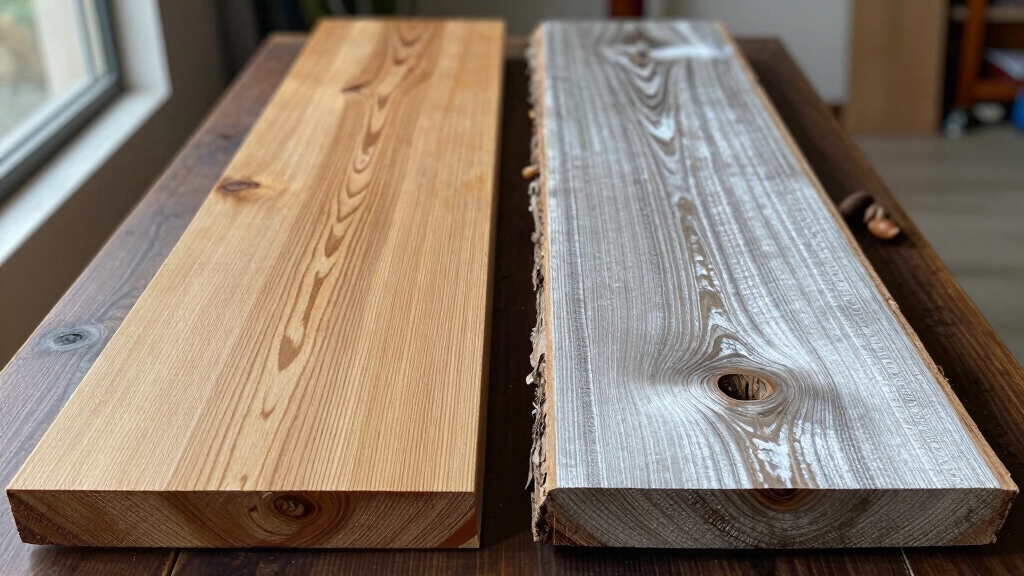
When you take a look at European Oak, you’ll see it has this lovely, warm, and rich tone. The boards are bathed in consistent honeyed hues, which is really appealing. This is mostly due to its tighter grain and higher tannin content.
On the other hand, White Oak has a different vibe altogether. It showcases lighter tan shades, and you’ll notice some pinkish and yellow undertones. The color variation between the planks is definitely more pronounced, which can add a unique character to your space.
Both types fit well with warm, natural tones that are currently favored for creating inviting interiors, enhancing the overall aesthetic impact.
Warmth And Richness
Warmth plays a pivotal role in defining the visual appeal of oak. European Oak distinctly offers a richer, honeyed golden brown tone that imbues spaces with a deep, inviting character.
When you choose European Oak, you get a consistently warm color with subtle depth, thanks to its higher tannin content and tighter grain structure. In contrast, White Oak presents a lighter tan base with pinkish-yellow undertones, delivering a softer, airier warmth.
Its color tends to be more variable across boards, offering brightness but less uniform richness. If you want a wood that conveys a classic, cozy ambiance with a pronounced golden warmth, European Oak excels.
Yet, White Oak’s lighter warmth suits spaces seeking subtlety and natural light enhancement without overwhelming richness. Additionally, White Oak has a Janka hardness rating of 1,360 lbf, making it a durable choice for flooring and furniture with high hardness.
Color Variation Patterns
Although both European Oak and White Oak fall within the same hardwood category, their color variation patterns differ markedly, influencing design choices.
European Oak exhibits a warm, honeyed golden-brown hue with a consistently even tone across planks, thanks to its tighter grain structure. This uniformity allows for predictable finishing outcomes and a richer overall complexion.
In contrast, White Oak presents a lighter tan coloration with subtle pinkish and yellow undertones, and greater color variation between boards due to its larger grain and growth rings. This variability enhances visual interest through tonal diversity rather than grain complexity.
When selecting between the two, consider that European Oak’s higher tannin content deepens stain response. White Oak’s lighter, more varied palette suits designs favoring subtle contrast and natural wood diversity.
Additionally, the grain pattern of each oak species influences not only aesthetic appeal but also surface texture and finish absorption, affecting the final look and durability of the wood.
Grain Patterns: What Sets European and White Oak Apart?

When you examine the grain patterns of European and White Oak, distinct differences immediately stand out that influence their aesthetic and functional applications.
European Oak presents a tighter, wavy grain pattern accented by prominent knots, swirls, and occasional burr figures. These features contribute to its rustic character and visual complexity.
European Oak’s tight, wavy grain with knots and swirls adds rustic charm and rich visual texture.
In contrast, White Oak exhibits a largely straight, linear grain with minimal figure, producing a more uniform and modern look. This linearity in White Oak often makes grain less visually prominent, shifting focus to color variation for aesthetic interest.
The denser, tighter grain of European Oak also affects finishing techniques, as its texture interacts differently with stains and oils compared to the broader, more open grain of White Oak.
Understanding these grain distinctions helps you select the appropriate oak for your design intent. Additionally, White Oak’s open grain allows for more even stain absorption, making it versatile for various finish options.
Hardness and Durability of European vs White Oak
Because both European and White Oak are prized hardwoods, understanding their hardness and durability differences is essential for selecting the right material for your project.
White Oak is slightly harder than European Oak, offering superior resistance to dents and scratches. This makes it ideal for high-traffic areas. Its higher fiber strength also provides better overall density and bending performance by weight.
European Oak, although marginally softer, remains robust and heavy, delivering sufficient durability for most residential uses. Importantly, European Oak outperforms White Oak in moisture resistance and dimensional stability due to its tighter pore structure. This reduces expansion and contraction risks, making European Oak preferable where moisture exposure is a concern.
Both species excel in strength, but your choice hinges on the balance between hardness and moisture tolerance required for your application. Additionally, engineered hardwood with an HDF core offers enhanced stability and moisture resistance that can complement the natural properties of these oak species.
Moisture Resistance and Outdoor Use for Both Oaks

Evaluating moisture resistance is essential for selecting oak species suitable for outdoor applications.
European Oak’s tighter grain and kiln-drying process reduce water absorption. This enhances its dimensional stability and resistance to warping, making it ideal for exterior use.
White Oak’s larger pores increase susceptibility to moisture ingress, causing potential swelling and discoloration outdoors. You’ll find White Oak better for indoor environments where moisture exposure is limited.
| Feature | European Oak | White Oak |
|---|---|---|
| Pore Size | Small, tightly packed | Large, open pores |
| Moisture Absorption Rate | Low | Higher |
| Outdoor Suitability | Excellent (cladding, decks) | Limited (requires sealing) |
Choose European Oak to guarantee longevity and minimal weathering in outdoor projects. Applying sealants and coatings can further enhance moisture protection and durability for both oak types when used outdoors.
Finishing Techniques for European and White Oak
When you’re finishing European and White Oak, it’s interesting to note that European Oak has a higher tannin content. This means it reacts more intensely with stains, so you’ll want to choose your stains carefully to achieve a consistent color. It’s a bit of a balancing act, but once you nail it, the results can be stunning!
On the other hand, White Oak has larger pores. Because of this, you really need to put in some effort during surface preparation to ensure that the finish adheres well and lasts. This is especially true if you’re using polyurethane coatings.
So, understanding these differences between the two types of oak isn’t just academic; it really helps you optimize stain compatibility and maximize the longevity of the finish.
Plus, knowing the right prep methods for each species can make all the difference in your project. When using finishes such as pure tung oil, White Oak exhibits subtle warmth and grain depth enhancement with minimal long-term darkening, making it a great choice for preserving natural wood tones.
Stain Compatibility Differences
Although both European Oak and White Oak accept stains, their differing tannin contents and grain structures influence stain compatibility and finishing outcomes markedly.
European Oak’s higher tannin concentration interacts strongly with reactive stains, leading to deeper, richer color development but less predictable results.
You’ll need to pre-test stains to avoid blotching or uneven tones caused by tannin reactions. Its tighter, wavier grain also absorbs stains more evenly, enhancing character without excessive blotching.
In contrast, White Oak’s lower tannin content produces more consistent, lighter stain absorption. However, its larger pores can cause uneven stain penetration and require pre-conditioning or wood conditioners to achieve uniformity.
When staining either species, adjusting application techniques based on grain and tannin differences guarantees ideal, professional finish compatibility and color fidelity. Be mindful that moisture can exacerbate tannic acid discoloration, affecting the final appearance of stained oak floors.
Finish Durability Comparison
Because of their distinct grain structures and moisture resistance, European Oak and White Oak require different finishing approaches to maximize finish durability.
You’ll want to apply penetrating oil finishes on European Oak to enhance its moisture resistance and emphasize grain detail. For White Oak, a polyurethane or film-forming finish seals the larger pores, protecting against wear and water ingress.
Each wood’s tannin content and grain density also influence finish adhesion and longevity. Choosing the right finish also depends on factors like durability & longevity, which ensures the floor withstands scratches, stains, and moisture over time.
| Wood Type | Recommended Finish Type | Durability Feature |
|---|---|---|
| European Oak | Penetrating oils | Enhances moisture resistance |
| White Oak | Polyurethane | Seals large pores effectively |
| European Oak | Fuming + oil finishes | Deepens color, consistent wear |
| White Oak | Regular refinishing | Maintains surface protection |
Surface Preparation Methods
Since surface preparation directly affects finish adhesion and durability, you’ll need to tailor your techniques specifically for European and White Oak.
For European Oak, begin by thoroughly sanding with progressively finer grits. Start at 80 and finish at 180 grit to expose its tight grain and open pores.
Its higher tannin content demands sealing with a tannin-blocking primer or oil-based pre-stain conditioner to prevent blotching and uneven stain absorption.
White Oak’s larger pores require additional attention. After sanding, use a wood filler or pore sealer to smooth the surface and reduce grain raise.
Both species benefit from dust-free wiping before finish application. Finally, apply finishes compatible with each wood’s moisture absorption and grain structure.
European Oak favors natural oils and fuming, while White Oak responds better to polyurethane coatings for lasting protection.
Availability and Cost Differences Between the Two Oaks
When sourcing oak for your project, you’ll find that European Oak typically comes with a higher price tag due to import costs and limited availability in North America. This oak is imported from Europe, resulting in elevated transportation and handling expenses.
Additionally, only about 5% of harvested European Oak meets the “Select” grade under U.S. standards, affecting both price and availability of premium quality lumber. In contrast, White Oak, native to eastern North America, is more abundant and generally more affordable due to local sourcing and larger supply.
Its domestic availability enables quicker procurement and lower logistical costs. However, European Oak’s taller growth allows for longer, wider planks, which might justify its cost for specialty applications where size and character are priorities.
Common Challenges When Working With European and White Oak
Although both European and White Oak offer excellent hardwood qualities, working with each presents distinct challenges that can impact your project’s outcome.
With European Oak, you’ll need to manage its higher tannin content, which can cause uneven stain absorption and complicate finishing. Its tighter grain and prominent knots also require careful sanding and filling to achieve a smooth surface.
Conversely, White Oak’s larger pore structure increases susceptibility to moisture absorption, leading to potential warping and dimensional instability if not properly sealed. Additionally, White Oak’s pronounced grain variation demands meticulous layout planning to guarantee visual consistency.
Both species require precise milling techniques to accommodate their density differences. European Oak’s hardness favors sharp tools to avoid tear-out, while White Oak’s fiber strength necessitates slower feed rates to prevent blade damage.
How to Choose the Right Oak for Your Project?
Evaluate your project’s specific requirements for durability, appearance, and environmental exposure to determine whether European Oak or White Oak is the better fit.
Assess durability, appearance, and environment to choose between European Oak and White Oak for your project.
If your project demands superior moisture resistance and a rich, consistent grain, European Oak excels indoors and for exterior use.
For high-traffic areas requiring hardness and wear resistance, White Oak’s density offers enhanced durability. Consider availability and finishing needs as well.
Choose European Oak for outdoor applications, consistent color, and tighter grain patterns. Opt for White Oak when hardness and abrasion resistance are priorities.
Factor in European Oak’s higher cost and character marks requiring filling. Select White Oak for cost efficiency, wider availability, and lighter tones with varied grain.
Frequently Asked Questions
Are European and White Oak Safe for Use in Food Preparation Surfaces?
Yes, both European and White Oaks are safe for food preparation surfaces. They’re hardwoods with natural antimicrobial properties and tight grain structures that resist bacteria infiltration.
European Oak’s tighter grain offers slightly better moisture resistance, reducing contamination risk, while White Oak’s hardness ensures durability against knife marks.
However, you should use food-safe finishes and maintain the surfaces properly to prevent absorption of liquids and guarantee longevity and hygiene.
Which Oak Type Is Better for Antique Furniture Restoration?
You’ll find European Oak better suited for antique furniture restoration due to its tighter grain, distinctive wavy patterns, and richer, warmer tone that closely matches historical pieces.
Its natural durability and moisture resistance help maintain structural integrity, while its ability to accept reactive stains allows you to replicate aged finishes accurately.
White Oak’s lighter color and straighter grain don’t align as well with traditional antique aesthetics or restoration requirements.
Do European and White Oak Have Different Allergenic Effects?
Oh, rejoice! Allergies caused by oak dust are your new best frenemy, regardless of the oak’s birthplace.
Both European and White Oak contain tannins and allergens that can irritate your skin, eyes, and respiratory tract when inhaled or contacted.
They pose similar allergenic risks, so you’ll want to wear proper masks and gloves during woodworking. In short, no oak is a hypoallergenic saint; safety gear is your loyal ally.
Can European Oak Be Sustainably Sourced Compared to White Oak?
Yes, you can sustainably source European oak, especially from managed forests in Germany, Poland, and France adhering to strict forestry standards like FSC or PEFC.
Similarly, white oak is sustainably harvested across North America with certification programs guaranteeing responsible practices.
Your choice depends on availability and environmental priorities, but both species have established sustainable supply chains supporting ecological balance and responsible timber production.
Always verify certification to guarantee true sustainability.
How Do European and White Oak Compare in Acoustic Properties?
You’ll find European Oak offers slightly better acoustic damping due to its denser, tighter grain structure, which minimizes sound transmission and reverberation. White Oak’s larger pores and more open grain absorb less sound, resulting in brighter, livelier acoustics.
If you need controlled resonance and reduced echo, European Oak’s fine grain delivers superior sound absorption. White Oak suits applications favoring clarity over muffling, thanks to its more open cellular structure.
Making the Right Wood Choice After European Oak Vs White Oak
When deciding between European and White Oak, you’re fundamentally choosing the subtle language of wood itself. Each type brings its own strengths, be it in tone, durability, or workability, that quietly influence your project’s success.
While neither is flawless, understanding their nuances lets you navigate challenges with confidence. By aligning your choice with your specific needs, you make certain your craftsmanship speaks volumes, even when the wood’s story remains softly in the background.