Why Are My Hardwood Floors Separating and How to Fix It?
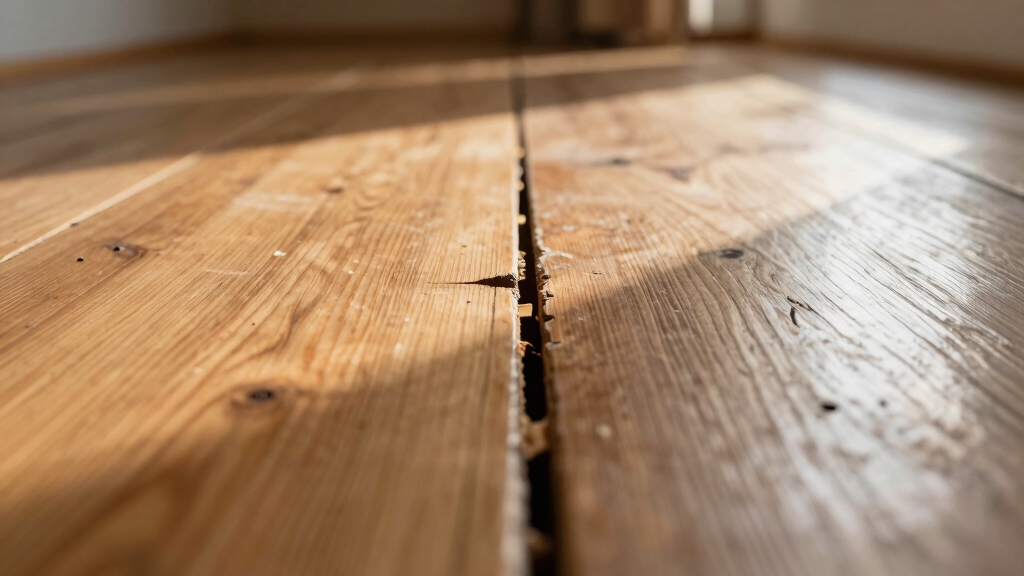
Your hardwood floors are separating because wood naturally expands and contracts with humidity changes. If the wood wasn’t properly acclimated to your home’s moisture levels before installation, this movement can cause gaps or buckling.
Improper expansion gaps or faulty fastening worsen the problem. Environmental factors like dry winter air or uneven subfloor moisture also contribute.
Maintaining stable humidity and following best installation practices minimize this. Understanding these causes helps you address and prevent further floor separation effectively.
Key Takeaways
- Hardwood floors separate due to seasonal moisture changes causing wood to shrink in low humidity and expand in high humidity.
- Insufficient acclimatization before installation leads to wood adjusting post-install, resulting in gaps and separation.
- Inadequate expansion gaps around walls or fixed objects restrict natural movement, causing boards to separate or buckle.
- Low indoor humidity from heating systems in winter causes excessive shrinkage and visible gaps between floorboards.
- Poor fastening, adhesive failure, or uneven subfloors can loosen boards and contribute to floor separation over time.
Impact of Moisture and Humidity Fluctuations on Hardwood Flooring
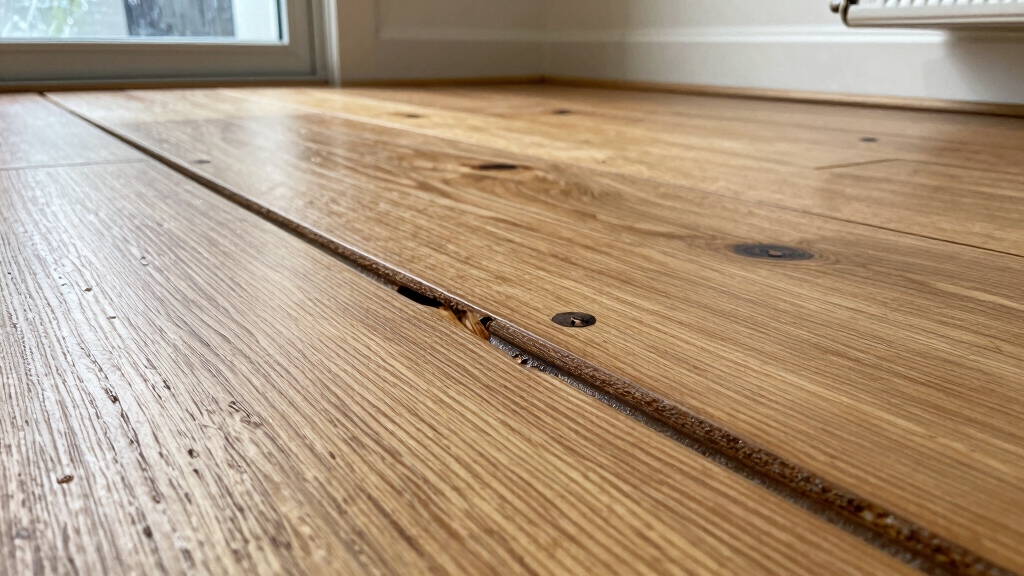
Because hardwood is a natural material, it responds dynamically to changes in moisture and humidity by expanding and contracting.
Hardwood floors naturally expand and contract with changing moisture and humidity levels.
When humidity rises, your floorboards absorb moisture, causing fibers to swell, especially tangentially across the width. This expansion can push boards against walls, risking structural stress. Leaving an expansion gap during installation is essential to accommodate this natural movement.
Conversely, low humidity forces wood to release moisture, shrinking the boards and creating visible gaps. This contraction occurs mainly in width and is common during dry autumn and winter months. These expansion and contraction cycles repeat with changing environmental conditions, driving the movement of hardwood floors.
Repeated moisture cycles weaken fasteners and adhesives, loosening boards over time. Maintaining relative humidity between 30-50% is critical. Below 35% causes excessive shrinkage, while above 55% risks swelling and buckling.
Understanding these moisture-driven dimensional changes helps you manage hardwood floor performance effectively.
Effects of Improper Acclimatization Before Installation
Hey there! Before you get started on laying down your hardwood flooring, it’s super important to make sure it reaches moisture equilibrium with the environment where it’s going to be installed.
If you skip this step or don’t give it enough time to acclimate, you might run into some pretty frustrating problems later on.
Acclimation is an essential pre-installation step that greatly reduces the risk of gaps, cupping, or buckling by allowing the wood to adjust to the room’s moisture content and temperature.
I mean, nobody wants gaps, cupping, or buckling after putting in all that hard work, right? Proper acclimatization helps align the wood’s moisture content with the room conditions, which really minimizes any movement or structural issues once everything is installed.
Importance of Moisture Equilibrium
When hardwood flooring isn’t properly acclimated to the installation environment, moisture imbalance can trigger significant dimensional changes after installation. Proper acclimation is essential for maintaining the durability and longevity of the flooring.
Achieving equilibrium moisture content (EMC) guarantees wood neither gains nor loses moisture, stabilizing its dimensions.
You must measure moisture in both subfloor and boards, comparing to manufacturer tolerances.
Also, maintain consistent relative humidity (30–50%) and temperature during acclimation. This step is essential because wood is hygroscopic, meaning it absorbs and releases moisture from the air.
Failure to do so results in swelling, gaps, or cupping.
| Factor | Impact |
|---|---|
| Moisture > EMC | Wood swells, causing buckling |
| Moisture < EMC | Wood shrinks, creating gaps |
| Uneven moisture gradients | Leads to cupping or delamination |
Proper EMC management is critical to prevent post-installation separation and extend flooring lifespan. Monitoring environmental humidity and temperature during acclimation helps prevent issues like warping and buckling.
Risks of Skipping Acclimation
Skipping the acclimation process before installing hardwood floors markedly increases the risk of dimensional movement as the wood adjusts to indoor conditions.
Without proper acclimatization, planks expand or contract excessively, causing gaps, buckling, warping, and cupping. This hygroscopic movement stresses fasteners and adhesives, leading to popped nails, loose boards, and potential bond failures.
Structural issues arise as trapped expansion lifts boards, overstressing subfloor connections and risking damage. Additionally, unacclimated wood faces larger seasonal moisture swings, accelerating joint failures and surface defects. Acclimation typically takes three to seven days to allow wood to reach equilibrium with indoor conditions. Proper acclimation also ensures compatibility with the existing hardwood flooring and helps maintain floor stability.
These problems raise maintenance costs due to frequent repairs, sanding, and refinishing. You may also void manufacturer warranties by skipping acclimation, increasing your financial risk.
Ultimately, improper acclimatization shortens flooring lifespan, compromises appearance, and diminishes usability, making acclimation an essential step for durable, stable hardwood floor installations.
Common Installation Mistakes Leading to Floor Separation
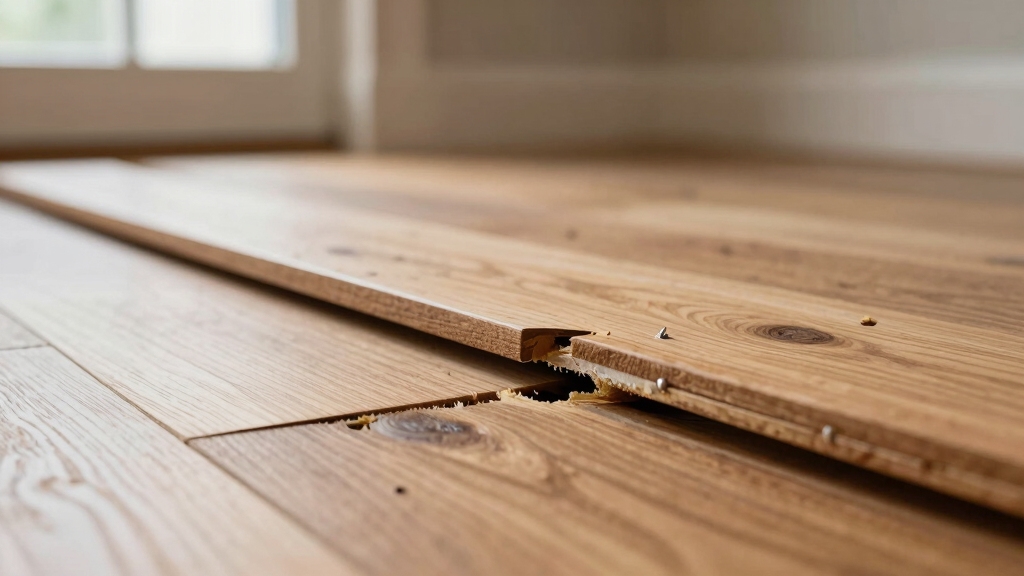
Hey there! Before you dive into installing hardwood flooring, it’s super important to let it acclimate to your home’s humidity and temperature. Trust me, skipping or cutting this acclimation period short can lead to some pretty annoying gaps.
You see, wood tends to expand and contract after installation, and without that crucial adjustment period, you might end up with separation issues. Proper planning and understanding of adhesive properties also play a key role in preventing such problems.
Also, don’t forget about those expansion gaps around the edges and any fixed objects in the room. If you skip this step, you’re restricting the natural movement of the wood.
This can lead to some serious problems down the line, like buckling or separation. So, take your time and make sure everything’s set before you start laying down those beautiful hardwood planks!
Proper expansion gaps are essential around walls, built-ins, and kitchen islands to accommodate wood movement and prevent damage.
Inadequate Acclimation Time
Although proper acclimation might seem like a straightforward step, insufficient acclimation time frequently causes hardwood floors to separate after installation. Acclimation balances the wood’s moisture content with the room’s environment, preventing expansion or contraction post-installation.
Because wood is hygroscopic, it naturally absorbs or releases moisture until it reaches equilibrium moisture content (EMC) with the surrounding environment. Proper acclimation is essential to ensure the wood’s stability and to minimize issues such as buckling or gaps caused by environmental fluctuations.
Skipping or shortening this process means the wood hasn’t reached equilibrium moisture content (EMC), leading to gaps as the floor adjusts.
| Plank Width | Recommended Acclimation Time | Moisture Difference Allowed |
|---|---|---|
| 2¼-inch strip flooring | 3-5 days | Up to 4% |
| 10-inch wide planks | 2 weeks or more | Up to 2% |
| Imported tropical wood | Longer due to density/oils | Varies, monitor closely |
Ensure HVAC runs 5-14 days pre-installation at 60-80°F, 35-50% RH. Verify moisture stabilization before proceeding to maximize installation durability.
Improper Expansion Gaps
When installers misjudge the necessary expansion gaps around hardwood floors, they set the stage for separation issues. You must select gap sizes based on species, plank width, and local humidity—typically 1/4″ to 1/2″, wider for broad planks or humid climates.
Ignoring seasonal moisture swings or using generic gaps risks buckling. Long runs demand expansion joints; without them, cumulative expansion causes crowding and board displacement.
Additionally, the installation method, such as glue vs nail, can influence how much movement the floor can tolerate. Also, avoid fastening trim directly to flooring, as it restricts edge movement and forces planks to lift or separate.
Relying on visual judgment rather than measuring ambient relative humidity leads to inconsistent gaps and localized stresses. Following manufacturer specifications precisely and including mechanical thresholds at thresholds guarantees controlled wood movement, preventing separation and preserving warranty coverage.
Additionally, understanding that hardwood naturally undergoes seasonal expansion and contraction is crucial for setting appropriate gaps.
Influence of Environmental and HVAC Conditions
Because hardwood flooring reacts directly to changes in indoor relative humidity (RH), your HVAC system plays a crucial role in maintaining stable environmental conditions that prevent wood movement and separation.
Hardwood floors depend on your HVAC system to maintain stable humidity and prevent wood movement.
When winter heating lowers RH below 35%, wood loses moisture, shrinks, and gaps form. Conversely, summer humidity causes expansion, potentially closing gaps or creating edge-crowning if restrained.
Maintaining indoor humidity between 35–55% is recommended to minimize these dimensional changes. Using dehumidifiers and humidifiers as part of HVAC design helps maintain these optimal humidity levels.
Without humidistat control or balanced airflow, HVAC systems allow prolonged RH extremes and rapid swings that aggravate wood stress and separations.
Additionally, ventilation introducing cold, dry air or uneven airflow creates microclimates causing localized movement.
Moisture imbalances from damp crawlspaces or plumbing leaks, combined with inadequate HVAC dehumidification, further exacerbate swelling and shrinkage cycles.
Proper HVAC design with humidity control is essential to minimize these dimensional changes and maintain hardwood floor integrity.
Role of Subfloor and Structural Problems
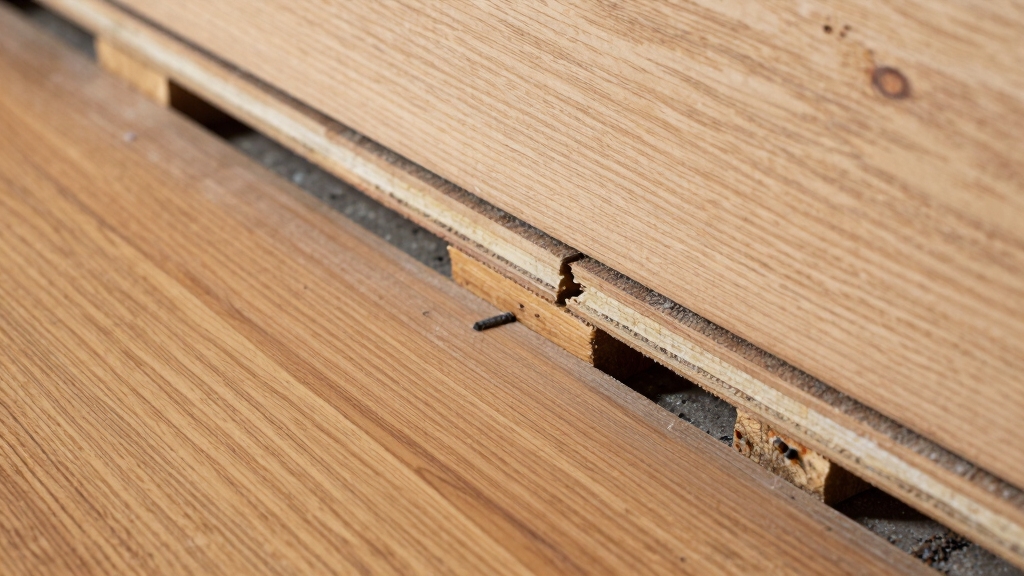
If your hardwood floors are separating, inspecting the subfloor and underlying structure is essential. Problems here often cause or worsen gaps.
Uneven subfloors prevent proper plank adhesion, causing shifting and visible separations over time. Using laser levels or straightedges can help identify subfloor flatness issues that contribute to this problem.
Moisture in the subfloor, common in damp basements or crawl spaces, induces wood swelling and shrinking. This leads to persistent gaps and occasional buckling.
Improper fastening methods, such as inadequate nailing or adhesive application, compromise plank stability. This allows movement and separation.
Structural issues like loose nails or screws between the subfloor and joists, joist separation, or shifting subfloor due to foundation movement further destabilize flooring.
This causes joint cracks and warping. Maintaining balanced indoor humidity between 35% to 55% is crucial to minimize wood movement and prevent worsening of these structural problems.
A professional assessment can identify these subfloor flatness and structural defects early. This enables targeted repairs to restore hardwood floor integrity and prevent ongoing separation.
How Product Selection Affects Floor Stability?
Although many factors influence hardwood floor stability, product selection plays a critical role in minimizing separation issues.
Choosing the right wood species matters: species with tighter, uniform grain like white oak exhibit less dimensional change than dense, open-grain woods such as hickory, which may move more despite high Janka hardness.
Understanding the balance between durability and stability helps in making the best choice for your flooring needs. Additionally, selecting wood that is less susceptible to moisture can reduce swelling and warping.
Engineered hardwood offers superior dimensional stability over solid wood, especially in moisture-prone areas or below-grade installations. Its cross-laminated cores reduce expansion and contraction.
Cross-laminated cores reduce expansion and contraction.
Board dimensions also impact stability; wider planks show more visible gaps, while thicker boards resist distortion but don’t eliminate moisture-driven movement.
Moreover, plank width and thickness can influence the floor’s overall resistance to everyday wear.
Profiles influence how boards accommodate movement; locking systems help reduce isolated separation.
Finally, finishes affect moisture exchange, with factory-cured urethanes enhancing stability better than oil finishes, which allow faster moisture equilibration and potential gaps.
Choosing the right finish can significantly improve the floor’s resistance to environmental changes.
Seasonal Changes and Their Effect on Floor Gaps
Product selection sets the stage for floor stability, but seasonal changes in humidity play a significant role in how hardwood floors behave over time.
Since wood is hygroscopic, it absorbs moisture in high humidity and releases it in low humidity, causing dimensional changes. Regular maintenance such as vacuuming hardwood floors helps remove abrasive particles that can damage the wood surface.
Indoor relative humidity typically drops during winter heating, leading to wood shrinkage and visible gaps, especially in wider planks or less stable species.
In summer, increased humidity reverses this, often closing gaps as the wood swells.
Maintaining indoor RH within the NWFA-recommended 35–55% band minimizes movement, but deviations cause larger seasonal gaps.
If gaps persist through humid months, it signals abnormal moisture conditions or installation issues, warranting inspection.
Understanding these cyclical moisture-induced changes is vital to interpreting seasonal floor gap behavior accurately.
Additionally, heating systems can increase indoor dryness, exacerbating separation during colder months.
Preventative Measures to Minimize Hardwood Floor Separation
To minimize hardwood floor separation, you must control the indoor environment and guarantee proper installation techniques.
Maintain humidity between 35%-55% using humidifiers or dehumidifiers as needed, and keep temperatures steady between 65-77°F. Since wood naturally expands and contracts with temperature and moisture changes, stabilizing these conditions is essential to reduce gaps.
Acclimate wood planks thoroughly to match your home’s moisture content before installation.
Make certain installers leave 10-15mm expansion gaps around perimeters and use correct fastening methods.
Regular maintenance, including cleaning and moisture inspections, helps prevent damage and gap expansion.
| Preventative Measure | Key Action |
|---|---|
| Humidity Control | Maintain 35%-55% humidity with humidifiers |
| Ventilation Management | Seal leaks and balance airflow |
| Acclimation Process | Acclimate wood to home’s moisture content |
| Quality Installation | Leave expansion gaps; use proper adhesives |
| Regular Maintenance | Inspect floors; apply fillers for minor gaps |
Identifying Signs of Damage and When to Seek Professional Help
Controlling humidity and ensuring proper installation help reduce hardwood floor separation, but you still need to recognize when gaps or damage indicate a deeper problem.
Measure gaps. If they exceed 1/8 inch or appear rapidly, suspect acute moisture loss or installation stress.
Note gap location; those along exterior walls often stem from humidity fluctuations. Watch for cupping, buckling, discoloration, or swelling, which signal moisture damage needing professional assessment.
Slight cupping of boards can often be fixed with sanding, but significant separation or large warped boards that have turned black typically need replacement of boards or segments due to water damage.
Persistent squeaks, loose boards, or visible fastening failures point to structural issues.
If gaps coincide with uneven subfloor or radiant heat systems, installation errors may be involved. Elevated moisture readings at gaps confirm water intrusion.
When you detect progressive board damage, recurring repairs, or multiple adjacent board failures, consult a flooring specialist promptly to prevent further deterioration and costly replacements.
Frequently Asked Questions
Can Pets Cause Hardwood Floor Separation?
Yes, pets can cause hardwood floor separation. Their urine soaks into wood fibers, introducing moisture that swells boards and widens gaps.
Repeated accidents weaken adhesives, allowing boards to pull apart. Claw scratches breach finishes, increasing moisture ingress and joint expansion.
High-traffic pet areas wear down edges, and mechanical stress from running or jumping loosens nails or glue.
You should promptly clean spills, trim nails, and monitor humidity to prevent damage.
Does Furniture Placement Affect Floor Gaps?
Think of your hardwood floor as a living puzzle that needs room to breathe and shift. Yes, your furniture placement directly impacts floor gaps.
Heavy pieces act like anchors, restricting natural expansion and contraction. When furniture blocks airflow or presses down without sufficient perimeter gaps, boards can warp or separate.
To maintain stability, make certain proper spacing around fixed items and use threshold strips in large areas to prevent stress-induced gapping.
Are Certain Cleaning Products Harmful to Hardwood Floors?
Yes, certain cleaning products can harm your hardwood floors. Avoid vinegar-based cleaners, since their high acid content strips protective finishes and damages the wood beneath.
Steer clear of abrasive cleaners or pads containing calcium carbonate, which scratch surfaces.
Harsh chemicals like toilet bowl or bathroom cleaners, Windex, and caustic substances degrade finishes and cause staining.
Using improper products often means you’ll need sanding and refinishing to restore your floors’ appearance and protection.
How Does Sunlight Exposure Impact Floor Separation?
Sunlight dances on your floors, but that dance can pull them apart.
UV radiation breaks down wood fibers, weakening finishes and causing color shifts.
Infrared heat dries wood unevenly, making boards shrink and expand at different rates.
Over time, this causes gaps and separation, especially near windows.
To protect your floors, limit direct sun exposure, maintain stable humidity, and use UV-blocking films or finishes to slow this damaging cycle.
Can Hardwood Floor Separation Be Covered With Rugs?
Yes, you can cover hardwood floor separation with rugs to cosmetically hide gaps. However, rugs don’t stop the underlying movement or moisture issues causing separation.
Covering gaps may trap moisture beneath the rug, increasing risks of cupping, mold, or finish damage.
For short-term aesthetics, rugs help, but you should still control indoor humidity and address structural causes to prevent worsening or permanent damage.
What to Do Next If Your Hardwood Floors Are Separating?
You might think your hardwood floors are separating just because of simple wear, but it’s often a mix of moisture, installation errors, and environmental factors working together.
Coincidentally, addressing these issues early, like controlling humidity, ensuring proper acclimatization, and inspecting your subfloor, can prevent costly damage.
By understanding these technical aspects and acting promptly, you’ll maintain your floor’s stability and appearance, avoiding more serious structural problems down the line.