What Size Pilot Hole for 3/8 Lag Screw for Lasting Strength?
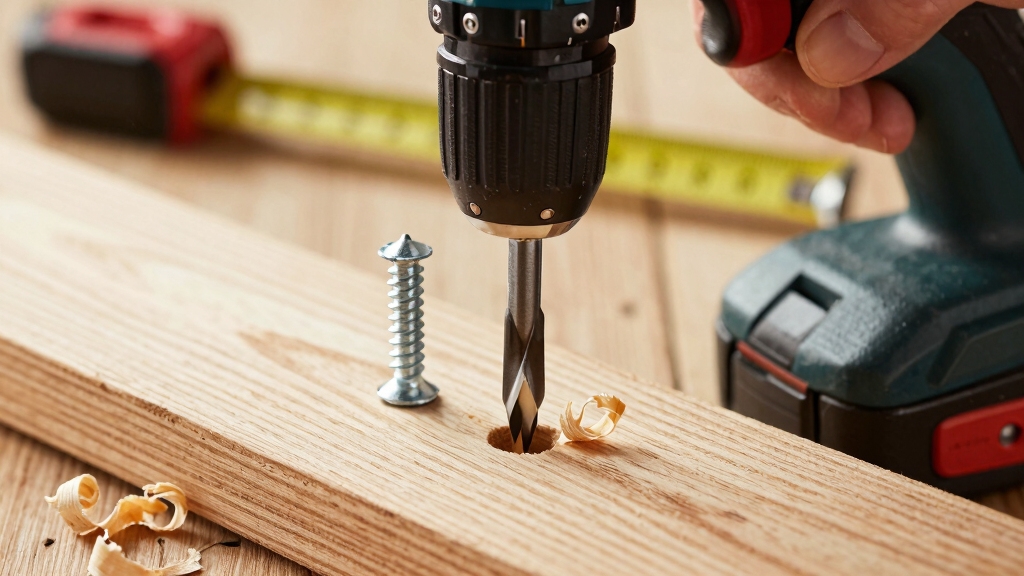
For a 3/8-inch lag screw, drill a pilot hole between 3/16 and 7/32 inches, depending on your wood type. Use a smaller size for softwoods and a larger size for hardwoods to prevent splitting.
Match the hole depth to the screw’s threaded length for full engagement and to avoid breakage. A pilot hole that is too small increases torque and risk of damage, while one that is too large weakens the hold.
Keep your drill steady and perpendicular for accuracy. Understanding these details helps guarantee a strong, lasting connection.
Key Takeaways
- For a 3/8″ lag screw, pilot hole diameter should match the core (minor) diameter, typically around 5/16″ for hardwoods and 3/16″ for softwoods.
- In softwoods, drill pilot holes about 40–75% of the screw shank diameter, generally 3/16″ to 11/64″ for 3/8″ lag screws.
- For dense hardwoods, increase pilot hole size to roughly 7/32″ to 5/16″ to prevent splitting and ease screw insertion.
- Pilot hole depth must equal the threaded length of the lag screw to ensure full thread engagement and avoid breakage.
- Use depth stops or tape markers on drill bits for consistent hole depth, and keep drill perpendicular to avoid angled holes or damage.
Understanding Lag Screw Dimensions
When you’re working with a 3/8” lag screw, understanding its key dimensions is essential for selecting the right pilot hole. The nominal diameter, 3/8″ or about 0.375″, refers to the major diameter, the outer thread width, not the core diameter.
The 3/8″ size denotes the screw’s major diameter, not the smaller core diameter essential for pilot holes.
The core, or minor diameter, is smaller and critical for pilot hole sizing to prevent wood splitting while ensuring strong thread engagement.
Thread pitch affects how tightly the screw bites into the material, and thread length determines how much of the shank is threaded. The thread pitch, typically measured in threads per inch (TPI), influences holding power and is important to match with pilot hole considerations.
The hex-head size grows with diameter, influencing driving tools. The screw’s point type and whether it’s fully or partially threaded also impact pilot hole strategy. Choosing the right pilot hole diameter is crucial for preventing wood damage and ensuring a secure installation.
Always measure or find the core diameter to pick the correct pilot drill size, aiming to balance insertion ease and holding strength. Measuring the core diameter precisely with a caliper helps ensure optimal pilot hole dimensions.
Pilot Hole Size Recommendations for Different Wood Types
Selecting the right pilot hole size depends largely on the type of wood you’re working with. For softwoods like pine or cedar, a smaller pilot hole around 3/16” or 11/64″ works well, roughly 40-75% of the screw shank diameter.
Hardwoods, such as oak or maple, need larger holes, typically 7/32″ or 3/16″, about 65-85% of the shank, to prevent splitting. Dense woods like black locust require pilot holes close to 90% of the shank diameter.
Softwoods: 40-75% of shank diameter, smaller holes prevent splitting. Hardwoods: 65-85% of shank diameter, larger holes avoid screw breakage. Dense hardwoods: nearly equal to core diameter for safety and fit.
Adjust pilot size based on wood density and moisture for best results. Pre-drilling pilot holes in hardwood or delicate wood types is recommended to prevent splitting and ensure a clean installation, as noted in installation techniques.
How to Measure and Drill the Correct Pilot Hole Depth?

When it comes to drilling the right pilot hole depth, it’s pretty straightforward.
First off, take a moment to measure the threaded length of your screw. Once you have that number, you’ll want to make sure your pilot hole matches it. It’s important to drill the pilot hole at least as deep as the screw length to avoid risk of snapping. Using the correct pilot hole size helps ensure proper fastening and prevents wood splitting, especially with hardwood floor nailers.
Now, to keep things consistent, you might want to use a depth stop on your drill bit or just wrap some tape around it at the right depth. This little trick helps you drill each hole to the same depth, which is super important.
Measuring Pilot Hole Depth
In measuring pilot hole depth, matching the hole depth to the screw thread length is essential for secure fastening. Drilling the correct depth also helps prevent wood splitting by allowing the screw to enter smoothly without excessive force, which is particularly important when working with hardwoods.
Additionally, understanding the subfloor compatibility can influence the choice of pilot hole size and depth for optimal hold. Drill the hole at least as deep as the threaded portion of the lag screw to avoid bottoming out and ensure full engagement.
Use a depth gauge hooked on the longer side for accuracy, or measure carefully if a hook isn’t available. Mark your drill bit with tape to control depth, drilling slowly and straight. Periodically pull out the bit to clear chips and maintain precision.
- Confirm hole depth matches or exceeds screw thread length before installing.
- Avoid shallow holes that cause incomplete threading or deep holes that weaken grip.
- Verify axis alignment during drilling to prevent angled holes and uneven depth.
Depth Stop Techniques
Once you’ve measured the correct pilot hole depth, controlling your drill to match that depth consistently is the next step.
The simplest way is using painter’s tape wrapped around your bit as a visual depth marker. Fold the tape into a flag for tactile feedback when the drill reaches the surface. Although the tape does not physically stop the drill, it provides a clear visual stop point to help avoid over-drilling.
For enhanced safety and precision, pairing this method with a drill that has variable speed control can improve accuracy. Remember, tape can compress or shift, so remove and re-measure frequently if drilling multiple holes.
For more precision, use an adjustable collar with two set screws to clamp securely on the bit, preventing over-drilling. If your drill has a depth rod, set it carefully to align with the bit tip and work surface, ensuring perpendicular contact.
In workshops, jigs or drill press stops offer repeatable depth control, especially with sacrificial backing blocks to protect material edges.
Matching Threaded Length
Measure the threaded length of your 3/8″ lag screw carefully before drilling the pilot hole. This length from the tip to the end of the threads determines how deep you need to drill so the threads fully engage the material without leaving the unthreaded shank bearing shear forces.
Mark your drill bit with tape at this depth to avoid overdrilling. Remember to adjust for any washers or plates by subtracting their thickness from the embedment depth if required.
Make certain the pilot hole depth matches the threaded length for peak grip and load distribution. For connections involving multiple members, confirm the threads penetrate all necessary layers per design specs.
Use incremental drilling and frequent depth checks on long or angled holes to prevent drilling too deep. Maintaining the proper moisture levels in wood is crucial to prevent warping and ensure the lag screw holds firmly in place, so always test for moisture content before installation.
Effects of Incorrect Pilot Hole Sizes on Wood and Fastening
When you use an incorrect pilot hole size, you compromise both the wood’s integrity and the fastener’s performance.
Using the wrong pilot hole size weakens wood integrity and reduces fastener effectiveness.
A hole that’s too small raises insertion torque, risking wood splitting and fastener breakage while also stressing your tools. Using a properly sized pilot hole reduces risk of splitting. Choosing the correct pilot hole diameter is essential to maintain the fastener’s holding power in wood.
Too large a hole reduces thread engagement, weakening the joint and allowing screw wobble or pull-out under load. Shallow pilot holes prevent full thread embedment, concentrating stress near the surface and reducing strength.
Repeated under-sized drilling causes microfractures that degrade load capacity over time. Incorrect sizing also amplifies crack propagation, especially near edges or grain changes, worsening with moisture cycles.
Over-sized holes rely on glue or bearing rather than threads, cutting design capacity. Proper pilot hole size preserves wood fibers, guarantees even load distribution, and reduces tool wear, making your fastening reliable and durable.
Tips for Drilling Pilot Holes in Hardwoods vs. Softwoods
When you’re getting ready to drill pilot holes for a 3/8 lag screw, it’s important to choose the right bit size based on the type of wood you’re working with.
For hardwoods, you’ll want to go with a larger bit—around 7/32 inch. This helps prevent any splitting and makes it easier to insert the screw.
On the other hand, if you’re working with softwoods, a 3/16 inch bit is usually your best bet. Just remember to drill slowly to avoid making the hole too big.
It’s all about adjusting your technique based on the density of the wood to ensure a secure fit while keeping the material intact.
Using a screw with a sharp, self-drilling tip can also minimize splitting and ease installation in both hardwoods and softwoods.
Hardwood Pilot Hole Size
Although hardwoods demand more careful pilot-hole sizing than softwoods, you can assure a strong, clean fastening by matching the hole diameter closely to the screw’s minor (core) diameter.
For a 3/8″ lag screw, this typically means drilling a pilot hole around 3/16″ or roughly 65–85% of the shank diameter. This sizing helps the threads bite properly without splitting the wood or risking screw breakage.
The pilot hole size should be adjusted according to the density of the lumber to ensure optimal holding strength. Controlling environmental factors like humidity levels can also affect the wood’s expansion after fastening, influencing long-term joint stability.
Keep these points in mind when drilling pilot holes in hardwoods:
Drill to the full depth of the threaded portion to assure full engagement without binding.
Use sharp bits and slow drill speeds to reduce heat and bit wear.
For very dense hardwoods, slightly increase hole size and apply wax or lubricant to ease screw insertion.
Softwood Drilling Techniques
Sizing pilot holes in softwoods requires a different approach than hardwoods due to their lower density and grain structure. For a 3/8″ lag screw, target pilot hole diameters between 40–70% of the shank diameter, adjusting for softness or density.
Always drill clearance holes through the top member and pilot holes to threaded depth in the receiving wood. Use straight drill bits and slightly countersink holes to prevent mushrooming. Lubricate threads on dense softwoods to ease driving and reduce fiber tearing.
Selecting the proper underlayment can similarly protect your subfloor from moisture, ensuring long-term durability, much like the importance of moisture barriers in flooring installation.
| Softwood Type | Pilot Hole % of Shank | Common Drill Size (in) |
|---|---|---|
| Very Softwood | 40–50% | 0.15–0.19 |
| Medium Softwood | 50–60% | 0.19–0.23 |
| Dense Softwood | 60–70% | 0.23–0.26 |
| Clearance Hole | 100% | 0.375 |
| Drill Depth | Threaded Length | Match screw threads |
Structural Considerations for Pilot Hole Sizing
Since pilot hole sizing directly affects the strength and stability of a lag screw connection, you need to choose dimensions that match the wood’s density and the screw’s thread profile.
For example, softer woods call for smaller pilot holes (around 3/16 inch), while hardwoods require larger ones, sometimes up to 5/16 inch, to prevent splitting and guarantee proper grip.
You must also consider the type of hole: lead holes are slightly smaller than the screw’s root diameter for holding power, while clearance holes match the shank diameter to allow smooth passage.
Depth matters too; drill at least as deep as the threaded embedment length to maximize strength. Lead hole size typically equals 75% of the screw diameter.
Hardwoods demand larger pilots to avoid wood damage. Clearance holes allow smooth shank insertion without binding. Using the correct pilot hole size helps to minimize wood splitting and ensures the threads grip securely for maximum holding power.
Common Mistakes When Preparing Pilot Holes
Getting the pilot hole right means avoiding common mistakes that can weaken your lag screw connection or cause wood damage.
First, don’t use the wrong drill bit size. Too large a hole reduces holding power, especially if you match the bit to the screw shank instead of the threads in hardwoods.
Also, avoid drilling holes deeper than the screw length. Mark the depth with tape or a drill stop for precision. Remember that the pilot hole depth should be about two-thirds of the screw length in hardwoods for the best grip.
Pay attention to placement. Always mark spots with a sharp pencil or center punch to prevent the bit from wandering. Keep the drill perpendicular to avoid angled holes. Don’t force the screw into a tight hole; enlarge it slightly if needed.
Finally, inspect and clean the hole before screwing to make certain a secure, damage-free fit.
Frequently Asked Questions
Can I Reuse Pilot Holes When Replacing Old Lag Screws?
You can reuse pilot holes if the screw goes in with normal torque and feels tight, showing solid thread engagement. If the hole feels loose or wobbly, or you can’t reach proper torque, it’s likely stripped and not reusable.
Inspect for crushed wood fibers or visible damage. For safety and strength, consider filling and redrilling, upsizing screws, or repairing the hole to ensure reliable holding before reusing.
What Drill Bit Type Works Best for Pilot Holes in Treated Lumber?
You want a drill bit that slices through treated lumber like a hot knife through butter. High-speed steel (HSS) twist bits are your reliable go-to, resisting dulling from preservatives.
For tougher, dense wood, cobalt alloy bits cut more aggressively without overheating. If you need longevity in gritty wood, carbide-tipped bits are unbeatable.
For clean holes, especially in softwoods, brad-point bits reduce tear-out. Choose wisely to save effort and get precise pilot holes every time.
How Does Moisture Content in Wood Affect Pilot Hole Sizing?
Moisture content directly affects how you size pilot holes. If the wood’s dry and brittle, you’ll want a larger pilot hole to prevent splitting. For medium moisture, stick to a moderate size balancing grip and split risk.
In wet or green wood, smaller holes work since it’s more pliable, but allow for shrinkage. When unsure, err on the side of a bigger hole if the wood feels dry to avoid cracking or stress later.
Are Pilot Hole Sizes Different for Lag Bolts Versus Lag Screws?
Imagine arguing over whether a hammer is a “nail pusher” or a “wood stabber.” Pointless, right?
You don’t need to worry about pilot hole sizes differing between lag bolts and lag screws because they’re the same fastener.
So, you use identical pilot hole sizes for both. Focus on wood type and screw diameter instead, not on what you call it. That’s where pilot hole size adjustments truly matter.
Can Pilot Holes Be Drilled at an Angle for Better Hold?
Yes, you can drill pilot holes at an angle to improve hold. Angled holes increase thread engagement and distribute load better, boosting shear resistance by up to 20-30%.
Just make sure you match the pilot hole diameter to the wood type. Softwood needs about 40-70% of the screw shank diameter, while hardwood requires 65-85%.
Keep the hole depth equal to the threaded length and maintain steady drilling to avoid splitting or weakening the joint.
Pilot Holes: The Hidden Strength Behind Lag Screw Fastening
When working with a 3/8 lag screw, think of the pilot hole as the key that releases a strong, secure hold. Choosing the right size, usually around 7/32 inch for hardwoods and slightly larger for softwoods, ensures your project won’t crack under pressure.
Drill carefully, matching depth and diameter to avoid splitting or weak fastening. With the right pilot hole, you’ll build a foundation as solid as bedrock, every time.